








What Defines an Italian Latte and How Is It Made?
An Italian latte is espresso combined with steamed milk, and its story is often traced to Vienna in 1683, when a Viennese merchant named Fanz George Kolschitsky used coffee left behind by the retreating Ottoman army. The drink is distinct from café au lait, which uses brewed coffee rather than espresso. Ratio and milk texture, not just the name, define the result in the cup.
Making one requires attention to extraction parameters, dosing and tamping, and milk frothing skills. Because espresso still outsells single-origin coffee in shops, bean choice matters: flavor performance, body and the balance of acidity, sweetness and bitterness all have to hold up against milk. The mixing ratio of coffee to milk is what keeps the coffee from being drowned by the milk.
Latte is one of the most frequently ordered espresso drinks in cafés, but its origins, recipe ratios, and preparation details are often far richer than one might imagine. This article begins with the Blue Bottle coffee house in Vienna in 1683, sorts out the differences between latte and café au lait, explains in detail the standard method for making an Italian latte, extraction parameters, dosing and tamping techniques, and milk frothing skills, and introduces how Front Street Coffee's classic espresso blend performs in actual service. Whether you are an enthusiast wanting to learn about latte culture or a professional practicing the fundamentals of being a barista, you will find practical references here.

Nowadays, more and more people are paying attention to single-origin coffee, but based on the actual ordering situation at Front Street Coffee stores, espresso coffee still accounts for a larger proportion. When selecting espresso beans, Front Street Coffee comprehensively considers flavor performance, body, and the balance of acidity, sweetness, and bitterness. Front Street Coffee has always believed that coffee is an extremely inclusive cultural carrier—it can both purely present the personality of a certain region and showcase complex flavors through multi-region blending. To keep coffee from being completely overpowered by the taste of milk while still coexisting harmoniously with it, one needs to work on aspects such as the choice of varieties for espresso beans and the mixing ratio of coffee to milk.
What exactly is latte coffee?
Although Caffe' Latte, coffee with milk, is an Italian term, this drink was not born in Italy. The story of latte coffee can be traced back to the war between the Ottoman Turkish Empire and Vienna. In 1683, the Islamic army of Mehmed IV besieged Vienna. The Christians in the city decided to seek help from Poland, but the precondition was finding a messenger who could speak Turkish so as to have a chance of getting through the Turkish army outside the city. A Viennese man named Fanz George Kolschitsky, who had done business in Turkey for many years, volunteered. With fluent Turkish, he fooled the enemy troops, then swam across the Danube to bring reinforcements from the King of Poland. The Christian allied forces finally reached Vienna and drove back the Turks.
When the Turkish army fled in panic, they left behind a large amount of supplies, including gold, cattle, horses, camels, and dozens of sacks of coffee beans. At that time, the Viennese had no idea what was in the sacks and simply took them for animal feed, so when rewards were being distributed according to merit, no one cared about those inconspicuous coffee beans. Only Kolschitsky carried away all the coffee beans, because he had lived in Turkey and knew well what great business opportunity these beans could bring.

So Kolschitsky opened a coffee house called the Blue Bottle. At first, he completely copied the Turkish method, boiling coffee directly without filtering, but the Viennese were not used to that kind of Turkish coffee with grounds, thick and burnt. Kolschitsky had a sudden inspiration: he filtered out the coffee grounds with cloth, then added milk and honey, creating a new type of refreshing drink that was quickly welcomed by the Viennese. This was also the first combination of milk and coffee, roughly between the late seventeenth and early eighteenth centuries. The technology at the time was not yet sufficient to invent high-pressure steam milk frothing equipment, but Kolschitsky's idea of adding milk to coffee gave coffee more diverse ways of being consumed and also became the prototype of today's Caffe' Latte.
The Blue Bottle coffee house later became one of the most classic coffee houses in Europe, and many well-known painters used it as a subject for their creations. Vienna still treasures many paintings depicting Kolschitsky entertaining guests, which shows how popular the Blue Bottle coffee house was in those years.
The reason Latte Coffee is called by this name is that latte means fresh milk in Italian. In the English-speaking world, it generally refers to coffee brewed with hot fresh milk. The French word lait and the Italian word latte have the same meaning, both referring to milk. Latte Coffee is coffee with milk added, usually translated directly as "latte coffee." As for the French Cafe au Lait, it also means coffee with milk and is generally called "café au lait" or "au lait coffee."
The term latte coffee did not begin to be used outside Italy until the 1980s. A typical latte consists of one-third espresso and two-thirds fresh milk, usually without milk foam. Compared with cappuccino, latte has a more prominent fresh milk flavor. In a latte, the ratio of coffee, milk, and milk foam is 1:2:1.
Latte coffee is a classic combination of espresso and milk, and Italians are also accustomed to drinking it as a breakfast beverage. In Italian kitchens, on stoves reached by the morning sun, coffee and milk are often being heated at the same time. Rather than saying that Italians who drink lattes prefer espresso, it is better to say that they love milk, and only espresso can make ordinary milk radiate an unforgettable flavor.
How to make Italian-style latte coffee
Making an Italian-style latte coffee (Caffe Latte) requires a small cup of Espresso and a cup of 150 to 200 milliliters of milk. A latte has more milk and less coffee, which is clearly different from a Cappuccino. The method for making a latte is extremely simple: pour nearly boiling milk into freshly made espresso. In fact, there is no hard rule about how much milk to add; it can be adjusted freely according to personal taste.
If you add some cold milk whipped into foam on top of the hot milk, it becomes an American-style latte. Starbucks' American-style latte is made in this way: espresso at the bottom, milk heated to 65 to 75°C in the middle, and a layer of cold milk foam no more than half a centimeter thick on top.

If you do not use hot milk but instead place two large spoonfuls of milk foam directly on the espresso, it becomes what Italians call Espresso Macchiato, that is, macchiato coffee.
Cafe Au Lait
Cafe Au Lait can be understood as the European version of a latte, and it is rather different from both American-style latte and Italian-style latte. Its method is likewise simple: pour a cup of espresso and a large cup of hot milk into a large cup at the same time, and finally place two spoonfuls of whipped cream on the surface. The biggest difference between Cafe Au Lait and American-style latte and Italian-style latte is that it requires milk and espresso to be poured into the cup simultaneously, letting milk and coffee meet at the first moment and collide into a feeling of leisure and ease.
The French are the most loyal fans of Cafe Au Lait. On French breakfast tables, you will see plump au lait cups containing the source of their good mood for the day. Interestingly, compared with all coffee cup types, the cups French people use for Cafe Au Lait may be the largest.
Latte coffee is the espresso category most familiar to domestic consumers. It is a flavored coffee made by adding an equal proportion or even more milk to rich, heavy Espresso. The gentle harmonizing of milk makes the originally bitter coffee smooth, sweet, rich, and delicious; even people who normally do not drink coffee find it hard to resist the deliciousness of a latte. Like cappuccino, latte is suitable for morning drinking because it contains a large amount of milk. Italians also like to use it to warm the stomach and drink it with breakfast. Many people cannot distinguish the relationship between latte and au lait. In fact, latte is Italian milk coffee, using machine steam to heat the milk; au lait is French coffee, using fire to heat the milk, and it is likewise smooth and beautiful in mouthfeel.
Each shop's latte will have slight differences in the ratio of milk to coffee, the beans used, extraction parameters, and so on. But overall, a latte is simply a drink made by adding a large amount of milk to espresso.
Quite a few friends have privately messaged Front Street Coffee asking what one needs to learn to become a barista, and whether knowing how to pour latte art is enough to work as a barista. In fact, to become a barista, you not only need to know how to make coffee but also need to master a lot of coffee knowledge. Among these, the most basic skills are extracting espresso and steaming milk. Many cafés, when interviewing baristas, choose latte coffee as the test question to examine whether the interviewee has the basic skills of a barista.
To make classic Italian-style coffee, you can use Front Street classic espresso blend coffee. This recipe is composed of three origins: Brazil, Indonesia, and Vietnam. It uses a dark roast, which can maximize the rich aroma of the coffee and also allow everyone to easily extract abundant, dense crema. It is very suitable whether for making an Americano diluted with water or a latte paired with milk, and can be purchased and ordered at the Front Street Taobao store or the Front Street Tmall flagship store.

Espresso extraction parameters:
Coffee dose: 18 grams
Coffee liquid yield: 36 grams
Extraction time: 28 seconds
Milk parameters:
Milk type: whole milk
Steaming temperature: 50 degrees Celsius
Milk foam thickness: 1cm
Milk-to-coffee ratio: 1:9
Cup details:
Cup capacity: 200ml
Material: ceramic
How do you make a good espresso extraction?
1. Choose the beans
Front Street Coffee usually recommends resting espresso beans for about ten days. Everyone knows that dark-roasted beans release gas faster than light-roasted beans, so why is the recommended resting period actually so long? This is because when making espresso, unlike when making pour-over, there is not enough space for the coffee to degas. If the coffee beans are too fresh and degas too vigorously, channeling is very likely to occur, making the extracted espresso unstable.

2. Adjust the grind size
After choosing suitable coffee beans, you need to pay attention to the grind size for espresso. This is basically something that must be done every day—dialing in the grinder. The grind size for espresso is not a matter of fixing it at a certain setting and then being done forever. So when does the grind size need to be adjusted?
The following situations may require adjusting the grinder:
1. When temperature, air pressure, or humidity changes abruptly, especially in open spaces where it is most obvious.
2. When switching between old and new coffee beans. After one bag of beans is used up and newly opened beans are poured in, because the new beans may differ in roast date, batch, and resting period, the extraction situation can be completely different.
3. During continuous brewing. After making 5 to 6 cups in a row, the grind size will suddenly become finer. This is because after the grinder runs continuously, the heat from the motor is conducted to the burrs, and together with the heat generated by friction between the burrs and the coffee beans, the gap between the upper and lower burrs narrows due to thermal expansion and contraction.
The moisture and storage time of coffee beans are constantly changing, and the degree of wear on the grinder burrs also changes over time, so baristas should regularly adjust the grinder to ensure that the ground coffee powder remains in an ideal state.
After coffee beans enter the grinder, the burrs crush them into powder. The smaller the gap between the burrs, the finer the particles the coffee beans are ground into. The finer the particles, the tighter and more compact the pile, the harder it is for water to pass through, and the longer the extraction time will be greatly extended. Conversely, the larger the gap between the burrs, the coarser the particles, the easier it is for water to pass through, and the shorter the extraction time will be.
Generally, we refer to the previous extraction parameters when making an espresso, controlling the time within 25 to 30 seconds, with a single spout dose of 13 to 14 grams, and a double spout dose of around 20 grams.
After ruling out factors such as puck perforation, if the extraction time becomes longer, it may be over-extraction on the surface and under-extraction inside, showing sharp acidity, burnt bitterness, and a puckering mouthfeel. Then the grind may be too fine, and you can adjust it slightly coarser; but if the coffee flow speeds up, the stream is wide, the extraction is shallow, and the color is pale, then the grind may be too coarse, and you can adjust it slightly finer.

3. Dosing
Dosing is the first step of distribution. Uneven dosing will greatly mislead and affect the subsequent distribution steps. Even if you use very advanced distribution aids, you cannot completely ignore the impact of the dosing stage on espresso extraction.
What effects does uneven dosing have?
1. Differences in taste: if dosing is uneven, during distribution it is already impossible to remedy the distribution in the lower part of the coffee bed. Uneven density distribution in the coffee bed leads to inconsistent puck thickness. During extraction, hot water passes through different positions at different speeds, and with the slightest carelessness, perforation and channeling are likely to occur (the inertia of water makes it choose places that are easy to pass through while ignoring other paths), causing parts of the puck to be under-extracted and parts to be over-extracted, so the coffee taste is unstable every time.
2. Extraction parameters fluctuate too greatly, causing you to adjust the grinder for a long time with the flow rate wrong, the time wrong, and the grind size still wrong. You waste a pile of coffee beans and still cannot produce consistently.
So how do you practice dosing?
1. Prepare an electronic scale
Weighing the dose before every extraction is an essential operation for making perfect espresso. Even with a quantitative grinder, it is recommended to regularly check its weighing accuracy; after all, even the most advanced machines inevitably have errors and malfunctions.
2. Rotate while dosing
Whether by hand dosing or direct output, as long as the coffee powder does not fall completely vertically, under the influence of lateral acceleration, the coffee bed will still show a certain degree of bias. For example, when dosing by hand, the effect of pushing hard and pushing lightly is obviously different—the harder you push, the more it shifts to the left.
At this time, you need to rotate the handle at a constant speed while dosing at a constant speed, so that the coffee powder is evenly distributed to different positions in the portafilter basket—of course, it is impossible to achieve absolute uniformity, but at least it is much better than dosing in a fixed position.
4. Distribution
Common distribution methods include the following:
One: Leveling distribution method
The leveling distribution method has three great tools: the dosing funnel lid, a bamboo strip, and fingers. This is one of the most common and earliest techniques encountered by beginners of all kinds. It is usually combined with back-and-forth pushing and other motions, and is further divided into "four-direction distribution" for leveling front, back, left, and right, "rotational distribution" for leveling with a 360-degree rotation, and so on.
Two: Light tapping and light knocking distribution method
Light tapping and light knocking are two motions, but they are usually used in succession. Tap the bottom of the handle quickly with the palm to shake the coffee pile evenly, then supplement with light vertical knocking. This can effectively eliminate large voids in the coffee bed, make the coffee powder pile denser, and at the same time increase the amount of powder that can be held in the portafilter basket.
Three: Tool-assisted distribution method
Tool-assisted distribution also has many variations. Based on the various tools on the market, it is mainly divided into several types: ① stirring or shaking evenly; ② smoothing the surface; ③ dispersing with a screen; ④ distributing by rotation.
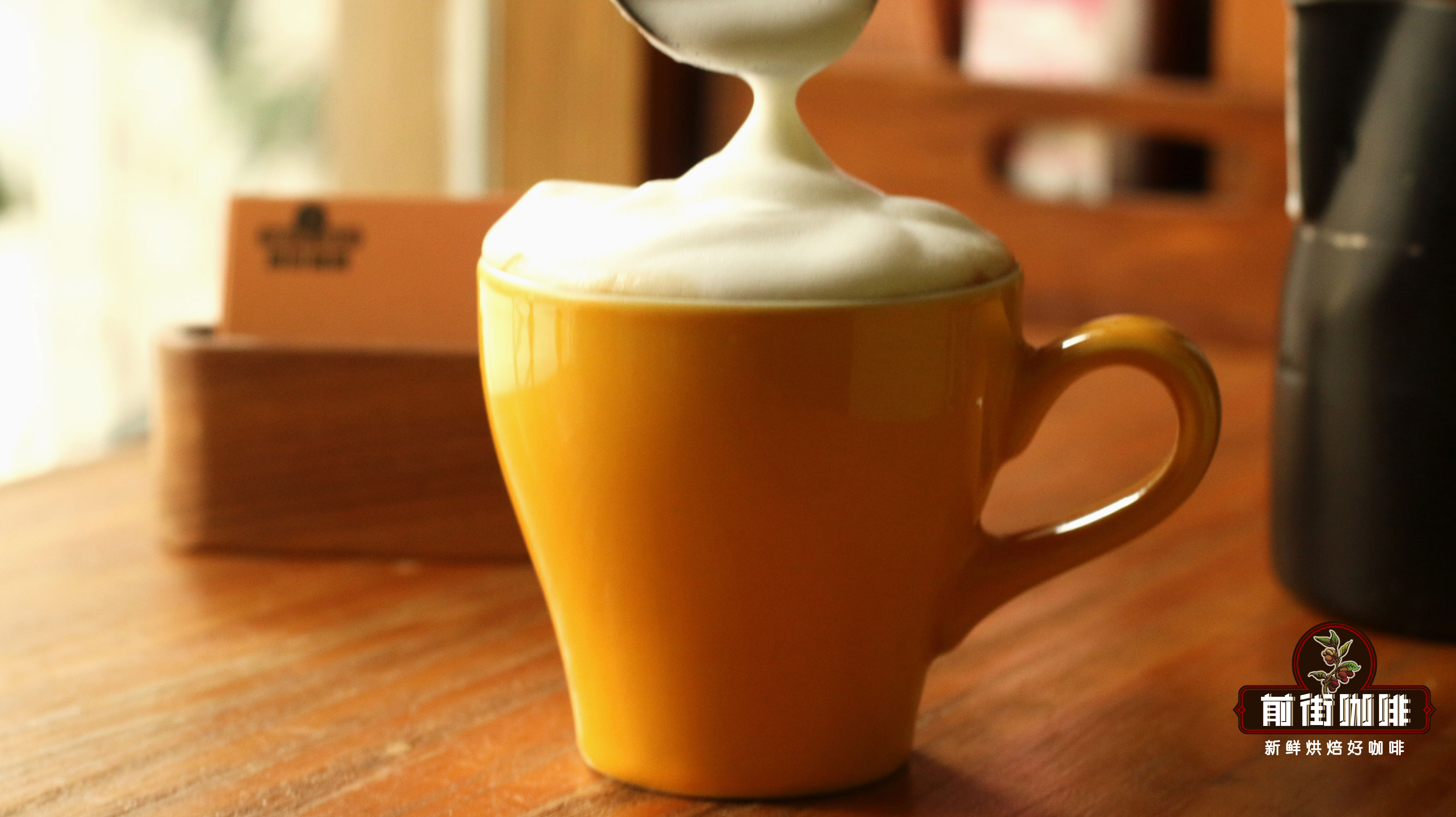
Checking the distribution result
If during extraction you find that the状态 of the coffee liquid flowing out quickly becomes unstable, jumps greatly, and the color also quickly becomes lighter, then you can judge: there is a problem inside the puck (cracks have appeared), or uneven tamping has caused the part with less coffee powder to be over-extracted (and this is very likely also caused by uneven distribution leading to uneven tamping), or the distribution was simply uneven, so that the edge areas were not covered by coffee powder and water flowed directly through there.
After extraction is completed, remove the handle and observe the shape of the puck. If there is no coffee powder at the edges, or the coffee powder has been washed up, or the puck has obvious gaps, then it is an extraction failure caused by uneven distribution.
Four: Tamping
Tamping uses a certain amount of pressure to make the loose coffee powder compact so that the pressurized hot water can penetrate evenly.
The direction is vertically downward. If you tamp at an angle, the high-temperature, high-pressure hot water coming out of the group head will seek the layer with the least resistance to penetrate, causing uneven extraction and also making the so-called channeling effect likely to occur.
The amount of force used in tamping and what kind of tamper is used do not matter much, as long as the powder is tamped compactly. Therefore, keeping the tamping force consistent each time is more important.
How do you steam milk foam?
How should the indispensable milk foam in a latte be steamed to make it thick and velvety? Front Street Coffee recommends using whole milk with a fat content of 3.2% to 3.8%.
In this experiment, Front Street Coffee used Vitasoy fresh milk.
The process of steaming milk:
1. Place the steam wand at the center point of the milk pitcher, tilted 45 degrees toward the upper right near the edge of the pitcher, at a depth of about 1 centimeter. (This depth is fairly common, but for espresso machines with different steam strengths, this is only a suggestion.)
2. Turn on the steam from the steam wand, and slowly move the milk pitcher downward so that the steam wand's steam holes contact the milk surface to create aeration, rolling in an up-and-down flipping manner, slowly letting the volume foam and expand.
3. When aeration and foaming have expanded to the desired thickness, pull the steam wand diagonally to the right of the center point of the milk pitcher near the edge of the pitcher, so that the milk foam rolls in a vortex manner.
4. Control the angle and depth of the pitcher, fold in the coarser milk foam, and stop once it reaches the desired temperature.
The principle of steaming milk
The first stage is aeration and air intake. Aeration is when the steam wand's steam holes contact the milk surface and steam enters the milk to make milk foam.
The second stage is texturing. Texturing is using a vortex to fold air into the foamed milk, causing larger milk foam bubbles to burst and break down into fine bubbles, while also creating bonding between milk molecules, making the milk foam texture denser and finer.
Points to note:
Aeration and air intake
Turn on the steam to begin air intake and observe the milk surface. If the milk is rotating but you do not hear a hissing sound, it means the air has not been incorporated. At this time, you need to lower the milk pitcher a little so that the nozzle is slightly exposed to allow air intake. While hearing the hissing sound of air intake, stop lowering the pitcher and keep it in place.
At this time, observe the state of the milk's movement. Normally it should be taking in air while the liquid rotates, forming a vortex.
The action of lowering the milk pitcher for air intake must be subtle and gradual, not too aggressive. When the sound indicates that it is roughly in the air-intake state, stabilize it and stop lowering.
The angle of the steam wand when steaming milk foam
Many people are used to placing the steam wand at the 2 to 3 o'clock or 9 to 10 o'clock direction of the milk pitcher (with the pitcher spout as the 12 o'clock direction).
To find the angle of the steam wand, in addition to placing the steam wand in the correct position, the angle between the steam wand and the liquid surface is also very important.
If the steam wand is too vertical, most of the steam sprays downward, making it difficult for the milk to form a small vortex; if the steam wand is too flat, most of the steam sprays in a parallel direction, making the small vortex too large and forming turbulence, which makes it difficult to control or causes the milk to spill.
Practice methods for beginners learning latte art
After we have extracted a cup of espresso and steamed the milk foam, first swirl and shake the espresso in the cup so that the crema adheres to the cup wall, then tilt the cup to about a 40-degree angle.
When pouring the milk, control the stream so it is not too large, letting the milk pierce directly through the coffee liquid to the bottom layer, then begin circling to mix the milk and coffee liquid.
What needs attention here is that when pouring the milk, the stream should be thin and fixed at the center of the coffee liquid.

Then begin circling to mix the milk and coffee liquid until about six-tenths full, and start pouring latte art.
Pushing stacked hearts latte art
For pushing stacked hearts, pour milk at the 1/3 point of the cup, push out a semicircular arc, then immediately push another one forward, and when a heart shape is finally formed, raise the milk pitcher higher and pour milk for a short while, letting the initial semicircular arc surround the entire heart, and finally finish with a thin stream.
The above content is compiled by CoffeeHunters, a coffee news website.


