








What Separates a Long Black From Other Espresso Drinks?
Espresso drinks form the backbone of most café menus, and they divide into clear families. The base trio is Espresso, Ristretto and Lungo, with Doppio as a double shot. Black coffees include the Americano and the long black, where hot water is added first and the espresso poured over it, preserving the crema. Milk drinks follow with Latte, Cappuccino, Macchiato, Flat White and Piccolo.
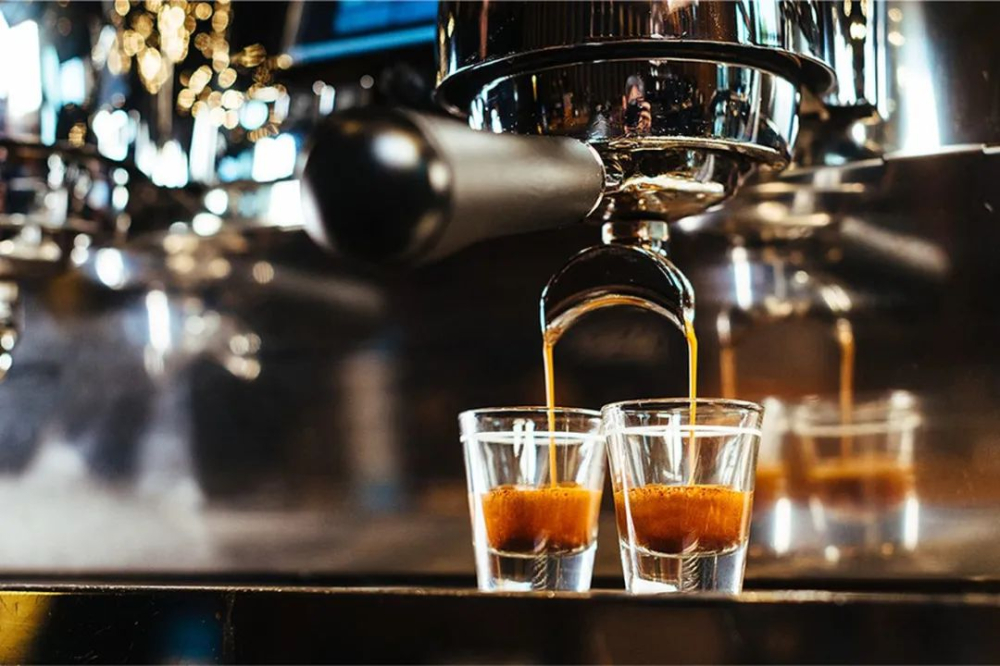
A standard espresso extraction uses a coffee-to-liquid ratio of about 1 to 1.5–2.5, for example 20 grams of grounds yielding 40 grams of liquid in 25 to 30 seconds. Ristretto takes only the first and middle segments, while Lungo runs longer. Knowing piccolo coffee ingredients, typically a ristretto shot with steamed milk in a small glass, helps beginners place each drink on the menu.
Walk into any café, and espresso-based drinks are almost always the mainstay of the menu. Front Street Coffee shops offer classics like Americano, Latte, Cappuccino, and Flat White, and many stores also blend in various ingredients to create creative beverages. This article systematically sorts out the most commonly seen espresso drinks in cafés: first, get to know the trio of espresso "brothers"—Espresso, Ristretto, and Lungo—along with Doppio; then learn about black coffees like Americano and Long Black; next, take stock of milk coffee members such as Latte, Cappuccino, Macchiato, Flat White, and Piccolo; and finally, introduce Italian specialties like Mocha, Marocchino, Affogato, Con Panna, Caffè Corretto, and Caffè Shakerato. Beginners can use this to quickly build a complete understanding of espresso coffee.
In recent years, China's coffee market has grown rapidly, and when friends get together, they often pick a relaxed café to sit down and chat. Espresso drinks are basically a standard offering in every shop—Front Street Coffee, for example, serves classics like Americano, Latte, Cappuccino, and Flat White, and many stores also add various ingredients to make creative beverages. Today, Front Street Coffee will walk you through the most frequently seen espresso drink types in cafés, so those new to coffee can use this as an introduction.
For a rich, aromatic espresso, Front Street Coffee recommends using Front Street Coffee's specialty blend beans. This coffee uses a dual-origin recipe of Colombia and Brazil; the blend presents a sweet, fragrant flavor with a medium-dark roast level. When pulled as espresso, it has a soft, slight acidity and clean sweetness on entry, with a nutty sweetness in the finish—overall it's mild and not harsh, with medium-thick crema.
The Espresso "Three Brothers"
Espresso is the foundation of café espresso drinks and can be called the soul player. However, if you look closely into the espresso system, you'll find it's not an "only child"—it has two brothers: Ristretto and Lungo.
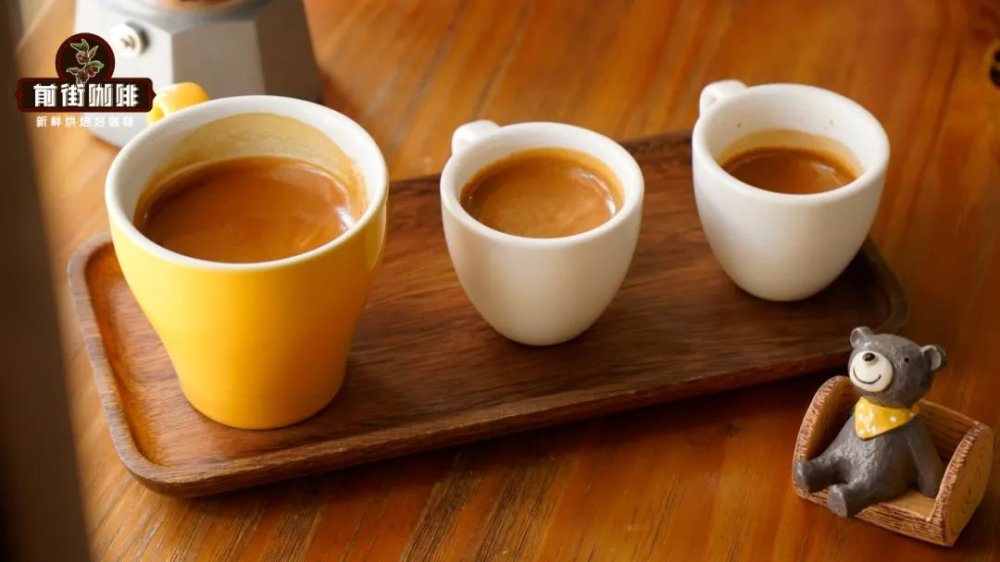
From left to right: Lungo, Espresso, Ristretto
A standard Espresso extraction typically uses a coffee-to-liquid ratio of about 1:1.5–2.5; for example, 20 grams of coffee grounds yield 40 grams of coffee liquid in 25–30 seconds. Building on the standard extraction, Ristretto only takes the first and middle segments; with 20 grams of grounds at a ratio of 1:1–1.5, it yields only about 28 grams of liquid in roughly 20 seconds. Lungo is the opposite—it extends the time to increase the extraction amount, usually expanding the ratio to 1:4–5, meaning 20 grams of grounds yield about 100 grams of coffee liquid, taking nearly 1 minute.
Compared with regular Espresso, Ristretto has a more concentrated flavor but a shorter finish, and it is often used as the base for a Flat White; the "extra-long" extraction Lungo, because it is diluted by a large amount of hot water, tastes thin and bitter, and can be understood as over-extracted coffee.
Besides the espresso trio, Italy also has a thick, full-bodied espresso: Doppio. If you say "double espresso" when ordering, you get two shots of normal extraction; but if you order a Doppio, the barista uses double the coffee dose to make just one shot. More grounds and less liquid weight naturally make the flavor stronger.
Members of the Black Coffee Family
When it comes to black coffee, the Americano is absolutely known to everyone. It consists only of Espresso and water. This drink, called "the American's coffee," has long topped the espresso menu thanks to its approachable style and suitability for both hot and iced versions.
In Australia, there is also a local specialty coffee called "Long Black," which likewise consists only of espresso and water. The biggest difference between an Americano and a Long Black is the amount of water added: when making a Long Black, the ratio of Espresso to water is usually 1:3; an Americano uses more water, about 1:5–1:8. As a result, a Long Black tastes richer than an Americano, and it can only be made hot.
Members of the Milk Coffee Family
To introduce the milk coffee family, we have to start with the globally popular Latte. "Latte" means milk in Italian; if you want a milk coffee, you need to ask locals for "Caffe latte." Outside Italy, however, Latte is generally assumed to mean latte coffee, with an espresso-to-milk ratio of about 1:5–1:8.
In fact, before lattes became popular, what people called milk coffee was Cappuccino. It is made with a 1:1:1 ratio of coffee, milk, and milk foam, and the top layer of foam is thick enough to bulge above the rim of the cup, so you can enjoy both the rich foam and the intense coffee. Besides that, there is another milk-foam espresso drink: Macchiato. A spoonful of fine hot milk foam is added to espresso; because the amount of milk is very small, the taste is on the strong side, somewhere between espresso and cappuccino.
Top: Cappuccino Bottom: Macchiato
Like the Long Black, after Latte spread to Australia, it adapted to local tastes with thinner foam and less milk, evolving into the Flat White. To reduce waste when dialing in coffee beans, Australian baristas also invented a small latte—Piccolo Latte. The cup for a Piccolo is only 3 ounces, with a single espresso shot mixed with a small amount of steamed milk. Compared with a Latte, both Flat White and Piccolo taste richer and highlight the bean's flavor more, and they can only be made hot.
Left: Flat White Right: Piccolo
As for the "internet-famous" Dirty, it is not a traditional Italian coffee, but a later modified version of iced latte. Freshly extracted espresso is poured directly over iced milk to create a layered effect. Not only does it look great, it also has a rich, fragrant taste—no wonder it's gone viral across the internet.
Members of the Italian Specialty Coffee Family
To help more people accept the bitter, hard-to-swallow espresso, people began adding various local ingredients to coffee, hoping to neutralize its intensity. This is how various Italian specialty coffee drinks were born.
Building on a latte and adding a chocolate-containing flavoring gives the traditional Italian Mocha Cafe. Another Italian drink with a chocolate flavor is Caffè Marocchino. To make it, start with a shot in a 60 ml cup, then dust with a layer of cocoa powder, then pour in milk foam or cream, and finally dust with another layer of cocoa powder. The small cup size and two layers of cocoa powder give the coffee a stronger presence.
There are also many Italian specialties made directly with espresso as the base. Pouring espresso over ice cream gives Affogato—it is both an Italian coffee category and can be considered a dessert. Squeezing steamed fresh milk onto the surface of espresso gives a Con Panna. A small cup of Espresso with a small amount of high-proof liquor added is called Caffè Corretto.
From left to right: Affogato, Con Panna, Caffè Corretto
Coffee liquid is added to a shaker with ice cubes and a small amount of syrup and shaken, then finally strained over ice into a martini glass, and a European-style iced shaken coffee, Caffè Shakerato, is complete. While retaining the aroma of espresso, a hint of sweetness and the dense foam on top make the coffee feel like drinking dark beer in both mouthfeel and appearance.
- END -
The above content is compiled by CoffeeHunters, a coffee news website.


