







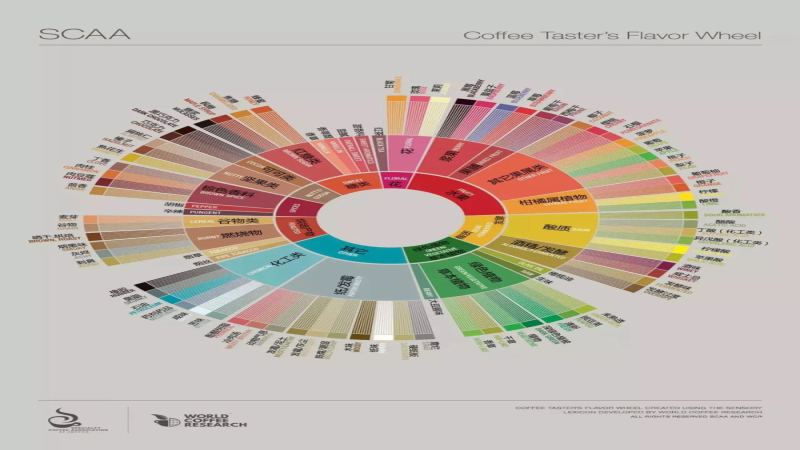
How Does the SCAA Coffee Flavor Wheel Organize Aromas and Defects?
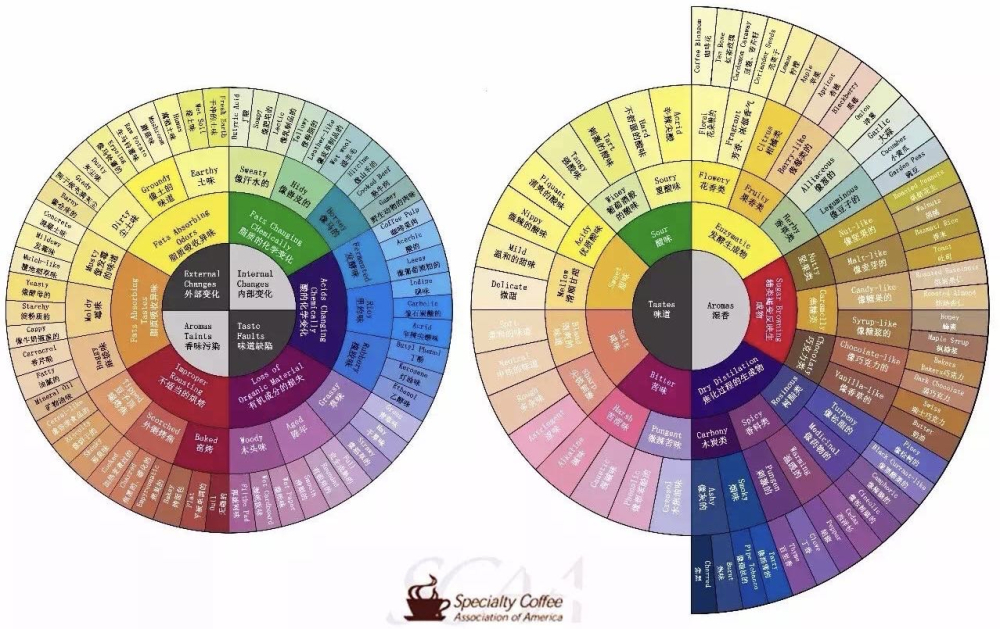
The SCAA coffee flavor wheel splits into two halves. The right side holds normal flavors and traces them to three sources: enzymatic fermentation during green bean processing, which yields floral and fruity notes; sugar browning through caramelization and the Maillard reaction, giving nuts and chocolate; and dry distillation during roasting, producing currant and smoky notes. The left side lists defect flavors from poor processing, storage or roasting.
In SCAA cupping, defects carry fixed deductions. Serious defects subtract 4 points and minor defects subtract 2 points. The roasting process itself and the loss of organic material do not trigger defect deductions, yet they still lower flavor performance and the final score. Reading both halves of the wheel gives a clearer picture of where a coffee's aromas come from and where faults appear.
The SCAA Coffee Flavor Wheel is a core tool for specialty coffee enthusiasts to identify flavors, but many people are still unfamiliar with it. This article systematically breaks down the left and right structure of the flavor wheel: the right side, the normal flavor spectrum, reveals the three major aroma sources of fermentation, sugar browning, and dry distillation, while the left side, the negative flavor spectrum, corresponds to defect flavors produced by improper green bean processing, storage, and roasting. It also explains in detail the scoring deductions for different defects in SCAA cupping—serious defects deduct 4 points, minor defects deduct 2 points—and notes that although roasting and loss of organic material do not incur defect deductions, they lower flavor performance. The article includes the latest high-resolution Chinese and English flavor wheel images and retains Front Street Coffee's communication channels, making it suitable for readers who want to understand coffee sensory evaluation in depth.
For professional coffee knowledge exchange and more coffee bean information, please follow Coffee Workshop (WeChat public account: cafe_style)
For more specialty coffee beans, please add the private WeChat of Front Street Coffee (FrontStreet Coffee), WeChat ID: qjcoffeex
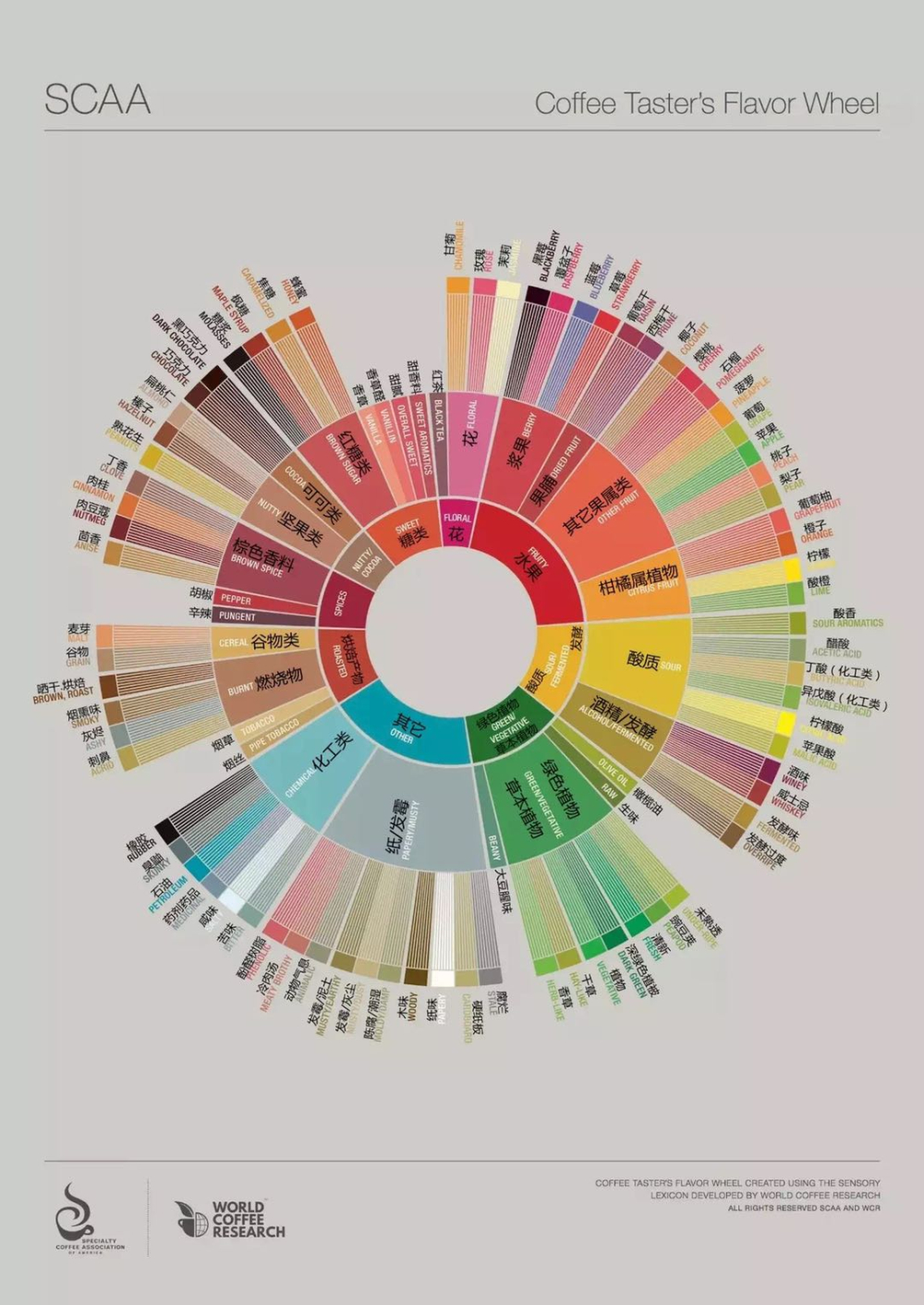
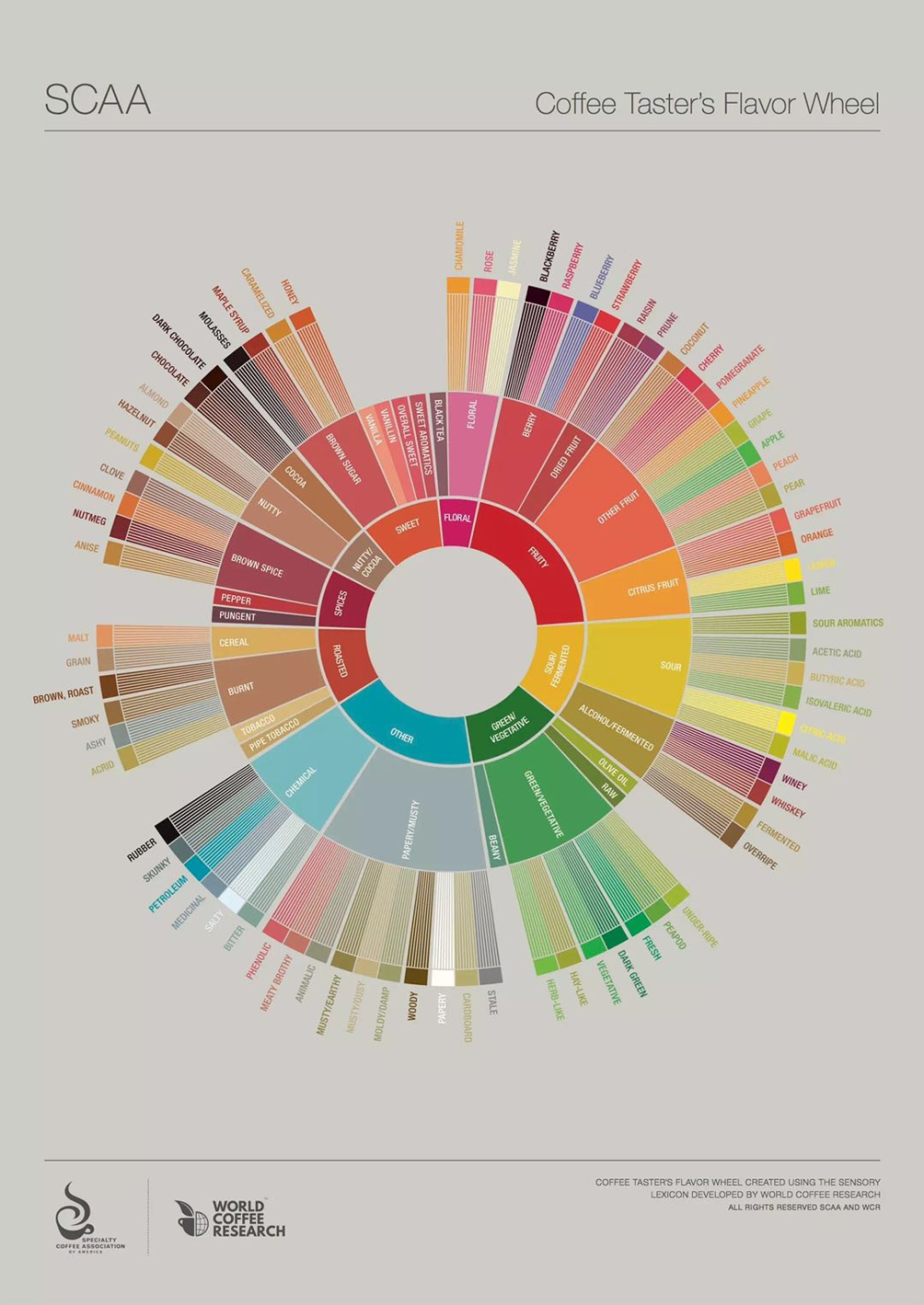
Latest Chinese and English Versions of the Coffee Flavor Wheel
Friends who like specialty coffee should be very familiar with this SCAA flavor wheel, but many people say they do not quite understand it. Today we will briefly explain the structure of the flavor wheel and the meaning it conveys. The flavor wheel can be divided into two major areas: the negative flavor spectrum on the left and the normal flavor spectrum on the right.
First, look at the right half of the right-side flavor spectrum
This area mainly explains the aroma categories of coffee flavors and how they are formed.
Enzymatic fermentation: refers to flavors formed by fermentation during the green bean processing stage (such as washed, natural, and honey processing), such as floral and fruity notes.
Sugar browning reaction: this is the flavor brought by caramelization and the Maillard reaction during coffee roasting, such as nuts and chocolate.
Dry distillation reaction: this is the flavor generated by dry distillation during the coffee roasting process, such as currant and smoky notes.
Some people have suggested that "from top to bottom, the flavor wheel also represents the flavors produced by different coffee roast levels," but in fact dry distillation reactions are present from the very beginning of roasting, so this statement is not accurate enough.
Next, look at the left half of the right-side flavor spectrum
This part is relatively easy to understand: it is the sensory classification of basic tastes such as sour, sweet, bitter, and salty. It is said that umami will also be added to the flavor wheel in the future.
Now let us look at the left-side flavor spectrum, starting with the right half
This part describes the defect flavors left by improper handling during the coffee harvesting and drying stage, as well as the flavors produced by aging during storage.
If the coffee is not processed in time after harvesting, or if the humidity and temperature during drying are unreasonable, fermentation will produce Rio flavor, fermented flavor, and so on. If the temperature during drying is too high and the coffee beans are heated too quickly, the oils will break down, producing leather-like flavors.
After green bean processing is completed and the beans enter the storage stage, some reactions still occur inside the beans, and organic substances gradually change and are lost. New beans will have a grassy flavor. After several years of storage, as organic matter is lost, this turns into straw and woody notes. At this point, the coffee tastes quite bland!
Finally, the left half
This area corresponds to changes caused by the external environment (cleanliness, humidity, etc.) during green bean processing and storage, as well as the flavors produced by whether the roasting temperature is reasonable.
During green bean processing, if the drying environment is not clean, such as drying directly on the ground, the coffee will absorb surrounding odors and develop earthy flavors; or if the humidity in the place is too high and the coffee beans dry too slowly, they may mold and develop musty flavors.
During roasting, if the temperature rises too quickly and the coffee beans are scorched, they will carry smoky and carbon notes; if the temperature rises too slowly, it will wear away the coffee's flavor and make it seem flat and uninteresting.
The defect flavors corresponding to the two items on the right, fats changing chemically and acids changing chemically, are serious defects. If such flavors are detected in SCAA cupping, 4 points will be deducted; the two items on the left, fats absorbing odors and fats absorbing tastes, are minor defects, and if detected in cupping, 2 points will be deducted; while the two items below, improper roasting and loss of organic material, are not green bean defect flavors, so no defect points are deducted, but they will lower the score in terms of flavor performance.
The above content is compiled by CoffeeHunters, a coffee news website.


