







World's Most Expensive Coffee Machine vs Cold Brew and Ice Drip Methods
Cold brew and ice drip coffee both extract with cold water, which limits how much oil and heavy body reaches the cup. Ice drip, also called Dutch coffee, runs chilled water slowly through a bed of grounds over hours, giving a crisp, layered drink with higher caffeine than hot brewing. Japanese iced pour-over brews hot and drops the coffee straight onto ice, and it is far quicker.
Dutch colonists in Indonesia are credited with developing the drip method to make strongly bitter Robusta drinkable in a tropical climate, which is the popular account of ice drip's spread. The slow, cold extraction captures mainly the sweet and sour compounds, so medium-light roasted beans hold up well. Matching grind, ratio and ice quantity decides how the finished glass tastes, whichever route you pick.
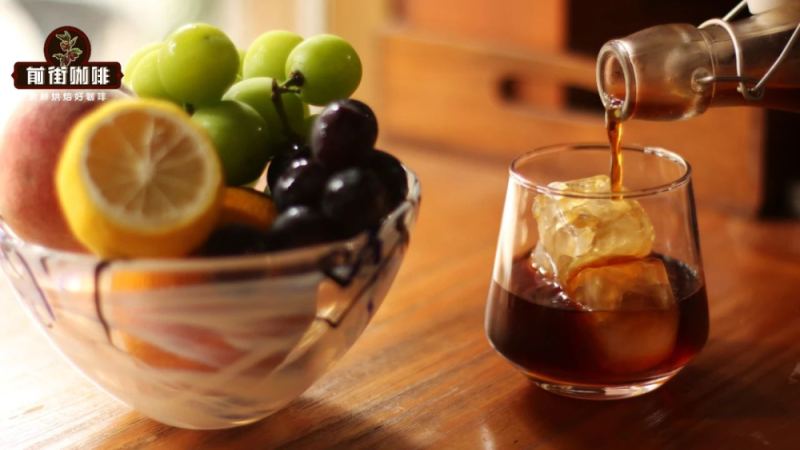
On a scorching summer day, a refreshing glass of iced coffee always brings a unique kind of satisfaction. As representatives of low-temperature extraction, ice drip coffee and cold brew coffee are highly favored for their crisp mouthfeel and full-bodied flavor, while Japanese-style iced pour-over made by adding ice to hot coffee is known for its speed and simplicity. Starting from the practices at Front Street Coffee, this article systematically reviews the historical origins, production process, and equipment choices of ice drip coffee, compares the extraction logic and parameter adjustments of adding ice to hot coffee, and shares the flavor performance of medium-light roasted beans in iced coffee, helping coffee lovers find the cup that suits them best in midsummer.
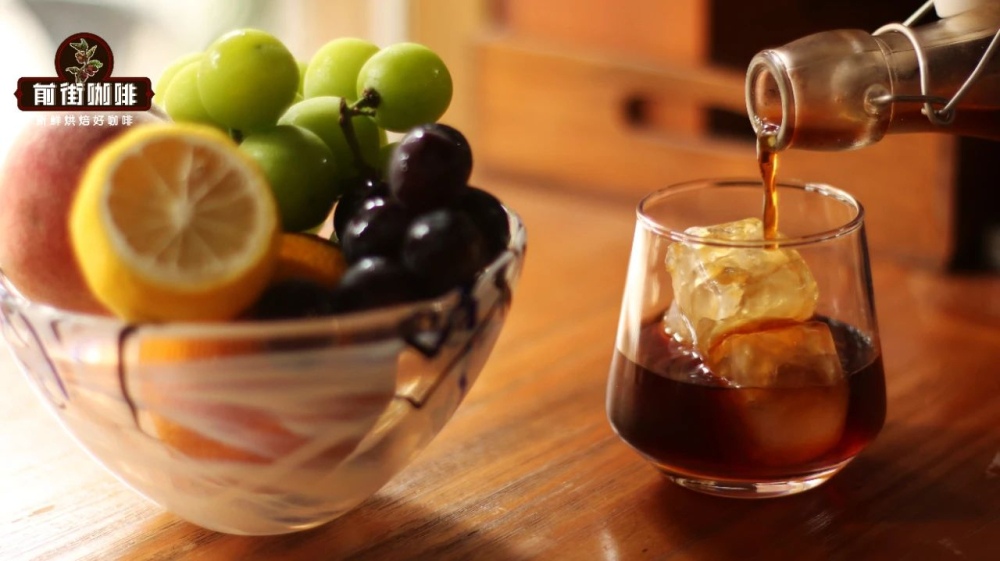
In the height of summer, for those passionate about coffee, being able to drink a glass of ice-cold coffee that chills to the core is truly a great pleasure. If you pursue low calories, care about the lingering aftertaste in your mouth, and enjoy trying new things, then in summer you might want to try two quite representative drinks in the iced coffee world—"Ice Drip Coffee" and "Cold Brew Coffee." Unlike brewing with hot water, ice drip coffee presents a distinctive layering of flavors, with a crisp entry and full aroma; a cup in the scorching heat is indeed deeply satisfying. Now let's follow Front Street Coffee into the world of ice drip coffee.
Ice drip coffee, also known as Dutch coffee. It is said that during the period of Dutch colonial rule in Indonesia, the local area widely cultivated the intensely flavored Robusta variety. In order to make these strongly bitter beans palatable even in a tropical climate, people designed a device that extracts coffee using slowly dripping cold water.
Completely different from hot water extraction, oils and rich, full-bodied substances are difficult to release under cold ice water, so ice water extraction mainly obtains the sweet and sour components in coffee. At the same time, because the extraction time is greatly extended, the finished coffee actually has a higher caffeine content than coffee brewed with hot water. This is also why ice drip coffee is widely popular in the Netherlands—it is both refreshing and thirst-quenching, and can quickly wake you up.
Although ice drip coffee originated in the Netherlands, an intriguing phenomenon is that this kind of coffee is almost nowhere to be seen in the Netherlands itself; instead, it has sparked a craze in Asia. In Japan, ice drip coffee has been passed down for hundreds of years, so it is also given the names "Kyoto coffee" or "Japanese-style slow-drip." In South Korea, almost every cafe serves ice drip coffee, and many well-known ice drip equipment brands also come from Japan and South Korea, such as Tiamo and Hario.
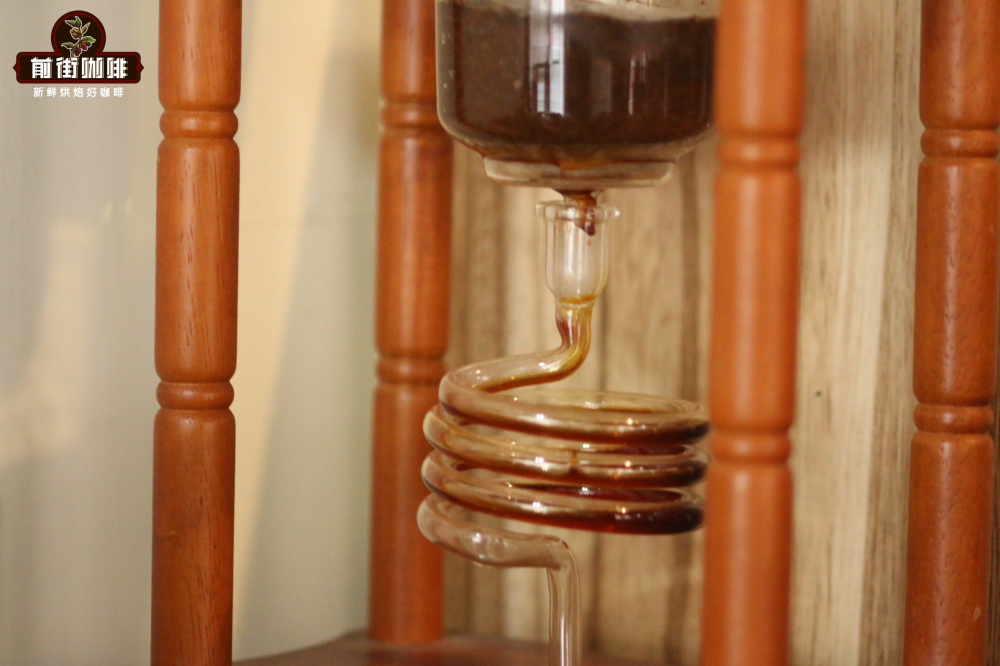
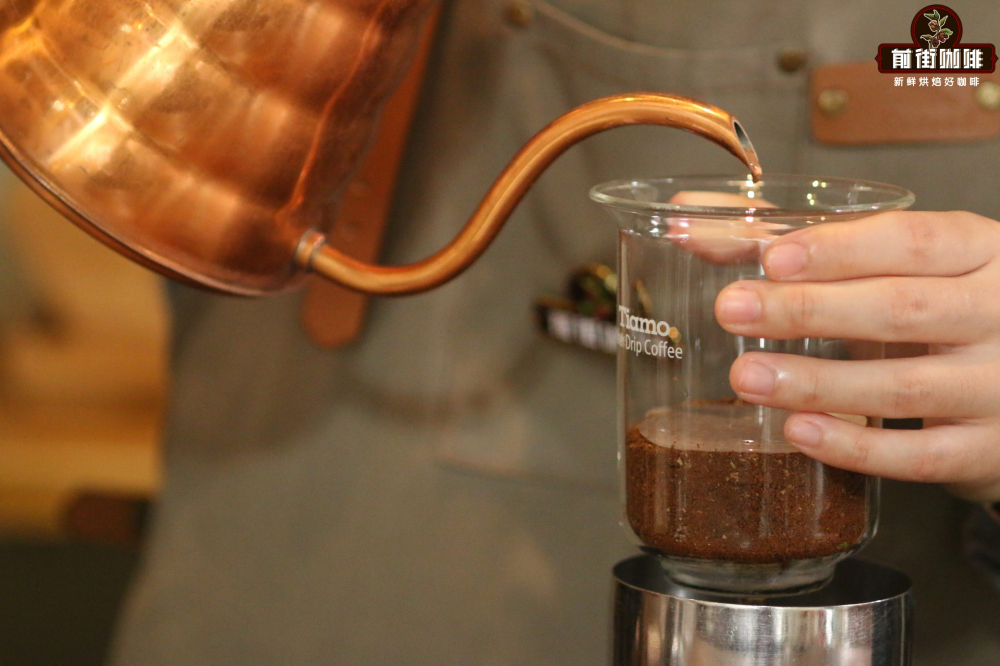
Front Street Coffee uses a Tiamo ice drip pot. To make ice drip coffee, usually take 60g of coffee grounds with the coarseness of fine granulated sugar (75% passing through a No. 20 standard Chinese sieve), extract 600g of coffee liquid (coffee-to-water ratio 1:10), and prepare the ice-water mixture at 1:1.
Place a round filter paper at the bottom of the powder cup, wet it with water so it adheres to the cup wall. Then pour the 60g of ground coffee into the powder cup and gently shake to level the surface. Next, cover the powder layer with another sheet of filter paper. The tension of the filter paper allows water droplets to spread evenly over the surface of the powder layer and participate in extraction; if no filter paper is placed, long-term dripping will punch a depression into the coffee bed.
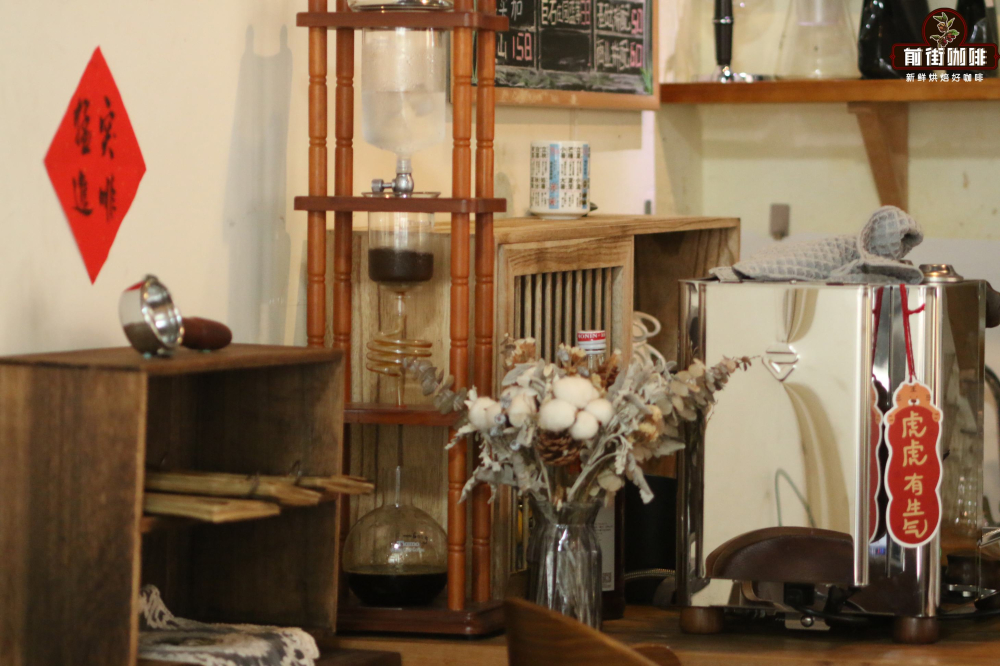
After laying the filter paper, wet the entire powder layer with ice water. This step is similar to the blooming stage in pour-over and helps improve extraction efficiency and consistency of the final product. Fill the dripping bottle with the 1:1 ice-water mixture, and adjust the speed at which the water droplets fall. Front Street recommends controlling it at 6 drops every 10 seconds. After production is complete, pour it into a sealed, clean, oil-free, and water-free container, and place it in the refrigerator for oxidation so that the flavor molecules are fully released before drinking.
Although ice drip coffee is delicious, it is often cumbersome to operate because you need to keep checking whether the ice water is still dripping. The ice cubes look clean and seem to have no obvious impurities, but because the ice drip speed is extremely slow, averaging only 6 drops every 10 seconds, completing one extraction usually takes 6 to 8 hours.
Precisely because the valve is opened so slightly, even a tiny bit of impurity can block the water outlet. In addition, the entire ice drip equipment set is expensive, so in order to enjoy low-temperature extracted coffee more conveniently at home, people invented cold brew coffee.
The method of adding ice to hot coffee
However, keep in mind that the less hot water poured in, the shorter the total extraction time will become. The most common situation is compression from the original 2 minutes to 1 minute and 20 seconds, which means the flavor substances in the later stage do not have time to be released, and the whole cup of iced coffee will most likely be under-extracted. In other words, the strength may meet the standard, but the flavor is insufficient. In order to balance the release ratio of aromatic substances, it is necessary to grind finer, which in turn extends the extraction time.
Unlike other parameters, the grind size of coffee grounds has always been difficult to describe precisely in words, and even a slight deviation can easily cause extraction problems. Therefore, Front Street believes that it is enough to simply grind slightly finer than the grind setting normally used for hot brewing.
For example, the grinder used in Front Street stores is the EK43s. If a certain coffee is at setting 10 for hot brewing, then adjust it to 9 to 9.5 for iced brewing; if using a C40 hand grinder, and a certain bean uses 24 clicks for hot brewing, then adjust it finer to 22 clicks for iced brewing.
Medium-light roasted coffee beans: Tanzania · Kilimanjaro Dose: 15g 10x hot water: 150g 5x ice amount: 75g Water temperature: 93°C Grind size: EK43s setting 9 (85% passing through No. 20 sieve) Dripper: Hario V60
Technique: three-pour method
Before pouring, first put ice cubes into the sharing pot (adding ice first or later has little effect on flavor), then add 15g of coffee grounds. Starting from the center and spiraling outward in a small circle, pour 30g of water in a thin stream and let it bloom for 30 seconds; in the second stage, pour 60g of water using the same technique; when the water in the dripper is about to finish dripping, pour the remaining 60g of hot water, with the final extraction time falling between 1 minute 50 seconds and 2 minutes.
Finally, swirl the sharing pot to speed up the melting of the ice and at the same time allow the coffee liquid to be fully mixed and cooled, then it is ready to enjoy. The Kilimanjaro iced pour-over brewed this way has a crisp entry, bright acidity, and flavors of green grapes, berries, and nuts, accompanied by a faint floral aroma.
The advantage of low-temperature extracted coffee is that it does not force out impurities and bitter flavors from the beans, which is also why people prefer to brew with the Cold Brew method. This way of drinking it is not only fresh and slightly sweet, but the sourness and bitterness are also relatively reduced, making the whole thing smoother. The disadvantage is that the contact time between water and coffee grounds is too long, making it the category with the highest caffeine content in the iced coffee series. Friends who are sensitive to caffeine should remember not to overindulge.
As mentioned above by Front Street, low-temperature extraction cannot effectively obtain rich, full-bodied substances, so Front Street Coffee recommends choosing coffee beans with prominent bright acidic and aromatic flavors to make cold brew or ice drip. For example, medium-light roasted beans or specially processed beans are all suitable for iced extraction coffee.
All the pour-over coffees sold daily by Front Street Coffee can be made into iced drinks. Commonly used ones include Front Street Ethiopia Yirgacheffe Goudingding coffee beans (citrus, honey, green tea flavors), Front Street Ethiopia Sidamo Huakui coffee beans (complex berry juice, rose, black tea flavors), Front Street Panama Butterfly Geisha coffee beans (white floral, citrus, honey, green tea flavors), and Front Street Costa Rica Strawberry Candy coffee beans (strawberry hard candy, raisins, fermented aroma). The common characteristic of these beans is rich aroma and prominent sweet-and-sour notes, making them very suitable for making refreshing iced coffee in summer.
The above content is compiled by CoffeeHunters, a coffee news website.


