







Why Do Panama Geisha Coffee Beans Taste So Distinct?
Panama geisha coffee beans are known for citrus notes, floral aromas and intense berry flavors, and Panama's climate and geography are the main reason. The variety needs high altitude and shade trees, and estates elsewhere that plant the same seed often get a different cup. That gap is what keeps Panama Geisha in demand among specialty roasters and competition judges.
After Geisha became famous in Panama, growers in many countries introduced it, including Yunnan in China. The same variety still performs differently under different terroir. Panama sits on the Central American isthmus, bordered by Colombia to the east, Costa Rica to the west, the Pacific to the south and the Caribbean to the north, with an S-shaped spine of mountains that provides the elevation Geisha requires.
Panama coffee occupies a unique position in the global specialty coffee landscape, and when people mention Panama, almost everyone immediately thinks of the Geisha variety's signature citrus notes, floral aromas, and intense berry flavors. After Geisha rose to fame in Panama, producing regions around the world rushed to introduce and cultivate it, and Yunnan, China also joined the ranks of growers. However, the same variety performs very differently under different terroir conditions, and Geisha is especially picky about its growing environment—high altitude and shade trees are both indispensable. Panama's climate and geography happen to match Geisha's growing requirements perfectly, thus producing its captivating floral fragrance, delicate fruit acidity, and richly layered mouthfeel. This article will take an in-depth look at Panama coffee's producing regions, the grading system of La Esmeralda Estate, and Front Street's brewing recommendations for Geisha coffee.
When it comes to the flavor profile of Panama coffee, the first thing people think of is inevitably La Esmeralda Geisha's signature citrus notes, floral aromas, and intense berry character. After Geisha became famous in Panama, estates everywhere began planting this variety, and Yunnan, China also joined the ranks of Geisha growers. Although the variety is the same, flavor expression still varies. Front Street has also shared with everyone before that coffee is essentially an agricultural crop, so its quality is naturally closely tied to its growing environment—and this is especially true for Geisha. This variety is extremely demanding about growing conditions, requiring both high altitude and the shelter of shade trees. Panama's climate and environment happen to satisfy Geisha's growing needs, which is why Panama Geisha can present such outstanding flavors—captivating floral aromas, delicate fruit acidity, and a richly layered taste experience. This is also what Geisha grown at estates in other producing countries struggles to match. Of course, Geisha from other estates is likewise excellent; the flavor direction is simply different.
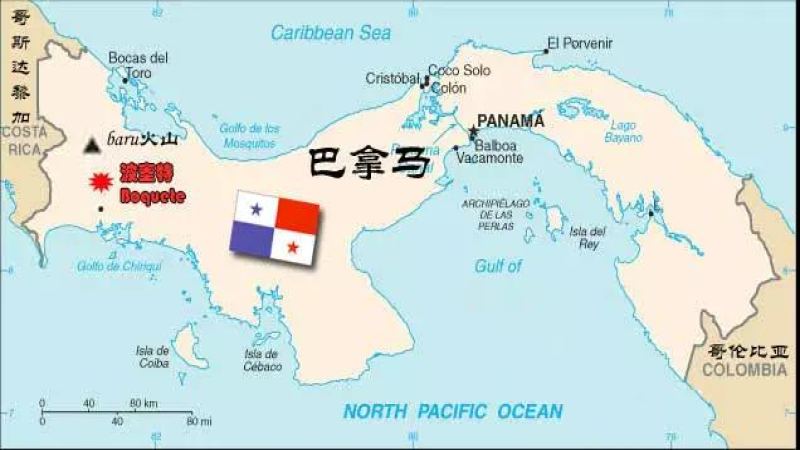
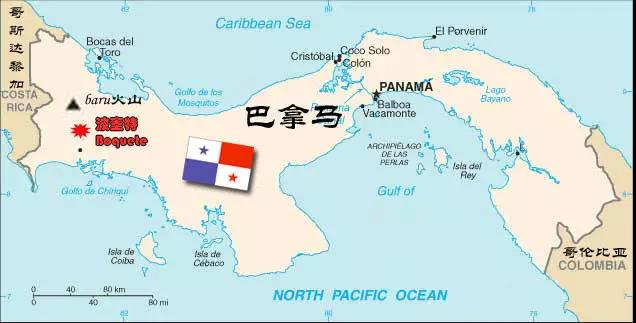
Panama is located in the Central American isthmus of Panama, bordered by Colombia to the east, the Pacific Ocean to the south, Costa Rica to the west, and the Caribbean Sea to the north. The country is S-shaped, connecting North America and South America, with the Panama Canal running north to south through the Atlantic and Pacific Oceans, earning it the reputation of "Bridge of the World."
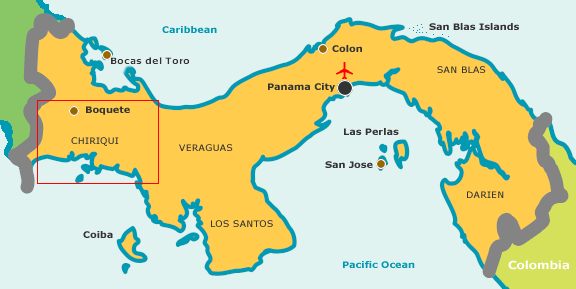
Panama's coffee-growing areas are distributed in the country's west across Boquete, Volcan, Santa Clara, and Piedra de Candela, among which Boquete and Volcan are the most frequently mentioned specialty coffee regions. Both areas are located in Chiriqui Province, fully within the core of the coffee belt, with fertile volcanic soil and ancient forests. Panama's terrain is undulating throughout, with ravines and valleys crisscrossing the land; apart from the northern and southern coastal plains, it is mostly mountainous. Being close to the equator, it has a tropical maritime climate, humid during the day and cool at night, with an average annual temperature of 23–27°C. The year is divided into dry and rainy seasons, with average annual rainfall of 1,500–2,500 mm.
Panama Geisha coffee beans were discovered in 1931 in the Geisha forest of Ethiopia. After discovery, they were sent to the Kenyan Coffee Research Institute, and five years later, in 1936, were introduced to Uganda and Tanzania, then to Costa Rica in 1953, and to Panama in 1970. In fact, Geisha coffee beans initially did not receive much attention, and for quite a long time Geisha coffee trees were used only as windbreaks. It was not until it encountered Panama's La Esmeralda Estate that it truly entered the public eye and became famous overnight.
Boquete Producing Region
Boquete is a small town in Chiriqui Province, located near the border between Panama and Costa Rica, adjacent to the famous Baru Volcano, with beautiful scenery and deep, fertile soil; its climate and soil conditions are both very suitable for producing high-quality coffee.
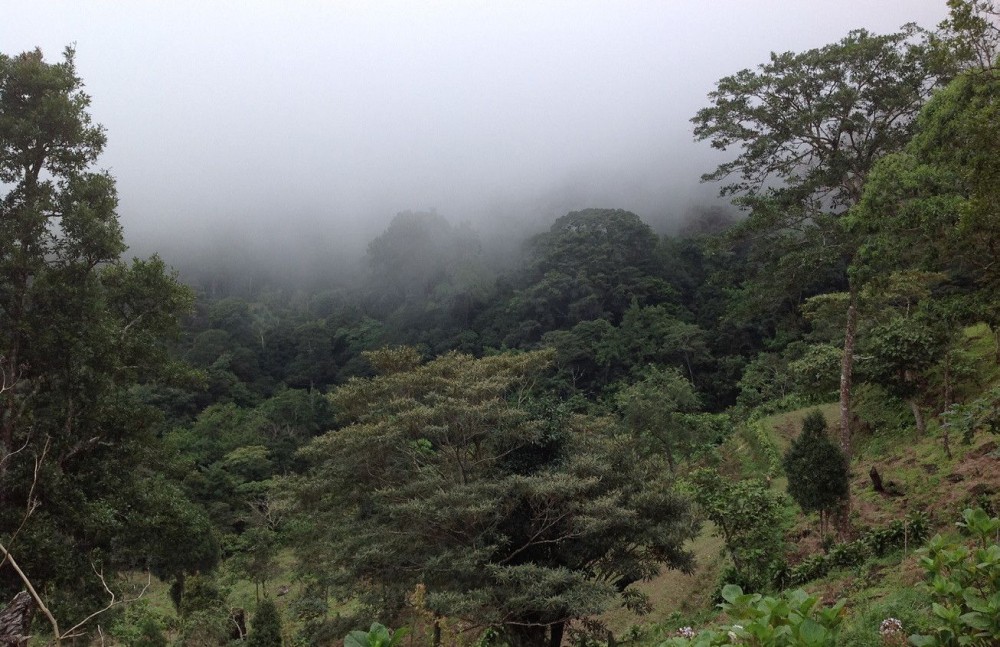
The microclimate of Panama's Boquete highlands is a uniquely important resource for the specialty coffee of the Boquete producing region. Panama's east-to-west geographical layout allows cold air currents to converge above 6,500 feet via the central mountain range, thereby creating multiple microclimates in the Boquete area and making its temperature and rainfall very suitable for plant growth, so coffee trees grow very well here. Coupled with year-round mist and abundant rainfall, this creates excellent local coffee-growing conditions, and many outstanding estates have been established here, such as La Esmeralda Estate, Elida Estate, and Duncan Estate.
Panama La Esmeralda Estate
When speaking of Panama, one must mention La Esmeralda Estate. La Esmeralda Estate is located on a corner of Baru Volcano, so before the area's Panama coffee beans became famous, they were mostly named after Baru Mountain. The surrounding area of Boquete is scenic, with many leisure hotels and vacation estates built there, even along the important Rio Caldera river. In 1964, American banker Rudolph Peterson retired and moved to Panama, buying La Esmeralda Estate in Boquete, initially focusing on dairy.
After Price took over, he divided the estate's growing areas into five brands for sale according to altitude, microclimate, cupping performance, and planted variety. There are three Geisha brands: Esmeralda Special, Private Collection, and Geisha 1500. For the Catuai variety there are two brands: Diamond Mountain grows and Palmyra.
La Esmeralda Red Label Geisha
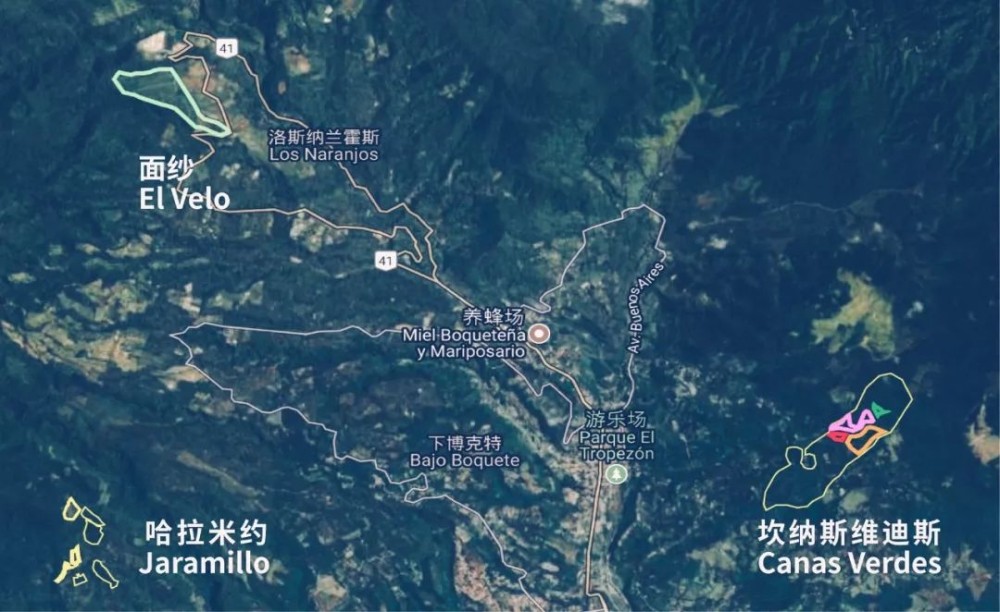
The Geisha from Esmeralda Special is what everyone commonly calls Red Label. It is selected from Geisha beans grown at 1,600–1,800 meters, with a cupping score above 90, from the Jaramillo and Canas Verdes producing areas. Thanks to La Esmeralda Estate's refined processing techniques and strict quality-control standards, the slow sun-dried lots of Red Label Geisha have even richer fruit notes, with excellent sweetness and acidity, and of course the sweet fruity aroma and jasmine florals that are inseparable from Geisha.
La Esmeralda Green Label Geisha
Private Collection, commonly known as Green Label, is not a lot from an independent competition; it is a Geisha variety that does not participate in auctions but still has excellent quality. It is selected from micro-lots blended from different plots such as Jaramillo and Canas Verdes, grown at 1,600–1,800 meters. Although Green Label Geisha coffee beans are not as highly graded as Red Label, they are very clean and lean overall toward jasmine tea flavors, with high acidity, while sun-dried Green Label Geisha has good sweetness, pleasant sweet-and-sour balance, and is reminiscent of passion fruit and flower tea. Green Label lots of Geisha are likewise available as washed or sun-dried.
La Esmeralda Blue Label Geisha
The Geisha 1500 brand is what we commonly know as Blue Label Geisha. Grown at 1,400–1,500 meters, it is a blend of beans from three different plots: Jaramillo, Cañas Verdes, and El Velo. The flavor has slight floral notes and fruit acidity, and the mouthfeel is less full-bodied! Blue Label Geisha is only available as washed.
However, starting from 2021, La Esmeralda Estate adjusted its Geisha coffee grading. Beginning with the 2021 crop year, La Esmeralda Estate has discontinued the Blue Label lot (Geisha 1500).
Front Street believes that washing, as one of the most traditional green bean processing methods, not only makes coffee production quality more stable but also allows Geisha to present a cleaner and fresher flavor profile. After roasting, Front Street sensed Geisha's elegant white florals, rising citrus and lemon acidity, with a slight green tea character, like drinking a cup of gentle Tieguanyin tea.
Elida Estate
Elida is a famous Panama coffee estate with a century-long history and superb coffee quality, located in Panama's renowned specialty coffee producing region—Boquete. Last year, one of Elida's Geisha coffee beans won the championship in the Geisha processing category of the BOP competition, and Front Street Coffee selected Elida Geisha from the same plot and same altitude for tasting. Compared with La Esmeralda Estate's Geisha coffee beans, it was found that because of the different processing methods chosen, Elida Geisha's layering is somewhat more complex than La Esmeralda Geisha.
Elida Estate covers a total area of 65 hectares, more than half of which lies within Baru Volcano National Park. Only 30 hectares of the estate are used to grow coffee trees, while the rest remains pristine forest. Coffee is grown at altitudes from 1,670 to 1,850 meters, making it one of Panama's two highest-altitude coffee estates (the other estate with such altitude is Carmen Estate in the Volcan Valley).
In such a high-altitude environment, low temperatures delay the ripening period of coffee cherries by about a full month compared with normal ripening. The fertile volcanic soil provides ample nutrients for the coffee, and together with the excellent microclimate brought by Baru Volcano and the estate owner's original ASD slow anaerobic sun-dried processing technique, Elida Estate is able to repeatedly achieve excellent results in cupping competitions.
Front Street Panama Elida coffee flavor: fermented aroma, rose, berry, citrus, green tea, cream, nuts.
After Geisha became famous, major producing regions began racing to introduce and cultivate it, but even for the same variety, the coffee quality and flavor produced under different terroir and climates still differ. Front Street Coffee believes that Panama, as the place where Geisha became famous, still offers a guarantee of industry reputation for Geisha coffee produced with mature cultivation techniques and processing methods, so Front Street has launched a Boquete producing region Geisha coffee, using washed processing, hoping to let everyone taste the classic Geisha flavor.
Front Street's hand-brewed Panama washed Boquete Geisha coffee has clear acidity of citrus, lemon, and bergamot, a creamy smooth mouthfeel when swallowed, and a sweet finish of green tea and honey.
For friends who want to taste the flavor of Geisha coffee, Front Street Panama Butterfly Blend Geisha coffee is also a very good choice. Panama Butterfly is a Panama coffee bean with especially high value for money, possessing 70% premium Geisha lineage, composed of three varieties: Geisha, Caturra, and Catuai, planted in the Baru Volcano area of Boquete, grown at an altitude of 1,600 meters in the volcanic region, and processed with meticulous washing at the processing plant. Panama's special local microclimate results in abundant rainfall in this area, along with large temperature differences between day and night; combined with the volcanic rock soil unique to the volcanic region, as well as careful harvesting and fine processing, this coffee performs outstandingly in body, acidity, and floral aroma.
Why is Panama Geisha coffee so popular?
Panama's microclimate is very suitable for growing Geisha coffee, so Panama Geisha coffee's flavor is more outstanding than Geisha from other producing countries. Drinking Panama Geisha coffee does not feel like drinking coffee, but like drinking a cup of fruit tea. The coffee presents rich, elegant floral aromas, full-bodied acidity of citrus, peach, and mixed fruits, a creamy smooth mouthfeel, and a finish with the sweet fragrance of oolong tea; the exquisite flavor expression makes people feel as if they are not drinking coffee, but tasting a cup of fragrant fruit tea.
Although Panama La Esmeralda Estate's Geisha coffee is very famous, Geisha coffee from other estates is also very good. Of course, you do not necessarily have to drink Geisha coffee; everyone likes different flavors, and perhaps coffee from other producing countries or regions suits you better. If you are still unsure, you can consider choosing a flavor you like from Front Street's everyday beans. Front Street's everyday beans are all representative coffees from various producing countries, with very high value for money.
Front Street's parameters for brewing Geisha coffee:
Dripper: Hario V60, water temperature: 91°C, coffee dose: 15 g, coffee-to-water ratio: 1:15, grind size: medium-fine grind (80% passing through a Chinese standard No. 20 sieve)
Front Street uses staged extraction, namely the three-stage pouring method, using 30 g of water for blooming, with a bloom time of 30 s. In the first stage, pour in a small stream in circles to 125 g and stop; when the liquid level drops to just about to expose the coffee bed, continue with the second stage, pouring to 225 g to finish extraction. The total extraction time (counted from the start of pouring) is 2'00.
Front Street Coffee brewing suggestions:
To brew a good cup of coffee, besides the coffee variety, you also need to pay attention to the freshness of the coffee beans. Front Street believes that coffee bean freshness is a very important part of brewing. The coffee beans shipped by Front Street Coffee are all within 5 days of roasting, because Front Street deeply understands that coffee bean freshness has a great impact on flavor. Front Street's roasting philosophy is "freshly roasted good coffee," so that every customer who places an order receives the freshest coffee. Coffee's resting period is about 4–7 days, so when customers receive it, it is exactly at its best flavor.
Of course, some customers need Front Street to help grind the coffee, and that is fine too, but Front Street must remind you: if the coffee beans are ground in advance, there is no need to rest them, because during transportation the pressure produced by carbon dioxide inside the package can also make the coffee flavor rounder, so once you receive the ground coffee you can immediately brew a cup and drink it. However, ground coffee needs to be brewed promptly, because after ground coffee contacts air it oxidizes relatively quickly; in other words, the coffee's flavor will dissipate relatively quickly, and the coffee will not taste as good. Therefore, Front Street recommends buying whole beans and grinding fresh before brewing, so you can better taste the coffee's flavor.
For professional coffee knowledge exchange and more coffee bean information, please follow Coffee Workshop (WeChat public account: cafe_style)
For more specialty coffee beans, please add the private WeChat of Front Street Coffee, WeChat ID: qjcoffeex
The above content is compiled by CoffeeHunters, a coffee news website.


