








How Do Yunnan Coffee Varieties Like Typica and Catimor Differ?
Yunnan coffee, often called Yunnan small bean, is grown mainly as Catimor, a variety that carries Robusta genes and trails Typica in flavor and mouthfeel. Because most plantings are Catimor and processing often relies on anaerobic fermentation, the overall quality has not yet reached the specialty coffee threshold, even though the region's growing conditions suit coffee well.
Typica, Bourbon, and Catimor each bring distinct traits to the cup, and Catimor's Robusta background shows clearly when compared with Typica. Growers in the border area between Yunnan and Myanmar argue that matching the right arabica variety to suitable altitude and a processing method that reveals regional flavor is the logical path forward, an idea behind the Yunnan Department of Agriculture's specialty coffee flavor map.
Yunnan coffee, also known as Yunnan small bean, has full and uniform beans with a mellow and moderate taste. Front Street Coffee's bean list currently features two Yunnan small bean coffees—Catimor and Typica—and their flavors differ significantly. Catimor, due to its Robusta genes, does not perform as well in taste as Typica. Although Yunnan has good growing conditions, Front Street believes the current quality has not yet reached specialty coffee standards: most plantings are Catimor, and the processing tends to favor anaerobic fermentation, which instead masks the coffee's true flavor. Front Street grows coffee in the border region between Yunnan and Myanmar, insisting on expressing regional flavor through the right variety, appropriate altitude, and suitable processing methods. This is also the core philosophy behind the Yunnan Department of Agriculture's initiative to establish a specialty coffee flavor map. This article will provide an in-depth analysis of the varietal characteristics of Typica, Bourbon, and Catimor, and share Front Street's roasting and brewing recommendations for two Yunnan coffees.
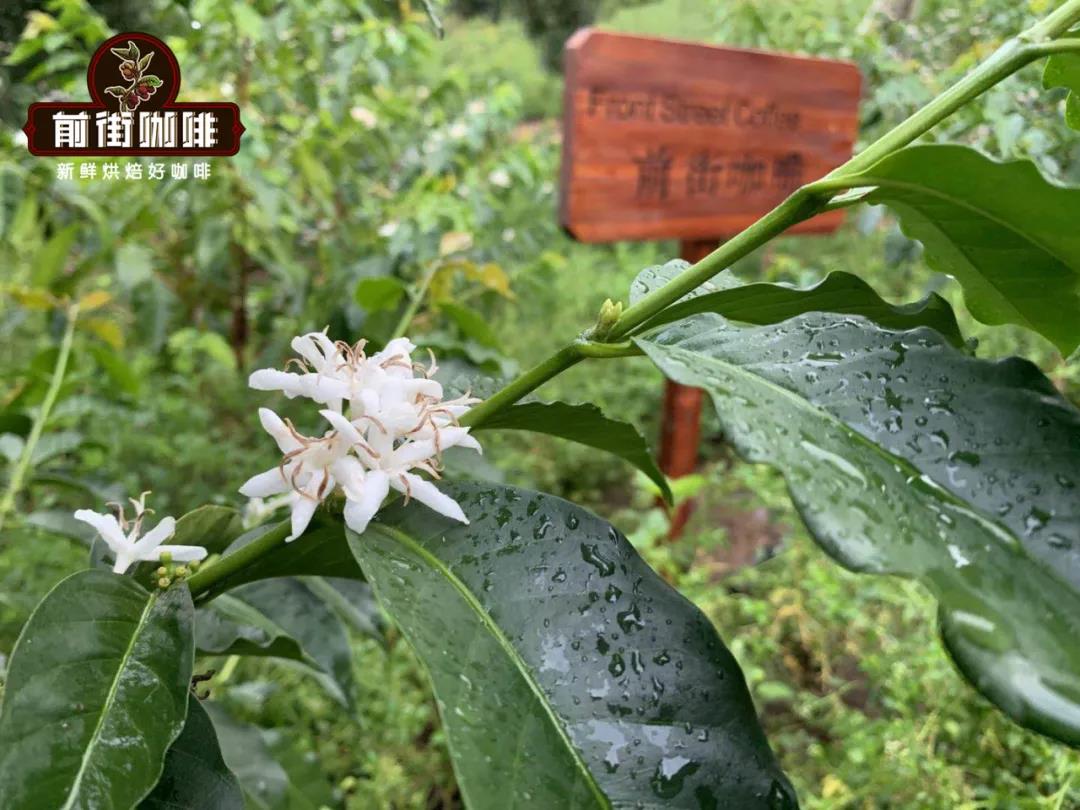
Yunnan coffee is also called Yunnan small bean. The coffee beans are uniform in size, full and round, with a mellow yet gentle taste. Front Street loves Yunnan coffee because it is coffee grown on Chinese soil. Currently, Front Street's bean list has two Yunnan small bean coffees: Catimor and Typica.
Because Catimor carries Robusta genes, its flavor and mouthfeel are inferior to Typica. Yunnan's natural conditions are actually quite suitable for growing coffee, but Front Street feels that the overall quality of Yunnan coffee has not yet reached the threshold of specialty coffee. One reason is the variety: Yunnan mainly grows Catimor, which is inferior to Typica from the starting point of variety. The second reason is that many processing methods use anaerobic fermentation. Although the technique is novel, it masks the coffee's own flavor. How can that be called specialty?
Front Street Coffee has long grown Yunnan coffee beans in an area bordering Yunnan and Myanmar. Front Street's view is: select the right variety, grow it at the appropriate altitude, and after the fruit ripens, figure out a processing method that can showcase its unique flavor. This is the only logical chain for specialty coffee to possess a clear regional flavor, and it is exactly the work the Yunnan Department of Agriculture has recently been advancing—building a Yunnan specialty coffee flavor map. In other words, it is to clarify what regional flavor Yunnan specialty coffee should present.
Why have Yunnan beans been so keen on processing methods in recent years? To put it plainly, it is an attempt to bypass the connection among the three factors above. The variety can no longer be easily changed (99% of Yunnan's large-scale plantings are Catimor, a small-to-medium bean hybrid, and switching to a new variety takes four to five years from planting to flowering and fruiting), and the altitude cannot be changed either. It just so happens that processing methods are popular in the market, so many Yunnan beans emphasize post-processing methods. Changing only the processing method while leaving variety and altitude aside may seem strange, but it is actually understandable.
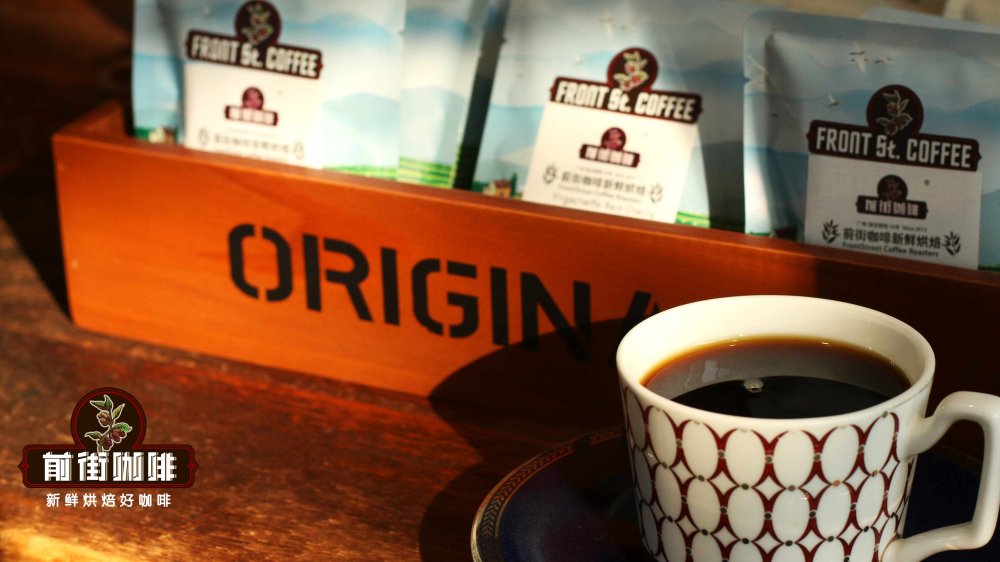
During this period, Front Street also visited the Tropical Crops Genetic Resources Institute (the Ministry of Agriculture's coffee germplasm bank) and a few coffee farmers growing specialty coffee, and clarified the reasons why Yunnan does not grow mainstream specialty coffee varieties such as Typica and Bourbon.
The price of Catimor is too low, and it can only be sold as bulk goods, about 15 to 20 yuan per kilogram. The selling price cannot even cover picking labor and fertilizer, so farmers naturally have no enthusiasm for care and management. Typica and Bourbon have low yields and are susceptible to disease, with high management costs and long exploration cycles, not to mention whether they can develop a unique flavor. On the one hand, coffee farmers do not yet have an awareness of specialty coffee; on the other hand, even if they do, cutting down old trees and spending several more years replanting would inevitably deter them.
Yunnan Coffee Varieties
The variety with the largest planted area in Yunnan is currently Catimor, while a small amount of Typica and Bourbon is still retained in the Baoshan area. Although they all belong broadly to Arabica, these varieties differ fundamentally.
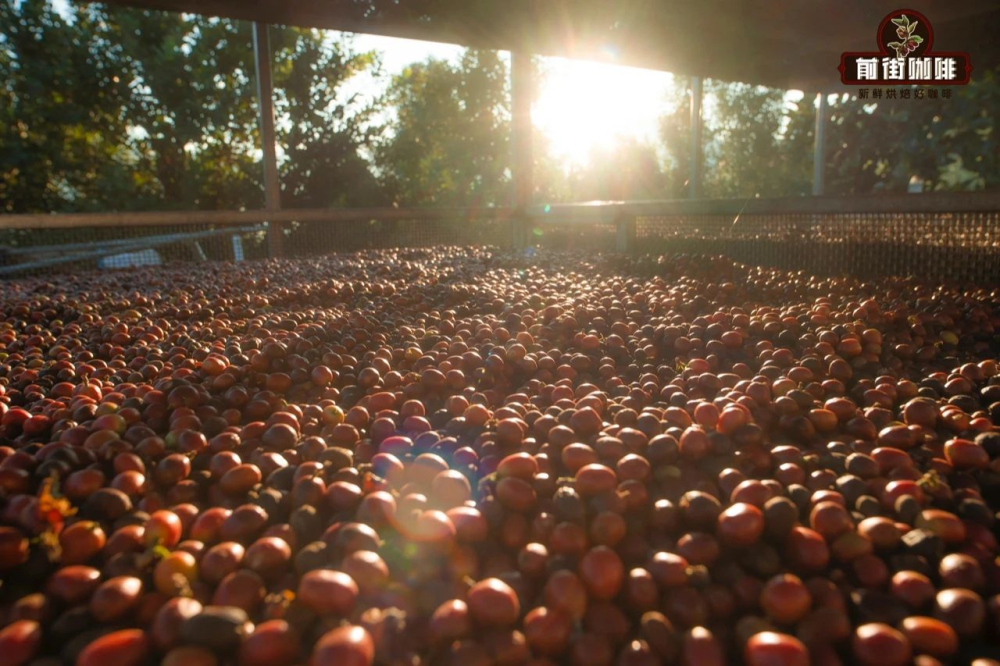
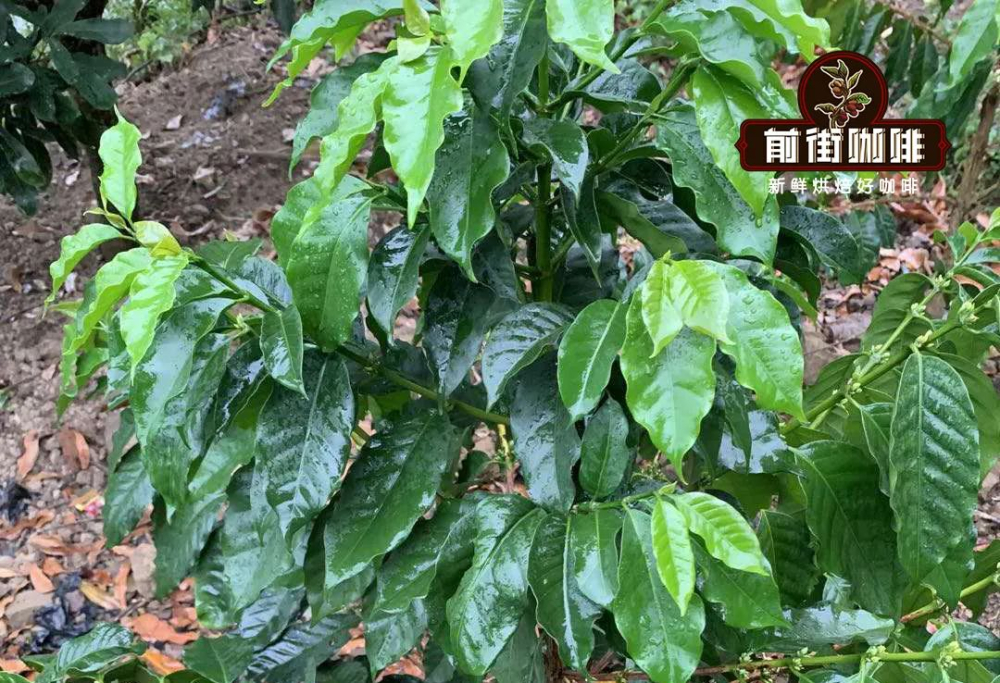
Typica: The most classic high-quality Arabica variety, from which many modern commercial improved varieties originate. Typica has excellent flavor expression and is recognized as a specialty coffee variety, but its yield is very low and it is prone to coffee leaf rust, requiring more manpower for management. Typica originated in Ethiopia and southeastern Sudan and is the most widely cultivated coffee variety in the Western Hemisphere. The plant is relatively robust but does not tolerate strong light, and it yields relatively high in Hawaii. Typica's top leaves are copper-red, so it is also called red-top coffee.
Bourbon: This variety originated from Typica and gradually spread after being planted by the French on Bourbon Island (now Réunion) in 1708. Bourbon also has excellent aroma and rich flavor. Its yield and growth vigor are slightly higher than Typica, and it is suitable for planting at 1,200 to 2,000 meters, but its resistance to pests and diseases is relatively weak, and it is also sensitive to strong wind and heavy rain. Bourbon is the variety second only to Typica among small bean coffees. The main branches initially grow upward at 45 degrees to the trunk and droop as they bear fruit. The lateral branches have relatively dense internodes, bear many fruits, and have higher yields. However, the berries are smaller and ripen more slowly. Bourbon's young top buds and leaves are green, so it is also called green-top coffee.
Catimor: Catimor does not have pure Arabica lineage. It is a hybrid descendant of Timor (belonging to Robusta) and Caturra (a Bourbon variety), so it carries 25% Robusta genes. This determines its flavor defects: the aroma is not rich enough, the bitterness is relatively heavy, and it is prone to astringency and a rather pungent moldy taste.
Front Street mainly grows Typica in Yunnan. Although Arabica has been grown and the variety has been taken seriously, no one can guarantee producing excellent specialty coffee all at once. Front Street believes there is no such easy thing in the world. After multiple rounds of variety selection, waiting for results and then conducting refining processing trials, several more years pass. Someone must walk this difficult path of specialty coffee. If you try, there may still be hope; if you do not try, it will remain a blank forever. Front Street currently offers two Yunnan coffee beans—Front Street 2013 Yunnan Natural Typica and Front Street Yunnan Baoshan Small Bean Coffee. To get an initial sense of the basic flavor of the Yunnan producing region, you can choose Front Street Yunnan Small Bean as an entry-level option; to experience the characteristics of Yunnan specialty coffee, Front Street 2013 Typica Coffee is recommended, where you can taste the purest flavor and mouthfeel.
Front Street 2013 · Yunnan Natural Typica Coffee Beans
Coffee origin: China, Yunnan, Lincang
Coffee variety: Typica
Production altitude: 1,200 meters
Processing method: Natural
Roast level: Medium roast
Front Street 2013 Typica Coffee Roasting Recommendations
The bean moisture content is 10.9%. The roasting plan is to charge at 200°C, then use high heat and a small damper to accelerate dehydration. After the dehydration phase ends, open the medium damper and use medium heat so that the Maillard reaction does not proceed too rapidly, and drop after 3 minutes of development after first crack. Turning point: 1 minute 32 seconds, 92.5°C; yellowing point: 5 minutes 40 seconds, 148.5°C; first crack: 8 minutes 59 seconds, 188.0°C; drop after 3 minutes of development: 12 minutes 00 seconds, 196°C.
Front Street 2013 Typica Coffee Cupping Report
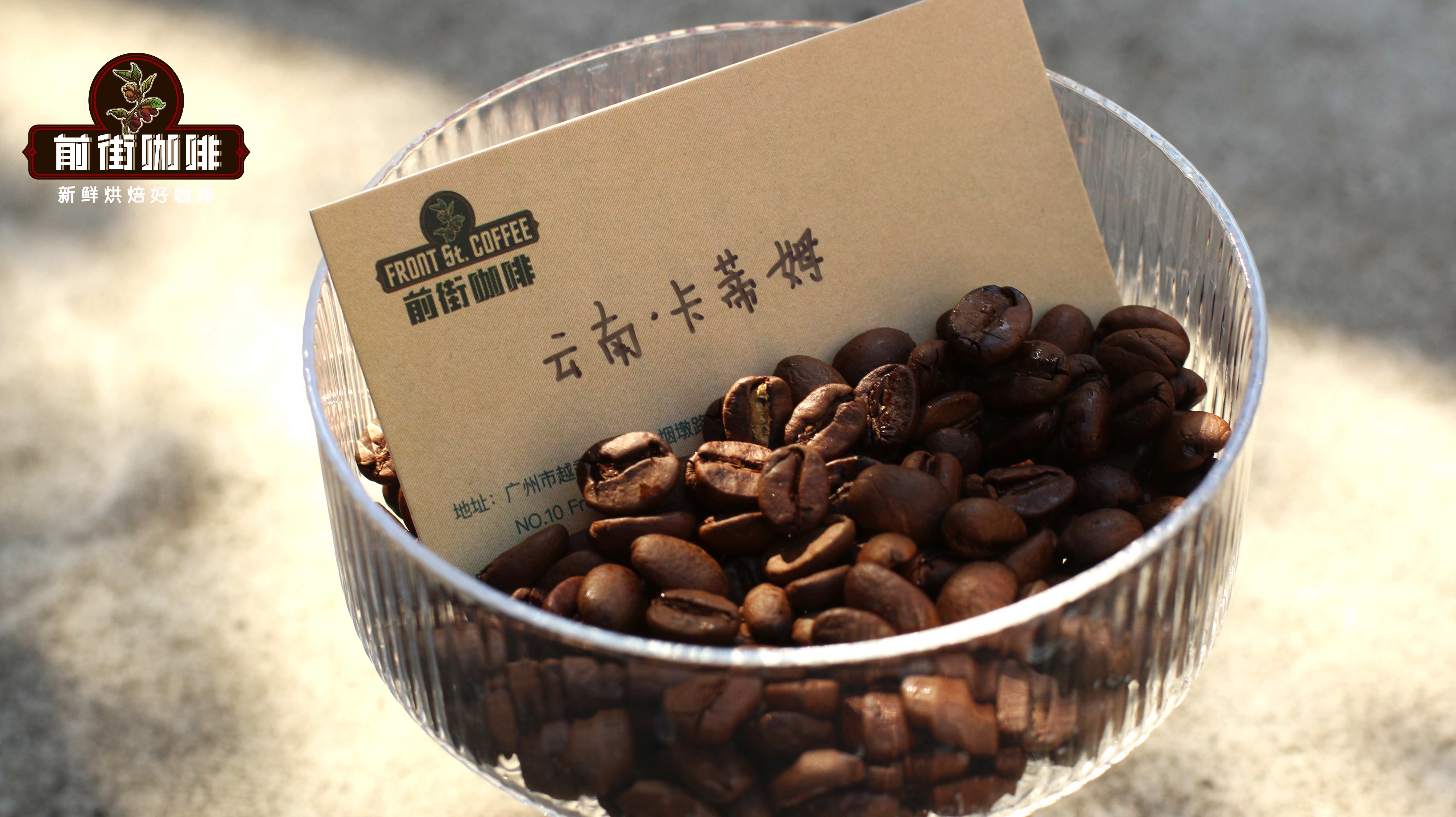
Cupped 12 hours after roasting: rich fruity aroma on entry, melon and herbal plant aromas, smooth on the palate, nuts and milk chocolate in the mid-palate, lively and bright plum acidity in the finish, salivation on both sides of the cheeks, good balance, medium body with a full mouthfeel. As the temperature goes from hot to warm, layered sweet and sour changes can be felt, first sweet then sour, apricot and citrus-toned acidity, with a black tea finish and a hint of brown sugar.
Front Street Yunnan Small Bean Coffee Beans
Producing region: Baoshan, Yunnan
Altitude: 1,200 meters
Processing method: Washed
Variety: Catimor
Front Street Yunnan Small Bean Coffee Roasting Recommendations
Charge at 190°C, heat 120, damper opened to 3; turning point at 1 minute 40 seconds, when the temperature reaches 145°C open the damper to 4 while keeping the heat unchanged; when the temperature reaches 166°C the bean surface turns yellow, the grassy smell completely disappears, and the dehydration phase begins; when the temperature reaches 188°C, adjust the heat to 60°C and the damper to 5; at 8 minutes 37 seconds, ugly wrinkles and dark streaks appear on the bean surface, and the toast smell clearly turns into coffee aroma, which can be defined as the prelude to first crack. At this time, listen carefully for the sound of the first crack point. First crack begins at 9 minutes 00 seconds, the damper remains unchanged, and after 3 minutes of development after first crack, drop at 198°C.
Front Street Yunnan Small Bean Coffee Cupping Report
Smooth on entry, Asian herbal plant aroma, lively and bright acidity, salivation on both sides of the cheeks, mellow acidity, good balanced mouthfeel, rich layers, with black chocolate, honey, and sucrose notes in the finish, presenting a brown sugar flavor after fully cooling.
Front Street Coffee Brewing Recommendations for Two Yunnan Coffee Beans
Front Street recommends using a V60 conical dripper. The V60 has a larger opening, and combined with its unique spiral curved ribs, air is more easily released, thereby improving extraction quality. The mouthfeel may not be thick enough, but the bright Yunnan coffee fruit acidity and distinct aroma brought out by its high concentration are a major feature.
Dripper: V60
Water temperature: 90-92°C
Coffee-to-water ratio: 1:15
Grind size: medium-fine grind, that is, the coarseness of fine granulated sugar (HARIO V60: 80% passing rate on China Standard No. 20 sieve)
Brewing method: staged extraction. Use 30 grams of water for a 30-second bloom, pour in a small stream in circles until 124 grams, then pause for a stage; when the water level is about to expose the coffee bed, continue pouring until 227 grams and stop; when the water level is about to expose the coffee bed again, remove the dripper. (Start timing from the beginning of the bloom.) The extraction time is 2 minutes.
Front Street 2013 Yunnan Natural Typica Brewing Flavor Description: Nuts, cocoa, caramel, berries, black tea, with melon sweetness in the mid-palate and a black tea sensation in the finish.
Front Street Yunnan Baoshan Small Bean Coffee Brewing Flavor Description: It smells very nutty, with herbs, chocolate, caramel, and a slight light fruit acidity in the finish.
The above content is compiled by CoffeeHunters, a coffee news website.


