







How is Colombia's coffee belt organized?
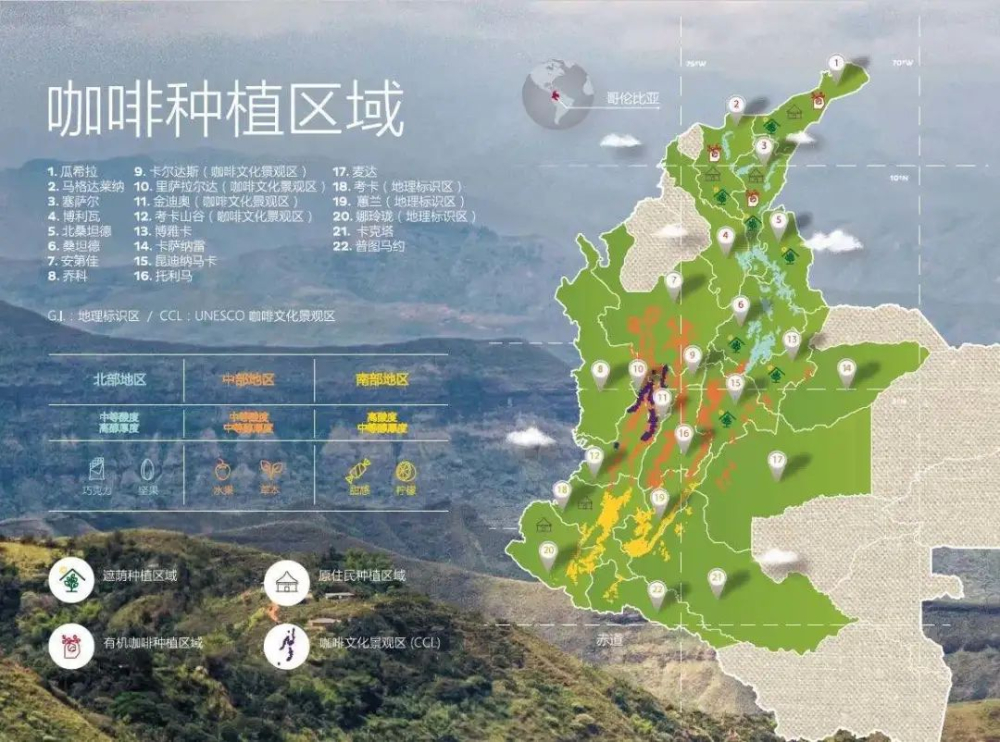
Colombia's coffee belt follows the Andes Mountains from south to north and splits into three main regions: northern, central, and southern. Growing areas sit mostly between 1,000 and 2,000 meters, with average temperatures of roughly 18°C to 22.5°C, and harvest seasons differ noticeably between the north and south ends.
That range of terrain explains why a coffee belt map of Colombia shows such varied cup profiles, from round and full-bodied to bright and fruity. Grading runs by green bean screen size, with Excelso as the export standard. A Huila washed daily lot, roasted medium-dark, shows how origin, processing, and brewing parameters come together.
Colombian coffee, with the diverse terroir of the Andes and exquisite washed processing, has become a force to be reckoned with on the global specialty coffee map. From the classic image of Juan Valdez to the emerging specialty regions in the southern Huila Province, from green bean screen-size grading to the Excelso export standard, this article systematically sorts out the origin characteristics, processing methods, and grading system of Colombian coffee. At the same time, Front Street Coffee uses Huila washed daily beans as an example to share brewing parameters and flavor performance under medium-dark roasting, taking you through the core charm of this major South American coffee country.
For more specialty coffee knowledge, please follow the WeChat public account: Front Street Coffee (FrontStreet Coffee)
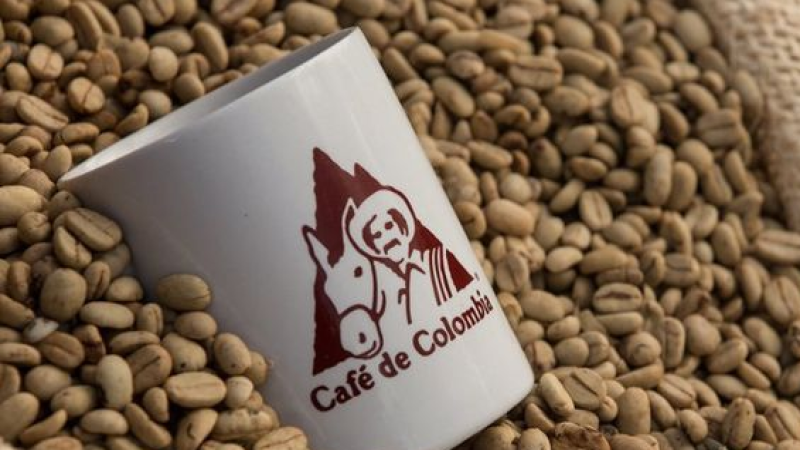
Whenever you look at Colombian coffee promotional materials, you can always see a highly recognizable figure: the plain-featured coffee farmer Juan Valdez, with a white straw hat on his head, an Andean wool vest, a leather bag over his shoulder, canvas shoes on his feet, and his faithful mule by his side. This trademark frequently appears in all kinds of advertisements and film and television images, making the classic brand impression of Colombian coffee deeply rooted in people's hearts.
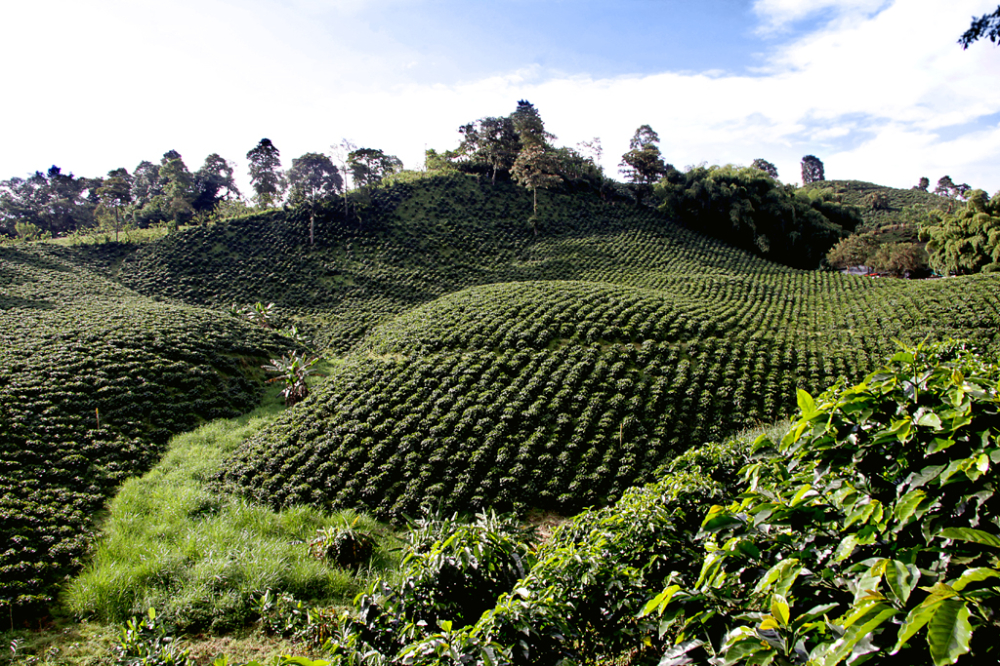
Colombian coffee is grown in the valleys of the Andes Mountains
Colombia's coffee-growing belt is distributed along the Andes Mountains, and climatic conditions vary noticeably with the ups and downs of the terrain. The southern part of the eastern plains and the Pacific coast have a tropical rainforest climate, the mountainous areas at elevations of 1,000 to 2,000 meters have a subtropical climate, and the northwest has a tropical savanna climate. The average temperature in coffee-growing areas generally fluctuates between 18°C and 22.5°C. Precisely because the geographical and climatic conditions are so diverse, whether you prefer a round and full-bodied taste or pursue a bright, fruity style, you can basically find corresponding beans in Colombia.
Colombia's producing regions are divided quite clearly. Influenced by the span of latitude and the direction of the Andes, the country's coffee belt can be divided from south to north into three major regions: northern, central, and southern. The harvest seasons at the north and south ends differ markedly, while the central region is divided into main and secondary harvest periods depending on whether it leans north or south. There are two harvest windows in a year: the main harvest is concentrated from October to January of the following year, and the secondary harvest is from April to July. The changeable climate among the mountains allows coffee cherries to ripen throughout the year on this land, and different varieties enter the picking period one after another at different times, so coffee farmers can be seen busy among the trees in all four seasons.
In the last century, Colombian coffee's most famous calling card was the "MAM" region made up of Medellin, Armenia, and Manizales. With the advancement of the specialty coffee wave, many specialty origins emerged one after another in the south, such as San Augustin, Huila, Popayan, Cauca, Nariño, and Tolima. Relying on ultra-high altitudes and unique processing methods, these regions produce coffee with refined acidity and fruity notes, and they have repeatedly achieved good results in Cup of Excellence competitions. After repeated cupping comparisons, Front Street finally locked in washed beans from the Huila region among many specialty origins, making them the representative face of Colombian coffee and listing them in small-package form so that everyone can taste the classic Colombian flavor.
Huila Province is located in the southern section of Colombia's Central Cordillera and is recognized as a core specialty coffee producing region in Colombia. Here hills roll on continuously and mountains encircle the land, with planting elevations generally above 1,500 meters, offering altitude and temperature conditions suitable for high-quality Arabica growth. In addition to fertile soil and favorable planting terrain, several important rivers in Colombia converge here, bringing abundant water resources and moisture. The terrain of canyon slopes not only blocks the invasion of cold winds, but also allows mountain breezes to bring coolness, avoiding the trouble of high temperatures. Coupled with sufficient rainfall, it can be called a geomantic treasure land for coffee cultivation.
Most Colombian coffee uses traditional washing
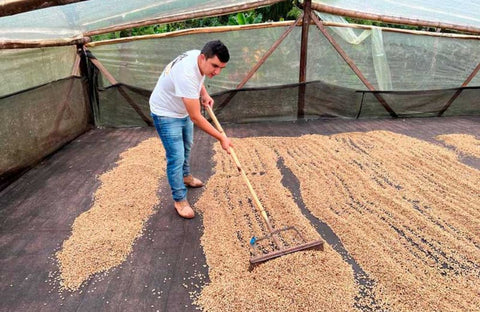
Colombia's producing regions are rich in water resources, providing a natural advantage for washed processing. Family-based farms are usually equipped with dedicated green bean processing equipment (Ecomill or Eco-Pulper). Coffee farmers pour the harvested coffee cherries into the machine, and while removing the skin and pulp, only a very small amount of water is needed to remove most of the mucilage. The parchment beans with a small amount of remaining mucilage are placed in a small tank or container—possibly a tiled tank—and left to ferment overnight, allowing the residual mucilage to fall off naturally. The next day they are rinsed clean with fresh water, and finally spread out in the sun to dry to the target moisture content. Washed processing not only ensures the high quality of the coffee, but also allows Huila beans to present their most authentic flavor characteristics. This is exactly why Front Street prioritizes washed lots when selecting daily beans.
Characteristics of Colombian green bean grades
At present, Colombian coffee green beans use screen size as the grading basis. Although bean size is not a decisive factor in judging coffee quality and flavor, many producing regions believe that plump, uniform, and large beans indicate that the fruit reached a fully ripe state, making it easier to develop excellent aroma types and also facilitating even roasting, thereby forming consistent flavor performance.
Grading is usually done with fixed-size screens, and different specifications correspond to different aperture sizes. For example, when the screen aperture is 17 mesh, beans larger than that size cannot pass through, so the larger the screen number, the larger the beans retained on the screen. The most common export grades on the market are UGQ, EP, and Supremo.
Excelso UGQ 12*60 (1.5%): UGQ stands for Usual Good Quality. Green bean size is above 14 mesh, with 1.5% of green beans allowed to be between 12 mesh and 14 mesh, but they must be above 12 mesh, and more than 50% must be larger than 15 mesh.
Excelso EP 12*60 (10%): EP stands for European Preparation. Green bean size is above 15 mesh, with 10% of green beans allowed to be smaller than 15 mesh, but they must be above 14 mesh.
Excelso Supremo 12*60 (5%): Green bean size is above 17 mesh, with 5% of green beans allowed to be smaller than 17 mesh, but they must be above 14 mesh.
No matter which screen-size level the green beans belong to, as long as they are used for export, they are all classified as Excelso grade. In other words, most burlap sacks of Colombian coffee green beans exported around the world today must be marked with the word Excelso. Excelso is currently the most widely adopted export standard grade by FNC, and it is also the highest grade for Colombian green bean exports.
In addition, Colombia also has a grade called Extra for above 16 mesh, Premium for above 18 mesh, which is larger than Supremo, and Minama for green beans almost all uniformly at 15 mesh, and so on. Colombia also has coffee beans that do not reach the Excelso export grade, locally called "Product of Colombia," generally used to make commercial-grade instant coffee.
In Colombia, every farmer reports a number and enters green bean information so that green bean traceability can be carried out later. The names of Colombian coffee green beans for export are usually formatted as country + producing region + grade + other information. For example, the full green bean name of Front Street Huila daily beans is Colombia Huila Supremo SC17/18 FNC.
Front Street brewing suggestions
Washed Huila daily beans have both soft acidity and moderate body and sweet aftertaste. Front Street hopes to present the classic Colombian nutty character while retaining some acidity, so it chose medium-dark roasting. Before launching any coffee bean, Front Street will conduct at least one cupping evaluation of it. Cupping can help us show the strengths and weaknesses of the coffee more objectively.
Considering that Huila daily beans use medium-dark roasting and the flavor leans toward the rich, full-bodied character of nuts and chocolate, deeper roasting makes the coffee beans more porous and the coffee grounds more absorbent. In order to avoid extracting too many unwanted flavors, Front Street chooses a medium grind size. In terms of water temperature, Front Street appropriately lowers the water temperature to avoid excessive burnt bitterness in medium-dark roasted coffee, and uses a KONO dripper for extraction.
Dripper: KONO dripper
Water temperature: 88°C
Coffee-to-water ratio: 1:15
Coffee grounds: 15g
Grind size: EK43s - setting 10.5 (75% passing rate on No. 20 standard sieve)
Pour the coffee grounds into the dripper, wet the coffee bed with twice the amount of water as the coffee grounds, and let it bloom for 30s to form a dome. Then pour in a small stream in circles from the inside out until 125g, pause, wait until the coffee bed drops to half the height of the dripper, continue pouring the third stage with the same fine stream to 225g, and after all the coffee liquid has filtered through, remove the dripper. The time is about 2 minutes.
This Colombian Huila daily bean has obvious roasted aromas of chocolate, nuts, and caramel on the palate, smooth and sweet, with moderate body and a clean mouthfeel. As the temperature drops, you can perceive a pleasant, soft acidity.
The above content is compiled by CoffeeHunters, a coffee news website.


