







Which Type of Sugar for Coffee Pairs With Your Cup?
There is no single correct sugar for coffee. White granulated sugar dissolves fast and adds plain sweetness that suppresses bitterness. Yellow sugar carries a light molasses note that suits darker roasts, and caramel brings its own cooked-sugar flavor and thicker mouthfeel, which changes how the cup reads.
Sugar does more than mask bitterness: it also builds body and smoothness on the palate. The types of sugar for coffee are limited in practice, since only a few commonly appear in cafes. Matching is a matter of need, because the same sugar behaves differently depending on the coffee it is added to.
Many people are used to adding sugar to their coffee to neutralize the bitterness, but sugar does far more than that—it can also enhance the smoothness and body of the coffee. Faced with the dazzling array of sugars on the market, coffee lovers are often puzzled: which sugar pairs best with coffee? Front Street Coffee believes that there is no absolute "best" sugar, as different sugars bring entirely different flavor effects to coffee due to their own characteristics. This article sorts out several of the most common sugars found in coffee shops—white granulated sugar, yellow sugar, and caramel—introducing their origins, characteristics, and the types of coffee they suit, to help you make a more suitable choice in your daily drinking.
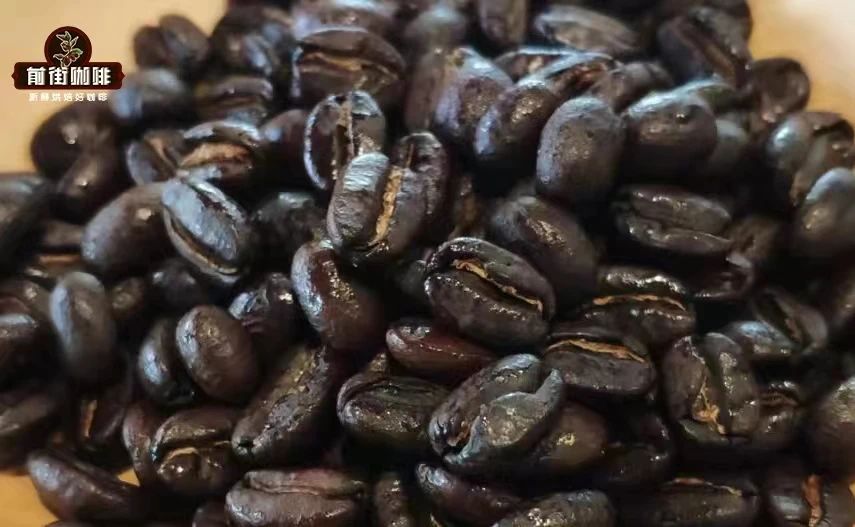
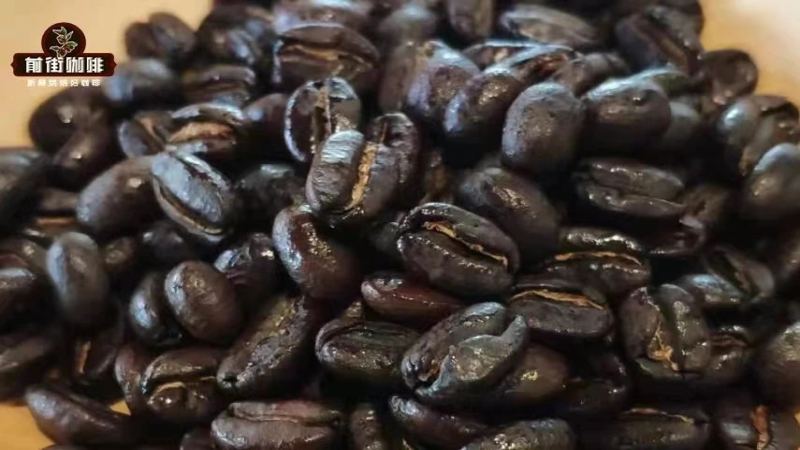
In most people's understanding, sugar has always been the first choice for seasoning, for a simple reason: it provides ample sweetness, thereby suppressing bitterness to the greatest extent. Even today, when coffee quality has improved dramatically and no longer has the sharp burnt bitterness of the past, many people still habitually add sugar to their cup. "Removing bitterness" is certainly one motive, but the role of sugar in coffee is not as simple as just neutralizing bitterness. It can also make the coffee's mouthfeel better, smoother and fuller on the palate, which is another important reason people are willing to add sugar.
Just these past couple of days, a customer came to the shop and asked Front Street: there are so many types of sugar, which one actually pairs best with coffee?
Indeed, there is quite a rich variety of sugars, which can be extracted directly from fruits and vegetables or obtained through secondary processing. Different sugars differ in sweetness and flavor. But when it comes to which sugar is most suitable for coffee, Front Street feels there is no standard answer. Just like the various milk coffees in the espresso system—although they are essentially all espresso plus milk, each one presents a completely different personality due to different ingredients and methods. The same applies to sugar: each type affects coffee differently based on its own characteristics. Different needs naturally call for different sugars, which is why Front Street says there is "no most suitable one."
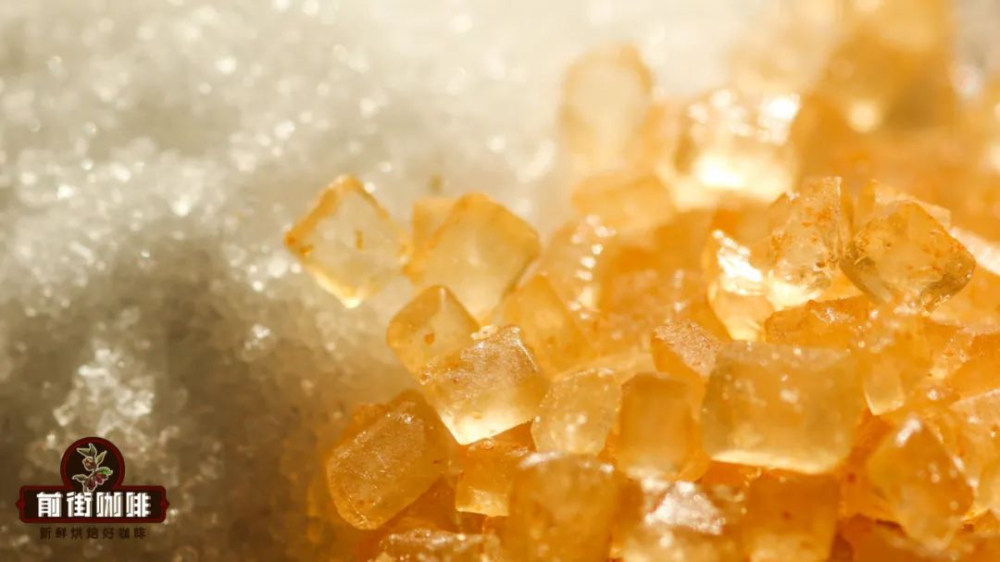
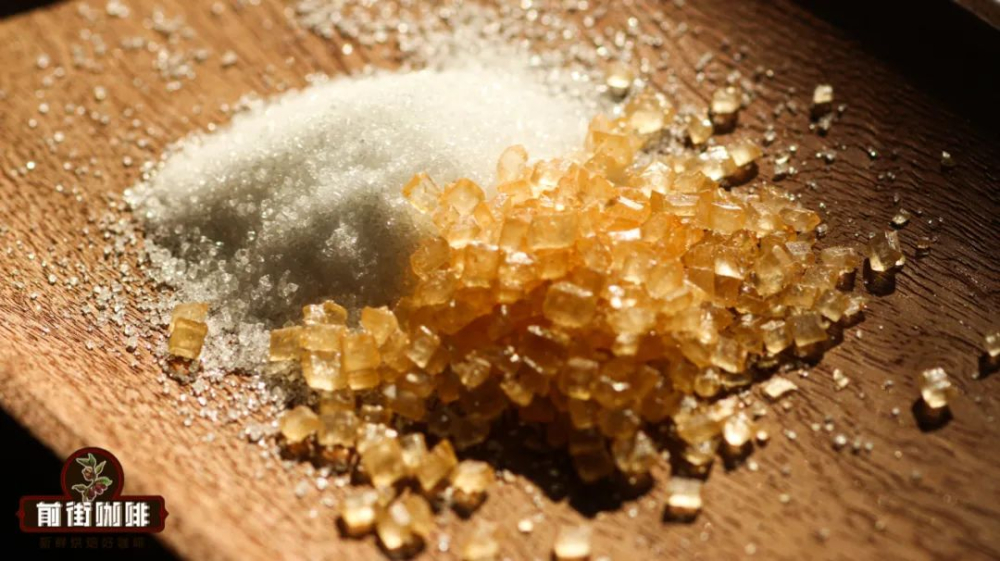
However, not all sugars are suitable for adding to coffee. Despite the wide variety of sugars, only a few commonly appear in coffee shops (here we only discuss sugars used in hot drinks, not syrups).
White Granulated Sugar
White granulated sugar is extremely common not only in coffee shops but also in daily life. It is refined from the juice of sugarcane or sugar beets. Because it undergoes multiple purifications during processing, the final crystals are white and pure, free of impurities. But precisely because of repeated purification, white granulated sugar is essentially a pure sweetener, with no flavor other than sweetness.
White granulated sugar is suitable for almost all coffees, but in most coffee shops it is mainly paired with milk coffees like lattes and cappuccinos. The reason is that these coffees are at a lower temperature, making it easier for the fine granules of white granulated sugar to dissolve. Sugar cubes also fall into the category of white granulated sugar.
Yellow Sugar
Yellow sugar, like white granulated sugar, is one of the most commonly used sugars in coffee shops. Its difference from white granulated sugar lies in its lower degree of refining—it has not undergone excessive purification. The benefit of this is that yellow sugar is not only sweeter than white granulated sugar, but its sweetness is "less pure"—in other words, it retains more minerals and trace elements, carrying a slight flavor of the sugarcane itself.
Yellow sugar is usually paired with black coffees like espresso and Americano, for two reasons. First, yellow sugar granules are larger and do not dissolve easily in lower-temperature milk coffees, whereas black coffee is at a higher temperature, which is just the opposite. Second, yellow sugar's sweetness is more natural and comes with additional aroma, adding a richer layering to the coffee (though very subtle).
Caramel
So-called "caramel" is the product obtained by heating other sugars above 170°C and undergoing the caramelization reaction. Since it is a substance resulting from sugar being caramelized, its sweetness is somewhat lower than the previous two. But it carries a very distinct caramel aroma, and this aroma fits well with the coffee's own flavor. Therefore, after adding caramel to coffee, besides boosting sweetness, the coffee's aroma also becomes richer. The caramel latte that went viral online in recent years uses block caramel.
The above are the more common sugars in coffee shops. Of course, there are many other sugars that can be added to coffee, just less commonly seen. Finally, Front Street would like to say a brief word: although drinking coffee without sugar has become mainstream nowadays, this does not mean that adding sugar to coffee is a "crooked path." After all, not everyone can accept the bitterness of coffee, and there is no need to be prejudiced against the act of adding sugar.
The above content is compiled by CoffeeHunters, a coffee news website.


