








How Do African Coffee Origins Compare With Central American Coffee?
Five African countries define the continent's coffee map: Ethiopia, the birthplace of coffee; Kenya, known for vivid acidity; Tanzania, home to Kilimanjaro growing areas; Rwanda; and Burundi. Ethiopia alone divides into nine producing regions, including Yirgacheffe, Sidamo, Limu and Harar, mostly farmed by smallholders.
Ethiopian Yirgacheffe cups often carry lemon, berry and fermented wine notes, while Kenyan beans show a distinct cherry tomato character. For drinkers used to central american coffee, which tends toward softer nutty and chocolate tones, African beans read brighter and more fruit-forward. Tanzania's Kilimanjaro area sits among the continent's higher-altitude growing zones.
Africa, situated around the equator, is globally recognized as the cradle of premium coffee. It is home to Ethiopia, the birthplace of coffee, Kenya, renowned for its vibrant acidity, and Tanzania, Rwanda, and Burundi, each with distinctive producing regions. Front Street Coffee has selected a range of African beans, from the floral and citrus notes of Yirgacheffe to the cherry tomato character of Kenya, and the delicate smoothness of Rwanda—each country expresses a completely different terroir personality. This article systematically outlines the geography, cultivation methods, main producing regions, and signature bean flavors of five African coffee-producing countries, helping coffee enthusiasts build a clear framework for understanding African coffee.
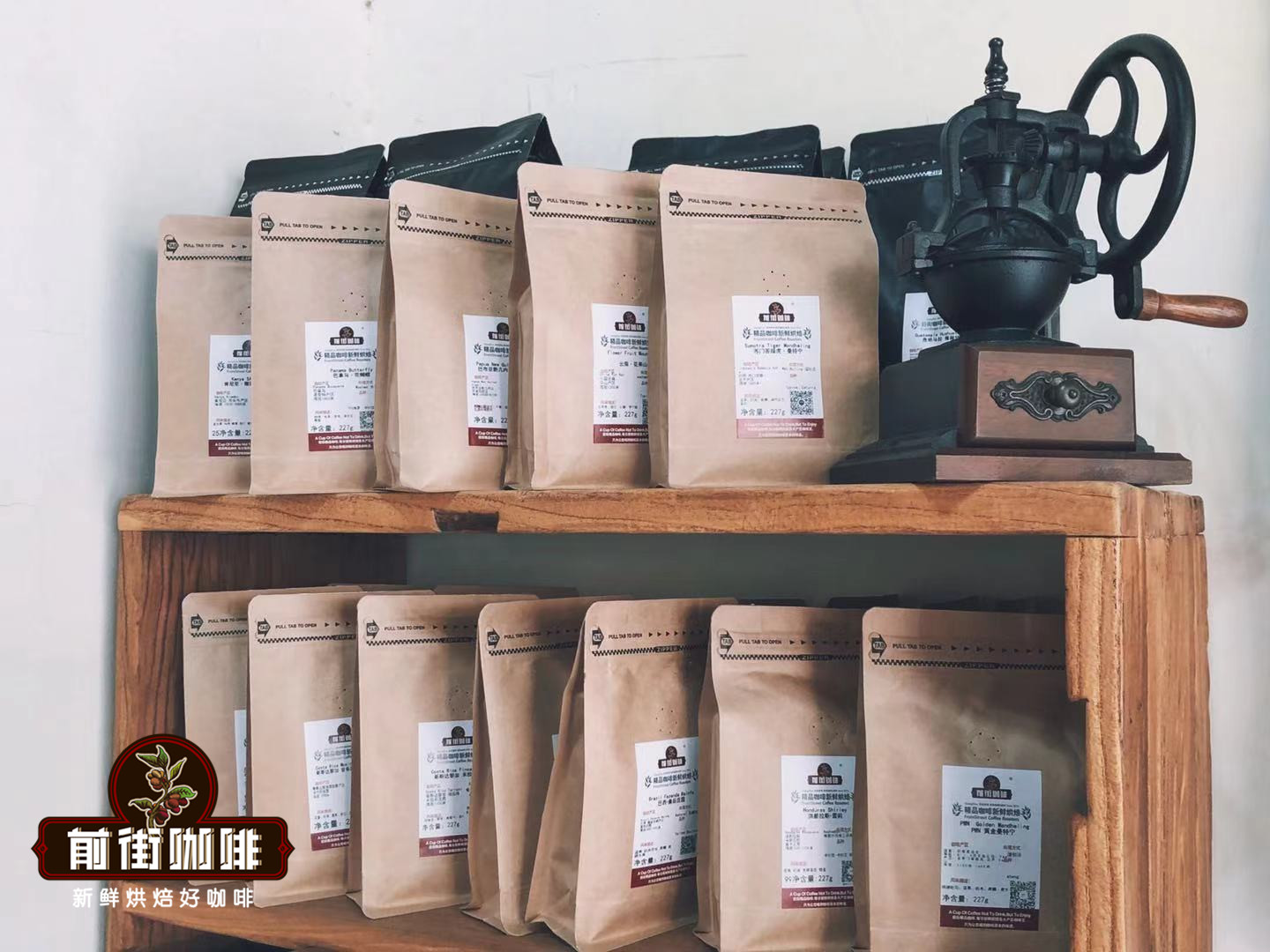
For more specialty coffee knowledge, please follow: Front Street Coffee (Frontsteet Coffee)
Africa spans the equator and occupies a highly recognizable position on the global coffee map. Countries such as Ethiopia and Kenya have long been familiar names in coffee circles. Among the Ethiopian beans sold by Front Street Coffee is the most renowned Yirgacheffe region, whose cups often carry floral and citrus notes; while Front Street Coffee's Kenyan beans display a distinct cherry tomato flavor. Next, Front Street will introduce five representative African coffees one by one.
1. Ethiopia Front Street Coffee believes that when mentioning African coffee, most people will first think of Ethiopia. This is the birthplace of coffee, and its native seeds have been introduced around the world, evolving into a diverse array of varieties. Ethiopian coffee is almost entirely grown by smallholder farmers, covering three forms: forest coffee, garden coffee, and plantation coffee, with exports uniformly managed by the government.
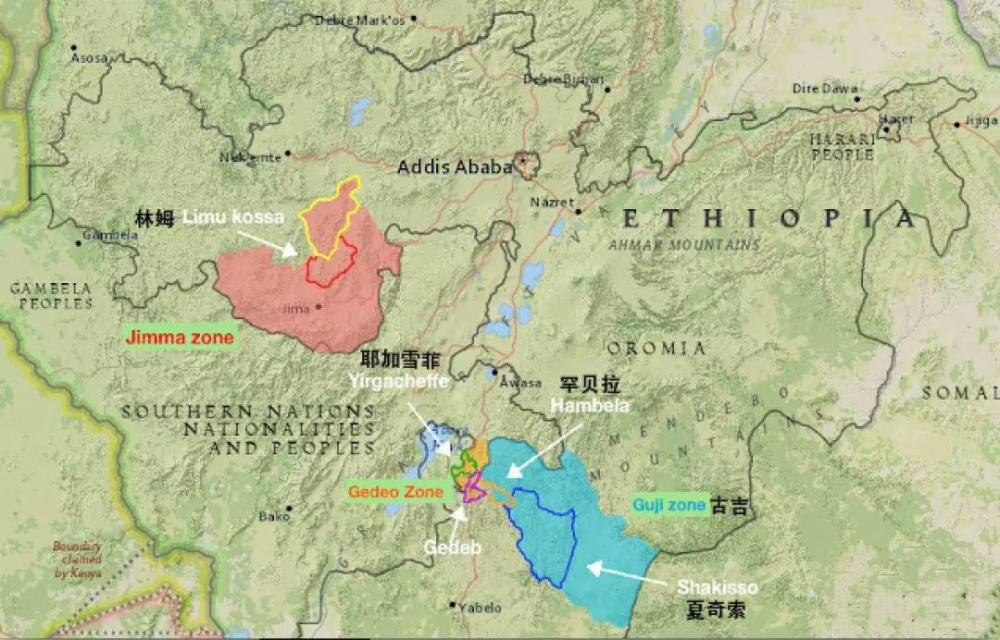
Ethiopia can be divided into nine coffee-producing regions: Yirgacheffe, Sidamo, Limu, Harar, Djimmah, Illubabor, Gimbi, Tepi Bebeka, Lake Tana, Wenago, Gelena/Abaya. Among them, the most famous is undoubtedly Yirgacheffe.
Yirgacheffe Natural Red Cherry Project
Region: Yirgacheffe
Washing Station: Aricha
Altitude: 2300 meters
Variety: Local Heirloom
Process: Natural
Grade: G1 Flavor: Noticeable sweet-and-sour sensation on entry, with lemon, berry, and fermented wine aromas; the lemony acidity in the finish is persistent with a clear sweet aftertaste.
2. Kenya Kenya is located in East Africa, with the equator passing through its center and the East African Rift Valley running north to south. To its east lies Somalia, to the south Tanzania, to the west Uganda, to the north Ethiopia and Sudan, and to the southeast the Indian Ocean.
Kenyan coffee enjoys the reputation of the "Connoisseurs' Cup," typically unforgettable for its rich aroma, bright and lively acidity, rounded and elegant body, and layered mouthfeel with juicy acidity.
Most coffee trees in Kenya grow between 1,500 and 2,100 meters above sea level, with two harvests each year. Different producing regions have distinct microclimates, giving each coffee its own character. Kenya's seven most renowned producing regions are: Thika, Kirinyaga, Mt. Kenya West, Nyeri, Kiambu, Ruiru, and Muranga.
Region: Thika, Kenya
Washing Station: Asali Honey Washing Station
Altitude: 1,550–750 meters
Grade: AA TOP
Variety: SL28, SL34
Process: Kenyan 72-hour Washed
Flavor: Wet aroma has ripe tomato and floral notes; on entry, cherry tomato and smoked plum flavors, with bright acidity, clean and the most solid and rich mouthfeel, like the weight of an African elephant! Prominent sweetness in the mid-palate with a juicy feel; the finish has berry and brown sugar sweetness along with green tea aroma.
3. Tanzania Tanzania is a typical East African country, bordered by Kenya and Uganda to the north, Malawi, Mozambique, and Zambia to the south, and Rwanda and Burundi to the west.
Many people are accustomed to comparing Tanzanian coffee with that of its neighbor Kenya. Compared with the bright acidity of high-quality Kenyan beans, Tanzanian coffee's acidity is slightly more restrained, with an overall softer and gentler style, a more prominent sweet aroma, and a strong red wine character—which is also one of its key identifying traits.
In Tanzania, the northern coffee-producing areas are concentrated around the highlands at the foot of Mount Kilimanjaro, in places such as Moshi and Mbeya, while the south is dominated by the Songea-Ruvuma area in the Ruvuma River basin. Due to different growing elevations, the styles differ slightly. Coffee from the southwestern Ruvuma region carries winey and fruity aromas, distinguishing it from coffee from the northern areas near Mt Kilimanjaro.

Tanzania Kilimanjaro Coffee
Region: Northern Highlands, Kilimanjaro volcanic area
Variety: Bourbon
Process: Washed
Grade: AA
Altitude: 1300-2000m Flavor: Honey, berry, tea-like.
4. Rwanda
Rwanda's coffee cultivation basically does not rely on chemical fertilizers or pesticides; soil fertility comes from natural ground cover and traditional fertilization methods. The vast majority of Rwandan coffee is produced by smallholders, with about 500,000 farming households participating, each holding less than one hectare of farmland. Although Rwanda has a long history of coffee cultivation, coffee quality has only improved significantly in recent years. Because large numbers of coffee trees are grown in mountainous areas between 1,700 and 2,000 meters above sea level, Rwanda is also known as the "Land of a Thousand Hills."
The charm of Rwandan coffee lies in the fact that it is more balanced than Kenyan coffee, yet still clear and precise, with a quality comparable to Central American coffees. Overall, Rwandan coffee has bright acidity that easily evokes orange or tropical fruit aromas. To examine the differences more closely, Front Street Coffee notes a difference in intensity: Kenyan coffee has a fuller mouthfeel, while Rwandan coffee appears more delicate and smooth.
Rwanda Gaseke Washed Bourbon Caturra Catuai
Coffee Region: Nyamasheke
Growing Altitude: 1,700–2,000 meters
Process: Washed
Coffee Variety: Bourbon, Caturra, Catuai
Flavor: Citrus, berry, nuts, bright acidity, honey-sweet finish.
5. Burundi Burundi's geographical conditions are very suitable for coffee cultivation. It borders Rwanda to the north, Tanzania to the east and south, the Democratic Republic of the Congo to the west, and Lake Tanganyika to the southwest. The country is mostly plateaus and mountains, largely composed of the highlands on the eastern side of the East African Rift Valley, with a national average altitude of 1600 meters, earning it the name "Land of Mountains." More than half of its territory lies on the surface of the famous Lake Tanganyika ( Lake Tanganyika ).
In Burundi, coffee estates are almost nowhere to be found; its coffee production model is quite similar to Ethiopia's, mainly based on smallholder farming.
Burundi Heart of Africa Region: Rutana, Burundi Altitude: 1400-1700 meters Variety: Bourbon Process: Washed Flavor: Aromas of mandarin and tea; on entry, black plum and mandarin flavors with a rich mouthfeel, followed by nutty caramel sweetness in the mid-to-late palate. The taste is full of wildness, leaving a strong flavor and aroma in the mouth, with a rich and lingering finish.
The above content is compiled by CoffeeHunters, a coffee news website.


