







Is Blue Mountain Jamaican Coffee Still Worth Drinking?
Blue Mountain coffee from Jamaica is made only from top-grade Blue Mountain green beans. After roasting it shows a rich aroma, a mellow and balanced cup, and a notably long finish, with no burnt bitterness and little acidity. Those qualities matched the older standard for judging good coffee.
In today's specialty scene, which favors fruity acidity and clear regional character, some drinkers find Blue Mountain bland by comparison. Supporters argue it remains the choice for a traditional cup. Grade classification and authenticity checks, including the CIB system, help buyers confirm what they are paying for.
Blue Mountain coffee has long been regarded as a classic representative of the coffee world. Its full aroma, balanced taste, and lingering sweet aftertaste have fulfilled countless tasters' expectations of a good cup of coffee. However, in today's trend of pursuing fruity acidity and regional flavors, has Blue Mountain become outdated? This article will comprehensively examine every aspect of this legendary coffee from perspectives including the geography and climate of the Blue Mountain origin, cultivation and harvesting methods, green bean processing procedures, the history of Japanese capital involvement, as well as the CIB official grade classification and authenticity identification methods. The article will also incorporate the example of the Clifton Farm Blue Mountain coffee beans sold by Front Street Coffee to help readers build a systematic understanding of authentic Blue Mountain coffee.
The raw material used in authentic Blue Mountain coffee is the highest-quality Blue Mountain green beans from Jamaica. The flavor presented after roasting is precisely what fascinates tasters. It possesses a rich aroma, and on the palate it is mellow yet balanced, capable of meeting almost all expectations people have for quality coffee. What is even more remarkable is that fresh, top-quality Blue Mountain coffee has an exceptionally long finish—in the words of wine lovers, it is unforgettable long after drinking.
Many consumers today consider Blue Mountain coffee bland and lacking in distinctiveness. Front Street's view on this is: such an assessment is not entirely without merit. In the era when Blue Mountain rose to fame, the industry had not yet popularized discussion of the flavor wheel. At that time, the standard for judging a good cup of coffee was mellowness, cleanliness, no burnt bitterness, no acidity, and a sweetness that would rise in the mouth after swallowing—and Blue Mountain happened to perfect this approach to the extreme. In today's specialty coffee context that celebrates acidity and distinctive flavors, Blue Mountain does indeed seem out of step. But if you prefer that traditional cup of coffee, Blue Mountain remains the only choice.
Geographical Features of the Blue Mountain Origin
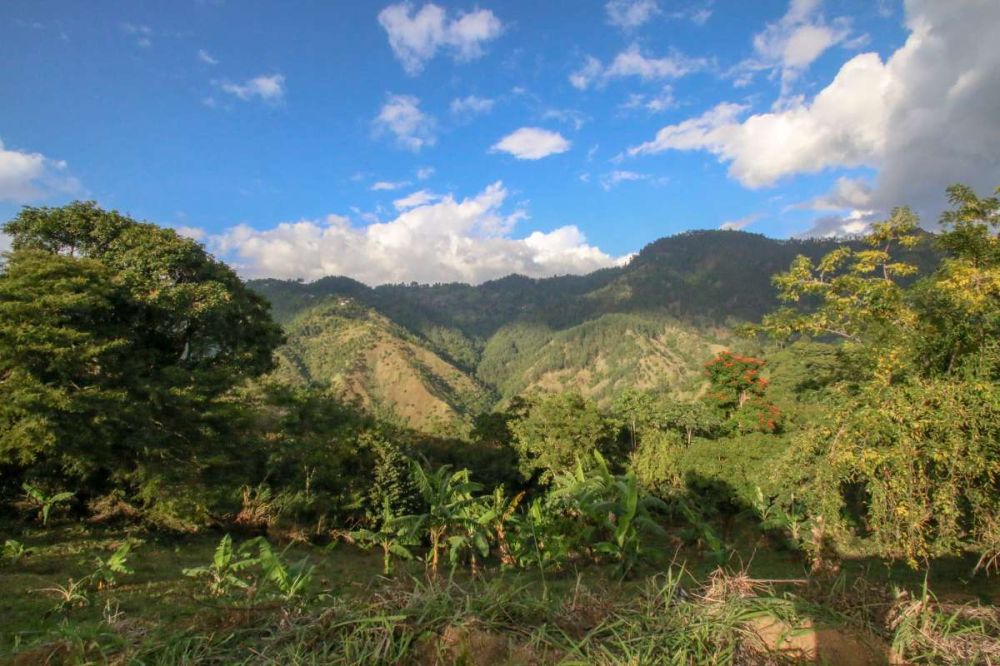
Blue Mountain coffee is recognized as one of the world's most outstanding coffees. The Blue Mountain range is located in the eastern part of the island of Jamaica. Because the Caribbean Sea surrounds it on all sides, on clear days when sunlight strikes the azure sea surface, the peaks reflect the brilliant blue light refracted from the seawater—hence the name Blue Mountain.
The main peak of Blue Mountain stands at 2,256 meters above sea level, making it not only the highest point in the Caribbean region but also a well-known tourist destination. The area lies within the coffee-growing belt, with fertile volcanic soil, clean and pollution-free air, a humid climate, and year-round fog and rain (annual precipitation of approximately 1,980 mm, with temperatures maintained around 27 degrees). It is precisely these natural conditions that nurture the world-renowned Jamaican Blue Mountain coffee and make it one of the most expensive coffees in the world.
Local cultivation uses a mixed-planting method, allowing coffee trees to grow alongside banana trees and avocado trees on the terraces. Some small estates also cultivate coffee. However, even the largest estate owners in the region would only qualify as smallholder operations by international standards, and many of these estate owners are holders of small plots of land, with family farming passed down for two centuries. The Jamaican coffee industry faces multiple challenges, including hurricane damage, rising labor costs, and the difficulty of mechanizing terraced terrain. Many small estates and farms find it very difficult to achieve rationalized cultivation. For example, Front Street's Blue Mountain coffee beans come from Clifton Farm, located on "Clifton Mount," a sub-peak of the Blue Mountain range. The farm has been in operation since the 18th century and has a planting area of only 20 hectares.
The operation method relying entirely on manual cultivation and harvesting gives Blue Mountain coffee both richness and mellowness, and because the three flavors of sweetness, acidity, and bitterness are perfectly balanced, it carries almost no bitterness, leaving only a moderate and beautiful acidity. It is usually enjoyed as a single-origin coffee, but due to scarce production and high prices, what is commonly found on the market are blends using coffees with similar flavors as substitutes.
The "secret" to Blue Mountain coffee's pure taste lies in the fact that the coffee trees all grow on steep slopes, making harvesting extremely difficult—only skilled local women workers can handle the task. During harvesting, precisely selecting coffee cherries at the perfect ripeness is crucial, as underripe or overripe cherries will drag down coffee quality. The picked cherries must be depulped the same day, followed by fermentation for 12 to 18 hours. Then the beans are washed and sorted. Next comes the drying stage, which must be done on concrete patios or thick blankets until the beans' moisture content drops to 12%-14%. After that, they are stored in dedicated warehouses. When needed, they are taken out for roasting and then ground into powder. These steps must be strictly controlled, otherwise coffee quality will suffer. Later, with the spread of the fresh-roasting concept, Jamaica gradually liberalized green bean exports.
Due to Japan's long-term investment in the Jamaican coffee industry, most Blue Mountain coffee is now in Japanese hands, and they have also obtained priority purchasing rights for Blue Mountain coffee. In 1992, Jamaica sold 688 tons of Blue Mountain coffee to Japan, 75 tons to the United States, and 59 tons to the United Kingdom. Today, approximately 90% of Blue Mountain coffee is purchased by Japan. The rest of the world can only get 10% of Blue Mountain's production, so regardless of price fluctuations, Blue Mountain coffee is always in short supply. However, this situation saw a turning point after the 2008 financial crisis. In order to find more stable partners, Jamaica signed an agreement in 2010 with the Hangzhou Coffee and Western Food Association as the general agent for Blue Mountain coffee in China. In May 2011, the first container of Blue Mountain coffee beans arrived at Ningbo Port.
Blue Mountain Coffee Grade Classification
Not all coffee produced in Blue Mountain can be called Blue Mountain coffee. The Jamaica Coffee Industry Board (CIB) stipulates that only coffee beans produced in the core Blue Mountain region of approximately 6,000 hectares are eligible to be called Blue Mountain coffee beans. Front Street has translated this based on CIB official documents and maps: only coffee grown in the Blue Mountain range at an elevation of 910 meters (3,000 feet) or above can bear the name Blue Mountain coffee beans.
Blue Mountain coffee beans are further divided into 4 grades: No. 1, No. 2, No. 3, and PB. Among them, No. 1, No. 2, and No. 3 are distinguished by bean size. No. 1 is the largest, between 17-18 mesh; No. 2 is approximately 16 mesh; No. 3 is approximately 15 mesh. Therefore, the highest grade is No. 1 coffee, and what we commonly refer to as Blue Mountain coffee actually specifically means Blue Mountain No. 1 coffee beans.
The PB grade is rather special. It consists of round beans selected from green beans and sold separately. The bean size is approximately 14-15 mesh, but due to its distinct appearance, it can fetch a price comparable to the No. 1 grade when sorted out separately.
How to Identify Authentic Blue Mountain Coffee Beans
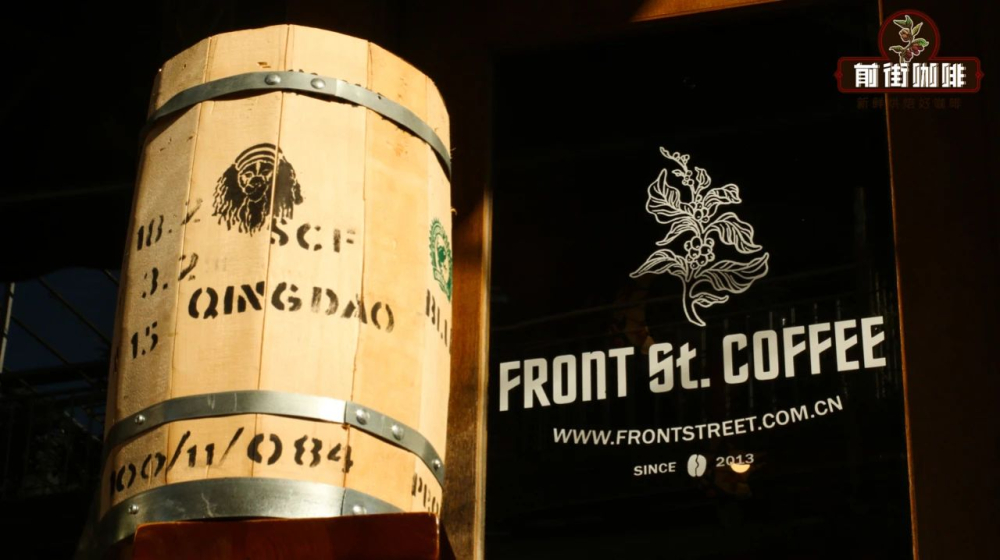
1. Look at the Blue Mountain barrel. Authentic Blue Mountain coffee is packaged in wooden barrels, available in specifications of 15, 30, and 70 kg. For example, the barrel placed in Front Street's store is a 15 kg Blue Mountain barrel. This barrel is quite special—it contains 2020 Blue Mountain Geisha coffee beans—but aside from the text information labeling, it is not much different from an ordinary Blue Mountain No. 1 barrel.
2. Look at the certificate. Currently, all Blue Mountain coffee exported on the market can be issued a certificate by the Jamaica Coffee Board.
Certificates come in three types:
The first type: Quality certification certificate issued by the Jamaica Coffee Board.
The second type: Authorized sales certificate issued by the Blue Mountain coffee producer. (Blue Mountain coffee is distributed by 4 Jamaican government-licensed processors and exporters, and exported by 16 licensed exporters.)
The third type: Jamaica Blue Mountain Coffee Certificate of Origin.
The certificate hanging in Front Street's store is precisely the second type, issued by Clifton Farm.
3. Look at the bean appearance. Authentic Blue Mountain coffee has an extremely low defect rate, with beans of essentially uniform size—flat, elongated, and plump. Green beans are light green, while roasted beans are dark brown with even coloration.
The above content is compiled by CoffeeHunters, a coffee news website.


