







What Sets Golden Mandheling Coffee Apart?
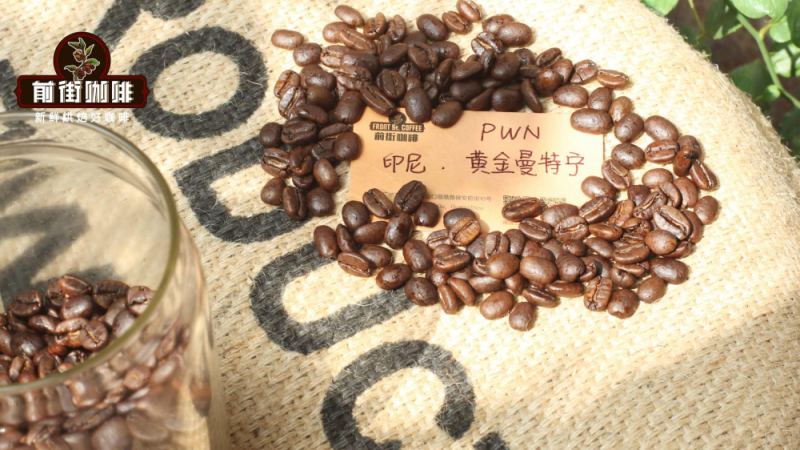
Golden Mandheling is a specialty coffee from Sumatra, Indonesia, and the PWN version is known for strict screening. PWN buys only beans that pass an 18-screen mesh and allows no more than three defective beans in a 300-gram sample, matching Indonesia's top G1 grade. Three rounds of hand sorting follow, keeping color, shape, and size consistent.
The beans come from the Lake Tawar area near Mount Gayo and use the Ateng series, a collective name for Catimor varieties grown on Sumatra and other Indonesian islands. Ateng is a hybrid descendant of Arabica and Robusta with strong resistance to leaf rust and berry disease. Sumatra's wet-hulling process, developed for the rainy season, gives Mandheling its clean brightness, body, and sweetness.
Golden Mandheling is a highly representative specialty coffee from the Sumatra region of Indonesia, and the Golden Mandheling produced by PWN is particularly famous for its strict screening standards. This batch of beans purchased by Front Street Coffee comes from the Lake Tawar area of Mount Gayo and belongs to a premium lot of G1 grade, 18-screen and above, and subjected to three rounds of manual hand sorting. This article will guide you through the variety origin of this coffee—the Ateng series—and how Sumatra's unique wet-hulling process gives Mandheling a clean and bright cupping performance and a rich sweetness, while also analyzing the effects of each wet-hulling step on the appearance and flavor of the green beans.
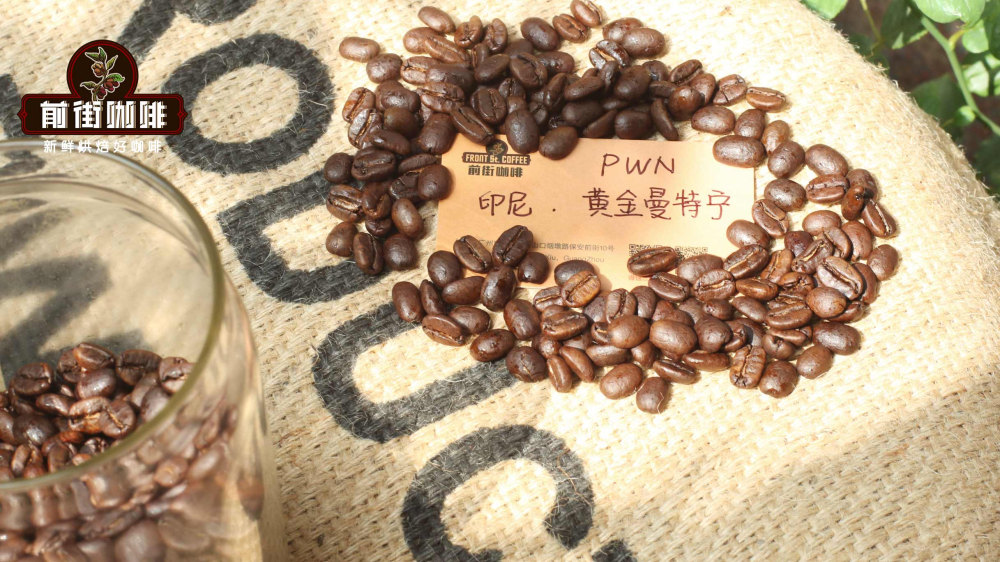
The raw materials for this Golden Mandheling offered by Front Street Coffee come from the Lake Tawar area near Mount Gayo in northwestern Sumatra, and it belongs to a high-grade lot among Mandheling coffees. When PWN purchases green beans, it only selects beans that pass through an 18-screen mesh, and requires that a 300-gram sample contain no more than 3 defective beans, which corresponds exactly to the highest G1 grade in Indonesia's green bean grading system. Afterward, three rounds of manual sorting are carried out according to established standards to remove defective beans, keeping the entire batch of Mandheling consistent in color, shape, and bean size. Because of this, this PWN Golden Mandheling from Front Street has higher cleanliness on the palate, better brightness, and more prominent body and sweetness.
In terms of coffee variety, Front Street PWN Golden Mandheling uses Ateng. This name comes from the Aceh Tengah region in central Aceh. The Ateng series is actually a collective term for Catimor varieties grown on the island of Sumatra and other Indonesian islands. It is a hybrid descendant of Arabica and Robusta and is widely planted on the island of Sumatra. This variety has high yields, strong resistance to coffee leaf rust and coffee berry disease, and also performs quite well in cupping.
Wet-hulling process:
When it comes to Mandheling coffee, Front Street must mention Indonesia's locally unique wet-hulling process. Indonesia's rainy season brings frequent rainfall, so green coffee beans cannot undergo the long sun-drying that is possible in producing regions such as Africa. Therefore, locals developed this processing method—wet-hulling.
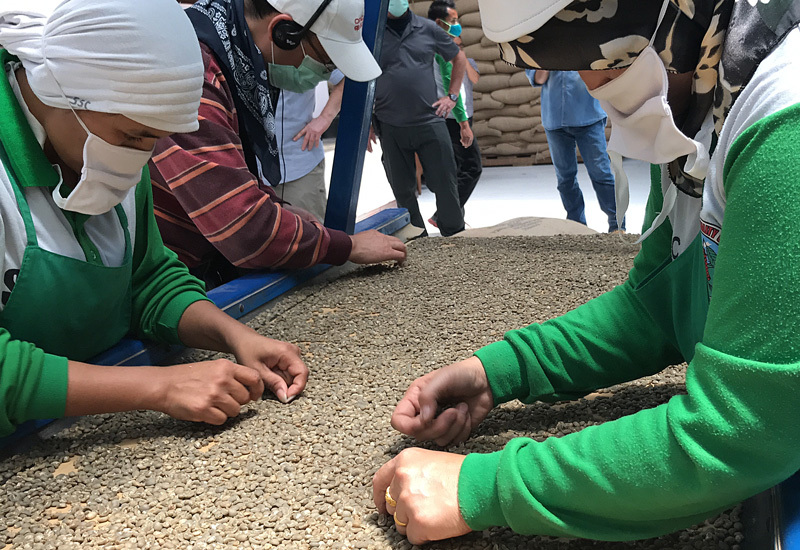
The specific operation is as follows: first use a machine to remove the outer skin of the coffee fruit, then rinse away impurities with clean water, then place the beans in a sealed environment to ferment for about 3 hours, and then spread them out to dry for one to two days. At this point, the moisture content of the green beans is about 30% to 50%, and the beans are in a semi-soft, semi-hard state. The mucilage layer and parchment layer on the surface of the green beans are then removed, and sun-drying continues. Usually after another 2 to 4 days, the moisture content can drop to 12% to 13%. Compared with the natural process and washed process, the drying cycle of the wet-hulling process is much shorter.
Because the wet-hulling process removes the parchment layer, the green beans appear bluish-green. During processing, the beans are relatively soft and easily compressed and deformed, so the beans we see have hoof-like indentations.
Front Street Coffee: Front Street PWN Golden Mandheling Coffee Beans
Region: Sumatra, Indonesia
Grade: G1, three times hand-sorted
Altitude: 1100——1600m
Variety: Ateng
Processing method: wet-hulling
Flavor: nuts, spices, herbs, caramel, dark chocolate
The above content is compiled by CoffeeHunters, a coffee news website.


