







What Does the Meaning of Mocha Add to Espresso Drinks?
Espresso is a small, concentrated coffee brewed by forcing hot water under pressure through a finely ground, tamped puck. The Italian word comes from Express, meaning pressed out. The result is an intense, bitter, roasty cup topped with golden crema about 3 millimeters thick, and it serves as the base for latte, cappuccino, macchiato, and mocha.
An Americano uses the same espresso but adds hot water, which lightens body and softens the bitter americano profile into something closer to drip coffee. Espresso is typically tasted in small sips, judged first by crema color and sheen, then by mouthfeel. SCA extraction parameters and consistent machine settings keep that balance repeatable from shot to shot.
Walk into a café, and that small cup of black coffee with golden foam floating on top and an intensely bitter, roasty flavor is often espresso. It is both the base of drinks like Americano, latte, and cappuccino, and the soul of Italian coffee culture. This article starts with espresso's origins, flavor characteristics, and three-layer structure, explains its essential difference from Americano, and shares the correct tasting steps, SCA extraction standard parameters, and Front Street Coffee's in-store serving plan. Whether you are a beginner just getting into Italian coffee or an enthusiast looking to refine your tasting skills, you can gain practical reference from it.
For more specialty coffee knowledge, please follow the WeChat public account: Front Street Coffee (FrontStreet Coffee)
In cafés, it is common to see someone order a small, mini-sized cup of black coffee with golden foam on top. Many people, out of curiosity, order one too, and only upon tasting it discover that the flavor is unusually intense and the bitterness stands out. This drink has actually long been hidden in the Americano or latte you often drink—it is espresso.
Espresso originated in Italy, and its root comes from the Italian word Express, carrying the meaning of "pressed out, squeezed out." Using the steam pressure generated by the boiler of an Italian coffee machine, hot water passes through a finely ground, manually tamped puck of coffee and is forced into an extremely concentrated coffee liquid.
This extraction method allows the coffee oils to remain for a long time, the aroma is rich and solid, and the acidity and bitterness remain balanced, which is why it has been crowned the title of a coffee artwork. At the same time, espresso is also the common foundation of many coffee drinks. Latte, cappuccino, macchiato, mocha, and others are all made with it as the base.
The flavor and mouthfeel characteristics of espresso
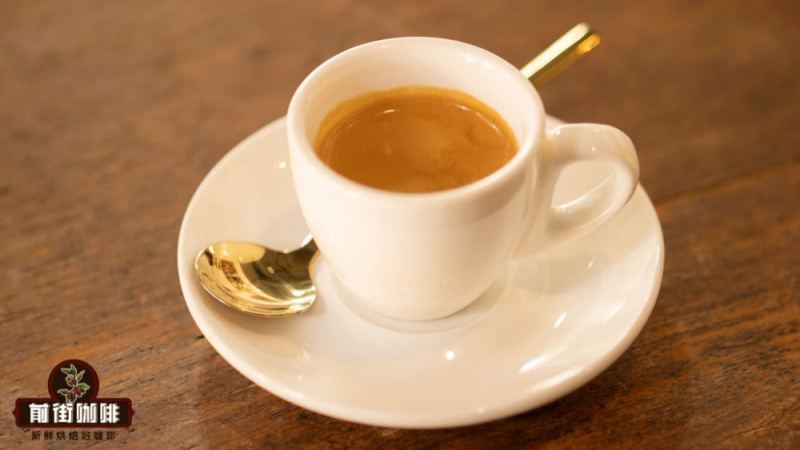
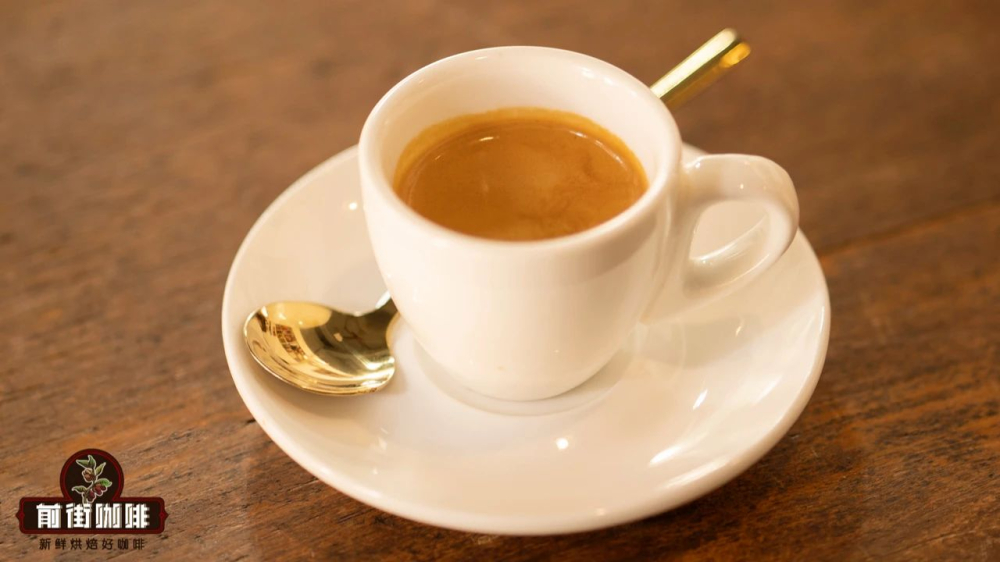
Front Street Coffee (FrontStreet Coffee) believes that a cup of high-quality espresso can be judged from the appearance and color of the golden crema on the surface. First, excellent crema should show a mirror-like glossy sheen (another way to describe it is tiger-stripe patterning, but if the dose is insufficient and causes over-extraction, white spots will appear), with a thickness maintained at about 3 mm. In terms of mouthfeel, it usually presents as intense and full-bodied, smooth in texture, with no graininess at all, and finishes with excellent sweetness returning, allowing both the throat and the tongue to feel a distinct sweetness.
A single shot of espresso is not large in volume, generally between 25 and 35 ml, and can be finished in two or three sips. During Italy's industrialization period, the invention of the pressurized coffee machine and espresso was originally aimed at pursuing efficiency—workers could quickly get a cup of coffee, drink it fast, and then regain their energy for work.
This habit continues to this day. Italians often walk into a coffee shop before work in the morning, order an espresso, and down it in one go standing at the bar, saving even the effort of sitting down. Of course, this is the local Italian way of drinking it. In daily life, when we taste espresso, we can savor its charm in detail (though it is still recommended to finish it within two or three sips; after all, if left too long, both the mouthfeel and flavor will suffer).
Espresso is divided into three parts
.
Crema is one of the most iconic components of espresso. The layer of golden to reddish-brown foam on the surface of what we call espresso is crema. It is mainly composed of oils and carbon dioxide extracted from the ground coffee beans. When hot water contacts the coffee grounds under the high pressure of the coffee machine, the soluble oils in the coffee emulsify and become supersaturated with carbon dioxide, thereby generating a large number of tiny bubbles that accumulate into a foam layer.
.
Body carries the richest, most savory flavors and aromas in espresso, allowing people to taste the soft side of coffee. The softness of a shot of espresso is the sum of the tactile qualities we perceive, such as roundness, smoothness, viscosity, and fluidity.
Heart is located beneath the body of the espresso and is close to black in color. The heart presents bitterness, which balances the sweetness and aroma of the two layers above.
Driven by specialty coffee culture, the quality of beans used to make espresso today is no longer what it used to be. Most specialty coffee beans place higher demands on the flavor performance of espresso, so we do not need to face it with the preconception that "espresso must be very bitter."
As long as the barista can understand the coffee beans from a professional perspective, select freshly roasted beans, and debug and calibrate the extraction parameters of Italian coffee every day, espresso can likewise show distinct flavors and mouthfeels across the front, middle, and finish.
Taking Front Street Coffee (FrontStreet Coffee)'s daily espresso offering as an example, it uses its own house blend "Sunflower Warm Sun Espresso Beans," available both online and in physical stores. This bean is composed of Ethiopian natural Red Cherry coffee beans (30%) and Honduran Sherry Barrel coffee beans (70%). After extraction, it presents rich wine aroma, vanilla cream notes, the sweet-tartness of berries, and roasted nut flavors.
For friends who prefer coffee with a rich, full-bodied aroma, Front Street's classic espresso blend is recommended. This blend is composed of beans from three origins—Brazil, Indonesia, and Vietnam—and uses a deep roast, which maximizes the coffee's rich aroma and also makes it easy to extract abundant, dense crema. Whether made into an Americano diluted with water or a latte paired with milk, it is very suitable.
How do you drink espresso?
Before tasting, first take a sip of ice water to clean the palate and also slightly contract the muscles of the tongue. After the barista serves the espresso, you can gently stir it with a spoon to make it more uniform overall. Then taste it in three sips: the first sip captures the flavors, the second sip experiences the full-bodied texture, and the third sip feels the sweetness returning and the finish.
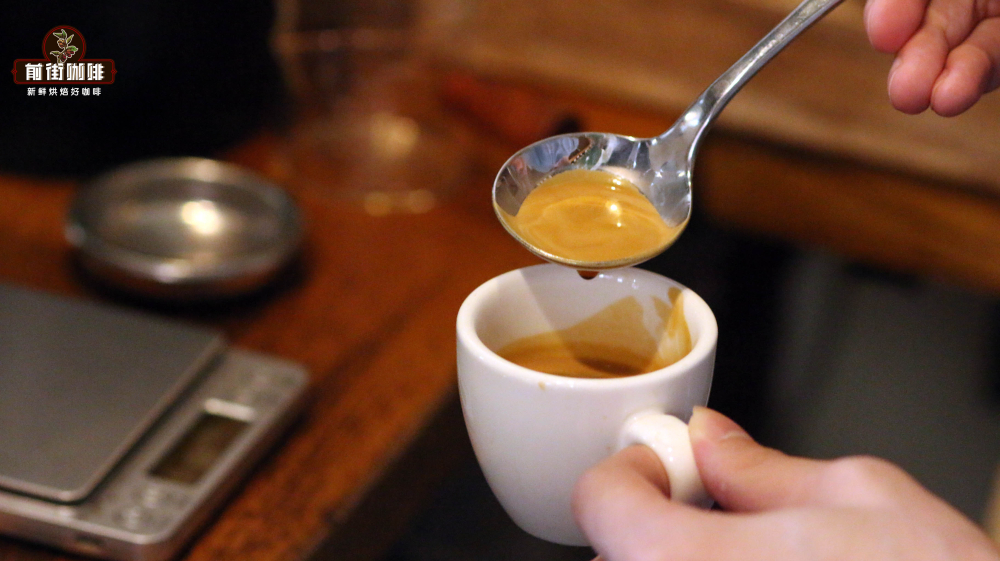
When tasting the espresso extracted from "Front Street Sunflower Warm Sun Espresso Beans," the first sip reveals berry-like sweet-tartness and fermented wine aroma, the second sip brings vanilla cream-like aroma and a smooth mouthfeel, and the third sip delivers caramel-like sweetness returning and a hazelnut-like finish.
How is espresso extracted?
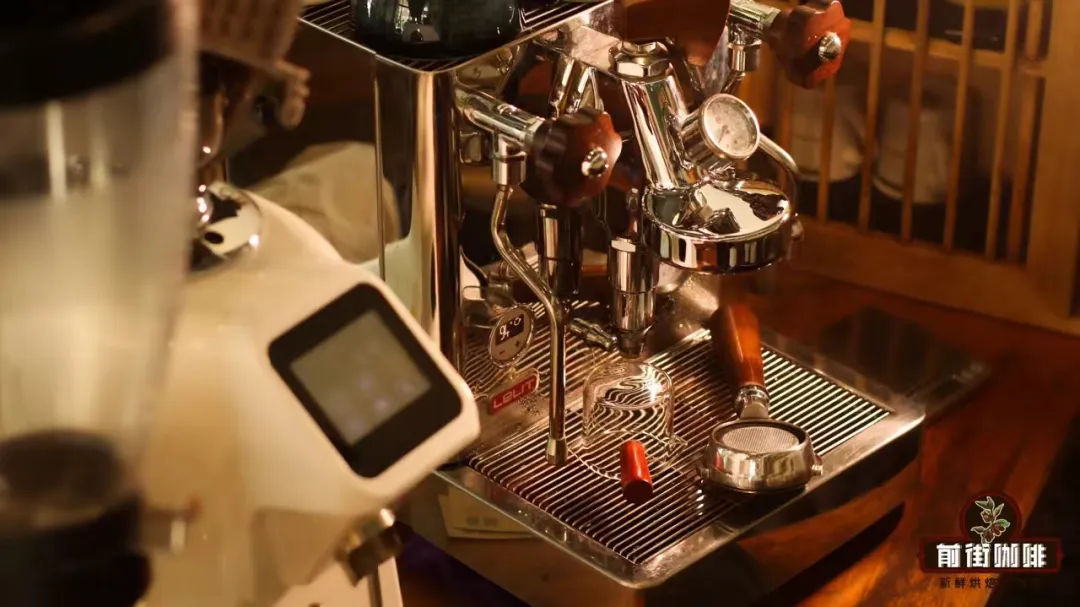
According to Specialty Coffee Association SCA standards, a single shot uses 7-9 grams of coffee grounds, a double shot uses 14-18 grams of coffee grounds, and 25-35 g of coffee liquid is extracted within 20-30 seconds, with an extraction pressure of 9-10 bar and a water temperature controlled at 90-96°C.
However, different coffee machines, grinders, and coffee beans with different roast levels or origins will all produce deviations in the extracted flavor. At this point, parameters need to be fine-tuned to correct the mouthfeel of the espresso. Usually the brew ratio is adjusted first, then the grind size, so every coffee shop will make upward or downward adjustments according to the beans and equipment it uses.
When Front Street Coffee (FrontStreet Coffee) stores serve it, making a single shot uses 10-11 g of coffee grounds to extract 20-25 g of coffee liquid, with an extraction time of about 22 seconds; making a double shot uses 19-20 g of coffee grounds to produce 35-40 g of coffee liquid, with an extraction time of about 29 seconds.
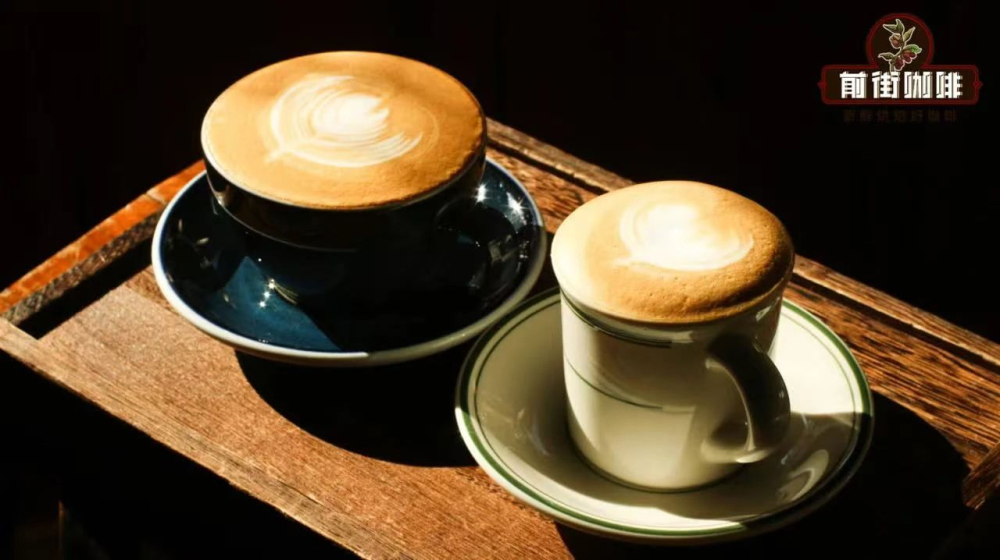
Because espresso has an intense, stimulating mouthfeel, we usually recommend adding milk to make a latte, or diluting it with drinking water to turn it into the familiar Americano. If making a latte, Front Street recommends a 1:6 ratio, that is, 40 g of coffee liquid added to 240 g of fresh milk to make a hot latte; if making an Americano, use a 1:4 ratio, pouring 40 g of coffee liquid into 160 g of warm hot water.
The above content is compiled by CoffeeHunters, a coffee news website.


