







How Can You Tell Real Blue Mountain Coffee Apart?
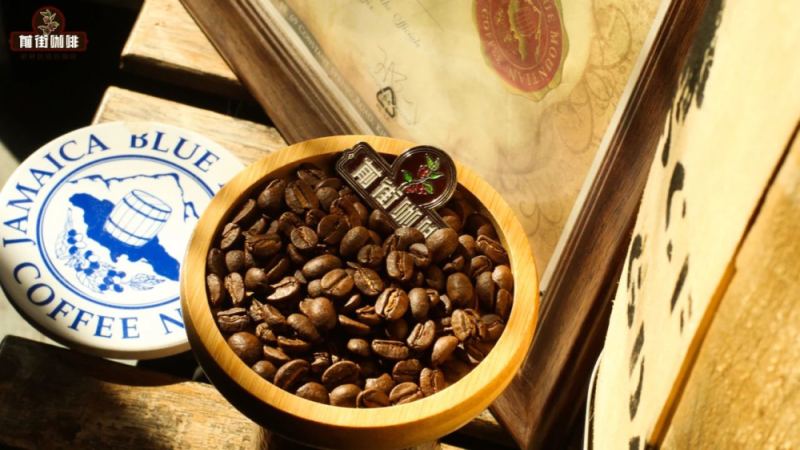
Authentic Blue Mountain coffee is Typica coffee grown in Jamaica's Blue Mountains between 910 and 1,700 meters. It shows balanced acidity, sweetness, and bitterness, a full mouthfeel, and a long sweet aftertaste with no burnt or bitter notes. Genuine exports ship in wooden barrels and carry certification from the Jamaican growing region, such as Clifton Estate.
Because blue mountains coffee has limited annual output, Blue Mountain No. 1 beans commonly sell for 150 to 400 yuan per 100 to 200 grams. Products labeled Blue Mountain flavor or Blue Mountain blend are usually not authentic. Beyond barrels and certificates, buyers can check bean size uniformity, bean shape, and raw bean color, then compare washed and natural lots by brewing both.
Blue Mountain coffee is grown in the Blue Mountains of Jamaica at elevations between 910 and 1,700 meters. The variety is Typica, and it is famous for its balanced acidity, sweetness, and bitterness, full and rich mouthfeel, long-lasting sweet aftertaste, and lack of burnt or bitter notes. Due to limited annual production, Blue Mountain No. 1 coffee beans typically sell for 150 to 400 yuan per 100 to 200 grams in the domestic market. Many products are labeled "Blue Mountain flavor" or "Blue Mountain blend," but are not authentic Blue Mountain coffee. Therefore, it is essential to know how to identify genuine Blue Mountain coffee. This article begins with Front Street Jamaican Blue Mountain coffee and explains how to verify authenticity through wooden barrels and certificates, overall bean size and quality uniformity, bean shape characteristics, and raw bean color, along with brewing parameters and flavor comparisons for both washed and natural processing methods.
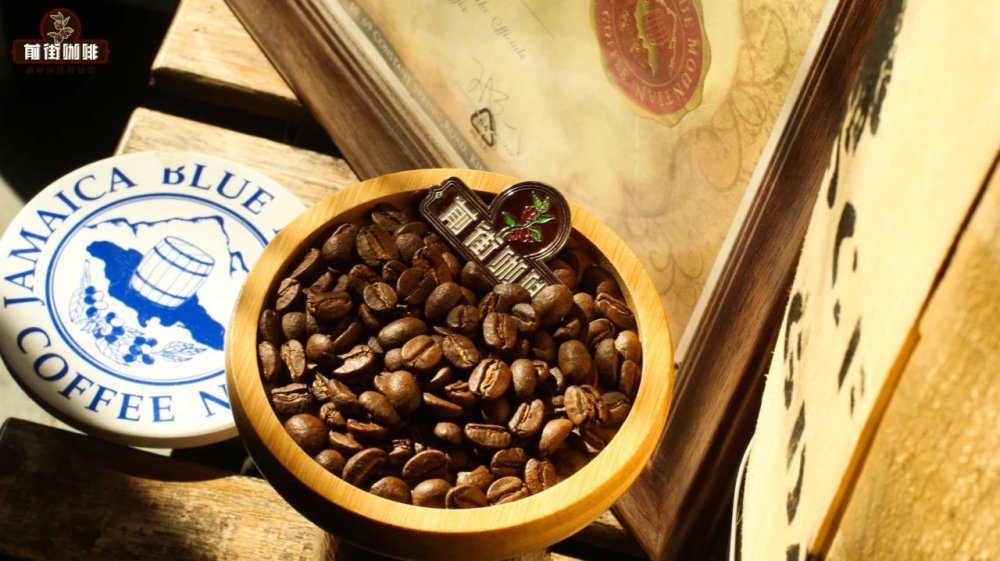
Blue Mountain coffee refers to Typica coffee beans grown in the Blue Mountains of Jamaica at 910-1,700 m, characterized by balanced acidity, sweetness, and bitterness, a rich and solid mouthfeel, and a strong sweet aftertaste, without any burnt bitterness.
Because Blue Mountain coffee has low annual production, Blue Mountain No. 1 coffee beans sold domestically typically cost 150-400 yuan (100-200 g). Some products labeled Blue Mountain flavor or Blue Mountain blend are not authentic Blue Mountain coffee, so learning to judge whether Blue Mountain coffee is genuine is very important. Below, let us look at how to identify authentic Front Street Jamaican Blue Mountain coffee:
"Identifying authenticity from wooden barrels and certificates"
Authentic Blue Mountain coffee is 100% shipped in wooden barrels for export, and the Jamaican government/Blue Mountain coffee growing region issues certification for exported Blue Mountain coffee.
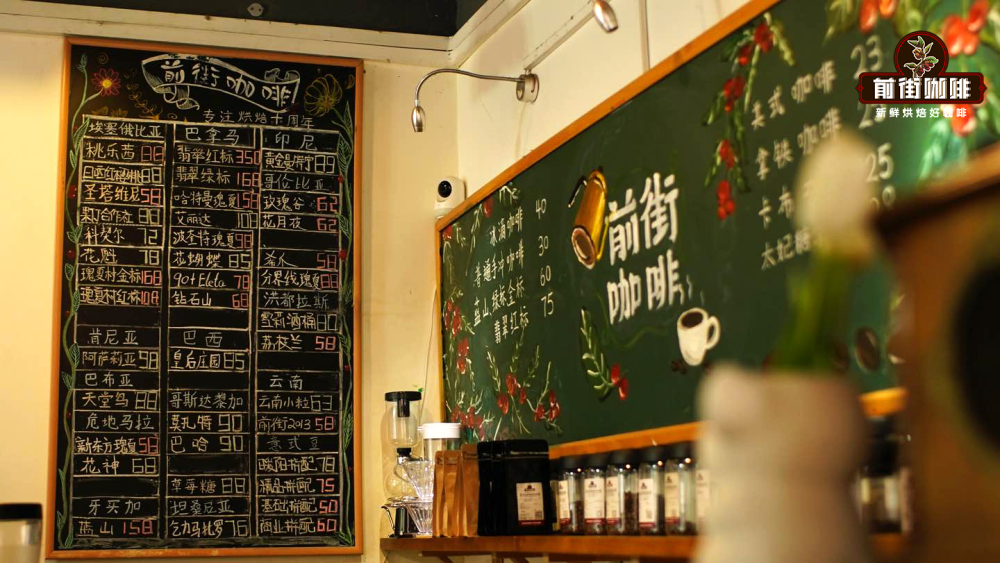
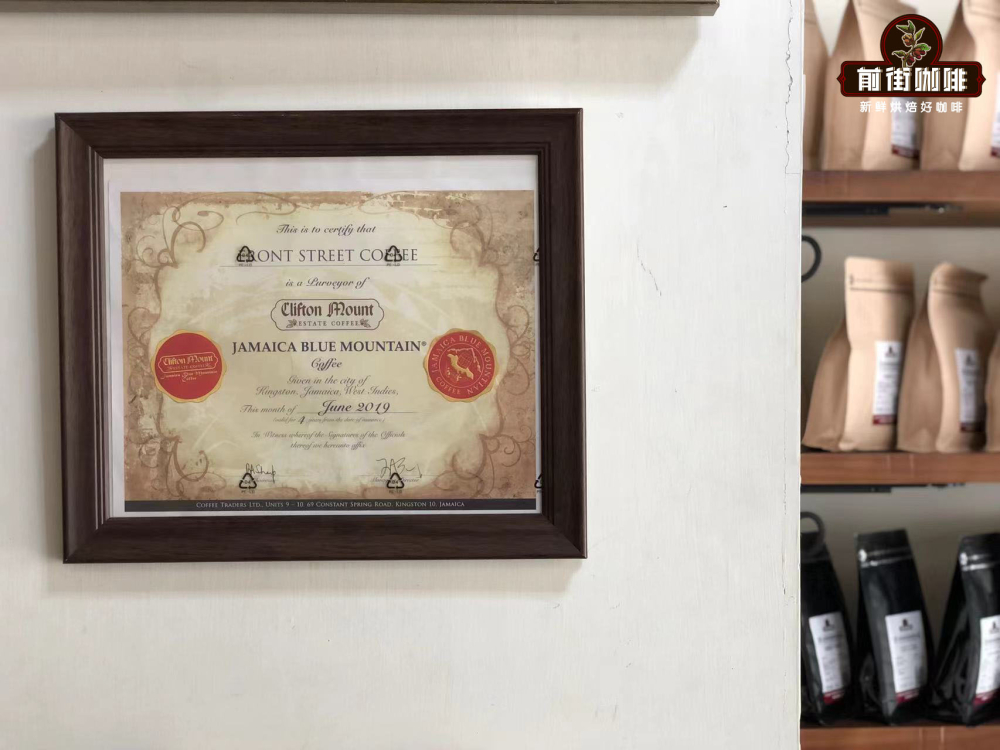
For example, Front Street Blue Mountain No. 1 coffee beans come from Clifton Estate in the Blue Mountains of Jamaica, which is also the region's oldest coffee plantation. At Front Street Coffee stores, you can see the Blue Mountain coffee wooden barrels and the certification issued by Clifton Estate.
In addition to identifying authenticity through wooden barrels and certificates, we can also judge whether Blue Mountain coffee is authentic by observing the appearance of the coffee beans.
"Identifying authenticity from overall bean size and quality uniformity"
At present, authentic single-origin Blue Mountain coffee on the domestic market is mainly Blue Mountain No. 1 grade. To reach this grade, 96% of the coffee fruits must be size 17 screen or above, and after processing, the defect rate of the coffee beans must not exceed 2%.
Therefore, after Front Street Coffee receives Blue Mountain No. 1 green beans, it notices that the beans are overall plump and uniform, with almost no defective beans visible, and no green bean sorting is needed.
"Identifying authenticity from the appearance of the coffee beans"
Second, the variety of Blue Mountain coffee beans is Typica. Front Street Coffee has noticed that Typica green beans are oval in shape, relatively slender and plump, with slightly upturned ends. After roasting, Front Street Blue Mountain No. 1 coffee beans present a uniform, plump oval shape, even in size, with almost no defective beans visible.
"Identifying authenticity from the color of green coffee beans"
Traditional Blue Mountain No. 1 coffee beans use the washed processing method, so Front Street Coffee has noticed that washed Blue Mountain green coffee beans appear green with a grayish tint. However, starting in 2020, Blue Mountain No. 1 coffee beans also began to include natural processing, and Front Street Coffee observed that natural Blue Mountain green coffee beans appear green with a yellowish tint.
Flavor performance of washed Blue Mountain and natural Blue Mountain coffee
Front Street Coffee store extraction parameters: Kono dripper, 88°C water temperature, 1:15 coffee-to-water ratio, 15 g dose, grind size (70-75% passing a No. 20 standard sieve).
Front Street brewing method: Pour 30 g of water in the first stage and bloom for 30 seconds, then pour 95 g (the scale shows about 125 g), finishing in about 1 minute. When the water level drops to 2/3 of the coffee bed, pour the remaining 100 g (the scale shows about 225 g), finishing in about 1 minute 40 seconds to 1 minute 45 seconds. Drawdown is completed at 2'05"-2'15", then remove the dripper to finish extraction.
[Washed Blue Mountain]: On entry, there are flavors of dark chocolate and nuts, high cleanliness, very bright, good body, and balanced acidity, sweetness, and bitterness.
[Natural Blue Mountain]: On entry, there is the sweetness of brown sugar accompanied by the acidity of berries, with nutty and cocoa flavors in the middle and back sections, a creamy mouthfeel, rich and distinct layers, and a finish that brings out the aroma of walnuts.
The above content is compiled by CoffeeHunters, a coffee news website.


