







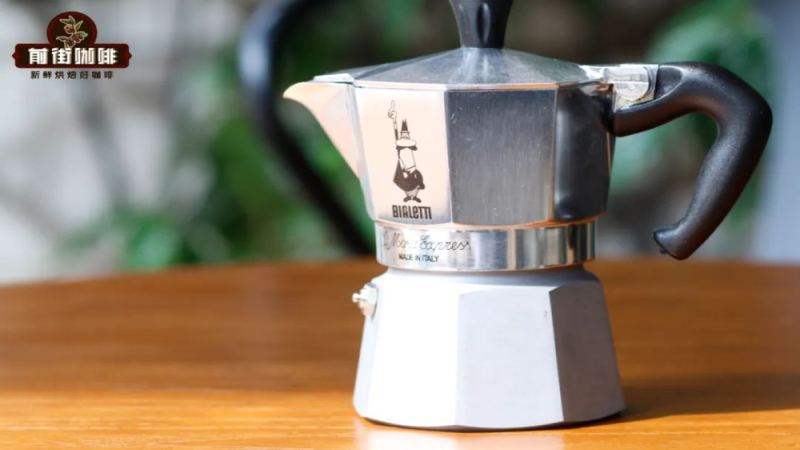
Which Bialetti moka pot should you buy?
Bialetti moka pots come in single-valve and double-valve versions that differ in extraction pressure, crema, and the situations they suit. Bialetti holds a special place in coffee history because founder Alfonso Bialetti invented the first moka pot in 1933, after watching a washing machine draw heated soapy water upward through a central tube.
The single-valve design follows the classic steam-pressure setup, while the double-valve version produces more pressure and a foam layer. For pairing, medium to dark espresso coffee beans work well in a moka pot, and the full process is simple: fill the lower chamber with water, add grounds to the basket, assemble, and heat until the coffee rises.
As a classic choice among home coffee makers, the moka pot is deeply favored by coffee enthusiasts for its convenient operation and rich output. Among the many brands, Bialetti enjoys a special status because its founder, Alfonso Bialetti, invented the world's first moka pot. Today, Bialetti moka pots on the market come in two versions: single-valve and double-valve, and the two differ noticeably in extraction pressure, crema performance, and suitable scenarios. This article will compare the features of single-valve and double-valve in detail to help readers make a choice based on their own needs. At the same time, Front Street Coffee will also share the complete steps for using a moka pot and recommend espresso coffee beans suitable for pairing with a moka pot, including Front Street Classic Espresso Blend, Specialty Blend, Commercial Blend, and Black Cocoa Blend, so you can easily brew a good cup of coffee at home.
In recent years, more and more people have begun trying to make coffee with a moka pot, which has also led many friends to consider buying one. However, with so many brands and models on the market, how should you choose the right one? Front Street will answer that for everyone in this article!
In the world of moka pots, there is one brand that can be called legendary: Bialetti. The reason is that the moka pot was invented by the brand's founder, Alfonso Bialetti.
Back on a certain day in 1933, Bialetti observed his wife using a washing machine and noticed an interesting phenomenon: there was a metal tube in the center of the washing machine that would draw up the heated soapy water and then spray it onto the clothes. From this, he realized that water can generate pressure after being heated, and when the pressure is great enough, the water can be drawn upward through a small-area tube. So, if a device were designed to brew coffee using water pressure, would the coffee be richer? Thus, the world's first moka pot was born.
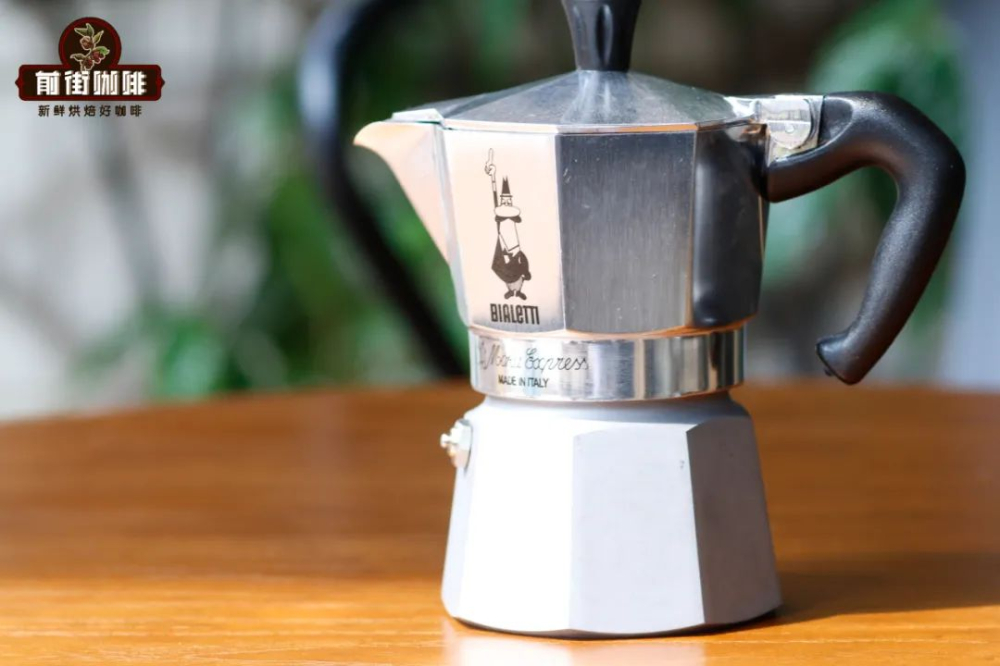
As the world's first home moka pot to extract coffee using steam pressure, this invention completely changed the way Italians originally made coffee, making coffee preparation simpler and faster. The cute cartoon figure on Bialetti's classic moka pot—the mustached little man "Omino"—is the embodiment of the brand founder Alfonso Bialetti. From this small and charming image, it is not hard to appreciate how Italians have turned coffee culture into a joyful and enjoyable way of life.
For this reason, Bialetti brand moka pots are the easiest to gain widespread recognition, with their market share once reaching as high as 90%, and even now they still hold more than half the market. In addition to Bialetti, there are also some rising newcomers, such as Bincoo, which uses styling and appearance as its selling point and is likewise loved by many people.
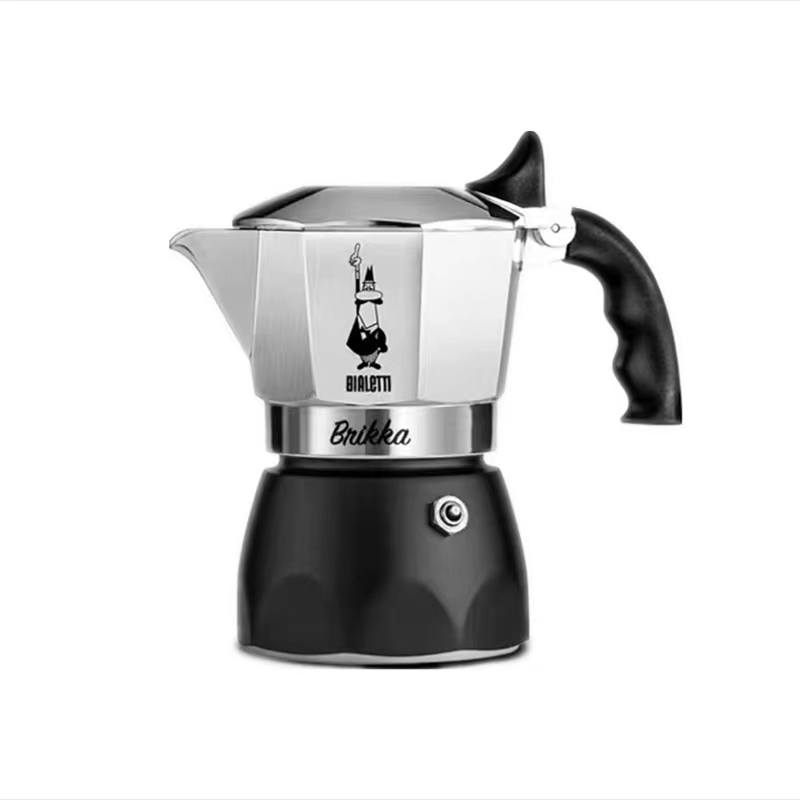
In addition to launching moka pots in different capacities and designs, another topic that attracts more attention is the difference between the single-valve and double-valve versions. Front Street will briefly explain here: single-valve is the most traditional moka pot, and its pressure is usually maintained at around 2-3 bar; double-valve, on the other hand, uses new technology and can provide higher pressure, producing richer and finer crema. Therefore, when purchasing, you can decide according to your actual needs. Those who prefer the classic design can choose the single-valve version, while those pursuing performance can choose the double-valve version.
So how should a moka pot be used? Front Street recommends a simple set of operating methods here.
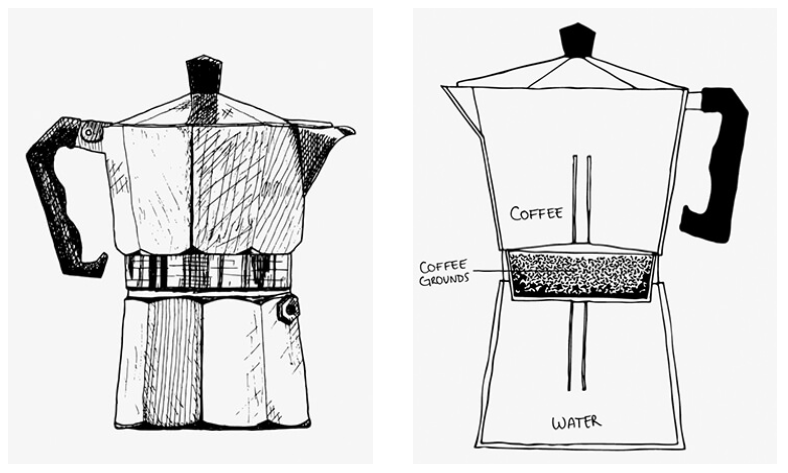
First, let's understand the structure of a moka pot, using the single-valve moka pot as an example. A moka pot is divided into three parts: upper, middle, and lower. The lower chamber is the water reservoir, the middle funnel basket is used to hold coffee grounds, and the upper chamber holds the extracted coffee liquid. Through steam pressure extraction, the water in the lower chamber is heated on a stove to generate steam pressure, which presses toward the outlet; the pressure generated by the steam pushes the water through the tube into the funnel basket, allowing the coffee grounds to be fully heated and extracted; the extracted espresso is then pushed up through the tube into the upper chamber and gathers and flows out.

For coffee bean selection, Front Street recommends using medium-dark roasted beans. If you don't know how to choose, you can buy espresso coffee beans, which are specifically intended for espresso machines and moka pots. For example, Front Street Coffee Classic Espresso Blend coffee beans, Front Street Specialty Blend coffee beans, Front Street Commercial Blend coffee beans, and the espresso moka pot coffee beans recommended by many baristas—Front Street Black Cocoa Blend coffee beans.
Practical section
1. Pour hot water into the lower chamber up to 0.5 cm below the pressure relief valve. Choosing hot water can better shorten the coffee brewing time.
2. Pour the ground coffee into the funnel basket, tap it left and right a little so the coffee grounds settle naturally downward; about 20 g of coffee beans are used. Then level the surface of the coffee bed. The purpose of doing this is to make the spatial distribution between coffee particles even; not tamping is to prevent the resistance of the coffee bed from becoming too great.
3. Place the funnel basket into the lower chamber, and tighten the upper chamber and lower chamber together.
4. Place it on the electric ceramic stove, turn on the power, and begin heating.
5. When the moka pot heats up to a certain temperature, when it makes an obvious "wooo wooo" sound, set the electric ceramic stove to low heat and open the lid of the upper chamber; the coffee liquid and crema begin to flow out.
6. When the coffee liquid in the upper chamber has come out halfway, turn off the electric ceramic stove. And move the moka pot to the table. The residual heat and pressure of the moka pot will "push" the remaining coffee liquid into the upper chamber.
7. Finally, pour the coffee into a cup and it is done. The crema produced by a single-valve moka pot is relatively thin and rough, and it will not last too long—it will dissipate completely after a while. This year, Bialetti also launched a new generation of pressurized moka pots, whose crema performance is a level stronger than that of the single-valve version.
The above content is compiled by CoffeeHunters, a coffee news website.


