







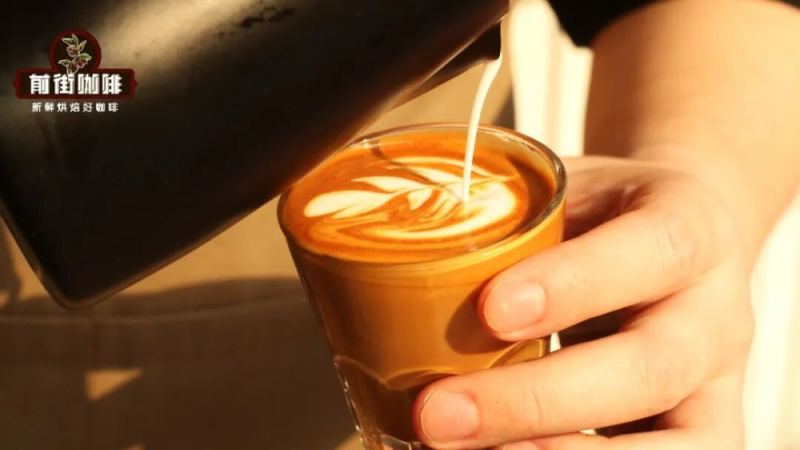
What Does Piccolo Coffee Mean in a Specialty Coffee Shop?
Piccolo comes from the Italian word for small, and the drink is essentially a mini latte. Australian baristas serve it in a roughly 90 ml (3 oz) cup, pulling a single ristretto of about 15 ml as the base, then adding around 75 ml of steamed warm milk with only a thin layer of foam. The result is a milk coffee that can be finished in three or four sips.
That small format separates the piccolo from the cortado and Gibraltar, which use different cup sizes and milk amounts even though the structure looks similar. The piccolo coffee ratio also matters when SOE beans are used, since light-to-medium roasted single-origin espresso changes the balance of milk and coffee. Blue Bottle Coffee's signature milk drink is a separate question worth checking on its own menu.
On the menus of specialty coffee shops, lattes and flat whites are already familiar to many, but the three small-cup milk coffees—piccolo, cortado, and Gibraltar—often leave people confused. They look similar, are made in similar ways, and even many baristas easily mix them up. This article will break down the real differences among these three coffees one by one from the perspectives of origin, recipe, cup size, and flavor, and reveal who exactly Blue Bottle Coffee’s signature milk coffee is. The article will also combine Front Street Coffee’s blends and SOE beans to offer more specific tasting suggestions.
In recent years, Front Street Coffee has introduced at least a dozen or so espresso drinks. Besides those classic items that are always on the menu, there are also quite a few obscure categories that almost never appear in domestic coffee shops. They are similar in structure and made in much the same way, and it is not just beginners—even some baristas confuse them. For example, the piccolo, cortado, and Gibraltar, collectively nicknamed “small lattes,” often leave people completely puzzled because they look almost identical.
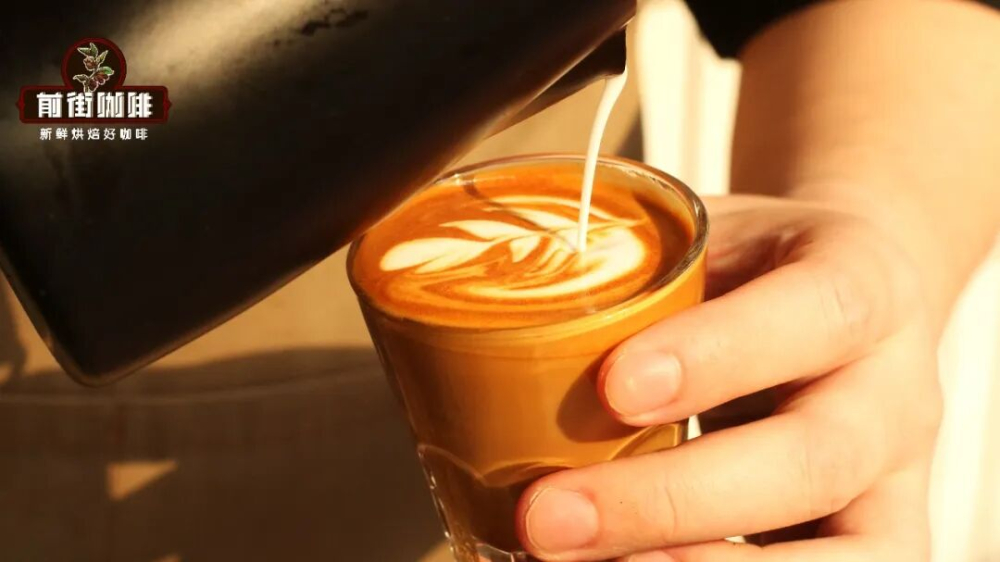
The piccolo is the true “small latte.”
Front Street Coffee has learned that piccolo coffee is not very common in domestic coffee shops, but in Australia it is as popular as the flat white. Its foreign name is “Piccolo Latte,” named by Australian baristas after the Italian word. “Piccolo” means “small” in Italian, so the original name of this coffee should be “small latte.” However, since Australia is an English-speaking region, a direct English translation naturally turned it into “piccolo (latte) coffee.”
(Piccolo and latte)
Both the piccolo and the flat white are smaller in cup size than the latte, but the piccolo is obviously more mini—sometimes less than half of a latte. Australian baristas usually use a 90 ml (about 3 oz) cup, use a single ristretto (about 15 ml) as the base, and then pour in 75 ml of steamed warm milk. The milk foam is extremely thin, and sometimes a simple pattern is even poured. A piccolo like this can be finished in three or four sips.
Its advantage is that you can enjoy a milk coffee for less money, without worrying about the feeling of fullness brought by a large cup, which fits very well with fast-paced coffee culture. As SOE enters more specialty coffee shops, some light-to-medium roasted single-origin beans that emphasize floral and fruity notes may also be recommended to be made as a piccolo to avoid being overwhelmed by milk. For example, Front Street Coffee’s Grana Geisha SOE has flavors of orange, berries, and ripe pomegranate. Compared with a large latte, it is actually more suitable to be made as a piccolo with less milk to experience this kind of elegant tone.
Cortado, an even rarer flavored coffee than the piccolo
Cortado in English comes from the Spanish word “cortar,” equivalent to English “cut,” meaning “to cut off, to cut open.” In the coffee world, Cortado is a specialty milk coffee originating from the Basque region of Spain. It can be simply understood as a flavored coffee that “cuts” hot milk into espresso. It never emphasizes latte art; it only seeks to use the sweetness of milk to reduce the strong, harsh sensation of espresso, making the coffee softer while retaining its richness.
Similar to the piccolo, the cortado is also a very small mini coffee that can be finished in a few sips. The local Spanish method usually mixes espresso and milk at about 1:1. If made in a 90 ml cup, the cortado uses a double normal espresso of 35–40 g plus 45 g of milk. Interestingly, the milk is generally not steamed, but heated and then poured directly into the coffee (if steamed with a coffee machine’s steam wand, the milk foam should be as thin as possible).

Unlike Australia’s refined coffee classification, European countries prefer traditional-style espresso, often presenting medium-dark roasted caramel, roasted nut flavors, and rich crema. For example, Front Street Coffee’s Classic Blend and Front Street Coffee’s Commercial Blend are very close to the tastes of local coffee people. Under the premise of the same cup size, the cortado, with a larger proportion of coffee, is obviously richer than the piccolo and has a stronger mouthfeel; in addition, without latte art, milk damages the crema less, so the coffee aroma can be better sensed when tasting.
As the cortado spread from Spain to the rest of the world, its recipe has also been constantly adjusted to suit local consumers. One famous improved version is Blue Bottle Coffee’s Gibraltar.
Gibraltar, a coffee born by accident
Unlike the two flavored coffees mentioned above by Front Street Coffee, the name Gibraltar comes from the container it uses, a glass called a “Gibraltar glass.”
When the founder of Blue Bottle Coffee was preparing the first store, he wanted to launch a new product that was close to an ordinary espresso milk coffee but not as stimulating as drinking espresso directly. So he added a small amount of hot milk to a small glass containing espresso. The overall ratio was between a latte and a macchiato, and it was named after the Gibraltar glass used for serving. This name was ultimately retained. Only later did he learn that this method was actually cortado coffee, though he had not realized it at the time.
Blue Bottle Coffee uses a 4.5 oz (about 130 ml) Gibraltar glass. It first extracts a double espresso (35–40 g), then steams and heats double the amount of milk (80 g) and combines it with the coffee. Because the milk has been steamed, it not only has a thin layer of milk foam, but can also produce a pattern on top of the espresso, looking even more beautiful with the small glass.
The above content is compiled by CoffeeHunters, a coffee news website.


