







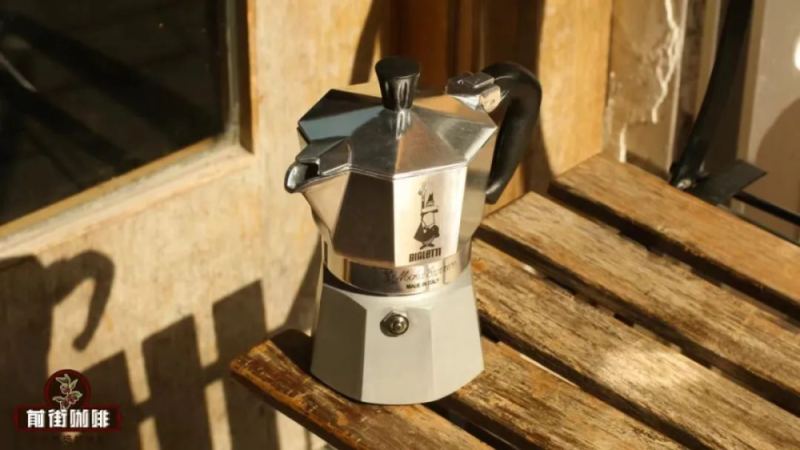
Why Does Moka Pot Coffee Taste Burnt and Bitter?
Burnt, bitter moka pot coffee is almost always over-extracted. Bitter compounds dissolve more slowly than acids and sugars, so once extraction runs long or pulls too much, those flavors dominate the cup. A moka pot makes this worse because steam pressure pushes hot water through the grounds unevenly, so parts of the coffee bed are over-extracted while other parts stay under-extracted.
Localized over-extraction, not overall over-extraction, explains most of the bitterness. Practical fixes include using a medium or medium-dark roast rather than a very dark one, keeping the grind coarser than espresso, filling the basket level without tamping, preheating the water, and pulling the pot off the heat as soon as the flow turns pale and sputters. Watching how long for moka pot to brew helps too.
Many coffee enthusiasts often encounter the problem of burnt and bitter coffee when using a moka pot, making it difficult to achieve the ideal aroma and balance. In fact, this is mainly related to over-extraction, especially localized over-extraction. Based on the practical experience of Front Street Coffee, this article will provide an in-depth analysis of the causes of burnt and bitter moka pot coffee, and share a complete set of solutions from coffee bean selection to specific operating parameters, helping you easily make a cup of moka pot coffee with full flavor and a rich, smooth body.
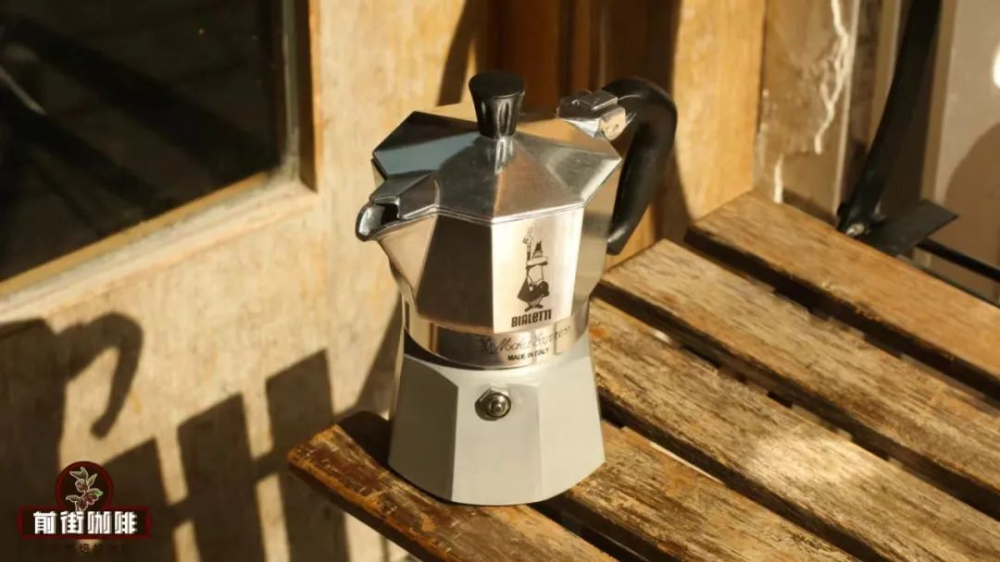
\n\n"Burnt! Burnt! Burnt! Burnt! Bitter! Bitter! Bitter! Bitter!"\n\nFriends often give feedback to Front Street, saying that the coffee they brew with a moka pot tastes either heavily burnt or distinctly bitter, and simply cannot achieve that aromatic, smooth, balanced, and mellow effect. Therefore, today Front Street will talk about what exactly causes the burnt and bitter taste, and what parameters we need to use in order to make a cup of moka pot coffee with a rich aroma and pleasant taste.\n\nWhy is coffee made with a moka pot always burnt and bitter?\n\nRegardless of the brewing method, when coffee tastes burnt and bitter, it is most likely due to "over-extraction." The reason is actually very simple. As Front Street often shares, the dissolution rate of bitter compounds in coffee is on the slower side among various flavor components. So once coffee shows obvious bitterness, it means the extraction time was too long or the extraction amount was too much, causing a large number of bitter substances to be dissolved out, which makes the coffee burnt and bitter.\n\n
\n\nOver-extraction can also be divided into several situations: one is that all the coffee grounds are over-extracted, and the other is that only part of the coffee grounds are over-extracted. Because our taste buds are quite sensitive to bitterness, even if only a small amount of bitterness is present, it can be clearly perceived. Usually, the bitterness in moka pot coffee mainly comes from the latter, that is, localized over-extraction.\n\nCompared with overall over-extraction, localized over-extraction is more common in moka pot coffee making. This is because the extraction method of a moka pot is different from conventional coffee-making methods. It relies on steam pressure to push hot water through the coffee bed, so localized over-extraction is more likely to occur. Why is that? Because many people do not control this.\n\n
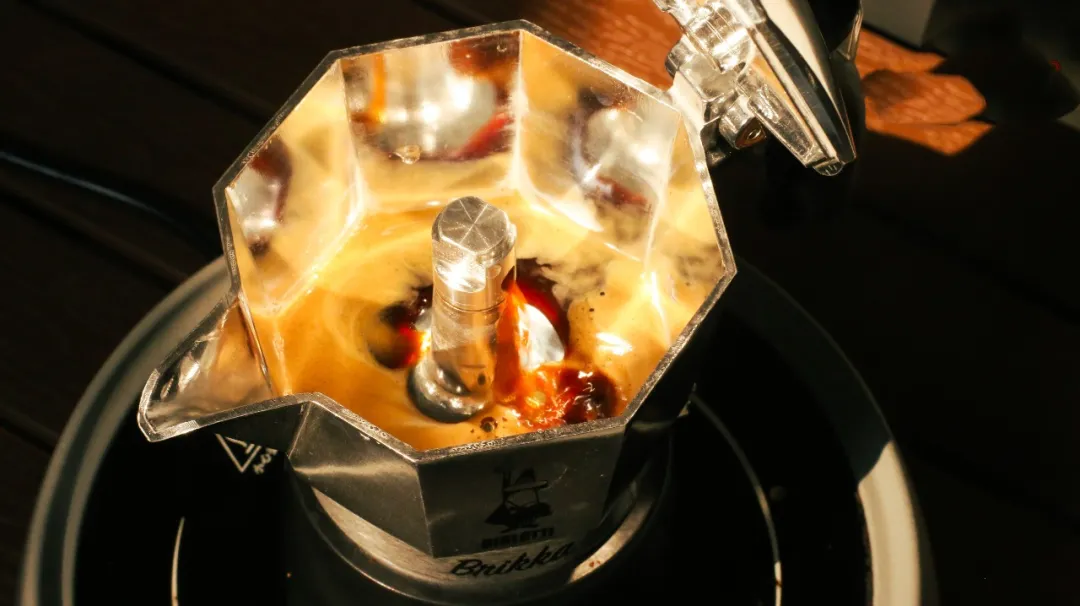
\n\nThe speed at which steam is generated is closely related to water temperature. The higher the water temperature, the faster the steam is produced. When we bring the water to a boil, the rate of steam generation increases exponentially. If it is not controlled, a large amount of steam will push hot water through the coffee puck in a short time, and the hot water tends to pass through from a certain position in a concentrated way. Because the speed is too fast, the water does not have time to fully saturate the puck, so it tends to pass through places where flow is easier. As a result, the following "double ponytail" phenomenon is likely to appear:\n\n
\n\nIn particular, when we use cold water to brew moka pot coffee, low-temperature water requires a longer heating time than hot water, and during this period, steam will be produced continuously and keep rising to saturate part of the coffee grounds, forming channels. So if the heat or steam generation is not controlled afterward, with the two effects combined, hot water can easily pass through only part of the coffee grounds in a concentrated way, causing localized over-extraction or uneven extraction.\n\nTherefore, when conditions allow, Front Street relatively recommends using hot water to brew moka pot coffee. This can shorten the heating time and reduce the impact of steam on the coffee grounds. Of course, using cold water is also fine, but remember to lower the heat after the liquid starts coming out, or directly remove the moka pot from the heat source, and use low heat or residual heat to complete the remaining extraction. In this way, the hot water has enough time to fully saturate and extract the coffee grounds, and the coffee made will have a rich and fragrant taste.\n\n
\n\nAs for other parameters, we do not need to worry too much, because a moka pot has many limitations. For example, there is not much room for adjusting water temperature and water volume. So we only need to focus on two aspects to easily brew a delicious moka pot coffee:\n\nHow to brew a delicious moka pot coffee?\n\nFirst, choose good coffee beans. Coffee beans are the key to determining the taste of a cup of coffee, so if you want to make a cup of coffee that suits your own taste preferences, the choice of coffee beans is very important.\n\nIf what everyone wants to make is a cup of coffee with full fruit flavors, mainly sweet and sour, and not obvious bitterness, then the direction for choosing coffee beans can be light-to-medium roasted African or Central and South American beans. For example, among Front Street's bean list, Front Street Ethiopia Hualkui, Hamasho, Alo, or Front Street Colombia Sidra, Ombligon, etc. They all have sweet and sour fruit flavors such as citrus and berries.\n\n
\n\nBut if everyone prefers coffee that is rich, aromatic, and non-acidic, then the direction for choosing coffee beans can be medium-dark roasted or dark roasted single-origin beans or espresso blends. For example, among Front Street's bean list, Front Street Brazil Queen Estate, Front Street Indonesia Golden Mandheling, or Front Street Espresso Basic, Classic, Specialty Blend, etc. They all have rich roasted flavors such as chocolate, nuts, cream, and caramel.\n\n
\n\nNext is the amount of grounds used, the amount of water, and the grind size. In terms of grind size, we should make it as fine as possible. If you are using a manual single-origin grinder, then directly adjust the grind size to the finest setting; and if you choose the merchant's grinding service, then you can ask the merchant to grind according to "espresso grind."\n\nIn terms of the amount of grounds, Front Street relatively recommends filling the basket directly. The specific amount of grounds will vary depending on the roast level of the coffee beans and the grind size. For example, with the Bialetti single-valve or double-valve moka pot used by Front Street, the coffee beans selected are the medium-dark roasted Front Street Espresso Classic Blend from Front Street's bean list, the grind size is espresso grind, and the amount of grounds used to fill the basket is 19g.\n\n
\n\nAfter filling with grounds, we can tamp appropriately. The purpose is to make the puck more compact, which helps make the extraction more even.\n\nNext is the amount of water. The amount of water mainly depends on the strength of the coffee you want to make. If you want to use this moka pot coffee as a base and add milk to make milk coffee, then the amount of water should not be too much, and the coffee-to-water ratio should be about 1:4; but if you just want to drink a cup of black coffee, then the amount of water does not need to be strictly controlled, and 1:4, 1:5, or 1:6 are all fine.\n\nJust note that the extraction time should be adjusted according to the ratio as much as possible. The less water used, the longer the extraction time should preferably be, and vice versa.\n\n
\n\nBecause here Front Street chose to make a cup of black coffee, the water amount selected was 1:7, that is, about 133ml of water was added to 19g of grounds. If everyone, like Front Street, adds boiling water, then remember to wrap the lower chamber with a wet cloth before tightening the body of the pot to avoid burns.\n\n
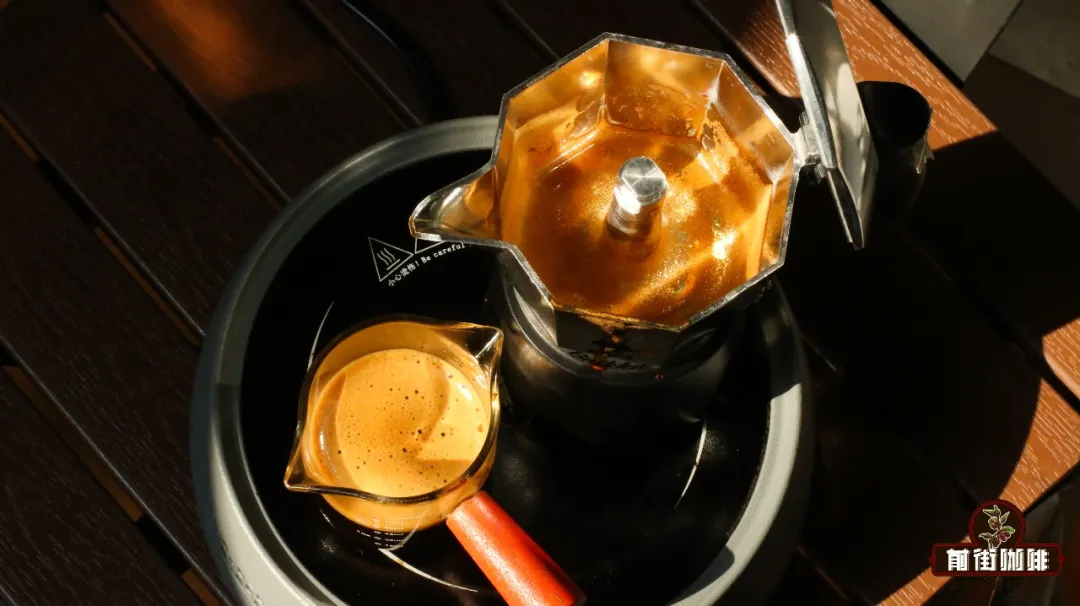
\n\nAfter tightening, it can be placed on the heat source to start brewing. First use high heat until liquid starts to come out.\n\n

\n\nAfter the liquid starts coming out, if you used more water, turn the heat to the lowest setting to extract the coffee liquid; and if you used less water, directly remove it from the heat source and use residual heat to slowly extract the coffee liquid, extending the time so the coffee can be fully extracted (if it can no longer extract, put it back on the heat source to warm it up a little).\n\n
\n\nWhen no more coffee liquid comes out, the extraction of the moka pot coffee is considered complete. Because 1:7 is also a relatively strong ratio, before drinking, we had better add an appropriate amount of hot water to dilute it. Here Front Street added 80ml of water.\n\nAnd with that, a delicious cup of moka pot black coffee is complete! It tastes not bitter at all, only rich aromas such as chocolate, caramel, and cream. The body is mellow, the finish is long, and it is very good~
The above content is compiled by CoffeeHunters, a coffee news website.


