







How Does the Roasting Process Decide SOE Performance?
Roast level is one of the main variables shaping coffee flavor, and the roasting stage accounts for roughly 30% of the final taste, with the green coffee bean contributing about 60% and extraction about 10%. Light roasts and dark roasts both struggle as single-origin espresso: light beans resist even extraction and taste sharply acidic, while dark beans lose origin character and turn bitter.
During roasting, the Maillard reaction between sugars and amino acids builds hundreds of flavor compounds, and caramelization dehydrates and browns sugars at higher temperatures. Medium and medium-light roasts sit in the range where beans stay soluble enough for espresso while keeping some origin character, which is why they work for SOE. Grinder setting, dose, and yield then need to match the roast you chose.
The roast level is one of the key variables affecting the direction of coffee flavor. From green beans to the cup, the roasting stage determines about 30% of the final taste. From the perspective of Front Street, this article sorts out the Maillard reaction and caramelization reaction that occur in coffee beans during roasting, explains the flavor characteristics presented by light, medium, and dark roasts, and focuses on answering a common question: why are light-roasted beans and dark-roasted beans both not very suitable for making SOE? At the same time, combined with several specific Front Street products, it gives the bean types suitable for making single-origin espresso and extraction suggestions, helping coffee lovers more clearly understand the matching relationship between roast level and espresso.
When Front Street chats with guests about coffee bean flavors in daily life, it often takes the opportunity to share some related knowledge. For a coffee bean to become the coffee in our cup, it must go through picking, drying processing, hulling and screening, roasting, and finally extraction. Each step will, to a certain extent, influence the final presentation of the flavor. Among them, roast level is a part that many people pay special attention to. This Front Street article will talk about the influence of roast level on coffee flavor.
The roasting principles of coffee beans
Coffee beans contain a large number of different types of substances, and under high-temperature roasting conditions they undergo a series of chemical reactions to produce various flavor compounds, and the proportion of these compounds directly determines the direction of the finished coffee's taste. In the taste composition of a cup of coffee, green beans account for about 60%, roasting about 30%, and extraction about 10%, which shows that roasting accounts for a fairly important share.
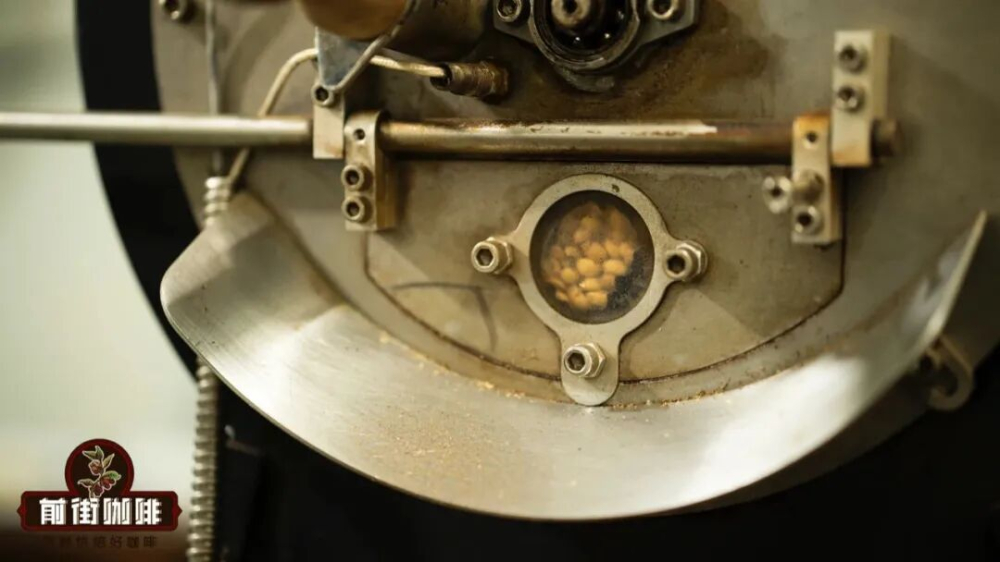
Throughout the roasting process, the two most important reactions are the Maillard reaction and the caramelization reaction. The Maillard reaction is related to the flavor and color of coffee beans. In a high-temperature environment, sugars and amino acids react to produce hundreds of flavor compounds, which ultimately come together to form the unique flavor of coffee beans. The caramelization reaction, on the other hand, is when sugar substances dehydrate, degrade, and brown under high temperature, deepening the color of the coffee beans while releasing aromatic and acidic compounds.
The formation of coffee bean aroma and the transformation of color are inseparable from the Maillard reaction and the caramelization reaction. During the roasting process, there are three elements that determine the final flavor and must be controlled well: sourness, sweetness, and bitterness. Generally speaking, the longer the total roasting time, the less residual sourness there will be at the end, and conversely, bitterness will increase with time, so coffee with a darker roast tends to be more bitter.
How roast level affects coffee flavor
In traditional practice, roasters generally adopted mainstream dark roasting, which can highlight a mellow, charred-aroma coffee taste and makes it less likely to taste defective flavors. With the rise of the specialty coffee concept, everyone began to value unique regional flavors and favor coffee with a clean taste and obvious sweetness and acidity, so light-roasted single-origin beans gradually became popular. The darker the roast, the more substances will caramelize, so if you want to retain more fruit acidity and floral aroma, you will choose a lighter roast level.
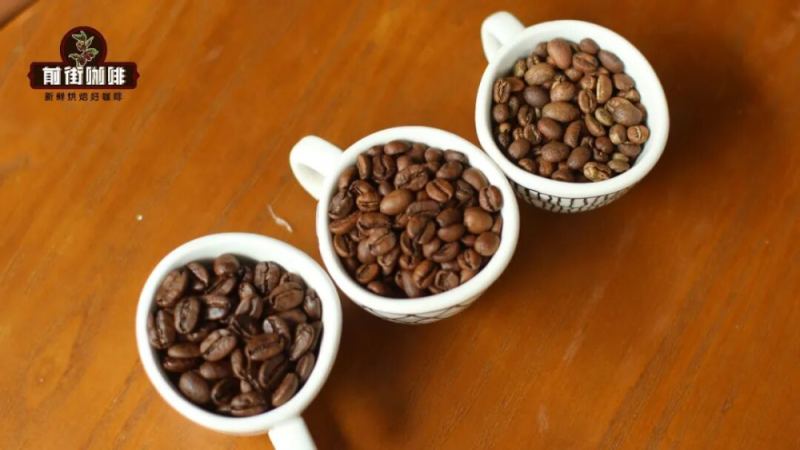
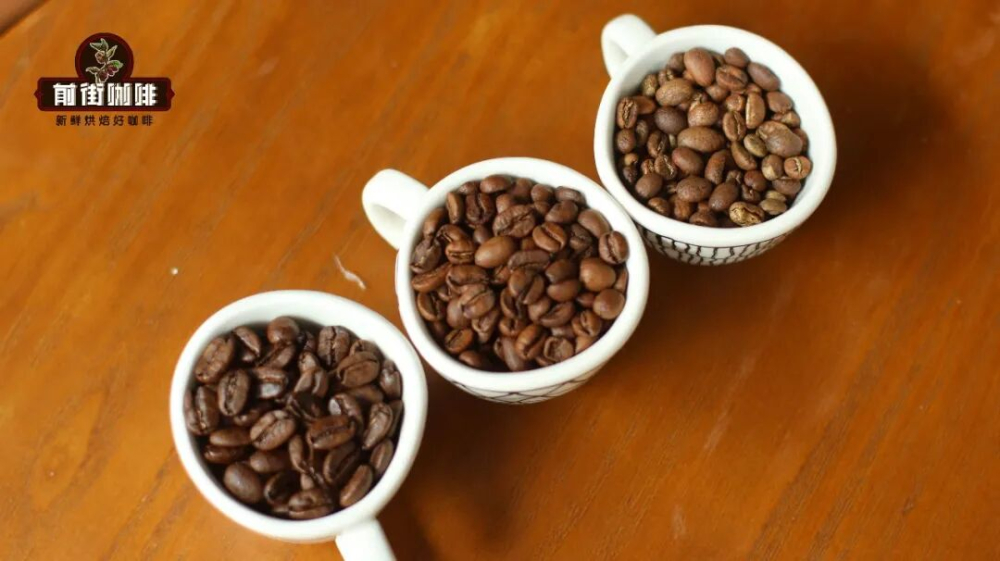
The common coffee bean roast levels on the market can be roughly divided into three categories: light roast, medium roast, and dark roast.
Light roast: rich fruit tones, with sweet-and-sour floral and fruity acidity, a relatively strong acidic perception, and flavor descriptions mostly of floral, citrus, berry, peach, honeydew, tea-like, berry... for example, Front Street Gutingding Cooperative coffee beans.
Medium roast: presents nutty tones, also with fermented characteristic mouthfeel, mainly aromas of nuts, baked bread, cocoa, malt, dried fruit, fermented wine, for example, Front Street Bird of Paradise coffee beans.
Dark roast: has a slightly chocolatey and caramel bitter note, lower acidity, rich roasted nut aroma, with spice, woody, and charcoal notes. The representative coffee bean is Front Street PWN Golden Mandheling.
Many people may think that coffee acidity means light roast and coffee bitterness means dark roast, but from the perspective of coffee professionals, things are not that simple. The choice of roast level requires understanding the flavors inherent to the coffee region itself, while also showcasing the unique taste of one's own roasting, in order to become a competitive product in the market. As a selling merchant, Front Street roasters not only have to find the roasting curve corresponding to each coffee bean, but also need to ensure that production quality remains consistently stable. Therefore, to roast coffee well, roasters need to be familiar with bean characteristics and roasting principles, and also continuously accumulate experience, in order to present the complex aroma of coffee beans more perfectly.
What roast level of coffee beans is suitable for SOE
SOE stands for "Single Origin Espresso," that is, espresso made from single-origin coffee. The opposite is espresso blend.
When we use blended coffee beans to make espresso, mixing coffee beans from different regions, as the roast level deepens, the flavor and mouthfeel tend toward balance and roundness, and it is also more conducive to stable extraction. For example, the recently quietly launched Front Street Autumn Chestnut Blend uses a brand-new combination of Honduras and Papua New Guinea. The medium roast allows the espresso to highlight cocoa and spice flavors as well as the sweet aroma of roasted nuts, while also retaining a touch of soft acidity, with an overall soft and delicate tone.
In order to present the regional flavor characteristics of single-origin coffee (such as the floral and fruity aroma of Africa), roasters will choose a lighter roast level to retain more acidity and floral aroma. These high-quality flavors that perform well in pour-over instead magnify various tastes under espresso machine extraction, making it easy for the espresso to become extremely harsh.
The roasting of all single-origin coffee needs to take into account presenting the unique regional flavor of the origin and the aroma of the coffee bean itself, just as Kenyan coffee should have a bold berry acidity, Blue Mountain coffee should have sweet chocolate and caramel aromas, and Panama Geisha should let people taste orange aroma and honeyed charm. Similarly, SOE also needs to express the highly recognizable flavor characteristics of the origin. The difference is that these high-quality flavors that perform well in pour-over, when switched to espresso machine extraction, instead magnify various tastes, making the espresso extremely harsh, with either the flavors being covered up or the aroma unable to come through, in which case SOE becomes meaningless.
To showcase a uniquely styled SOE, in addition to testing the roaster's skill, the extraction stage also requires precise control of various parameters. Coffee beans with a lighter roast are usually harder in texture. When the extraction intensity is insufficient, the espresso will taste flat and bland, while over-extraction will make it strong and harsh. If you want to find the right extraction yield, you need to adjust various extraction parameters, such as extraction time, water temperature, grind size, dose, beverage weight, and so on. Now everyone understands why SOE is not that simple.
Light roast and dark roast tend to present an unpleasant harsh mouthfeel in espresso extraction. Front Street suggests choosing some medium-roasted coffee beans whose flavors are easier to present, which can not only enrich the taste of the coffee in our cup, but also be more conducive to stable extraction. Here Front Street recommends three flavor types for everyone's reference:
1. Refreshing flavor type coffee beans: Front Street Flower Kui SOE, Front Street Grana Geisha SOE, Front Street Red Cherry SOE;
When Front Street uses this type of bean to make espresso, there is less crema on the surface, but it will be fine enough, the color tends toward pale yellow, it smells of berry aromas, the sweet-and-sour citrus and caramel flavors blend, the finish is clean, and after adding steamed hot milk it presents a honey and nut mouthfeel.
2. Rich fermented flavor type coffee beans: Front Street Sidra, Front Street Blackberry
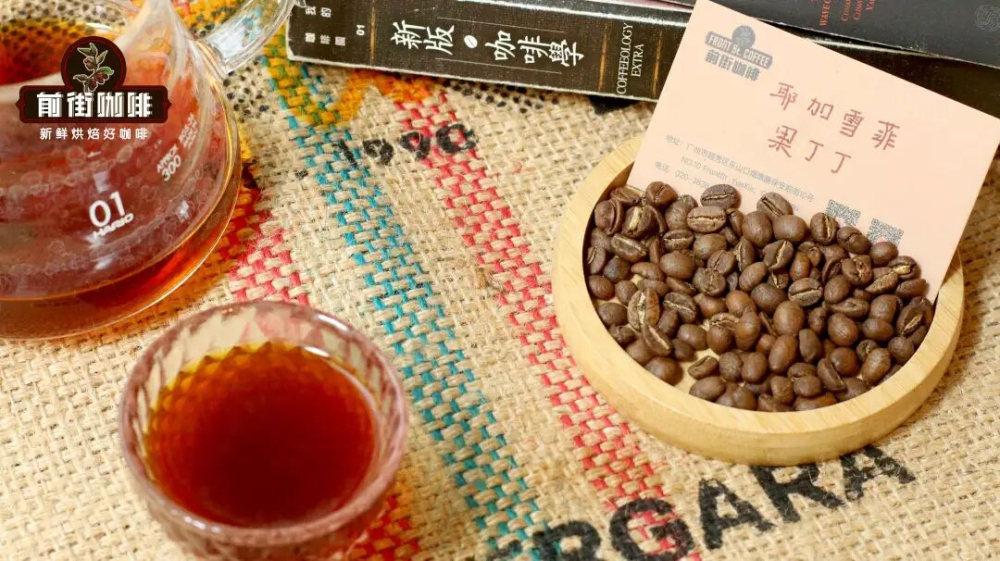
Most of this type of coffee uses honey processing, anaerobic natural, anaerobic washed, and other processes when it is green beans, allowing the coffee to further deepen its fruity aroma during fermentation. In pour-over it presents high-sweetness flavors similar to raisins, fruit wine, honeydew, mango, and honey, while extracted as SOE it shows rich tropical fruit and a fermented mouthfeel.
3. Balanced and mellow mouthfeel coffee beans: Front Street Queen's Estate, Front Street Bird of Paradise
Because this type of coffee bean uses a medium roast, while highlighting caramel-type aromas, it also retains a certain acidity, with the overall tendency being a balanced expression of sourness, sweetness, bitterness, and sweetness. In pour-over there will be the sweetness of baked bread and nuts, a spice finish, and a good mellow mouthfeel; made into SOE there will be aromas of roasted hazelnut and chocolate, the fresh sweetness of melon and sugarcane, and when made into a latte or flat white it easily highlights a creamy smoothness.
The above content is compiled by CoffeeHunters, a coffee news website.


