







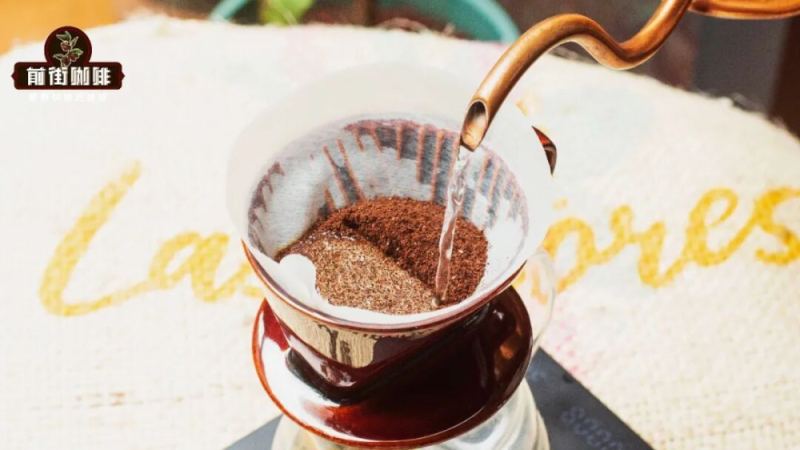
Is the Z-Pour Technique Within the Coffee Scope of Beginners?
The Z-shaped one-pour is a two-stage pour-over method: after blooming, the remaining hot water goes in one continuous pour, with the stream tracing a Z path across the coffee bed and then reversing back along the same line. Supporters say it is more stable than circular pouring for beginners, while critics find the motion hard to repeat and the flavor result only average.
Because there is almost no pause between stages, flow rate and stream steadiness decide the cup. Practiced on a Front Street Yirgacheffe Worka, the technique can be compared side by side with classic three-stage brewing to see where each one lands on acidity, sweetness, and body. Whichever method is chosen, the coffee scope of a beginner can grow one variable at a time, keeping grind and ratio fixed.
For friends who are just getting into pour-over coffee, choosing a pouring method that is easy to pick up and highly stable is crucial. Recently, a brewing technique called "Z-shaped one-pour" has become popular in the coffee community, attracting many enthusiasts to try it due to its unique line path and simplified segmentation logic. Some believe it is easier to control than traditional circular pouring, while others find it quite difficult to operate and its flavor performance mediocre. This article will take Front Street Yirgacheffe Worka as an example, and based on Front Street's actual operation, break down in detail the pouring path, parameter settings, and key details of the Z-shaped one-pour, and compare its flavor with the classic three-stage brewing, helping beginners fully understand the pros and cons of this technique and its applicable scope.
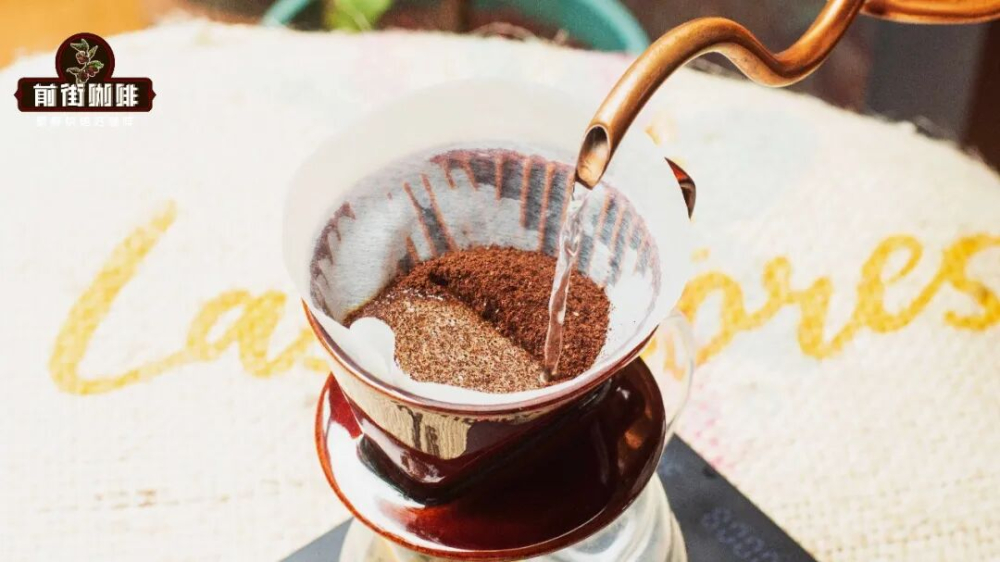
Recently, Front Street has continuously seen a new brewing technique called "Z-shaped one-pour" on various platforms. Because the operation method is quite unique, many coffee enthusiasts have tried to replicate it at home. After actual experience, some believe that coffee extracted with the Z-shaped one-pour is relatively stable and quite friendly to beginners; however, many players also feel that its operation is not as simple as it looks, and in terms of final taste, its performance can only be considered average.
The so-called "Z-shaped one-pour" can actually be understood by breaking it down into two parts: "Z-shaped" and "one-pour."
Let's first talk about one-pour, which everyone may be relatively familiar with—it refers to a brewing method in which, after blooming, the remaining hot water is poured in one continuous go, with the entire process consisting of two stages. Since there is almost no pause in between, whether the water flow is stable and whether the flow rate is appropriate directly determines the success or failure of a cup of coffee, so this technique places stricter demands on basic pouring skills.
The core of "Z-shaped" lies in this: during extraction, the water flow is made to travel in straight lines along a "Z"-shaped path into the dripper, sweeping in an orderly top-down manner over every position of the coffee bed inside the filter paper. When the line reaches the bottom, it then returns in reverse along the same path from bottom to top back to the starting point. This cycle repeats until the remaining target water volume is no longer enough to complete another surface rinse, at which point the flow is kept at a central fixed point until pouring is finished.
How exactly is the Z-shaped one-pour brewed?
In terms of parameter settings and tool selection, the Z-shaped one-pour is actually not very different from other brewing schemes. In order to obtain a more intuitive visual effect, Front Street uses 20g of coffee grounds, a 1:15 coffee-to-water ratio, paired with a V60 #02 dripper and a Kalita flat-bottom dripper. Since this is the first practical attempt, the water temperature and grind size are kept consistent with Front Street's daily brewing. In addition, considering the need for comparison, Front Street will use the same parameters and brew another pot of coffee with the familiar "three-stage" method.
As for the coffee beans, Front Street selected the recently launched Front Street Yirgacheffe Worka. This is a relatively rare anaerobic natural single-origin in the Ethiopian production area. Ripe coffee cherries are first fermented for 72 hours and then dried in the sun, allowing more tropical fruit aromas to be released, among which jackfruit and citrus flavors are especially prominent.
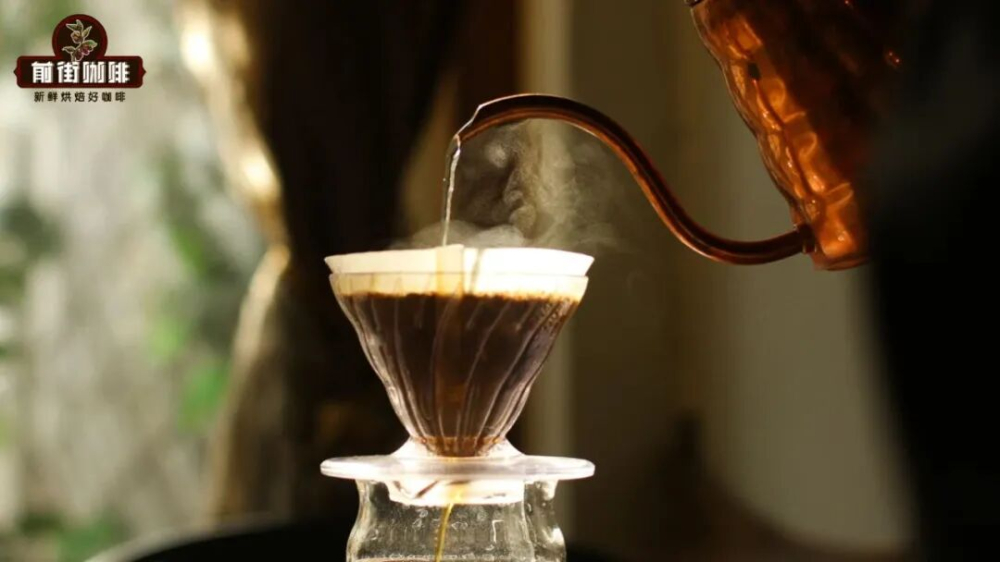
Coffee beans: Front Street · Yirgacheffe · Worka
Coffee grounds: 20g
Coffee-to-water ratio: 1:15
Water temperature: 92~93°C
Grind size: Ek43s setting 10 (80% passing rate on China No. 20 sieve)
Dripper: V60 #02
Z-shaped one-pour brewing method:
First rinse the filter paper clean, pour 20g of coffee grounds into the dripper, and gently tap level. Press the timer button and begin pouring hot water from the very top, with the flow rate not too large, slowly tracing a "Z" shape, like doodling to fill in color when drawing, ensuring every part of the coffee grounds can be moistened by water. When the Z-shaped motion reaches the very bottom of the circle, stop; at this point the total poured water is 60g.
After 30 seconds of blooming, begin pouring the second stage. Still let the water flow slowly trace a "Z" shape from the very top along the coffee surface until the landing point reaches the other side of the dripper;
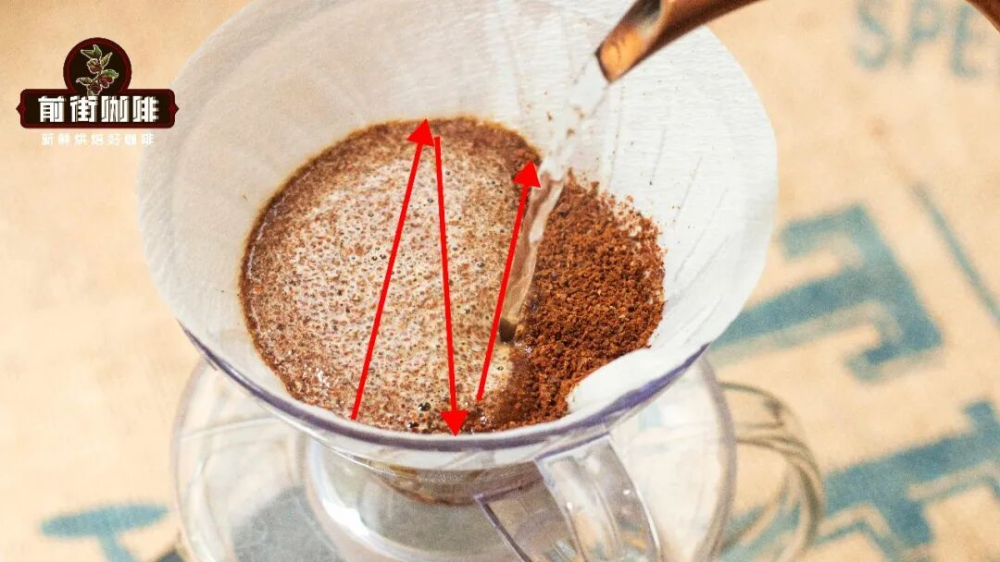
Do not pause in the middle; keep the water flow on the same path and return in reverse to the starting point, and after touching the wall, go back and forth again;
Front Street observed that after completing the third round of "Z"-shaped tracing, there was still about 40g left to reach the target total water volume, so the landing point was moved to the center for pouring to avoid damaging the coffee bed structure. After all the coffee liquid fell into the server, the total extraction time was 2 minutes 25 seconds.
Flavor comparison between the Z-shaped one-pour and three-stage brewing:
Front Street first tasted the coffee brewed with the three-stage method. Before even taking a sip, a hint of floral honey aroma and a faint fermentation note could be smelled. On the palate, it presented a fresh, sweet-and-sour note like lychee and citrus, with a soft aftertaste and a lasting finish. However, the Z-shaped one-pour method failed to showcase the rich flavor layers of Front Street · Worka; it drank more like tea, citrus acidity, and higher body.
Brewing details of the Z-shaped one-pour
During multiple attempts, Front Street found that the Z-shaped one-pour is actually more difficult to extract with than the regular one-pour:
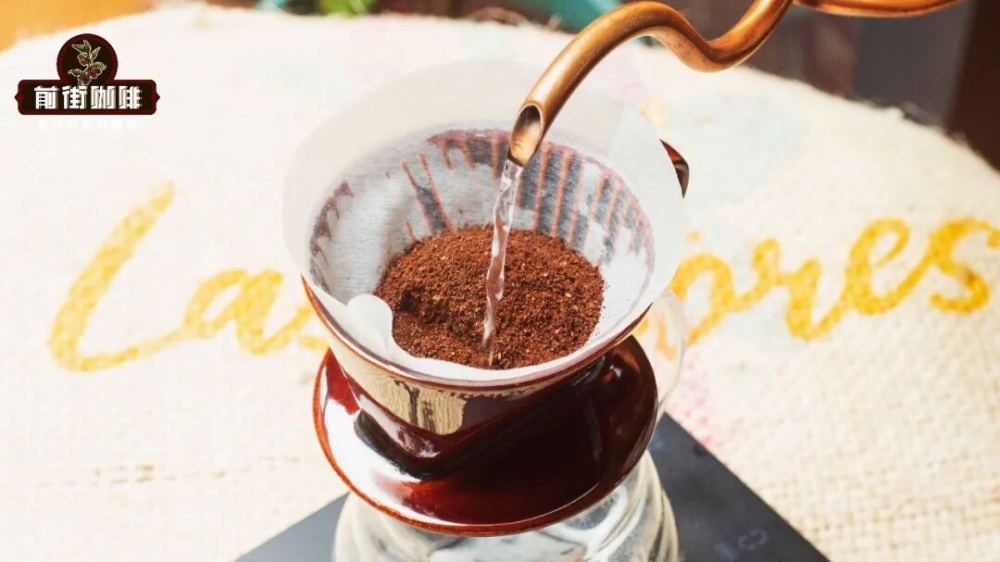
First, the water flow rate must remain consistent and moderate throughout; too large can easily collapse the coffee bed wall, while too small leads to low extraction efficiency. Front Street controls the flow rate at 3ml/s. Second, the water flow path must be smooth; the brewer needs to steadily draw the Z shape on the liquid surface, avoiding pauses midway that cause uneven extraction in some spots. Finally, since the total water volume is divided into only two stages, when we focus on drawing the lines, it is easy to neglect the extraction time, causing the total duration to deviate far from 2 minutes, so brewing also requires "doing two things at once."
Compared with the circular stirring method, the Z-shaped one-pour is closer to rinse-style extraction, using hot water to repeatedly cover the coffee bed so that soluble substances are released in an orderly manner. At this time, it can be used together with a flat-bottom dripper (cake cup, Kalita扇形滤杯), which can enhance the immersion extraction effect and make the coffee taste more full-bodied and rich.
The above content is compiled by CoffeeHunters, a coffee news website.


