







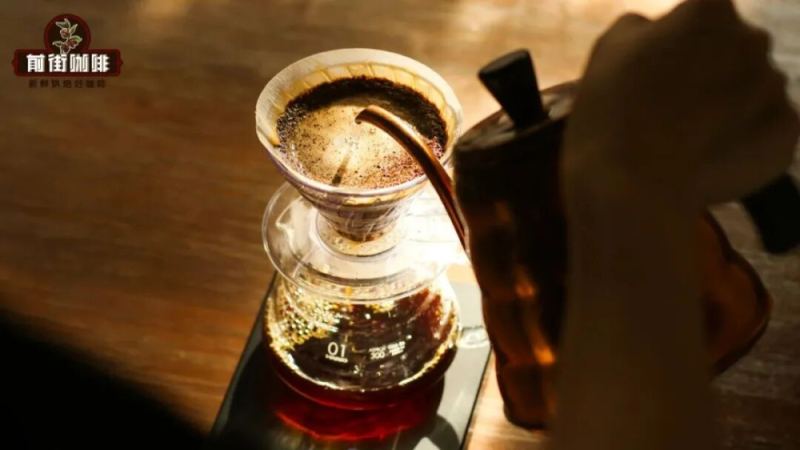
How do coffee beans grow and why does flow rate differ?
Pour-over flow rate is not random. Lighter roasts keep a denser internal structure and produce more fine particles, so the coffee bed clogs and water drains slowly. Darker roasts expand during roasting, leaving a looser bed that lets water pass quickly, which is why one bean finishes before two minutes and another holds water.
Processing method and how do coffee beans grow also matter. Growing conditions of coffee, especially altitude, shape bean density: high-altitude lots are denser and often roasted light, so they need a coarser grind and gentler pouring. Anaerobic and dark-roasted beans usually need the opposite adjustment to keep the extraction even.
With the same set of pour-over parameters, why do some beans finish dripping in under two minutes, while others seem to hold water from start to finish? Many friends new to pour-over encounter this confusion at Front Street stores. In fact, the flow rate performance of coffee beans is not random; it is closely related to roast level, processing method, and growing altitude. Starting from Front Street's extraction experience, this article first breaks down the three major influencing factors, then provides specific grinding and technique adjustment suggestions for anaerobic beans, dark-roasted beans, and high-altitude light-roasted beans, helping you find the right extraction rhythm for different beans.
If you often read Front Street articles, then you should be quite familiar with the "2 minutes" brewing time. It is a reference value based on countless past extraction experiences, and it can help us judge whether the flow rate is fast or slow.
Recently, a friend bought a bunch of different types of beans at a Front Street store and curiously asked: every time he extracts according to the parameters we provided, why do some coffee beans flow especially fast during brewing, with all the liquid already dripping into the server before 2 minutes, while other coffee beans seem like "enemies," always holding water for a long time every time, and he doesn't know whether it's better to cut off the flow or wait for the water to finish.
Let's first look at the main factors that affect the flow rate of different coffee beans:
1. Roast level
The lighter the roast, the shorter the heating time for the coffee beans, and the higher the internal density. This makes the structure of the coffee bed tighter, leaving smaller gaps for hot water to pass through during extraction, making clogging more likely. In addition, light-roasted coffee beans are more brittle, and at the same grinding setting, they will "burst" out more very fine particles, which is also one of the important reasons why pour-over light-roasted beans always "flood."
As the roast level deepens, the coffee beans continue to expand, the density of the internal structure becomes lower, and the coffee bed after grinding is loose and even, providing larger gaps for hot water. This allows the coffee liquid to pass smoothly into the server, so the overall extraction time of medium to dark roasted beans is easier to control than that of light-roasted beans.
2. Processing method
Washed, natural, and honey processing are classified as the three traditional processing methods. During processing, coffee beans are not subject to much external intervention, so their structure retains its original density. In contrast, there are "non-traditional processing methods," with anaerobic fermentation as a typical representative.
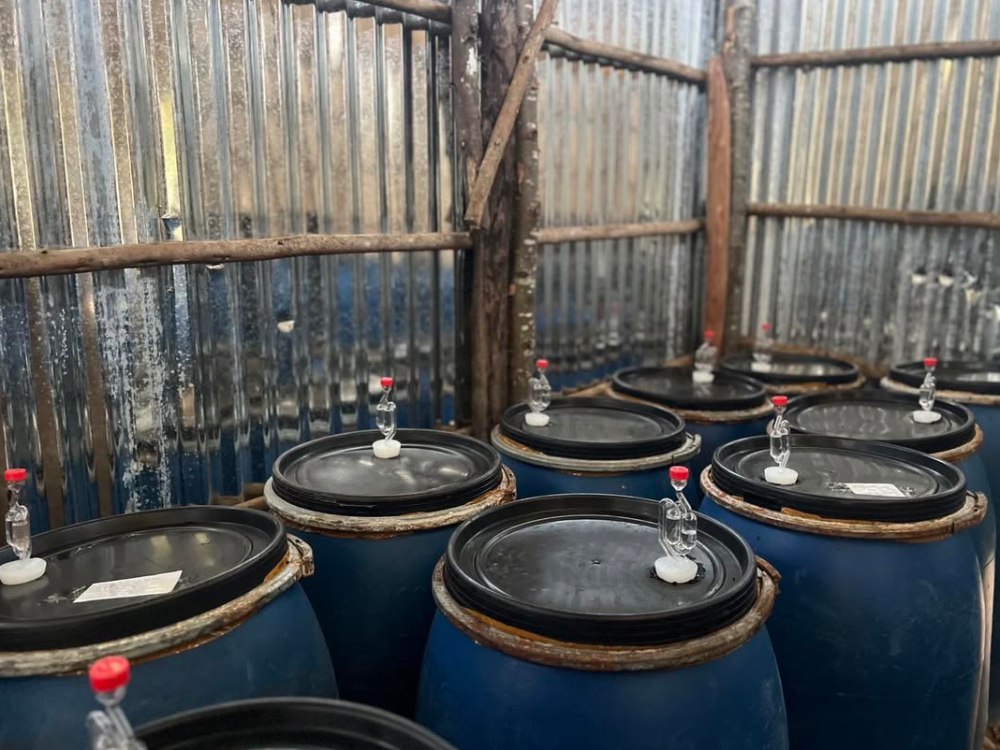
Anaerobically processed coffee beans are fermented under controlled temperature in sealed tanks. The decomposition rate of pulp and mucilage decreases, extending the fermentation time, which in turn causes the coffee beans to develop more fruity flavors and fermented wine aromas. Compared with the three traditional coffees, the anaerobic process reduces the tightness of the coffee bean cell walls, so after roasting, the internal structure becomes very loose, and it can be turned very easily and smoothly during grinding.
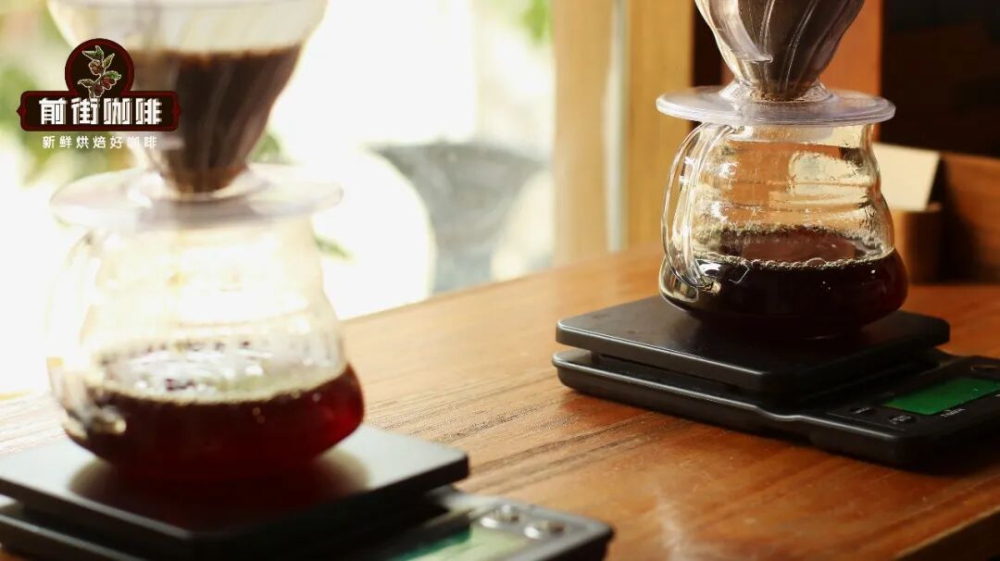
Front Street's Xizhao coffee using double anaerobic natural processing is a very successful example. The low-temperature fermentation step greatly improves Xizhao's sweetness, making the aromas of passion fruit, grape, and dried blueberry clearer. Although Front Street Xizhao also uses a medium-light roast, during extraction you can find that the drainage speed is noticeably much faster than that of general natural and washed beans, and it is easy to under-extract if you are not careful.
3. Growing altitude
In the introduction of all single-origin coffee beans, basic information such as origin, estate, processing method, altitude, and variety is often listed... Influenced by purchasing needs, very few people pay attention to the reference indicator of "growing altitude." But Front Street wants to tell you that if you want to comprehensively analyze flow rate issues, altitude may just hold the answer.
Anyone who has studied geography knows that for every 100 meters rise in altitude, the temperature drops by 0.6°C. Therefore, the higher the growing altitude of the coffee tree, the lower the temperature, and the slower the growth and ripening speed of the fruit. This not only helps the coffee beans store more aromatic precursors, but also gives them higher hardness.
For example, in the Ethiopian producing regions that Front Street likes very much, most of its single-origin coffees are produced at altitudes above 2,000 meters, such as Front Street Gudingding (2,100 meters), Front Street Gesha Village Red Label (2,069 meters), and Front Street Hualei (2,350 meters). These medium-light roasted beans, which highlight floral aromas and fruity acidity, have slower flow rates during brewing because of their high hardness, and coffee that seriously "overtimes" will either be over-extracted or have unclear flavors.
Now that the reasons have been explained, let's analyze the solutions:
Now that everyone knows that the pour-over flow rate of different coffee beans is affected by the above three aspects, then to bring the extraction time into the ideal range, you only need to analyze each specific situation individually.
Flow rate too fast: anaerobic processed, dark roasted
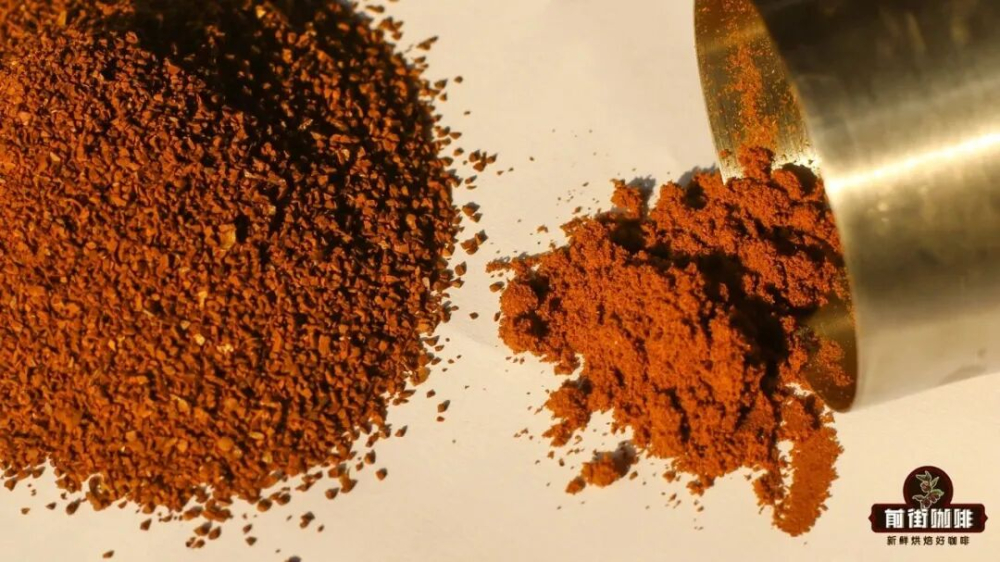
If the drainage speed when brewing anaerobic coffee beans is absurdly fast and the aroma is still weak, it is most likely under-extraction, and it is best to directly adjust the grind size. Front Street usually uses only 2~3 grinding settings for coffee: the finest for light roast and the coarsest for dark roast, while anaerobic coffee, in order to retain hot water, will be 0.5 settings finer than light-roasted beans (a hand grinder can be adjusted 1~2 clicks finer). At the same time, to make the extraction time more sufficient, Front Street will control the water flow to be smaller when pouring, without needing to raise the coffee bed too high. This way, the brewed coffee will have a richer, fuller flavor.
When you are brewing dark-roasted beans and the time is always under 1 minute 40 seconds, with a thin mouthfeel, the problem is very likely a lack of support from the tail-end substances. Considering that dark-roasted beans contain more caramel-like substances, making the grind finer can easily release too much bitterness, so instead, Front Street suggests dividing the total water amount into four pours. After blooming ends, pour in a small stream in circles throughout. If conditions allow, you can switch to slow-flow drippers such as KONO, cake cup, or Kalita, which can lengthen the overall immersion time. If you feel it is over-extracted, lower the water temperature by 1~2°C and try again.
Flow rate too slow: high-altitude light-roasted beans
Normally, Front Street recommends using the combination of "high water temperature, fine grind, fast flow rate" when brewing light-roasted beans. In this case, fine grinding is the main culprit for the slow flow rate. There are two solutions to this problem: either adjust the grind coarser, or change the technique, and then lower the water temperature.
If every time you brew light-roasted beans the clogging is extreme, and the taste is mainly tea-like astringency, thinness, and sharp acidity, then Front Street suggests you adjust the grinding setting coarser by 3~4 clicks. This can directly change the particle size and reduce the distribution of very fine particles, while also reducing the contact area with hot water, allowing the coffee liquid to flow faster.
Without changing the grind size, if you want to speed up light-roasted coffee, you can also rely on adjusting your technique. Front Street generally, after blooming, continuously increases the circling range while pouring, until the coffee bed is piled up to 4/5 of the dripper. The purpose is to let the larger particles first carry the fine particles to the edge of the dripper, providing a smooth channel for the subsequently poured hot water. Wait until all the coffee liquid is almost finished before continuing to pour the third batch of hot water. In this way, the probability of clogging is reduced, and it is also more conducive to subsequent even extraction.
Finally, if adjusting the grind size and technique cannot improve the water retention problem in pour-over, then Front Street suggests you first not interfere with the brewing time, but instead try lowering the water temperature. For example, whenever brewing Front Street Gesha Village Gold Label, using a fine grind makes it very easy to over-extract because of "overtime," so Front Street had a sudden inspiration and adjusted the water temperature to 86°C, ending extraction at 2 minutes 32 seconds. Not only did the coffee have no negative flavors, it actually showed rich fresh citrus aromas and black tea notes. This shows that there is no universal formula for pour-over, only appropriate extraction management.
The above content is compiled by CoffeeHunters, a coffee news website.


