







Why are some coffee beans oily, and does it affect cold brew?
Bitter or sour cold brew almost always means over-extraction or under-extraction. Too fine a grind, too long a steep or a roast that releases solubles quickly pushes bitterness; too coarse a grind or too short a steep leaves sourness. Roast level, grind size, steeping time and filtration each shift the balance.
Ask why are some coffee beans oily and the answer is usually roast level: darker roasts bring oils to the surface, and those oils dissolve readily in a long cold steep, adding heaviness and bitterness. For those beans, use a coarser grind and a shorter steep, then filter thoroughly. Cold brew extracts roughly 67% less acid than hot brewing.
Cold brew coffee has become the top choice for many people in summer thanks to its smooth, full-bodied taste and lower acidity and astringency. It uses cold or room-temperature water to steep coffee grounds for a long time; in a low-temperature environment, small-molecule floral and fruity notes are released first, while large-molecule roasted substances are difficult to dissolve, making it cleaner and softer than hot brewing. However, in practice, "too bitter" and "too sour" remain the two most common problems. This article analyzes the root causes of over-extraction and under-extraction in cold brew from the perspectives of roast level, grind size, steeping time, and filtration method, and offers practical adjustment suggestions from Front Street Coffee to help you make a balanced, easy-drinking glass of iced coffee.
More and more people are falling in love with cold brew coffee, not just because of its icy temperature, but also because of its silky, mellow texture and its ability to better showcase the unique aroma of a single coffee bean.
From a flavor perspective, high temperatures cause the tannic acid in coffee to break down, bringing about astringency and bitterness. Some studies indicate that the acidic components extracted by cold brew are about 67% lower than those from hot brewing. It is precisely because of this lower astringency that cold brew is so well loved.
In a low-temperature environment combined with the long contact with coffee grounds, only small-molecule flavor substances (such as floral and fruity notes) can enter the water, while components with larger molecular weights, such as smoky and roasted notes, are not easily extracted. This also explains why cold brew does not have a particularly prominent aroma when smelled, yet is exceptionally smooth on the palate. Comparing the same bean, cold brew may have less layering than hot brewing, but its texture is thicker and purer than other iced coffees.
Unlike hot water extraction, cold brew is a cold drink made by steeping coffee grounds in cold or room-temperature water and then placing it in the refrigerator for several hours. As for the specific method, Front Street has already shared quite a lot of practical tips, which you can look up in the "Front Street Coffee Knowledge Compendium." Although the content is already quite detailed, some friends still run into problems during实际操作, and the most frequently reported issues are "cold brew is too bitter" and "cold brew is too sour." Today we will do a brief analysis of these two phenomena.
If pour-over is the representative of hot coffee, then cold brew is the typical example of low-temperature extraction. Because it stays at a low temperature throughout and there is no external agitation during the steeping process, in theory the two variables of water temperature and technique can be ruled out, and it is more a matter of other factors at play.
Cold Brew Coffee Is Too Bitter
When we find a cup of coffee on the bitter side, the reason is either personal taste preference or excessive dissolution of bitter components during extraction.
1. The coffee beans are roasted too dark.
People often ask Front Street which beans are suitable for cold brew. In fact, all coffee beans can be used—whether single-origin pour-over or espresso blends, dark roast or light roast—they can all be steeped in cold water; it is just that at low temperatures they will show different performances.
The darker the roast, the lower the acidity, and the more bitter substances are produced by the caramelization reaction, making the resulting cold brew prone to bitterness. So if you do not like bitterness, be sure to avoid those espresso beans with an oily surface first. For single-origin beans, it is recommended to prioritize light to medium roasts, such as Front Street Paradise Bird, which has a balance of acidity and bitterness with nutty notes; the refreshing Red Cherry; and Front Street Strawberry Candy, which is rich in fruity aroma and has a lingering sweetness.
2. The grind is too fine.
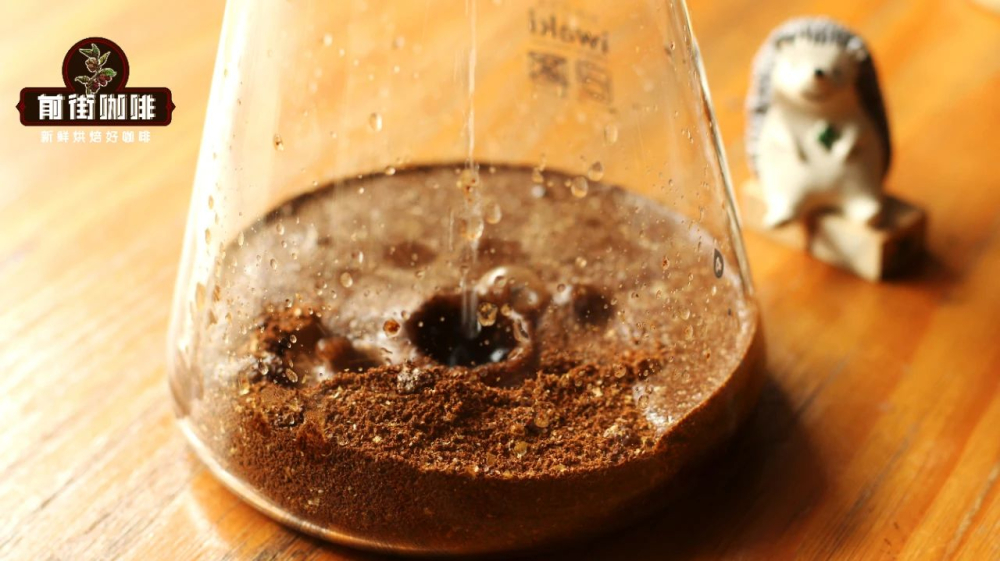
When steeping in cold water, the extraction speed of coffee is very slow, so there is no need to worry too much about over-extraction. The grind size Front Street uses for cold brew is generally a bit finer than for pour-over (adjust finer by 0.5–2 clicks, as shown in the figure below), roughly equivalent to a coarseness with an 82% pass rate on a No. 20 sieve, corresponding to 9.5 clicks on an EK43s electric grinder, or 22–24 clicks on a C40 hand grinder.
However, Front Street would like to remind you: although low-temperature extraction can reduce the release of bitter and astringent substances, it is not absolute. If you grind too fine, after the sweet and sour components in the coffee grounds are quickly extracted, the mellow substances will be released along with them. An appropriate amount of large-molecule components can enhance body, but once steeped too long, woody flavors will emerge, ruining the overall cleanliness of the coffee.
(Grind too fine)
3. The steeping time is too long.
Many beginners think the longer cold brew steeps, the better it tastes, but that is not the case. It is not that the more coffee substances are dissolved, the better; when the extracted components exceed a certain critical value, positive flavors turn into negative effects, giving the coffee off-flavors such as wood, bitterness, and straw.
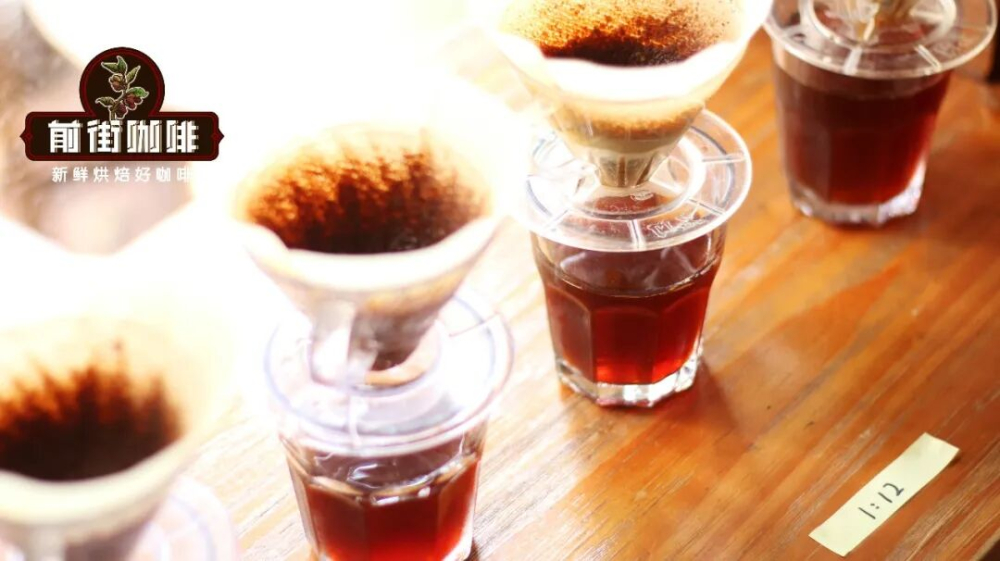
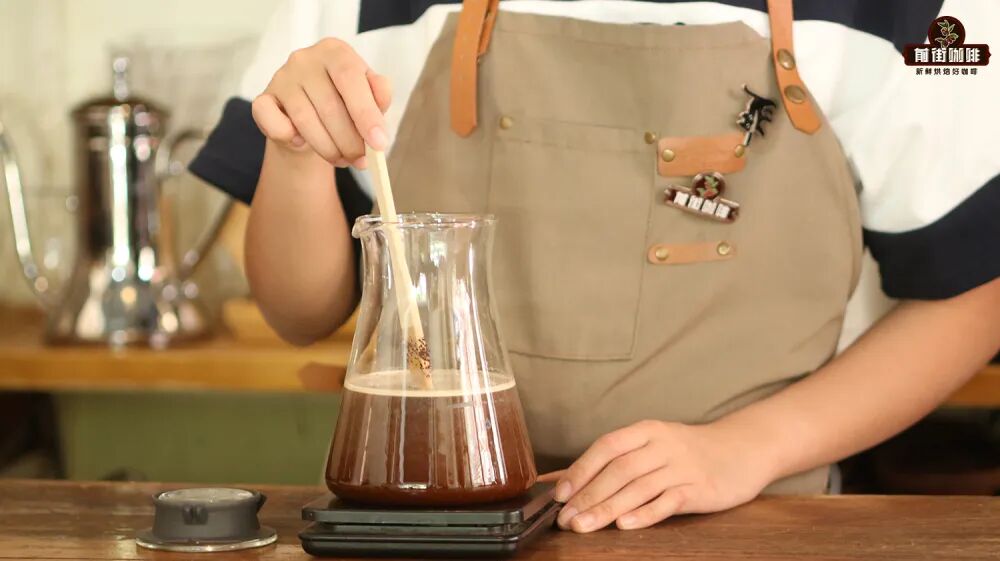
Front Street once conducted a comparative experiment, using the same bean to steep for 4 hours, 10 hours, 16 hours, and 22 hours respectively, keeping the parameters consistent and making one pot of cold brew each. The result showed that the pot steeped for 22 hours showed slight signs of over-extraction, which was precisely caused by excessive release of late-stage substances. Based on Front Street's years of production experience, steeping cold brew for 8–18 hours gives the most reliable flavor.
4. Filtration is not thorough enough.
Cold brew actually has low requirements for the steeping container and filtration tools. You can use the built-in filter mesh of a cold brew pot, or commonly available tea strainers, filter cloth, filter paper, or the metal filter of a French press. Although they all serve a screening function, their fineness is never comparable to filter paper. If you do not do a second filtration, the coffee will taste rough and tend to carry a bitter note, and you may even see a little sediment at the bottom of the cup after drinking.
To obtain a better drinking experience, Front Street always filters it again with filter paper each time. Filter paper of moderate thickness can effectively intercept fine grounds and also block more than 80% of the oils, making the iced coffee cleaner in mouthfeel.
Cold Brew Coffee Is Too Sour
1. The coffee beans are a light roast.
Like bitterness, everyone's tolerance for acidity is different. The lighter the roast, not only are more acidic substances retained, but because of the shorter heating time, the sweetness brought by caramelization is also "suppressed." In addition, during low-temperature extraction, small molecules are released first, so cold brew will show characteristics of lower body, higher acidity, and thin aroma.
If you want an iced coffee with rich fruity aroma but not sourness, you can prioritize beans from Central and South America, especially those whose flavor descriptions include tropical fruit, dried fruit, fermented notes, and so on, such as Front Street Blackberry, Front Street Sidra, and Front Street Big Belly. They naturally carry a caramel-like quality, and over time this aroma can develop into a glass of iced coffee with both full body and aroma.
2. Lack of fermentation and aging time.
Although it has undergone a long steeping process, it is, after all, cold water extraction, and after filtration there are still many suspended substances that have not completely dissolved into the water. If you happen to use light-roast beans, sourness is very likely to dominate, while body and roundness are lacking.
For this, Front Street suggests sealing the filtered cold brew again and putting it in the refrigerator for 3–5 hours, allowing the flavor substances released in the previous step to fully react with the water, thereby promoting the coffee's "aging."
The above content is compiled by CoffeeHunters, a coffee news website.


