






How does roast level change espresso made from coffee beans?
Roast level drives how coffee beans behave in espresso, shaping the balance of acidity and bitterness and the direction of flavor. Light roasts hold more origin character and organic acids but extract unevenly and give thin crema. Medium roasts sit in the middle, blending sweetness and bite. Dark roasts build body and a thick, rich crema that many espresso drinkers prefer.
Origin, variety, and processing set the raw potential, and roasting decides how much caramelized sugar, aromatic precursors, and organic acid survives into the cup. A roast that is too light leaves flavors undeveloped and crema weak; one taken too far flattens nuance. Blends often pour a fuller crema because several lots and roast profiles overlap, filling in what a single lot lacks.
The final expression of a cup of coffee is the result of the combined effects of origin, variety, processing method, roasting, and brewing, among which the roast level directly affects the balance of acidity and bitterness and the direction of flavor. In the context of espresso, the three roast levels—light, medium, and dark—bring completely different extraction performances: light-roasted beans retain more origin flavor and organic acids, but are difficult to extract and produce thin crema; medium-roasted beans balance acidity and bitterness, suitable for those seeking a harmonious taste; dark-roasted beans, with their high body and rich crema, become the ideal choice for espresso. This article takes several Front Street Coffee beans as examples, and through actual extraction parameters and flavor descriptions, systematically analyzes the differences in the performance of different roast levels in espresso, and explains the principle behind why blended coffee has richer crema.
The taste of a cup of coffee is created by multiple factors working together, from the origin, variety, and processing method at the very source, to roasting, and finally brewing. Each link plays its own important role, yet they are closely interconnected, and the absence of any one will affect the final expression of the coffee.
As for roast level, it first determines the acidity and bitterness of the coffee, and affects the retention or loss of caramelized substances, aromatic precursors, organic acids, and sugars. An appropriate roast level can not only fully leverage the advantages of the coffee beans but also weaken their shortcomings, allowing the flavor to be better expressed. So in espresso, how does the roast level affect it? Today Front Street Coffee will talk about this topic~
Light Roast → Espresso
Light roast can be said to be a very popular roast level over the past decade, and its emergence is inseparable from a concept, namely "specialty coffee." Specialty coffee refers to high-quality coffee beans that, under the microclimate and soil conditions of a producing region, develop flavors unique to that origin, such as the bright lemon acidity of Yirgacheffe, the intense berry notes of Kenya, the floral and tea-like feel of Geisha... all are classic characteristics that many coffee lovers are deeply familiar with.
In order to highlight the regional flavors of these coffees, roasters must choose a lighter roast level: first, to avoid excessive transformation of substances into bitterness; second, to allow more of the essential aromatic substances and organic acids to be retained, so they will not be masked by the coffee's bitterness.
Friends who enjoy pour-over coffee all know that Ethiopia is Africa's most famous coffee-producing country, and among its coffees, the washed coffee beans of Yirgacheffe are the most renowned, with Front Street Coffee Gutingting being one of its representatives. When formulating the roasting curve, Front Street Coffee hoped to highlight the citrus acidity and white floral aroma of the Yirgacheffe region, while also emphasizing its honey and nutty sweetness, so it chose a light-to-medium roast. When brewed as pour-over, it shows clear fruity sweet-and-sour notes and a tea-like charm, with distinct layers and a low-bitterness, refreshing taste.
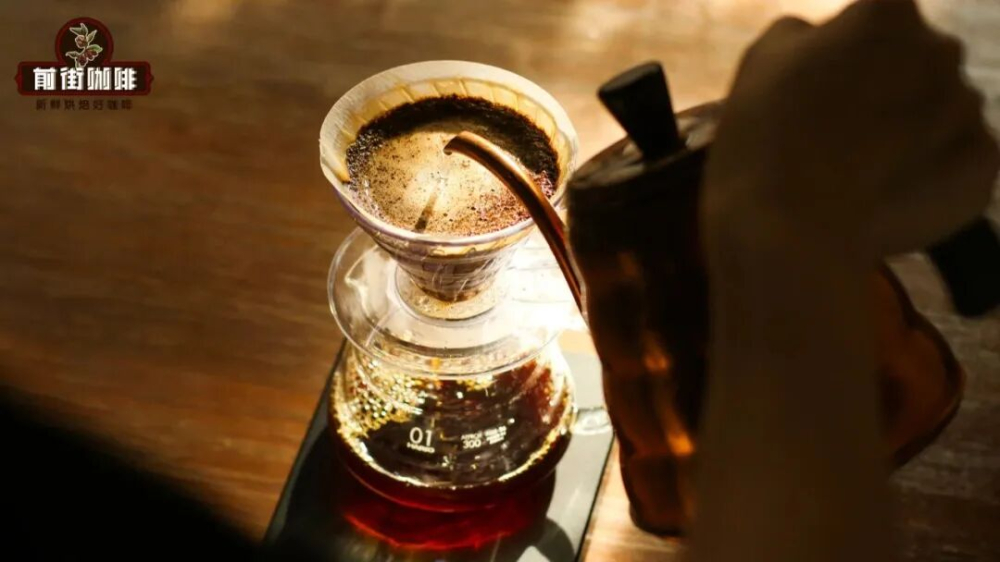
Parameters for Front Street Coffee Gutingting Espresso Extraction
Coffee grounds: 19g
Coffee liquid: 38g
Yield time: 4 seconds
Extraction time: 20 seconds
Grind setting: Galileo Q18-2.0 (time controlled at 20–30 seconds)
Making hot Americano: 1:4 (add 150g warm hot water)
The overall flow rate is fast, the extraction time is short, and the crema is only a ring along the cup wall, pale yellow in color, smelling of cream and nuts. The hot Americano has relatively high acidity and lacks coffee flavor support, so it tastes monotonous. At this point we can see that the difficulty of making espresso with light-roasted coffee lies in the fact that, under the same conditions, light-roasted beans, due to their shorter heating time and higher hardness, are difficult to fully extract even when ground to espresso fineness. The most direct manifestation is that hot water quickly washes through, resulting in ultra-high acidity, even reaching a sharp sourness, with insufficient body and sweetness, though at the same time its bitterness is the lowest.
Medium Roast → Espresso
Medium roast is the category many baristas like most, because it retains part of the coffee bean's own flavor while also having the caramelized flavors brought by roasting. The overall taste achieves a balance of acidity and bitterness, and the roasted substances are also more likely to provide obvious sweetness, making it very suitable for people who pursue a taste that is neither sharply sour nor bitter.
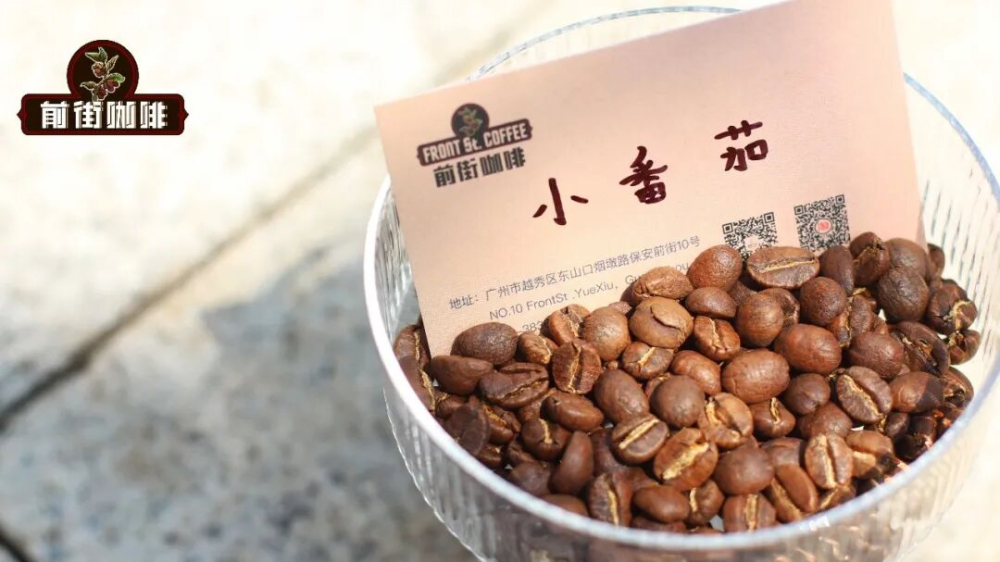
Medium-roasted beans often appear in American producing regions. For single-origin coffee, the top choices are Front Street Brazil Queen's Estate, Front Street 2013 Yunnan Typica, and Front Street Bird of Paradise. For blended coffee, buy Front Street Strawberry Candy Espresso. The caramelization reaction gives them a darker color on the bean surface and creates aromas of fruit, caramel, nuts, and more. Here Front Street Coffee selects freshly roasted Front Street 2013 Yunnan Typica, which comes from Front Street's own estate and is presented with natural processing and medium roasting, aiming to let everyone experience the serene flavor of Yunnan coffee.
Parameters for Front Street 2013 Natural Typica Espresso Extraction
Coffee grounds: 19g
Coffee liquid: 38g
Yield time: 6 seconds
Extraction time: 24 seconds
Grind setting: Galileo Q18-2.0 (time controlled at 20–30 seconds)
Making hot Americano: 1:4 (add 150g warm hot water)
The overall flow rate is medium-fast, and the espresso has a thin layer of crema with brownish-yellow tiger stripes, giving off aromas of brown sugar and chocolate. The hot Americano tends toward a balanced profile on the palate; it is hard to say any one aspect stands out, but the acidity of ripe plum and the slight sweet-bitterness are very harmonious, and after the temperature drops you can still taste a tea-like finish. The shortcoming is that espresso made with medium-roasted coffee still has relatively low body, making it difficult to support the mouthfeel of an Americano, so the flavor threshold is low and the aroma is not lasting.
Dark Roast → Espresso
Undoubtedly, light roast corresponds to dark roast. It has a longer roasting time (higher roasting temperature), and the vast majority of substances participate in the caramelization reaction. The bean body is porous, with a very heavy roasted taste, while also having high body and obvious bitterness, making it most suitable for friends who do not like acidic coffee. Front Street Coffee believes that if light roasting is meant to better showcase the regional flavor of coffee, then dark roasting is meant to restore the classic "coffee taste," and the most representative single-origin coffee is none other than Front Street PWN Golden Mandheling.
Front Street PWN Golden Mandheling naturally carries unique flavors of herbs, wood, and spices. These traits are due not only to the Sumatra producing region and the wet-hulled process, but also inseparable from the rich roasted aroma and full body brought by a near-dark roast, making the final flavor three-dimensional. But when it comes to dark-roasted espresso, people generally think of blends, such as Front Street Classic Blend, Front Street Dark Cocoa Base Blend, and Front Street Commercial Blend, all of which are recommended representatives of dark-roasted beans on the list.
Front Street Classic Blend is a tribute to the once-popular "Mamba coffee." This is an espresso blend combining Indonesian Mandheling beans and Brazilian beans, playing a complementary and harmonizing role in taste. Front Street Classic Espresso Blend adds Robusta on the basis of the Mamba recipe, and during extraction it can obtain aromas of butter, nuts, spices, and dark chocolate. Its wild character, smooth mouthfeel, and overflowing crema are its greatest features.
Parameters for Front Street Classic Blend Espresso Extraction
Coffee grounds: 19g
Coffee liquid: 38g
Yield time: 6 seconds
Extraction time: 29 seconds
Grind setting: Galileo Q18-2.2 (time controlled at 20–30 seconds)
Making hot Americano: 1:4 (add 150g warm hot water)
The entire extraction of Front Street Classic Blend espresso has a uniform flow rate. The crema is thick with tiger stripes, dense in texture and dark brown in color, giving off aromas of caramel, roasted hazelnut, and roasted peanut. The hot Americano has a rich taste, medium-high body, almost no obvious acidity, and a lingering bitterness and sweet fragrance of unsweetened dark chocolate. After the temperature drops, the sweetness of caramel begins to emerge.
From this it can be seen that dark-roasted coffee is clearly more conducive to extracting espresso. Unlike light-roasted coffee, it focuses on high body and abundant crema, providing aroma for the coffee and also endowing it with a rich mouthfeel.
The above content is compiled by CoffeeHunters, a coffee news website.


