







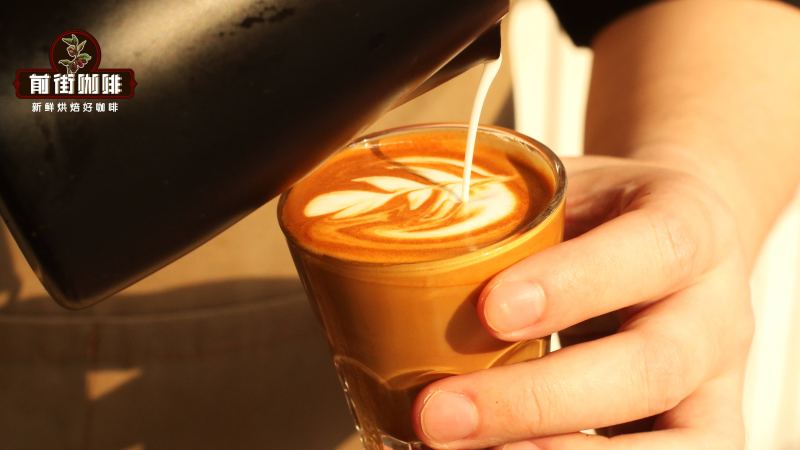
What Is the Piccolo Coffee Ratio and Cup Size?
Piccolo coffee is a mini milk drink from Australia that uses a single ristretto, about 15 ml, as its base, topped with roughly 75 ml of warm milk in a 90 ml cup. That works out to a coffee-to-milk ratio near 1:5, with only about 0.3 cm of thin microfoam, so the drink finishes in a few sips.
The piccolo began as a way for baristas to avoid pouring out full lattes while checking bean quality, and it grew into a scaled-down latte. In English the name comes from the piccolo instrument, while in Italian it simply means small. A flat white, by contrast, usually fills a 150-200 ml cup built on a double espresso.
Piccolo coffee is as famous as Aussie White in Australia, yet it is hard to find on domestic café menus. This mini milk coffee, known as a "small latte," has a cup size of only about 90ml, uses a single Ristretto as its base, and is topped with milk with thin microfoam—it can be finished in just a few sips. It was originally born from baristas' "waste avoidance" when dialing in beans, but today it has become a sharp tool for highlighting coffee bean flavors. This article compares the cup size and recipe differences between Piccolo, Aussie White, and Latte, explains Front Street Coffee's preparation parameters in detail—including 20g of grounds extracting 28g of liquid, a 1:5 coffee-to-milk ratio, 0.3cm microfoam thickness, etc.—and analyzes why Piccolo is niche in China.
For more specialty coffee information, welcome to follow: Front Street Coffee (Frontsteet Coffee)
On domestic café menus, there is a milk coffee drink that is almost nowhere to be seen, but in countries such as Australia, its popularity is no less than that of Aussie White—this is Piccolo coffee, known as a "small latte."
Differences Between Piccolo Coffee and Aussie White Coffee
Piccolo coffee originated in Australia. The word "piccolo" in "piccolo latte" refers to the piccolo instrument in English, while in Italian it means "small." Like Aussie White coffee (Flat White), it is often given the nickname "small latte."
The birth of Piccolo came from roasters and baristas, when evaluating coffee bean quality, using both straight espresso and milk-added methods to judge whether the output met standards. Because the standard latte cup size is rather large, after two or three sips it was often poured away. Baristas felt it was a waste, so they reduced the amount of milk. Over time, this practice evolved into a scaled-down version of latte coffee, and for people who do not want to take in too much caffeine and do not want to be bothered by a feeling of fullness, it is an ideal choice.
Although both Piccolo and Aussie White are smaller than Latte, when it comes to cup size, Piccolo is obviously much more mini. Australian baristas usually choose a 90ml (about 3oz) cup, use a single Ristretto (about 15ml) as the base, and then add 75ml of milk heated to warm with thin microfoam. A cup of Aussie White coffee, however, is about 150–200ml, for example, Front Street uses a double espresso as the base and adds 150ml of hot milk with a dense texture and thin foam. Therefore, a cup of Piccolo is often gone in a few sips, while switching to Aussie White makes it more "long-lasting" to drink.
Key Points for Making Piccolo Coffee
In the past, baristas made Piccolo to reduce waste; today, Piccolo in cafés is more about showcasing the flavor personality of the coffee beans used. Precisely because the Piccolo cup is small, you can both taste the silky mouthfeel after the coffee liquid and milk blend, and more clearly capture the coffee's aroma. However, completing latte art in such a small cup is not easy. To make an authentic and delicious Piccolo, baristas must ensure that the espresso quality is excellent, the milk quality is top-notch, the microfoam is dense enough, and the integration process is even—this is a great test of basic skills.
When making Piccolo, Front Street uses a small cup of about 90–100ml, controls the coffee-to-milk ratio at 1:5, and preheats the cup in advance to maintain the coffee's ideal drinking temperature as much as possible. The flavor foundation of coffee lies in the beans used. The espresso drinks served at Front Street stores all use Front Street's own roasted "Sunflower Warm Sun Blend Coffee Beans" to extract espresso. This blend is composed of 70% Honduras Sherry coffee and 30% Yirgacheffe sun-dried Red Cherry coffee: Sherry brings whiskey, vanilla, and cream notes, while Red Cherry contributes tropical fruit and fermented notes, making the overall cup rich in layering and mild.
Piccolo uses a single Ristretto as the base. Ristretto, or restricted espresso, means "restricted" in Italian, also known as extra-concentrated espresso, and usually only the front and middle sections of Espresso are extracted, so it is higher in concentration and more focused in flavor. Front Street's method is: use 20g of coffee grounds, extract 28g of coffee liquid within 20–25 seconds, of which a single Ristretto is 14g, and pour it into the cup first.
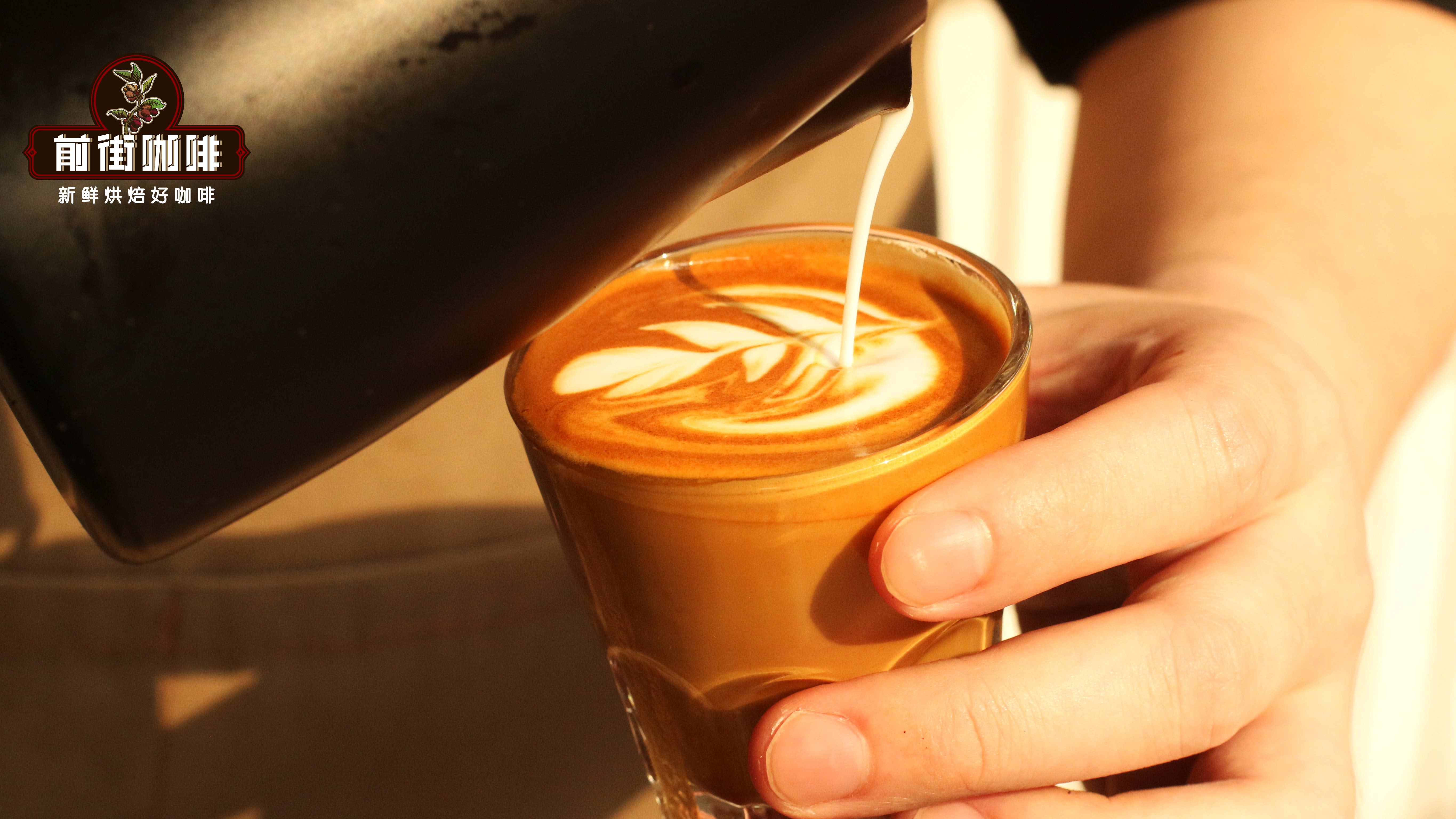
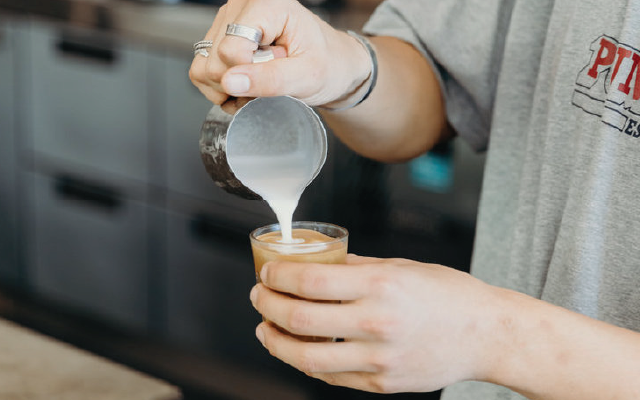
The milk steaming stage is quite particular; you should know that the less milk there is, the harder it is to steam. Front Street uses a 350ml milk pitcher and pours in 100ml of milk. The microfoam of Piccolo latte is thinner than that of Aussie White, so the air intake should be less and the time shorter, with a thickness of about 0.3cm, and the steaming temperature controlled between 55℃ and 60℃, so it will not burn the mouth when drinking. Try to integrate the microfoam and Ristretto evenly, and begin pouring latte art when it reaches seven-tenths full. The finished Piccolo is best enjoyed immediately.
The Piccolo coffee served by Front Street has aromas with notes of vanilla, cream, chocolate milk, and whiskey-filled chocolate, as well as a berry-like sweet-and-sour sensation. The coffee flavor is full, the milk is creamy and fragrant, and the finish is lasting.
Why Is Piccolo Rare in China?
Also a popular drink in Australia, Piccolo has not entered the public eye with the help of a "big name" like Starbucks the way Aussie White has. Many people's impression of this milk coffee still remains at the level of "niche." In addition, in regions with deep coffee culture such as Europe and Australia, most people go for the coffee drink itself: they order a Piccolo in the store, drink it, and leave. Domestic cafés, however, serve more of a leisure function, and people are used to chatting and savoring slowly, so Piccolo's positioning seems somewhat out of step.
With the continuous development of the specialty coffee industry, many domestic coffee shops now place more emphasis on the regional flavor of single-origin coffee beans, and therefore launch mini milk coffees like Piccolo to amplify coffee aroma. But after all, the cup size is small while the price is on par with a latte, so as consumers, people will naturally be inclined to choose a coffee with a larger portion.
The above content is compiled by CoffeeHunters, a coffee news website.


