







How Does the Coffee Association Classify Espresso Types?
Espresso is coffee ground fine, dosed into a portafilter basket, and extracted under high pressure in a short time. Three main types follow from changing the yield: ristretto, normale, and lungo. Each is built on the same fundamentals of pressure, water temperature, dose, grind, and extraction time, and all milk drinks such as lattes and flat whites rest on a well-pulled shot.
The golden foam on top, crema, forms when hot water under pressure forces gas out of freshly roasted grounds while dissolved oils emulsify around the bubbles, creating a fine layer of vegetable oils, proteins, and sugars. Pulling a consistent shot means controlling dose, grind, water temperature, time, and yield together, since changing one shifts the taste of the others.
Many people's first impression of espresso is a strong, bitter, highly stimulating black coffee, but it is also the most fundamental element of the Italian coffee system. Whether it's a latte, flat white, or americano, all are built upon a properly extracted Espresso. This article will approach things from Front Street's perspective, systematically explaining the definition of espresso, the formation principle of Crema, and the extraction differences and parameter settings of three types of espresso—Ristretto, Normale, and Lungo—while also sharing the key factors that need to be carefully controlled during extraction, such as dose, grind, water temperature, time, and yield, to help coffee enthusiasts gain a more comprehensive understanding of espresso.
For more specialty coffee knowledge, please follow: Front Street Coffee ( Frontsteet Coffee )
When it comes to espresso, many people picture a heavy, bitter black coffee with an intense flavor impact. For baristas, one of the most important daily tasks is repeatedly calibrating the extraction state of espresso, because almost all popular espresso-based drinks rely on that small cup of concentrated liquid as their base. Today Front Street will talk about what espresso actually is, and the differences between several types of espresso.
What Is Espresso?
Espresso is a coffee liquid obtained by grinding coffee beans into fine powder, loading an appropriate dose into the portafilter basket, and extracting under high temperature and high pressure in a short time using a semi-automatic or fully automatic espresso machine. According to this definition, a qualified cup of espresso needs to simultaneously satisfy multiple prerequisites: sufficient pressure, appropriate water temperature, a reasonable dose, a fine enough grind size, and a relatively short extraction time.
One distinctive feature that sets espresso apart from pour-over, cold brew, and other extraction methods is the golden, velvety foam on the surface—Crema. Freshly roasted coffee beans contain a large amount of gas inside. When coffee grounds are subjected to high pressure in hot water, the gas is forced out of the cell walls due to thermal expansion; at the same time, the hot water also dissolves some of the oils in the coffee, and these oils emulsify to encapsulate the gas, forming a fine bubble layer. Crema is composed of vegetable oils, proteins, sugars, and various aromatic compounds, which is why a freshly extracted espresso often has an inviting aroma.
Types of Espresso
According to the golden cup theory proposed by the Specialty Coffee Association of Europe, after water contacts coffee grounds, about 30% of the soluble substances are released, while the remaining 70% consists of large-molecule woody structures that cannot dissolve. Of that 30%, only about two-thirds are substances with ideal flavor expression, so key parameters need to be adjusted to keep the extraction yield around 20%. In terms of extraction method, Espresso can be divided into three types: Ristretto (short extraction), Normale (regular), and Lungo (long extraction), all of which are rapidly extracted using an espresso machine.
Ristretto is commonly known as extra-concentrated espresso, also called restricted espresso. Compared to the familiar Espresso, Ristretto is more niche, and the well-known Flat White is made with Ristretto as its base. Ristretto carries the meaning of "restricted," which can be understood as extracting a restricted amount of coffee liquid, taking only the front and middle portions of the espresso to increase concentration.
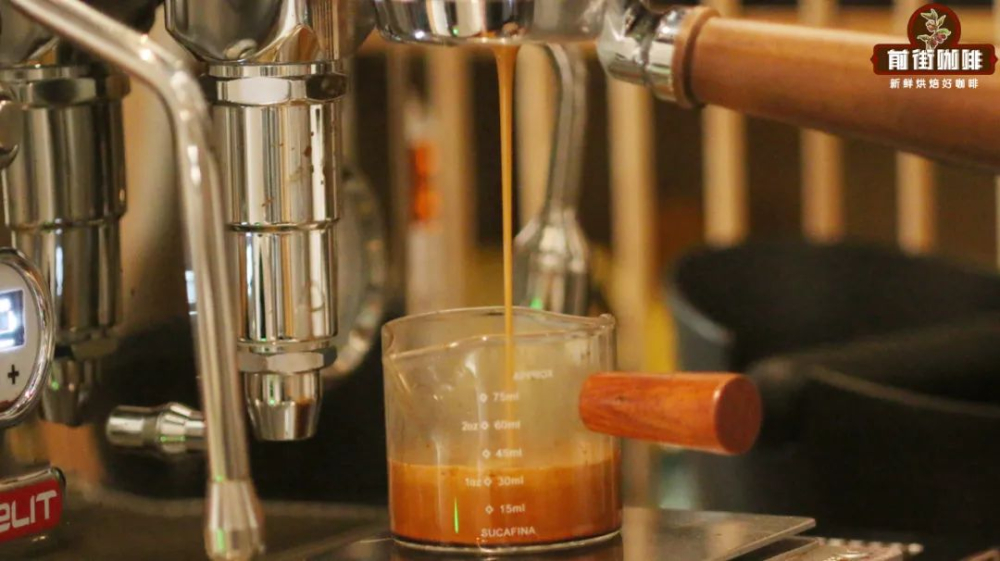
For example, Front Street's Espresso extraction recipe is 20 grams of coffee grounds extracting 40 grams of coffee liquid, with a brew ratio of 1:2, taking 30 seconds. When making a Ristretto, only 70% of the Espresso is taken, meaning 20 grams of coffee grounds extract 28 grams of coffee liquid, and the time is correspondingly shortened. Additionally, the grind size can be made finer to slow the flow rate, further increasing the concentration of the coffee liquid. Every coffee shop will make different adjustments based on the characteristics of the coffee beans used and the flavor direction the barista wants to present.
Normale is the most common and widely accepted espresso, which is what is typically called Espresso. Most offerings on the market today are Normale, though it is not deliberately emphasized. According to golden cup standards, Normale's extraction yield falls between 18% and 22%, with a concentration range of approximately 8% to 12%.
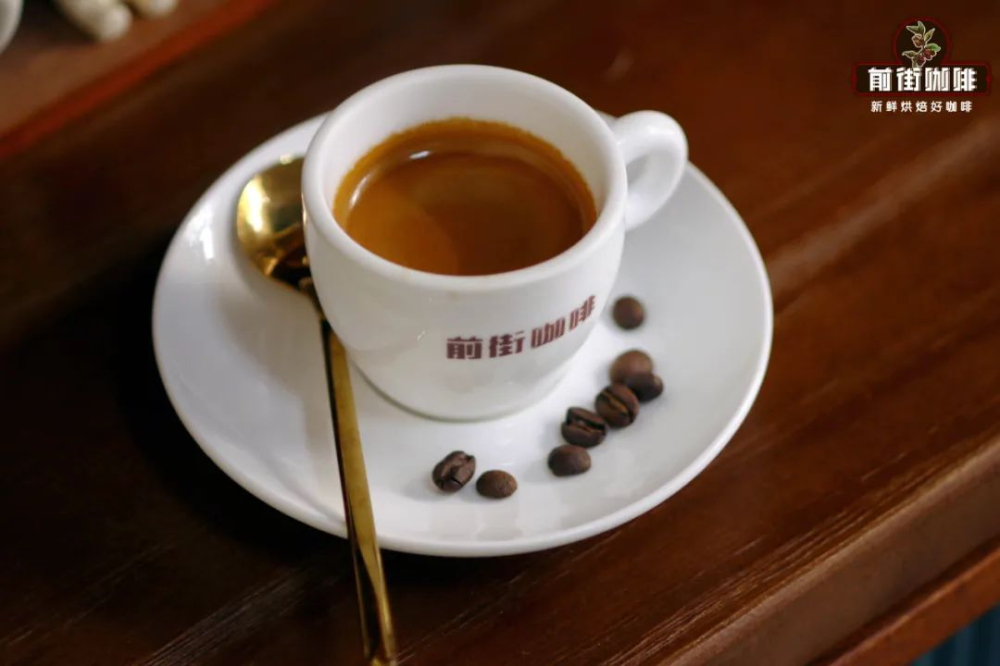
Lungo is a coffee made with twice the amount of water compared to a normal espresso. "Lungo" means "long, extended" in Italian, and it is also called a "stretched espresso," meaning that by extending the extraction time, the coffee concentration is lowered and the taste becomes softer.
After repeated adjustments and tastings, Front Street's finalized Lungo extraction recipe controls the brew ratio at 1:5. That is, using 20 grams of coffee grounds, extending the extraction time to 42 seconds, to extract 100 grams of coffee liquid.
Points to Note When Extracting Espresso
The golden Crema floating on the surface of the coffee liquid is the result of carbon dioxide and other gases in fresh coffee beans dissolving into the water under high pressure. If coffee beans that have been stored for too long (more than 2 months) are used, it is difficult to extract an Espresso with ideal oils, so Front Street recommends using freshly roasted coffee beans and allowing proper resting. Coffee beans shipped by Front Street are confirmed to be freshly roasted within 5 days, so they are still in a relatively fresh state when you receive them. After roasting, coffee beans need a period of time to release gas. Since espresso beans mostly use medium-dark roasting, such as the Sunflower Warm Sun blend used at Front Street's shop, 7 to 10 days are needed to release carbon dioxide. Using properly rested coffee beans to make espresso not only gives fuller aroma but also results in a more stable extraction.
For friends who prefer coffee with a rich, mellow aroma, Front Street's Classic Espresso Blend is recommended. This recipe is composed of beans from three origins—Brazil, Indonesia, and Vietnam—and uses a dark roast, which maximally highlights the coffee's rich, aromatic character and allows everyone to easily extract abundant, dense crema. Whether made into an americano diluted with water or a latte paired with milk, it is very suitable. It can be purchased at Front Street's Taobao store or Front Street's Tmall flagship store.
Extracting a delicious cup of espresso involves thousands of parameter settings, and Front Street believes the main key factors to control are: coffee dose, grind size, temperature, extraction time, and extraction yield. For example, when espresso tastes thin in flavor, the extraction yield needs to be increased, which can be achieved by increasing the dose, making the grind finer, or raising the water temperature; conversely, if the espresso is too strong and bitter, the extraction yield should be reduced, which requires decreasing the dose, making the grind coarser, or lowering the water temperature. Regardless of which adjustment method is used, the ultimate goal is to extract an espresso with full aroma.
The above content is compiled by CoffeeHunters, a coffee news website.


