







Can Blended Coffee Beans Work for Pour-Over Brewing?
Blended coffee beans are standard in espresso but rare in pour-over, and the difference mostly comes down to roast level rather than a hard rule. Espresso blends are usually roasted darker and built to balance body and sweetness, while pour-over beans cover light to dark roasts but lean light. A blend can work in pour-over if it genuinely makes up for what a single origin lacks.
The pattern formed historically: pour-over rose alongside specialty coffee, which pushed single-origin beans with clear regional flavor identities. Classic recipes such as Front Street's Mamba Blend, Deep Love Honey Blend, and Nutty Chocolate Blend show how beans from different regions combine for balance and layered flavor, offering a practical reference for home brewing.
Blended coffee beans are commonplace in the espresso world, but using them for pour-over is far less common. Starting from the conceptual differences between blends and single-origin coffees, this article sorts out how pour-over and espresso beans differ in roast level and flavor presentation, and explains that using blended beans for pour-over is not unworkable—the key lies in whether the blend truly compensates for the shortcomings of single-origin beans. The article also draws on three classic blend recipes from Front Street Coffee—Mamba Blend, Deep Love Honey Blend, and Nutty Chocolate Blend—to concretely demonstrate how coffee beans from different regions can achieve flavor balance and enhanced layering through combination, offering practical reference for coffee enthusiasts.
In espresso, blended beans are almost standard, but when it comes to pour-over, they are rarely seen. So if blended coffee beans are extracted using the pour-over method, will the final flavor performance be satisfying?
-First, clarify the basic concept of blended coffee beans
To answer this question, we must first understand a few basic concepts. So-called espresso coffee beans refer to beans specifically suited for use with espresso machines, usually with a darker roast level, and the key point lies in the roast level. Espresso blends stand in contrast to SOE (Single Origin Espresso), and are a branch of espresso coffee beans.
Pour-over coffee beans refer to coffee beans mainly used for drip-style extraction such as pour-over, and their most core difference from espresso coffee beans also lies in the roast level. The roast range for pour-over beans covers light, medium, and dark, but is mainly light roast. At present, pour-over beans are basically dominated by single-origin coffee beans.
Of course, this does not mean blended beans are only fit for espresso, and single-origin beans can only be used for pour-over. This pattern actually formed naturally through historical evolution. When pour-over coffee became popular, it happened to coincide with the stage when the concept of specialty coffee was spreading widely. Specialty coffee emphasizes separating coffee beans from commodities and establishing flavor identities for independent regions, thereby enhancing coffee quality and the recognizability of flavor.
It was precisely under such an opportunity that pour-over, as a brewing method, could simply and effectively showcase regional flavors, while high-quality single-origin coffee beans in turn endorsed pour-over. The two achieved mutual success, ultimately forming today's trend.
As for blended beans, their purposes can be many, but overall, the main aim is to combine coffee beans of different styles and apply appropriate roasting to achieve stable extraction and flavor balance, not simply to lower costs. Nowadays, many blends on the market are also made from two or more single-origin coffee beans, capable of presenting rich and refined aromas well, though the price will accordingly be higher.
-Using blended beans for pour-over is not a problem in itself
Overall, whether blended or single-origin, as long as it can express a recognized coffee flavor, it is a good bean. But this also raises a question: Front Street Coffee is not advocating that blends are universally applicable. If it is blending merely for the sake of blending, then it is meaningless. So from the perspective of a merchant or roaster, the blended coffee beans must be able to compensate for the shortcomings of single-origin coffee beans. In this regard, Front Street Coffee shares several delicious blended coffee bean recipes.
① Mamba Blend: Front Street Coffee's classic espresso blend
Recipe = Indonesian Mandheling + Brazilian Red Bourbon + Vietnamese Robusta
Mamba Blend is not a local original creation, but originated in Japan. Indonesian Mandheling has a deep, heavy flavor, with rich nutty and chocolate notes, and also a somewhat controversial herbal taste. Brazilian Red Bourbon, by comparison, seems thinner, presenting strong peanut and nutty notes. When the two are combined at a ratio of 4:6, they can effectively neutralize the herbal and peanut flavors, transforming them into a clean, mellow body similar to Blue Mountain.
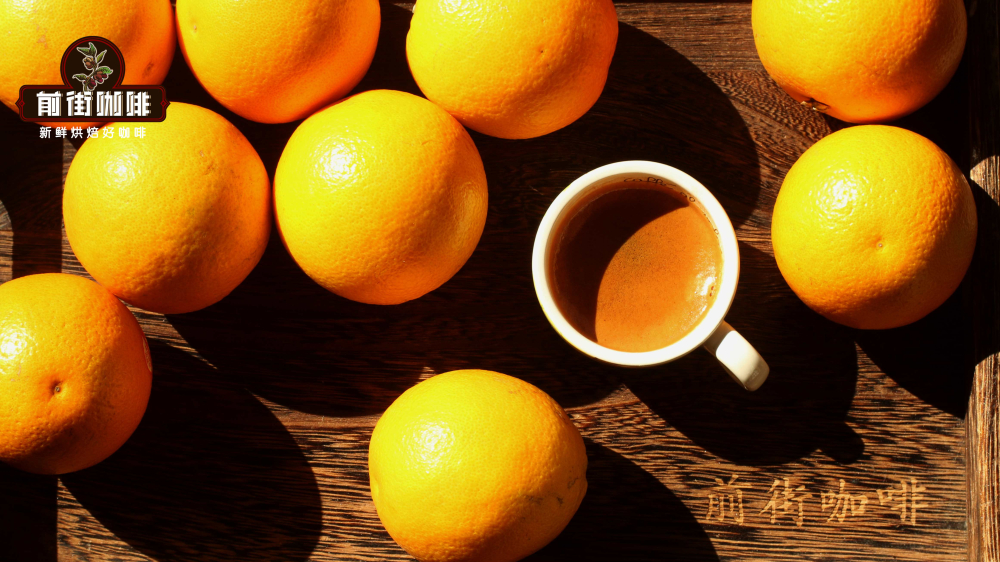
② Deep Love Honey Blend: Front Street Coffee Strawberry Candy espresso blend
Recipe = Colombian Huila + Yirgacheffe Red Cherry + Costa Rican Tarrazu
Front Street Coffee's Yirgacheffe Red Cherry brings fresh berry flavors, Front Street Coffee's Costa Rican Tarrazu adds honey-like sweetness, and Colombian Huila provides coffee oils, giving Front Street Coffee Strawberry Candy espresso a rich layering of rose, raisin, blueberry, and nut notes.
③ Nutty Chocolate Blend: Front Street Coffee's basic espresso blend
Recipe: Yunnan washed small bean + Brazilian Cerrado Red Bourbon
Brazilian coffee is mainly responsible for providing roasted nut, cocoa, and creamy aromas, while Yunnan washed small bean is responsible for adding soft fruit acidity and a mellow body, steering the overall tone of the espresso toward a balance of acidity, bitterness, and sweetness.
The above content is compiled by CoffeeHunters, a coffee news website.


