







What Is Drip Bag Coffee and How Do You Brew It?
Drip bag coffee is pre-ground coffee sealed in a filter bag with two cardboard ears that hook over a cup rim. It is filter extraction, like pour-over, but it removes the grinder, dripper, filter paper, and scale. Hot water and a cup are enough, which is why it fits offices and travel.
Each drip bag typically holds around 10 grams of coffee, and a 1:15 ratio calls for roughly 150 grams of hot water. Flavor depends on bean freshness, water temperature, and that ratio. Because the grind is fixed by the roaster and there is no dripper to control flow, the cup is simpler and slightly lighter than freshly ground pour-over.
For office workers who need a cup of coffee to wake up every day, drip bag coffee is undoubtedly an ideal choice that balances convenience and quality. But are drip bags and pour-over really the same thing? What details should be paid attention to when brewing? Starting from the definition of drip bag coffee, this article will compare in detail its similarities and differences with pour-over coffee, and explain the complete brewing process of drip bag coffee step by step. At the same time, we will also discuss several key factors that affect the flavor of drip bag coffee, including coffee bean freshness, water temperature control, and the coffee-to-water ratio, to help you easily brew a delicious cup of drip bag coffee at home or in the office.
For more specialty coffee knowledge, please follow: Front Street Coffee (Frontsteet Coffee)
In recent years, coffee culture has become increasingly popular, and many "early-shift workers" must have a cup of coffee every day to perk up and work. But the reality is that not everyone can walk into a coffee shop at any time and sit down to slowly enjoy a cup of pour-over coffee. For this reason, drip bag coffee emerged as a portable solution.
What is drip bag coffee?
Simply put, drip bag coffee is coffee beans pre-ground into powder and sealed in a filter bag with two "ears." These two ears can be hooked onto the rim of a cup to hold it in place. As long as there is hot water and a cup, brewing can be easily completed no matter where you are.
Drip bags and pour-over both belong to filter extraction, but drip bags are obviously much easier to operate. To make a cup of pour-over coffee, you need at least these tools: a pouring kettle, a thermometer, a dripper, filter paper, a grinder, a timing scale, and so on. With drip bags, because the coffee powder has already been ground, the grinder is omitted. The drip bag's filter bag is generally made of degradable non-woven fabric. When hot water passes through, it brings out the soluble flavor substances from the coffee powder, so a dripper and filter paper are also unnecessary.
How to brew drip bag coffee?
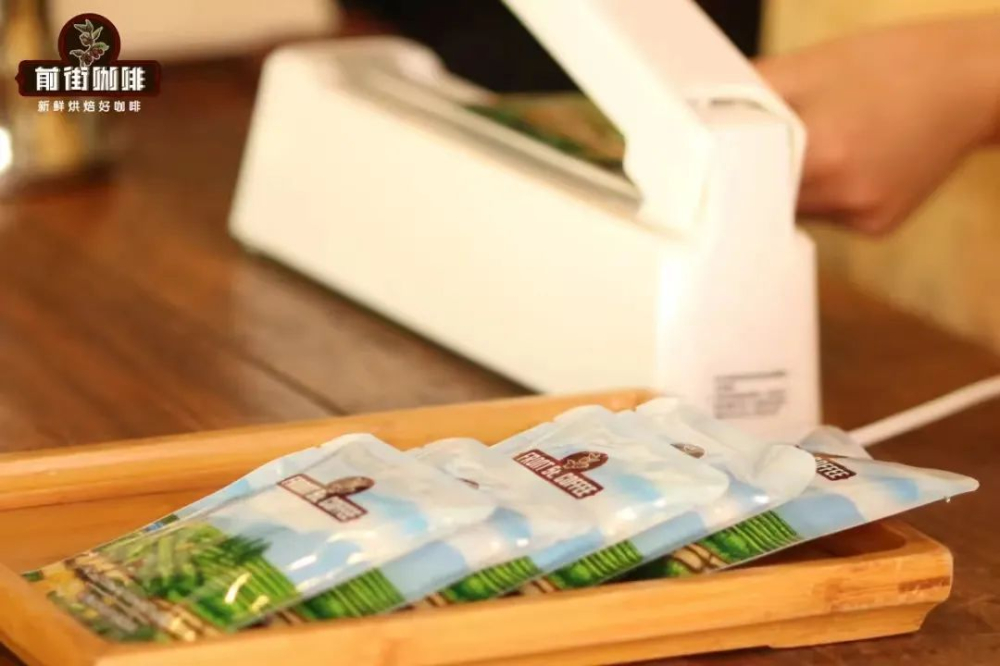
Common drip bags on the market are mostly small portions. Taking Front Street's drip bag products as an example, each pack contains 10 grams of coffee powder. Calculated at a 1:15 coffee-to-water ratio, 150 grams of hot water needs to be poured.
Step one, prepare a container to hold the coffee; a sharing pot or an ordinary cup is fine. Then prepare a kettle for pouring water.
Tear open the sealed outer packaging, take out the drip bag, and tear the non-woven fabric along the dotted line above the bag opening.
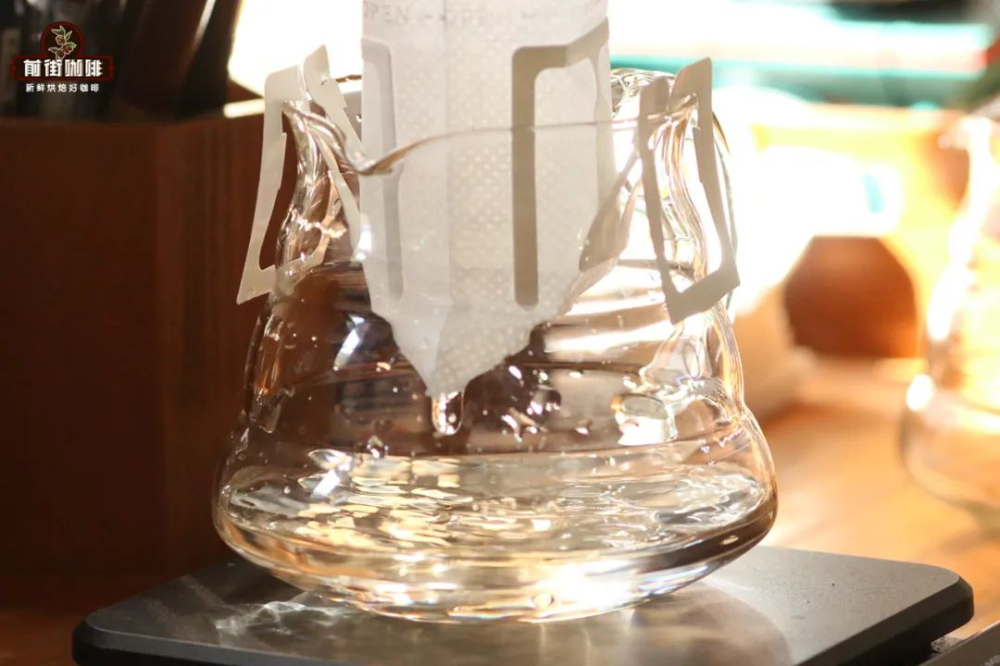
Spread the "ears" on both sides outward, unfold the drip bag as a whole, and then rest it on the rim of a cup or sharing pot.
Brewing is divided into three stages. In the first stage, first use a small amount of hot water to wet all the coffee powder, and let it bloom for about 10 to 20 seconds. In the second stage, pour steadily in a thin stream until the liquid level is nearly full, then wait for the coffee liquid to drop on its own until it has completely drained. Next, pour water for the third stage until full, wait for the coffee liquid to finish dripping completely, gently shake the cup to make the concentration even, and it is ready to drink.
What should be noted when brewing drip bag coffee?
Similar to pour-over, the flavor direction of drip bag coffee mainly depends on the coffee beans used—different producing regions and different processing methods present different flavor profiles. But there is one obvious difference between drip bags and pour-over: the coffee powder in drip bags is ground in advance, so its aroma performance is not as full as that of freshly ground coffee.
Once coffee beans are ground into powder, the contact area with air greatly increases, and the internal gases and aromatic substances are lost more quickly, shortening the optimal tasting period. The brewed coffee's aroma is not rich enough, and the taste is also rather flat. If left for too long, the coffee powder ages, and may even develop a "woody" taste.
Therefore, when purchasing drip bag coffee, freshness is an indicator that must be noted. The coffee beans sent by Front Street are all freshly roasted within 5 days, and can also be processed into drip bags. The processing fee is 20 yuan/100g. It is recommended to drink them as soon as possible after purchase; the flavor is best within the optimal tasting period.
Brewing water temperature also cannot be ignored. Pour-over coffee usually recommends controlling the water temperature between 86 and 93 degrees Celsius. Too low a water temperature will lead to reduced extraction efficiency and easily cause under-extraction. If conditions limit you from raising the water temperature, then extend the contact time between the coffee powder and hot water, that is, let it steep a little longer.
The amount of water poured and the speed of the water flow also affect the concentration of drip bag coffee. Front Street recommends controlling the coffee-to-water ratio at 1:15, then adjusting appropriately according to personal taste for strength. In addition, pouring too fast will shorten the extraction time, and the coffee taste can easily be too weak, so it is best to maintain a steady, thin stream throughout to allow the coffee bed to be extracted more evenly.
The above content is compiled by CoffeeHunters, a coffee news website.


