








Does Cold Brew Coffee Need to Be Sealed?
Cold brew should be sealed after extraction. The low-temperature steep pulls out smaller-molecule compounds such as floral and fruity aromas while leaving smoky, roasted notes behind, which is why the cup tastes smooth and sweet. Sealing limits oxygen contact and lets a slight fermentation develop in the fridge, producing that faint wine-like aroma.
A fruit-forward cold brew often uses a two-bean mixture, combining lots so one supplies sweetness and the other lifts the aroma. Keep the brew refrigerated and covered, and drink it within a few days for the clearest flavor. Because cold brew still carries caffeine, a cup six hours before bed can interfere with sleep.
Cold brew coffee, with its refreshingly smooth texture and richly layered flavors, has become a favorite among coffee lovers in summer. But when it comes to making and storing cold brew coffee, many people still have questions: Does it need to be sealed after extraction is complete? Why does it give off a fermented, wine-like aroma after sitting in the fridge overnight? This article starts from the principles of low-temperature extraction, explains the oxidation process of cold brew coffee and the necessity of sealed fermentation, and shares Front Street Coffee's cold brew parameters, detailed steps, and how to create a fruit-forward cold brew recipe through a two-bean blend, helping you make a cup of cold brew coffee with full flavor and a clear sweet aftertaste.
For more specialty coffee knowledge, please follow our WeChat official account: Front Street Coffee
Cold brew coffee has long been popular, and in the height of summer, when people walk into a café, many customers will order a cup. Take a light sip, and the icy liquid glides across the palate—that clean, crisp yet smooth mouthfeel is truly delightful. So how does Front Street Coffee make cold brew? What are the tricks? And what kind of coffee beans should be used? Below, Front Street sorts out some basic knowledge related to cold brew coffee.
What is cold brew coffee? Characteristics of low-temperature coffee extraction This kind of coffee can be said to be slowly developed over time. Brewing with water at different temperatures produces completely different flavor expressions, and in a low-temperature environment, the astringent components of coffee are not easily dissolved out. So-called low-temperature extraction means allowing water to contact coffee grounds for a long time at a relatively low temperature. At this point, only flavor substances with smaller molecular weights (such as floral and fruity aromas) can be extracted, while larger molecules like smoky and roasted flavors are difficult to dissolve into the water. For this reason, cold brew coffee better showcases the characteristics of the coffee beans themselves, is smooth on the palate, and has quite prominent layering and sweet aftertaste.
After long extraction with ice water, the coffee liquid is then placed in the refrigerator to ferment. After slight fermentation, the cold brew coffee takes on a faint fermented aroma, and the mouthfeel becomes even more mellow.
Why does cold brew coffee need to ferment? It is actually an oxidation process. Friends who often visit Front Street ask: Why can't cold brew be drunk immediately after it is finished, and why must it sit in the refrigerator overnight? Strictly speaking, rather than calling this step "fermentation," it is better to call it an oxidation process. This is like freshly roasted coffee beans, about 2% of whose weight is carbon dioxide. This large amount of carbon dioxide will gradually be released depending on the storage environment, equipment, or method, making the air pressure inside the packaging higher than one atmosphere, and this pressure helps the aromatic substances and oils merge, bringing all the aromatic substances in the beans into a state where they are easy to extract.
The same principle applies to cold brew coffee. Because the extraction time is very long, many flavor molecules have already been extracted but have not been fully released. Therefore, after cold brew extraction is finished, put it into a sealed bottle and let it sit in the refrigerator for 12 to 24 hours. The carbon dioxide produced inside the bottle will create a certain pressure, prompting the flavor molecules to be released—this is also why the longer cold brew coffee sits in the refrigerator, the richer it tastes. Of course, Front Street does not recommend leaving cold brew for as long as a week. After all, bacteria inevitably exist in the air or in the bottle, and it is hard to guarantee the coffee's condition if left too long. The best drinking period for cold brew is recommended to be kept within 72 hours, and before drinking, smell it first to check for any off or spoiled odors.
Front Street Coffee cold brew parameters Ratio: 1:10 (60g coffee grounds with 600ml ice water) Ice water preparation: 1:1 edible ice and drinking water Grind size: coarse sugar size (slightly coarser than the grind size for medium-roast pour-over is fine)
Front Street Coffee steps for making cold brew coffee 1. Place a round filter paper at the bottom of the powder cup, wet it with water so it adheres to the wall of the cup, pour in the ground 60g of coffee powder, then shake it flat to level the coffee surface. You can also use the weight of the tamper itself to gently press the coffee bed so that the surface remains flat.
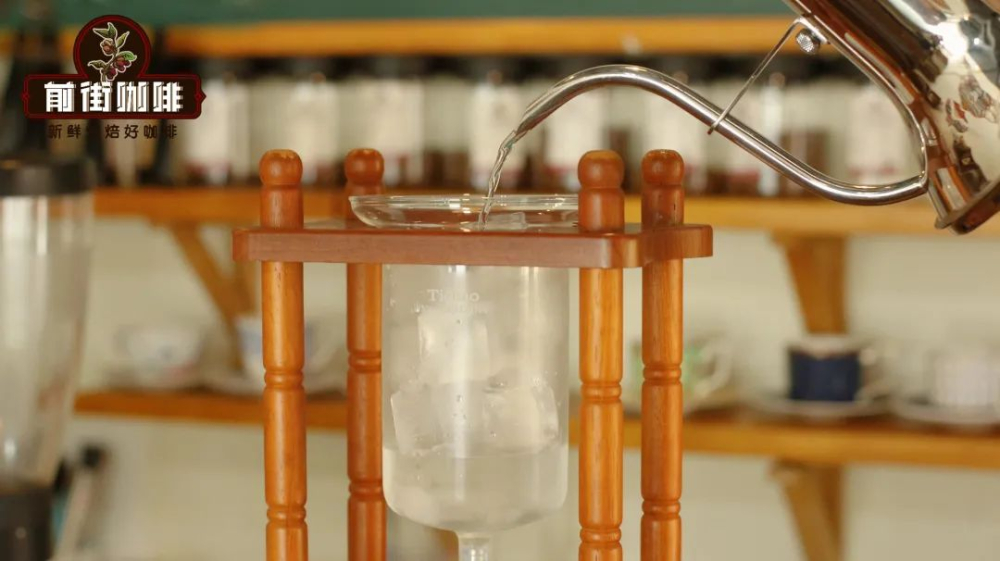
2. Place another piece of filter paper on top of the coffee bed. The tension of the filter paper allows water to distribute evenly over the surface of the coffee grounds for extraction. If no filter paper is added, the long-term dripping will create a pit in the coffee bed.
3. Wet the entire coffee bed with ice water. This step is similar to the blooming stage in pour-over and can improve extraction effectiveness and consistency of the final product.
4. Add a 1:1 ice-water mixture to the dripping bottle, and adjust the speed at which the water drips. Front Street recommends controlling it at 7 drops every 10 seconds.
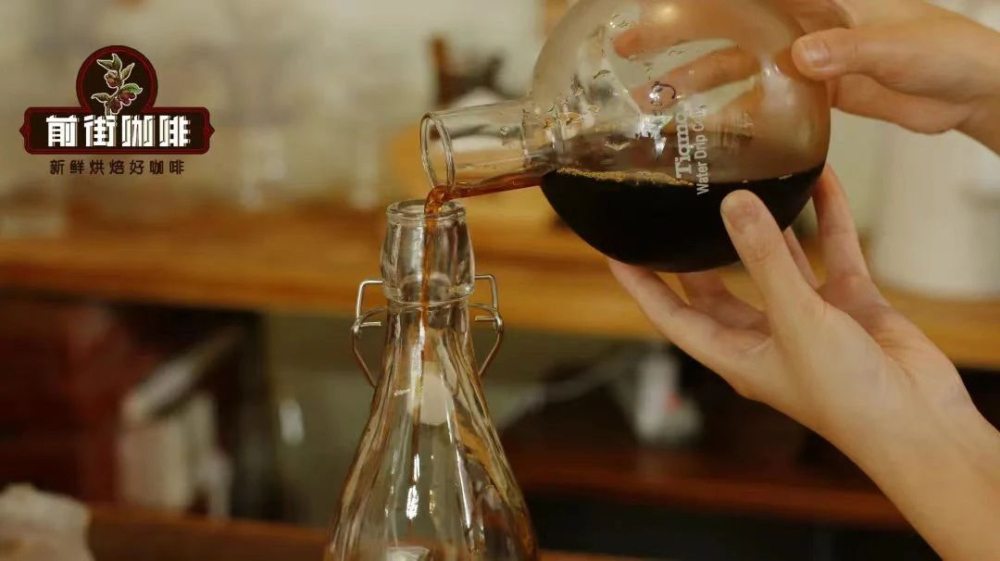
5. After making it, pour it into a sealed, clean, water-free and oil-free bottle, and place it in the refrigerator for oxidation, allowing the flavor molecules of the cold brew coffee to be fully released before tasting.
What coffee beans does Front Street Coffee use to make cold brew coffee? Front Street has found that if only a single bean is used to make cold brew, it is difficult to fully experience that bean's aroma, sweetness, or smoothness. Therefore, when making cold brew, Front Street Coffee usually chooses two coffee beans for blending, with the aim of making the final product highlight a certain flavor characteristic more strongly—one bean is responsible for providing aroma, and the other bean is responsible for providing flavor.
This time, Front Street selected Colombia Finca El Paraiso Sakura and Ethiopia natural Red Cherry for the blend, in a ratio of 40g Sakura to 20g Red Cherry. The Sakura from Finca El Paraiso brings basil, mint tea, and berry jam aromas to this cup of coffee, while the Ethiopian Red Cherry contributes citrus and berry acidity, while also better presenting the fermented feel of this cold brew.
Front Street Colombia Finca El Paraiso Sakura Region: Cauca, Colombia Farm: Finca El Paraiso Altitude: 2050m Processing method: Anaerobic natural Variety: Bourbon
Front Street Ethiopia Natural Red Cherry Region: Yirgacheffe, Ethiopia Altitude: 2000-2200m Processing method: Natural process Variety: Local heirloom varieties Grade: G1
Cold brew flavor: strawberry jam aroma, with an obvious fermented feel on the palate, full-bodied like berry juice, basil, mugwort, and a finish somewhat like mint tea.
The above content is compiled by CoffeeHunters, a coffee news website.


