







Is iced americano or hot americano which is better for cold brew?
Neither one is cold brew. Iced Americano and iced pour-over both start with hot water touching the grounds, then get chilled or poured over ice. Real cold brew uses room-temperature or near-0 degrees Celsius water for the whole extraction, either as cold steeped coffee fully submerged for hours or as ice drip coffee, where ice water drips slowly onto the bed.
The practical difference shows in the cup. Cold brew is smoother and lower in perceived acidity, while iced Americano keeps the brighter, more bitter edge of espresso. When choosing beans for cold brewing, Honduras Sherry beans work well, and the key parameters are dose, grind size, coffee-to-water ratio, and drip rate. Cold brew also keeps for a few days refrigerated.
In the hot summer season, a cup of cold brew coffee made with low-temperature extraction is a favorite of many coffee lovers. But what exactly is the difference between cold brew, iced pour-over, and iced Americano? Which coffee beans are more suitable for cold brew? Front Street Coffee uses Honduras Sherry beans as an example to fully demonstrate the production process of ice drip coffee, including key parameters such as coffee dose, grind size, coffee-to-water ratio, and drip rate control. At the same time, the shelf life of cold brew coffee is also a concern for many people, and this article gives practical suggestions as well.
For more specialty coffee knowledge, please follow: Front Street Coffee (Frontsteet Coffee)
Cold brew coffee is one of the indispensable refreshing drinks in summer. Standing at the bar of Front Street Coffee (FrontStreet Coffee), facing the densely packed coffee categories on the blackboard, all kinds of knowledge about producing regions are instantly thrown out of your mind, and you really do not know which one to choose. This time, let Front Street talk about the things related to cold brew coffee.
What is cold brew coffee?
The brewing logic of cold brew coffee is completely different from that of regular hot coffee. Literally speaking, cold brew means using lower-temperature water to extract coffee. However, because iced pour-over coffee and iced Americano coffee are also served in the form of ice plus coffee, Front Street has also met quite a few friends who mistake iced pour-over for cold brew coffee.
To accurately distinguish what real cold brew coffee is, you actually only need to pay attention to the water temperature used during the extraction stage. Cold brew coffee usually uses room-temperature or even near 0°C low-temperature water to extract coffee. In other words, whether it is iced Americano or iced pour-over, even if it is ultimately presented at a low temperature, hot water comes into contact with the coffee grounds during extraction, so neither can be classified as cold brew coffee.
According to different production methods, cold brew coffee can be roughly divided into two major categories: one is cold steeped coffee, in which coffee grounds are fully submerged in low-temperature water and extracted through long soaking; the other is ice drip coffee, in which ice water drips drop by drop onto the coffee grounds to complete extraction.
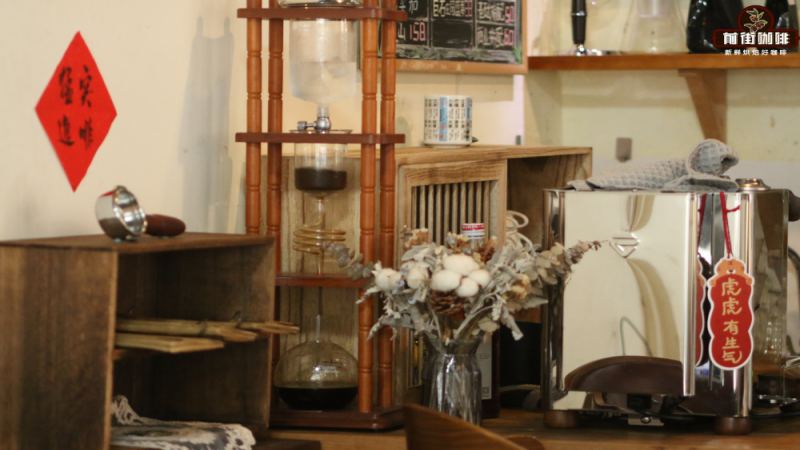
In the stores of Front Street Coffee (FrontStreet Coffee), limited by equipment conditions, the cold brew coffee produced by Front Street Coffee (FrontStreet Coffee) only has ice drip coffee as an option.
The core point of cold brew coffee is: the temperature must be low enough. First, you need to understand a concept — coffee beans contain 30% soluble substances, and the process of making coffee is essentially just extracting the better-flavored part of those substances. The higher the water temperature, the faster the various soluble substances in coffee are released: acidic substances move the fastest, followed by sweet substances, while bitter substances move the slowest. As the temperature rises, the total amount of these flavor substances also increases.
Conversely, if the water temperature is very low, then to extract a certain amount of flavor substances, a longer extraction time is needed. This is also why, if you want to drink ice drip coffee made from a specified coffee bean at a Front Street store, you need to order it two days in advance.
What coffee beans are suitable for making cold brew coffee?
Because the water temperature during the production of cold brew coffee is relatively low, after the coffee grounds come into contact with water, the release rate of flavor substances in the beans drops significantly, and the extraction amount of some larger-molecular-weight bitter substances also decreases, so the coffee's acidity and sweetness become more prominent.
Based on this, Front Street recommends choosing coffee beans with a lighter roast level and better acidity, such as Kenya, or coffee beans with outstanding and distinctive flavor, such as Honduras Sherry.
The process of Front Street Coffee (FrontStreet Coffee) using Honduras Sherry coffee beans to make ice drip coffee
Below, Front Street will use Honduras Sherry coffee beans as an example to explain in detail the production process of cold brew coffee. First, let us introduce this bean.
Honduras Sherry coffee beans adopt a processing method of fine washing plus Sherry whiskey barrel fermentation. Cleaned parchment beans are placed into Sherry whiskey barrels for low-temperature fermentation for 30 to 40 days, allowing the whiskey aroma substances in the barrels to fully penetrate into the green coffee beans. Finally, they are evenly spread out in a cool place to dry, avoiding the decomposition of whiskey aroma substances into unpleasant whiskey acidity due to excessively high temperatures from direct sunlight.
In the field of whiskey, malt undergoes germination, drying, grinding, saccharification, and fermentation, and the liquor finally obtained by distillation is put into barrels for long-term aging. 75% of whiskey flavor comes from the wooden barrels used for aging. Aging in barrels made of different materials and soaked with different liquids also leads to different flavors. Among various whiskeys, Sherry cask whiskey has won over a large number of whiskey connoisseurs and entry-level enthusiasts with its rich sweet flavor. And Front Street's Honduras Sherry coffee beans, because they use Sherry whiskey barrels for low-temperature fermentation, have inherited the sweet aroma of Sherry whiskey to a certain extent.
When formulating the roasting curve, in order to preserve the soft acidity of Central American beans, Front Street roasts Honduras Sherry coffee beans to a medium level.
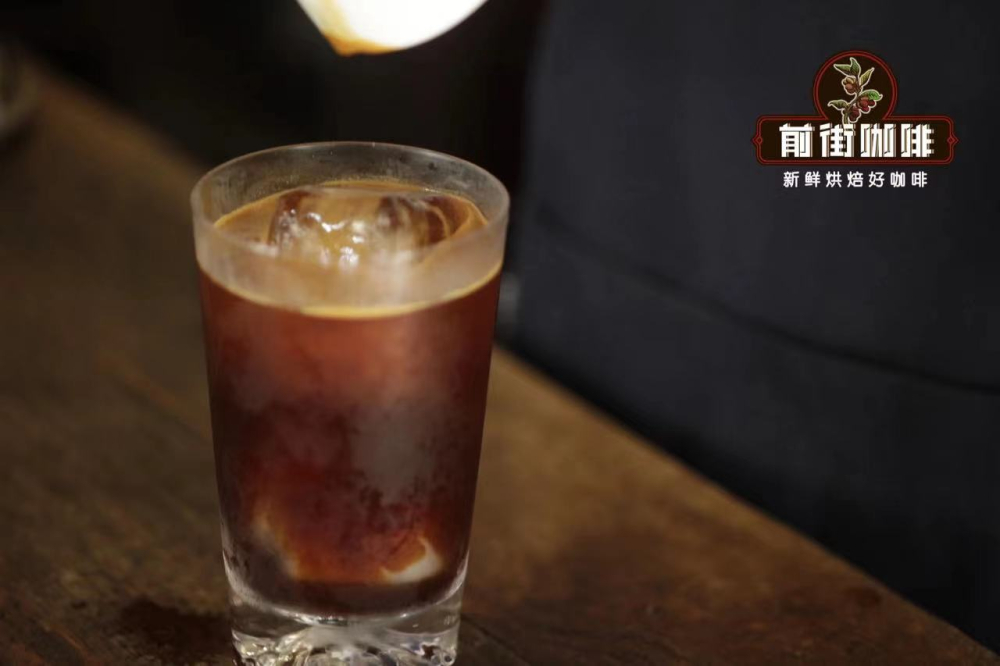
Front Street Coffee (FrontStreet Coffee) cupped the roasted Honduras Sherry and tasted rich vanilla and cream flavors, soft berry acidity, and after the berry acidity faded, a distinct oak barrel aroma emerged.
Coffee dose: 60 grams
Coffee-to-water ratio: 1:10
Water temperature: 0°C——4°C
Time: 6——8 hours
Grind size: 85% passing rate on China No. 20 standard sieve
Put 60 grams of coffee grounds into the coffee powder cup and extract 600 milliliters of coffee liquid. The water-to-coffee ratio for cold brew coffee is 1:10. In terms of grind size, because the water temperature in contact with the grounds is lower than in ordinary pour-over, choose a slightly finer setting than for pour-over. Judged by a No. 20 sieve, the passing rate is about 85%. The mixing ratio of ice to water is about 1:1, and the throttle valve is controlled at a flow rate of 7 drops/10 seconds. At the same time, place a moistened filter paper on the coffee bed to make extraction more uniform. The entire extraction process lasts about 6——8 hours. After extraction is completed, bottle the coffee liquid and put it in the refrigerator to chill for 12 hours before drinking.
After a night of fermentation, the ice drip coffee made with Sherry coffee beans has obvious berry acidity, while also presenting the rich sweetness of chocolate, nuts, and dried fruit found in Sherry whiskey, with a heavy mouthfeel and a fermented note.
How long can cold brew coffee be stored at most?
Because cold brew coffee takes a long time to make, some friends prefer to make it in batches and store it for later use. The question "How long can cold brew coffee be preserved?" has also troubled many people.
Front Street recommends that the prepared cold brew coffee should be placed in a sealable container and refrigerated at low temperature in the refrigerator.
From the time cold brew coffee completes extraction and is sealed for storage, the coffee liquid enters a fermentation process. As time goes by, the fermented flavor becomes stronger and stronger, and eventually it will produce a spoiled and deteriorated taste. Front Street Coffee (FrontStreet Coffee) once kept records: on the fifth day after the cold brew coffee was made and refrigerated, the coffee flavor weakened and was replaced by a strong fermented feel. For the sake of safety, Front Street recommends that after cold brew coffee extraction is completed, it should be drunk within one week.
The above content is compiled by CoffeeHunters, a coffee news website.


