







How do you identify an arabica coffee bean by variety?
Different varieties inside the Arabica species carry distinct bean shapes, and that is what lets experienced tasters guess variety and origin by eye. Typica is the reference: oval, slender, flat, and plump. Bourbon, SL28, SL34, Caturra, Catuai, and Geisha each differ in length, width, center cut, and tip, and those differences are visible in roasted beans.
The skill comes from patient observation rather than theory. Handle a handful of beans, compare each one against known references, and memorize the recurring features. Roasted beans work fine for practice, so a bag on the counter is enough to start. Building the link between arabica coffee bean appearance and variety takes repetition, the same way sensory training does.
Many people wonder why some coffee connoisseurs can tell the variety and origin of coffee beans at a single glance. In fact, different varieties within the Arabica family each have their own characteristics in bean appearance, and as long as you grasp the patterns, you can do it too. This article, from the perspective of Front Street Coffee, walks you through the bean shape features of common varieties such as Typica, Bourbon, SL28, SL34, Caturra, Catuai, and Geisha. Roasted bean images are used in the article to aid explanation, making it easy for everyone to grab the coffee beans at hand and compare while observing. Whether you are a beginner just starting out or a seasoned enthusiast looking to sharpen your identification skills, this guide can help you build the correspondence between variety and appearance.
For more specialty coffee knowledge, welcome to follow: Front Street Coffee (Frontsteet Coffee)
I wonder if any coffee lovers have noticed that there are always some "experts" around them who can tell the variety, origin, and other information of coffee beans at a casual glance, leaving people utterly impressed. How on earth do they do it?
Although the single-origin beans we usually drink basically all belong to the Arabica species, there are actually quite a few differences in appearance among the various varieties within Arabica. If you want to develop the ability to judge variety by bean appearance, you must patiently observe each type of coffee bean, identify their respective characteristics, and commit them to memory. That's right — this is exactly the same as practicing coffee sensory skills!
So next, let's follow Front Street and get to know these coffee beans that all look pretty much the same! Considering that everyone usually doesn't get many chances to handle green beans, the images used by Front Street below are all roasted beans. If you happen to have a bag of coffee beans on hand, you can also learn and apply it right away — grab a handful and observe carefully to make your judgment.
Typica
Let's start with the "standard template" of Arabica — Typica. If you open any coffee book, as long as it has an image introducing Arabica coffee beans, the beans in that picture are almost certainly Typica. Typica beans are usually oval in shape — slender, flat, and plump, looking very standard. Recommended purchases: Front Street 2013 Typica Coffee, Front Street Blue Mountain Coffee, Front Street Bird of Paradise Coffee.
Bourbon
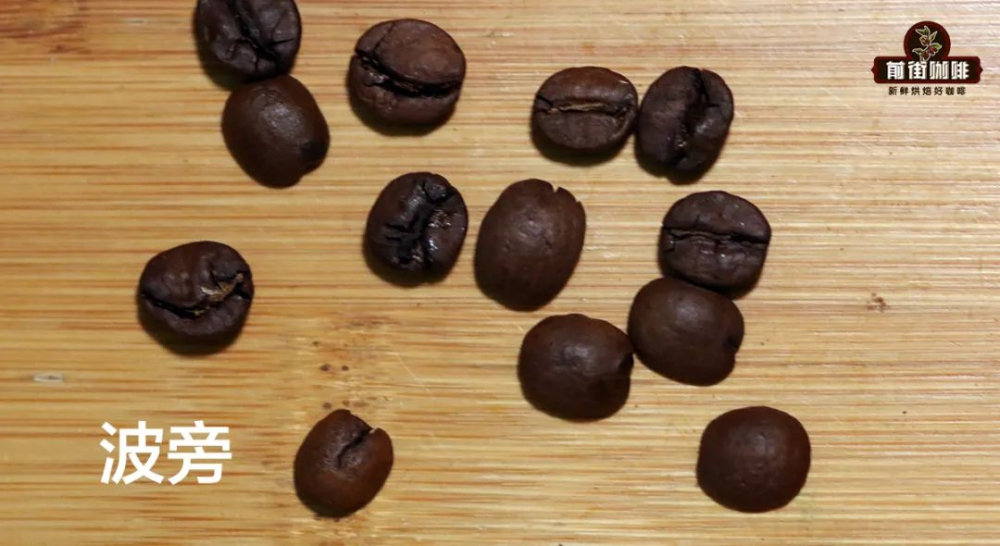
Bourbon coffee is a natural mutation of Typica coffee. The Typica coffee trees originally planted in Yemen underwent a mutation, producing round coffee beans, which is why they are also called round beans. Later, the French planted a batch of round coffee seeds on Bourbon Island (now Réunion), and the name Bourbon coffee gradually spread. Today, Brazil is the main country cultivating Bourbon coffee varieties. Recommended for tasting: Front Street Brazil Cerrado Coffee and Front Street Rwanda Red Bourbon Coffee. The body characteristics of Bourbon coffee beans are short at both ends, squat and somewhat round, with a bean size similar to Typica.
Typica and Bourbon are called the ancient premium varieties of Arabica, and many of the widely cultivated coffee varieties that came later are mostly mutations of these two varieties.
SL28&SL34
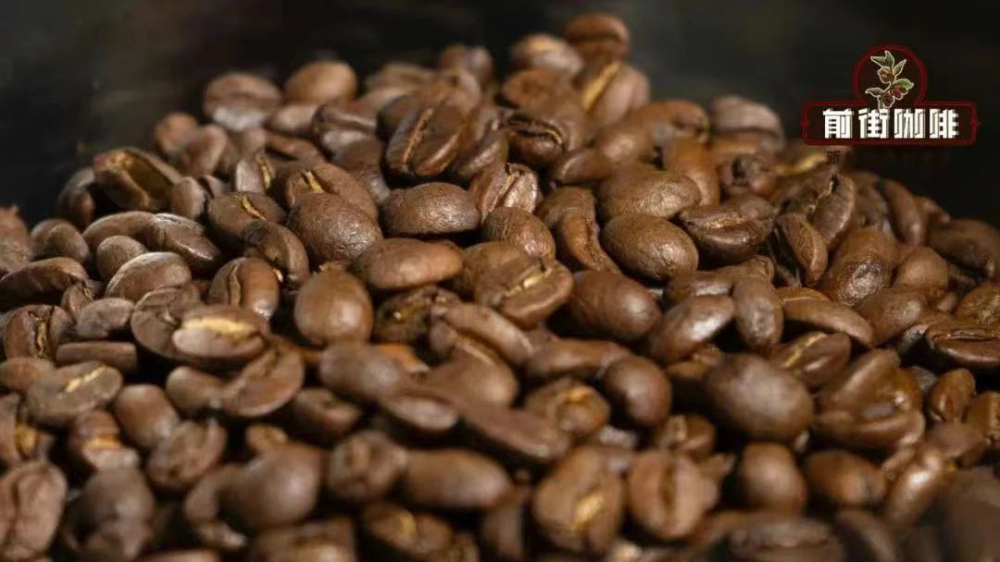
The most classic representatives are the SL28 and SL34 varieties widely planted in Kenya! Note that these are two different coffee varieties.
These two varieties are the result of classic artificial selective breeding. SL is actually the abbreviation of "Scott Laboratory." The purpose of establishing this laboratory was to research coffee cultivation. They found 42 coffee varieties in the wild and cultivated them in experimental fields (note: this is artificial selective breeding, not artificial hybridization). After more than ten years of screening, they finally selected SL28 and SL34, which were suitable for cultivation in Kenya.
Later, experts discovered through research that SL28 belongs to Bourbon or its mutations, while SL34 belongs to Typica or its mutations. That is why in Kenyan coffee beans, we can see beans of somewhat different appearances mixed together. By classifying them according to appearance, we can get the rounder SL28 and the more elongated SL34. Recommended purchase: Front Street Little Tomato Coffee.
Caturra
Caturra is a natural mutation of the Bourbon variety. The branches of the Caturra plant are spaced very closely together, and its fruit is smaller than Bourbon's. This way, more fruit can be produced in the same space, and coffee yield is greatly increased. Caturra's bean shape is similar to Bourbon's and also tends toward round, but it is slightly longer than Bourbon, like a plump little oval. Recommended for tasting: Front Street Colombia Huila Coffee.
Catuai
Catuai is an artificially cultivated hybrid of Caturra and Mundo Novo. Mundo Novo is a natural hybrid of Bourbon and Sumatra Typica. Therefore, Catuai carries Typica genes, and this is naturally reflected in its appearance as well.
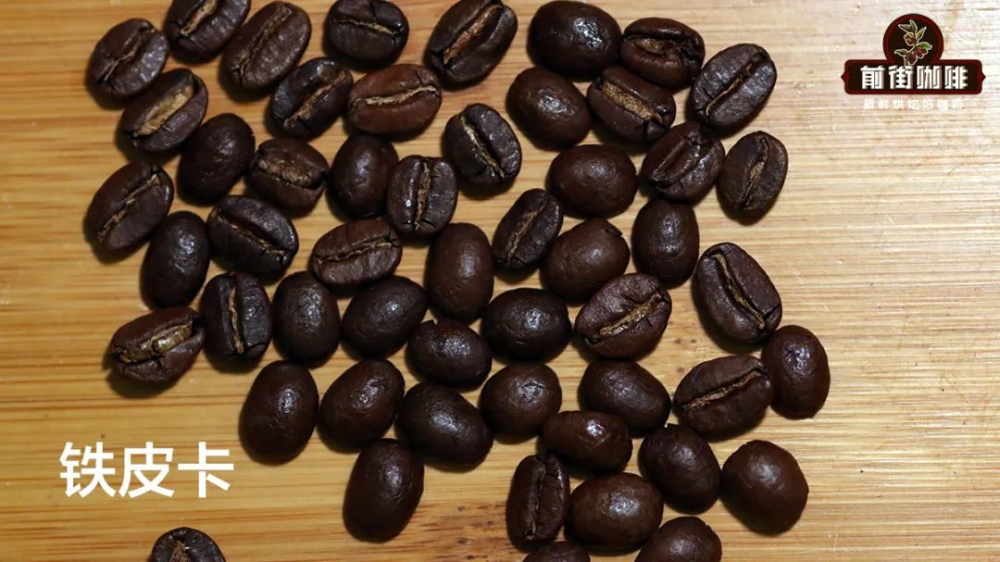
Catuai coffee beans are oval and flat, with the tail end of the bean relatively slender. In Central and South America, many producing regions plant Caturra and Catuai mixed together, so we can find some smaller, rounder Caturra and some larger, more elongated Catuai among Central and South American beans. Recommended: Front Street Elida Catuai Coffee.
Geisha
Everyone is surely most familiar with Geisha coffee, but many friends have only heard its name and never seen its true appearance. So Front Street will talk about its characteristics. Let's take Panama Geisha as an example first, because it has the highest recognizability. Panama Geisha coffee beans are slender in body, pointed at both ends, and plump and full in the middle. The roasted beans look a bit like sausage rolls.
For example, in the beans of Butterfly, Geisha, Caturra, and Catuai are included. First, we can very clearly distinguish the beans that are large, elongated, and pointed at both ends — these are the typical characteristics of Geisha coffee beans. Of course, smaller Geisha coffee beans are slightly less recognizable, but with careful observation, you can still see that they satisfy the features of being pointed and slender at both ends and plump in the middle.
However, this characteristic does not apply to Ethiopian Geisha. This is because Ethiopian Geisha came about after Panama Geisha became famous, when people traced the roots back to the forest in Ethiopia where samples were taken back then, and then searched the forest for varieties they believed had flavors similar to Panama Geisha.
For example, the Geisha coffee varieties at Gesha Village Estate are called Gori Gesha and Geisha 1931. The estate owner traced historical records and found a place called Gori Gesha Forest, believing that the British had taken Geisha seeds from there back then, so they also sampled there and ultimately selected Geisha 1931. Its selection was not based on genetic identification, but on observing plant morphology, bean shape, and cupping flavor. They judged from the samples that this variety was similar to Panama Geisha.
As for Gori Gesha, it was brought back by the estate owner when he entered Gori Forest again in 2011. Even if they found the right place, with thousands of varieties in the Geisha forest, there is no guarantee that the varieties they found were the Geisha (T2722) from back then. So it is only natural that the bean shape characteristics differ, since after all they are not the same variety.
Gesha Village's Geisha are all relatively small in body size. Geisha 1931 has slightly protruding tips at both ends and a plump middle. Gori Gesha, on the other hand, is oval in shape and relatively small in size.
The above content is compiled by CoffeeHunters, a coffee news website.


