







How Do You Identify Different Coffee Tree Varieties by Plant Traits?
Coffee varieties can often be told apart by plant traits rather than flavor alone. Looking at plant height, leaf tip color, tree shape, leaf form, fruit shape and color, branch angle, and internode spacing gives clear clues. Typica, Bourbon, Caturra, Catuai, Pacamara, and Geisha each differ in measurable physical features, so identification is possible before any cup is brewed.
About 70 percent of the world's coffee production comes from Arabica, which sits behind many cultivated varieties. Arabica is more delicate than Robusta but carries the aroma and taste most consumers prefer. Phenotype traits such as green bean size, fruit color ranging from red to yellow and pink, and branch spacing act as a practical starting point for sorting one coffee tree from another.
The coffee world boasts a vast array of varieties, yet different varieties often exhibit visually distinguishable differences in plant morphology. From the perspective of FrontStreet Coffee, this article systematically outlines the identification points for varieties such as Typica, Bourbon, Caturra, Catuai, Pacamara, and Geisha, focusing on phenotypic traits like plant height, leaf tip color, tree shape outline, leaf morphology, fruit shape and color, branch angle, and internode spacing, helping coffee enthusiasts quickly distinguish them through the plant's physical characteristics even after setting aside flavor descriptions.
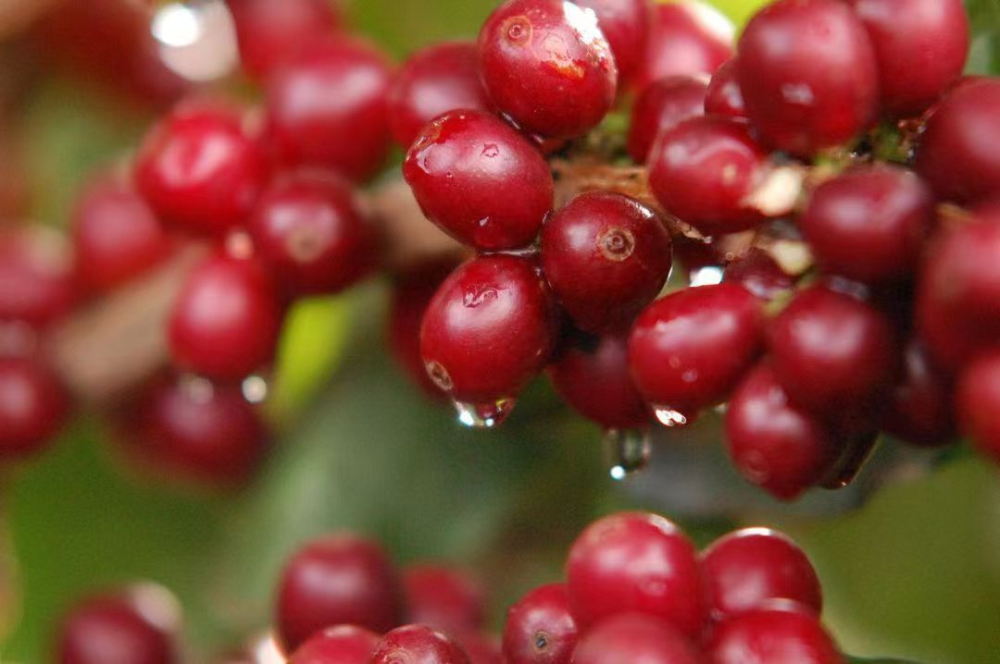
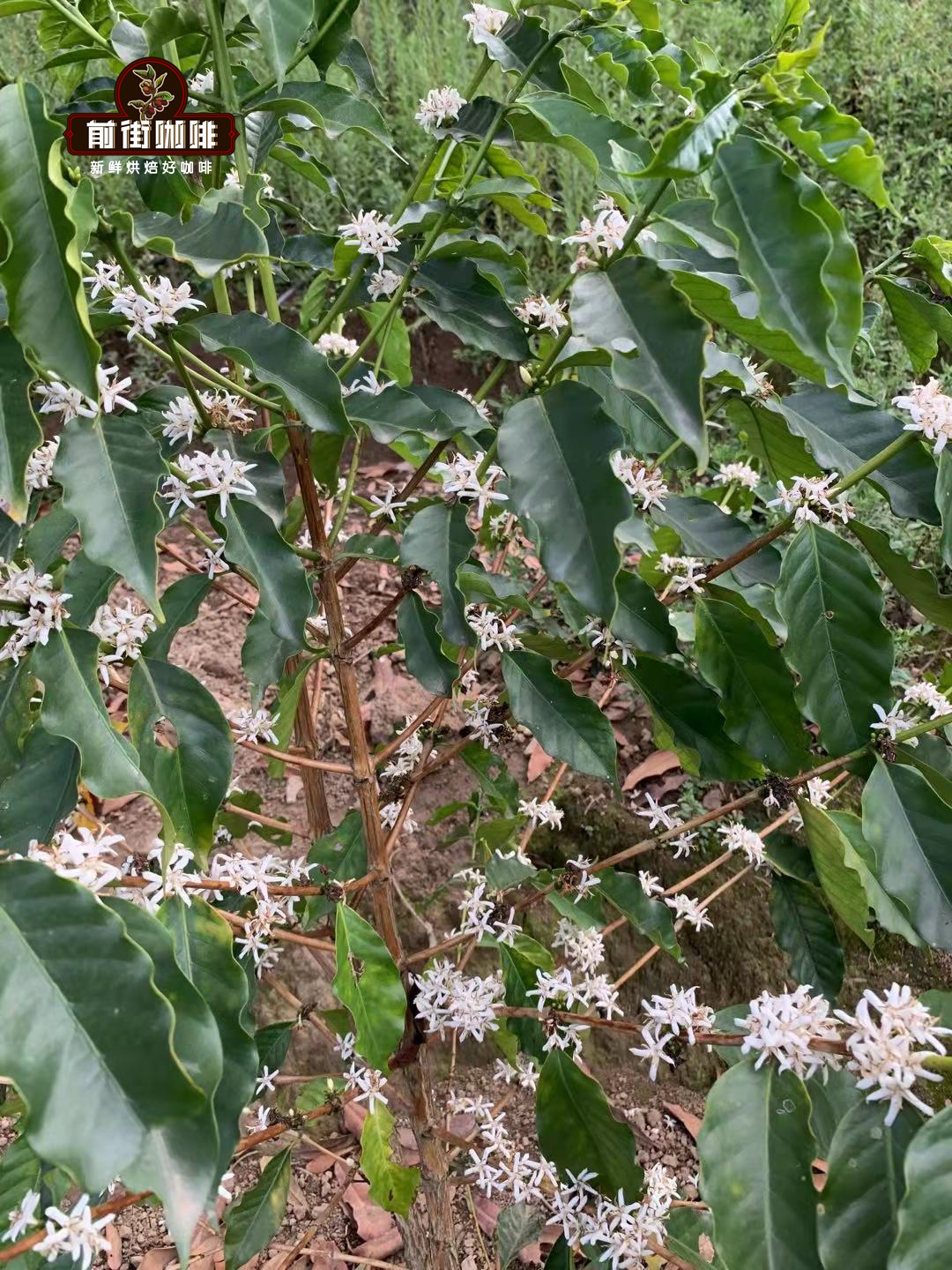
To learn more about specialty coffee, welcome to follow Frontsteet Coffee. What does a coffee tree look like? Perhaps you already have an impression, or perhaps not; what does a Typica plant look like, and why is Bourbon often mentioned? The coffee family has many members, but the differences between them are not always intuitive. Setting aside flavor performance and flavor profiles, there are actually quite obvious physical differences between plants. Needless to say, various coffee trees have different forms; even just looking at the flowers they produce, different varieties have different flower morphologies. Next, let's take a look at what characteristics these different varieties each possess.
How to identify the characteristics of different coffee varieties? There are hundreds of coffee varieties, but about 70% of the world's coffee production comes from Arabica. Although Arabica is more delicate than Robusta, its taste and aroma are more favored by most consumers. Under Arabica, there are many varieties, of which only a few are widely used in specialty and commercial cultivation. Below, FrontStreet Coffee will use certain physical characteristics (also called phenotypes) to identify plants, but this cannot serve as a complete universal reference. First, you can start understanding and identifying from the following aspects: plant type (tall or compact), leaf tip color (green or bronze), plant shape (conical or round), leaf shape (slender or broad), shape and size of fruit and green beans (slender, round, or other, and small, medium, large, or extra-large), fruit color (red, yellow, orange, or even pink), branch angle, branch spacing (short or long), and the distance between internodes on the same branch (short or long). When identifying varieties, you do not need to use all the characteristics, because some varieties themselves carry a very prominent marker. Characteristics of the Typica coffee tree
Typica has very unique characteristics and is perhaps the easiest variety to identify. The plant is conical, with a single vertical main stem that can grow up to 5 meters tall. This height means its branch spacing and the internode spacing on the same branch are longer than those of other varieties. The angle between the side branches and the vertical main stem is between 50 and 80 degrees. Neither the main stem nor the branches are particularly thick. The leaves, fruit, and green beans are usually slender, and the leaf tips are bronze when young. Compared with other Arabica varieties, Typica leaves have a smoother surface and fewer wavy edges. Typica fruit turns bright red when ripe. Characteristics of the Bourbon coffee tree
Bourbon's plant type and conical shape are consistent with Typica, but it is generally denser, with more secondary branches. The main stem is thicker, and the branches look sturdier, so the plant is more robust than Typica. Branch spacing and internode spacing are also slightly shortened. This increase in density means Bourbon's fruit yield is about 30% higher than Typica's. The leaves are broader than Typica's, with wavy edges and an uneven texture. Young leaves are usually green, but sometimes have bronze tips. The fruit is round and, when ripe, can be red, orange, or yellow, among other colors. Characteristics of the Caturra coffee tree
Many varieties are descendants of Bourbon and Typica, and Caturra is a natural mutation of Bourbon, much shorter and much denser than its parent. The distance between branches on the main stem and among the many secondary branches is smaller, making Caturra a denser plant than Typica or Bourbon. Other than that, it has characteristics similar to Bourbon. The broad leaves have wavy edges and green tips. The fruit is also round, medium-sized, and turns red or yellow when ripe. Characteristics of the Catuai coffee tree
Catuai is the hybrid descendant of the Mundo Novo and Caturra varieties. Just as Caturra is a natural mutation of Bourbon, Mundo Novo is a natural mutation of Typica. Therefore, in Catuai, characteristics from both Typica and Bourbon can be seen. The plant is relatively short, and the angle formed by side branches and the main branch is nearly vertical. There are few secondary branches at the top of the plant, which makes the tree shape more umbrella-like than Typica and Bourbon, while the latter two are conical. Catuai leaves are wavy and usually have green tips. The fruit does not easily detach from the branches, making it a good choice in areas with strong wind and rain. Characteristics of the Pacamara coffee tree
Pacamara is the hybrid descendant of the Pacas and Maragogipe varieties, developed by the Salvadoran Coffee Research Institute (ISIC) in 1958. It is currently not regarded as a stable variety, meaning the plant traits are not consistent across generations. Nevertheless, it is still widely planted and promoted. Pacas is another mutation of Bourbon, while Maragogipe is a mutation of Typica. The latter has very large fruit, and this trait was also passed on to Pacamara. The fruit size and unique pointed leaves make Pacamara easy to recognize. These leaves can have green or bronze tips. The plant type is compact, and the plant is conical. The distances between branches and the internodes on branches are both short, so it grows into a dense plant. The main stem and branches are similar to Bourbon's, thicker and less flexible than most other varieties. Characteristics of the Geisha coffee tree
This globally popular variety can be easily recognized from the angle of the upper branches and the plant shape. The upward-growing branches of the Geisha coffee tree extend skyward at a 45 to 50 degree angle. The Geisha plant is tall, with long branch spacing and internode spacing, and relatively thin main stem and branches, somewhat similar to Typica. The leaves are smooth and slender, and the fruit is also slender in a manner similar to Typica fruit. From personal experience, the most obvious main difference between Geisha and Typica is that the former is umbrella-shaped or flat-topped, while Typica is conical. Ripe Geisha fruit has a flavor completely different from other varieties, with citrus notes, sweetness, and floral elements similar to jasmine. Different coffee varieties differ not only in flavor and profile; as plants, they are also visually distinct.
The above content is compiled by CoffeeHunters, a coffee news website.


