







What Does SOE Meaning Coffee Refer to in Practice?
SOE stands for single origin espresso, meaning the shot is pulled from one coffee rather than a blend. Front Street Guji Huakui, a naturally processed Ethiopian bean with berry aroma and a creamy body, works well this way. The choice between a medium-light and a medium roast comes down to how much acidity and sweetness are wanted in the cup.
At the Buku Abel station in Hambela, Sidama, pickers select only ripe red cherries, which are dried on raised beds and hand-sorted every three to five days. The heirloom beans grow between 2,250 and 2,350 meters and are graded G1. Espresso parameters plus set ratios for an SOE americano and a latte make the recipe repeatable at home.
As a representative of naturally processed Ethiopian beans, Front Street Guji Huakui (Floral Queen) has become a daily staple for many coffee lovers thanks to its rich berry aroma and creamy, full-bodied texture. But when faced with both a medium-light roast and a medium roast, how do you choose in order to make a delicious SOE Americano? This article begins with Huakui's origin background, the story behind its name, and its flavor characteristics, then explains in detail why naturally processed Huakui is suitable for making SOE, and provides Front Street's recommended espresso extraction parameters along with specific ratios for Americano and Latte, helping you recreate a café-quality Huakui SOE at home.
When it comes to naturally processed coffee, the first thing that comes to many people's minds is the delightfully named Front Street Huakui. This bean is not only appealing in flavor but also quite friendly in price, making it a daily staple choice for many coffee enthusiasts.
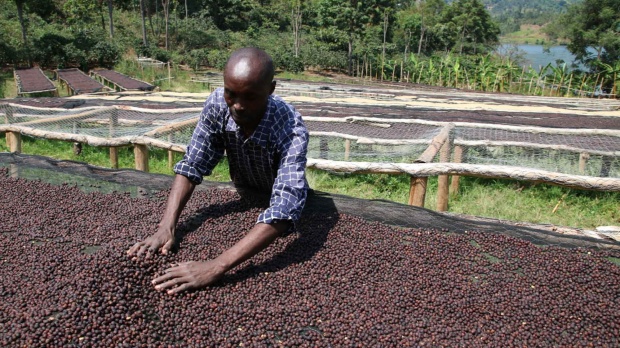
In the Sidama producing region, during every harvest season, farmers pick only ripe red cherries and place them one by one into baskets. The cherries collected this way are similar in size and consistent in ripeness, with no other debris mixed in. Once processing begins, defective beans as well as underripe or overripe cherries are first removed by hand. The red cherries are then spread out on raised wooden frames or drying racks for sun-drying, which prevents the beans from touching the ground directly and absorbing off-flavors.
During the drying period, workers frequently turn the cherries to ensure every bean loses moisture evenly. Every three to five days, moldy or poor-quality beans are also removed by hand. Once the fruit skin is completely dried and hardened, the dried skin is removed with a hulling machine. After obtaining the green beans, farmers perform one final round of sorting to pursue even better flavor expression.
Specialty Representative of naturally processed coffee beans
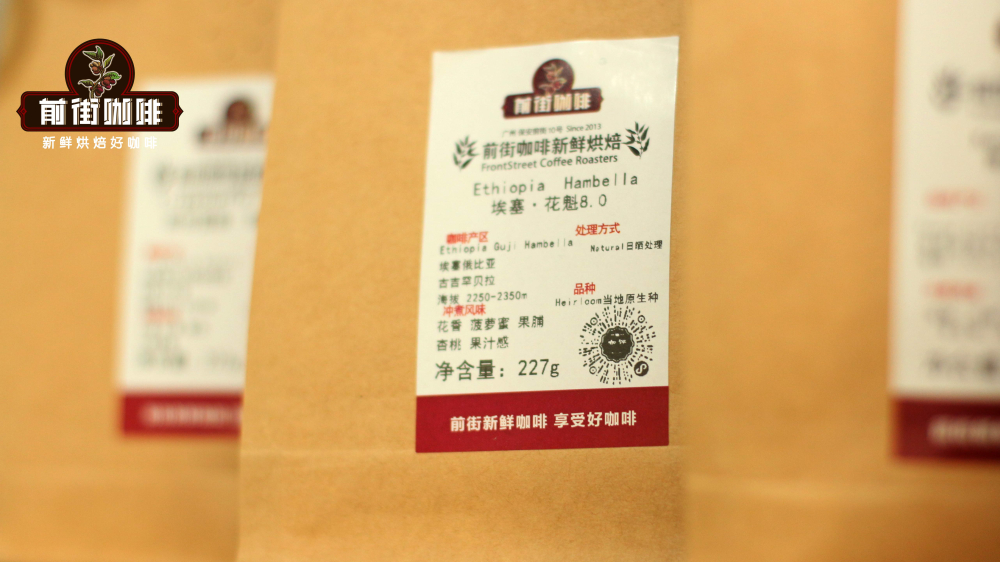
Front Street New Crop Naturally Processed Huakui Coffee Beans
Continent: Africa
Country: Ethiopia
Origin: Hambela, Sidama
Processing Station: Buku Abel Processing Station
Coffee Variety: Heirloom (Ethiopian native variety)
Altitude: 2250-2350m
Processing Method: Natural Process
Grade: G1
What is Huakui Coffee? Where Does the Name Come From?
Before becoming "Huakui," this bean was already a competition-level award-winning lot from Ethiopia. In February 2017, Ethiopian DW Coffee Company submitted a naturally processed lot from the Buku Abel Processing Station in Hambela, Sidama, to compete in the Ethiopia National Taste of Harvest competition (TOH) organized by the African Fine Coffees Association, ultimately winning first place in the natural group with its rich berry fragrance and creamy mouthfeel.
That same year, this winning lot caught the attention of a green bean trader in Beijing, who named it "Huakui" (meaning "the chief of all flowers, outshining all others") and brought it to the domestic market under the halo of a championship title. Later, a competitor in a China regional coffee brewing championship selected this Huakui as their competition bean and defeated several opponents using Geisha, winning second place, which was the first time Huakui made a name for itself in China.
As the competition buzz continued to grow, this traditional naturally processed bean from the Buku Abel Processing Station smoothly entered the public eye, and with its affordable price and appealing flavor, it quickly became recognized within the industry as a high-quality Ethiopian coffee.
Just looking at the name "Huakui," one might mistake it for a coffee bursting with floral aromas. That is not the case—Huakui's floral notes are not particularly intense. Instead, its fruit character stands out remarkably, such as creamy strawberry, mango, jackfruit, citrus, blueberry, and more. It carries the signature ripe tropical fruit flavors of Sidama natural beans, which is deeply impressive, and it was precisely this rich berry aroma that helped "Huakui" win first place in the natural group of the TOH green bean competition.
However, it's important to understand that coffee is ultimately an economic crop. A given year's yield and quality depend first on climate, rainfall, altitude, soil, fertilization, and weeding, and then on subtle differences in processing such as sun exposure duration, temperature, and humidity, which lead to different flavor directions—and Huakui is no exception. Therefore, each year's Huakui will more or less taste somewhat different from the previous year's.
Is Naturally Processed Huakui Coffee Suitable for SOE?
Front Street Huakui has a full, fermented fruit aroma, plus the mellow sweetness unique to natural beans, making it a daily staple for many enthusiasts. Those who have an espresso machine at home naturally itch to try making a café-style Huakui SOE Latte or SOE Americano themselves—just thinking about it brings joy.
In Front Street's view, choosing the right coffee bean for SOE extraction not only easily yields a delicious espresso, but also makes the subsequent Americano with water or Latte with milk twice as effective.
Front Street Huakui comes in two versions, each corresponding to a different roast profile: one is a medium-light roast Huakui suitable for cold brew and pour-over, and the other is a medium roast Huakui suitable for espresso machines and moka pots. If you like to keep things simple with cold brew, or enjoy the ritual of pour-over, you can choose the medium-light roast; if you prefer coffee crema, or want to pour beautiful latte art on your latte, Front Street recommends choosing the SOE roast profile.
SOE Huakui Espresso Extraction Parameters
Coffee Bean: Ethiopia · Huakui 8.0
Coffee Grounds: 20g
Coffee Liquid Yield: 40g
Coffee-to-Liquid Ratio: 1:2
Extraction Time: 26-32 seconds
Grind Setting: Galileo 2.0
The coffee machine used by Front Street has a double-shot basket capacity, requiring 20 grams of coffee grounds each time. The coffee-to-liquid ratio is set at 1:2, meaning 40 grams of coffee liquid is extracted within a reasonable time. Typically, a single extraction time is controlled between 20 and 35 seconds.
Before extraction, wipe the basket clean, turn on the grinder to grind a double shot of coffee grounds, and place it on an electronic scale to adjust until it is exactly 20 grams. Then use a distribution tool to level the coffee grounds, and use a tamper to press down vertically with force to compact the puck, which will make the extraction more stable.
Next, turn on the extraction switch and let water run for 1 to 2 seconds, which both wets the group head and rinses away any residual coffee grounds on it. Place an electronic scale under the cup that will catch the Espresso, tare it to zero, and place it together under the group head during extraction.
Gently lock the portafilter onto the group head and flip down the extraction switch. Watch the state of the extracted liquid—when the electronic scale shows the coffee liquid has reached 40 grams and the time is approximately 30 seconds, flip down the extraction switch.
The finished Huakui SOE espresso is topped with a dense layer of crema, while the coffee liquid beneath carries rich tropical fruit sweetness and acidity along with a gentle, subtle floral aroma. Add 160 grams of ice water or warm water at a 1:4 ratio for a refreshing SOE Huakui Americano; those who prefer milk coffee can add 240 grams of steamed warm milk at a 1:6 ratio, the purpose being to soften the texture of the espresso, ultimately yielding a cup of SOE Huakui Latte that tastes like creamy strawberry cookies.
The above content is compiled by CoffeeHunters, a coffee news website.


