







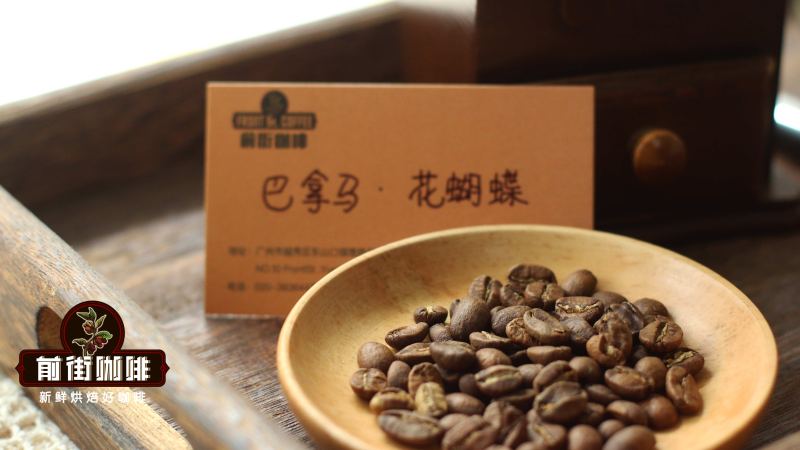
Is Panama Butterfly geisha blend coffee single origin?
Panama Butterfly from Boquete is a blend coffee in name only. It combines about 70 percent Geisha with Caturra and Catuai that were interplanted on the same estate, later separated for harvest and then mixed again at export, so all three varieties come from one origin and one producing region.
Washed coffee bean processing and a medium-light roast keep the floral aroma, bright acidity and rounded body intact. In the cup, the Geisha component carries jasmine and citrus notes while Caturra and Catuai add sweetness and structure, which is why a V60 staged pour with controlled parameters suits this lot.
A question that customers often ask about the Panama Butterfly coffee beans from Front Street Coffee is: do Geisha blends really count as single-origin beans? This article starts with the cultivation history of the Boquete producing region, sorts out the variety composition of this bean—70% Geisha combined with Caturra and Catuai—and reviews Geisha's path from the primordial forests of Ethiopia to overnight fame in Panama. It also explains the washed processing flow, the medium-light roast profile, and the V60 staged brewing parameters, with a cupping report attached. After reading, you will understand why this Front Street Panama Butterfly performs so well in floral aroma, acidity, and body.
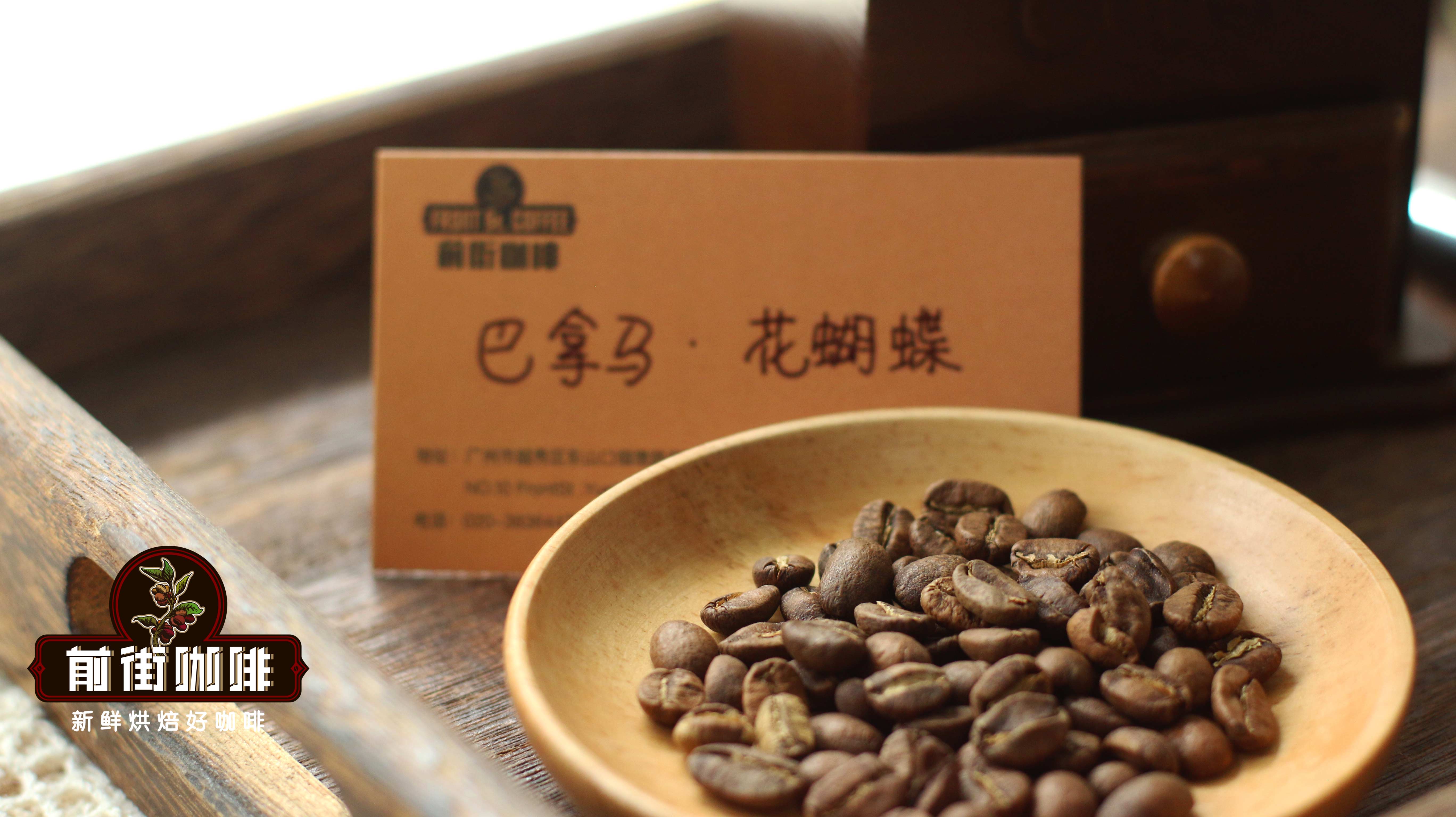
To learn more about specialty coffee, you can follow the WeChat public account: Front Street Coffee (FrontStreet Coffee).
When Front Street Coffee (FrontStreet Coffee) launched that Front Street Panama Geisha blend coffee bean, customers kept asking: can a Geisha blend really be considered a single-origin coffee bean?
After reviewing the materials, Front Street Coffee (FrontStreet Coffee) learned that, due to the estate's history, the Geisha variety was once interplanted with Caturra and Catuai coffee trees in the early days to increase yield. For easier harvesting, farmers later separated the three varieties, and during export they directly mixed them together to present the desired full-bodied flavor. The three varieties contained in Front Street Panama Butterfly come from the same origin and the same producing region, so it still belongs to single-origin beans.
Front Street Coffee (FrontStreet Coffee) believes that calling coffee beans made by mixing different varieties a "blend" is only meant to highlight one of the varieties, and this is not the same as blending in the traditional sense. Take Ethiopian heirloom varieties as an example: because the varieties themselves are extremely diverse, the local approach is mixed cultivation. The difference between Front Street Ethiopian heirloom varieties and the Front Street Panama Geisha blend is that the former is a natural mix, while the latter is an artificial mix.
Boquete Producing Region, Panama
Boquete
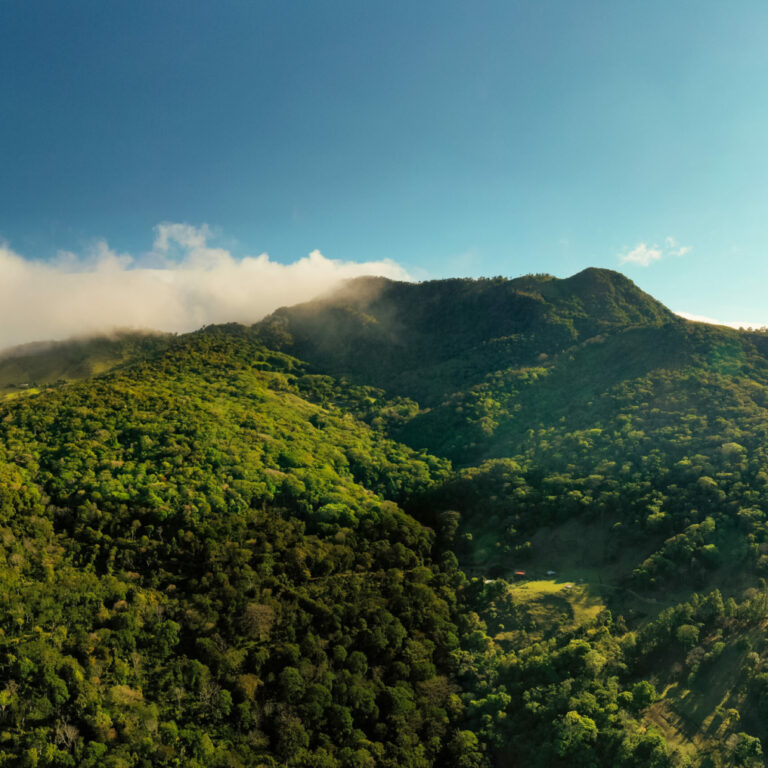
Boquete is one of Panama's well-known coffee-producing regions, located on the eastern side of Baru Volcano. The growing conditions here are quite favorable: coffee trees grow at altitudes between 1,200 and 2,000 meters, the lowest temperature is about 11°C, and the highest is about 27°C. There is neither frost nor excessive heat, and there is also a large temperature difference between day and night. Thanks to the advantages in altitude and soil, Front Street Coffee (FrontStreet Coffee) has cupped many coffee beans from this area, and their flavor expression is very rich, with both full-bodied nutty notes and alluring floral and fruity aromas.
More than a hundred years ago, a large number of highly educated Europeans, after completing the Panama Canal, were attracted by the flavor of coffee beans from the Boquete producing region, chose to stay, and bought estates to grow coffee. The Panama producing region was initially dominated by Caturra and Catuai, while Geisha became widely planted in Panama only after the owner of Hacienda La Esmeralda accidentally discovered it and entered it in a competition, making it famous overnight.
Composition of Front Street Panama Butterfly Coffee Beans
Butterfly
Geisha makes up 70% of Front Street Panama Butterfly, which consists of three varieties: Geisha, Caturra, and Catuai. It is grown in the Baru Volcano area of Boquete at an altitude of about 1,600 meters. The processing plant uses meticulous washed processing. Panama's special microclimate brings abundant rainfall and a pronounced temperature difference between day and night, and together with the unique soil of the volcanic area, careful harvesting, and refined processing, this Front Street Panama Butterfly performs quite excellently in body, acidity, and floral aroma.
Coffee Bean Varieties
Geisha, Caturra, Catuai
Caturra Caturra is a natural mutation of the Bourbon variety, discovered between 1915 and 1918 on a plantation in Minas Gerais, Brazil. At that time, a genetic mutation appeared in the Bourbon plants on the plantation, causing the plants to become smaller, similar to dwarfism. This variety is suitable for cultivation between 700 and 1,700 meters above sea level and has strong altitude adaptability. The higher the altitude, the better the flavor, but the yield decreases accordingly.
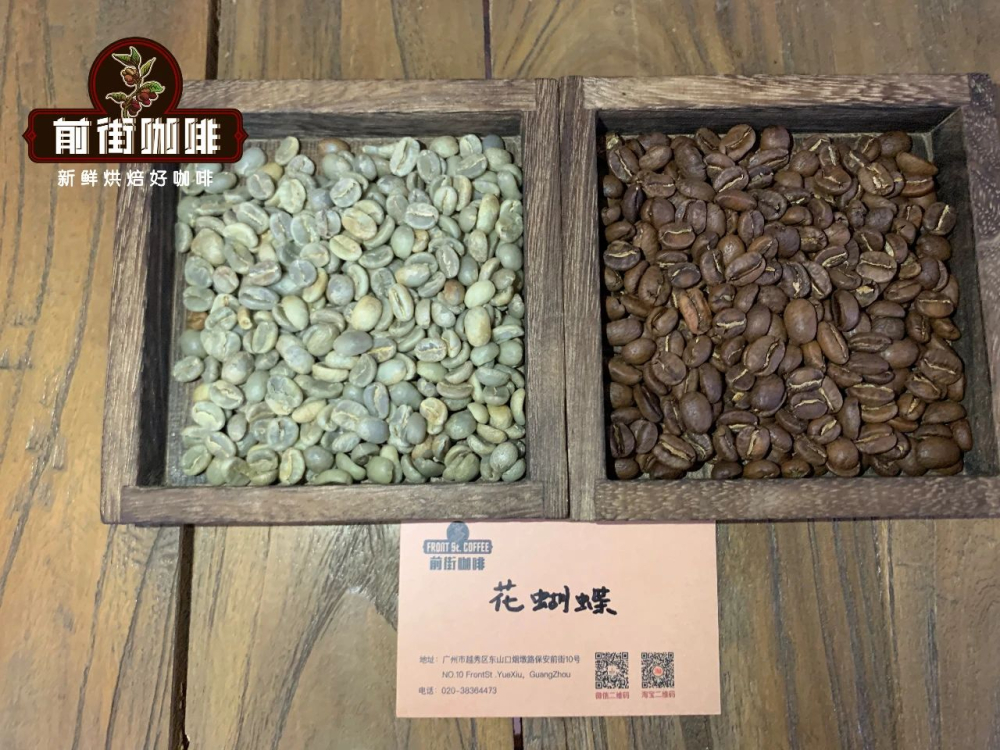
Catuai Just from the name, you can tell it is closely related to Caturra. It was artificially crossbred by the Instituto Agronomico de Campinas (IAC) in Sao Paulo, Brazil, using Mundo Novo and Yellow Caturra, and was initially numbered "H-2077." Catuai inherits both Mundo Novo's characteristics of high yield, strong disease resistance, and good cupping performance, and Caturra's characteristics of a small plant, high-quality acidity, and suitability for sun-dried coffee.
Geisha In 1931, Geisha was discovered in the primordial forests of Ethiopia. After research and cultivation in multiple countries, in 1960 Pachi Serracin, the former owner of Panama's Don Pachi estate, introduced Geisha to Panama from Costa Rica. It was not until 2004 that the owner of Hacienda La Esmeralda noticed a faint, alluring floral aroma in harvested coffee beans and entered it separately in the BOP competition. Geisha became famous overnight and shone brilliantly in the specialty coffee world. What makes Geisha special is its very obvious floral and citrus flavors, extremely high cleanliness, soft and elegant acidity, lasting and gentle sweetness, and a mouthfeel like fine black tea. It combines floral aromas with intense tropical-fruit-like sweetness and has a unique floral and fruity fragrance.
Coffee Bean Processing Method
Washed
This Front Street Panama Boquete Butterfly coffee bean obtained by Front Street Coffee (FrontStreet Coffee) uses the washed processing method: first, the selected coffee cherries are sent into a depulper to initially remove the skin and pulp; then the green coffee beans with residual pulp and mucilage are immersed in water and fermented for about 24 hours;
After fermentation is complete, the green coffee beans with parchment are placed in a flowing water channel to be washed, removing the pulp and mucilage; after washing, they are sun-dried or dried with a dryer until the moisture content drops to about 12%; finally, the parchment of the green beans is removed. Washed processing gives this Geisha blend Front Street Butterfly a brighter acidity and highlights Geisha's floral characteristics.
Front Street Coffee (FrontStreet Coffee) Roast Record
Considering the special variety composition of this Front Street Panama Butterfly, the Front Street roaster decided to use a medium-light roast. Because the beans are dense and hard, high heat is used initially for dehydration, and before first crack the heat is reduced to lower the rate of temperature rise and enter first crack, preserving small-molecule aromatic substances such as floral notes as much as possible and avoiding damage to Geisha's characteristic aromas of flowers, white grapes, caramel, honey, and black tea.
Roast capacity 550g: preheat the roaster to 200°C and charge, after 30 seconds adjust the heat to 160, open the damper to 3, turning point at 1'31", maintain heat; at 4'50" turn yellow, the grassy smell disappears, entering the dehydration stage, at 165°C lower the heat to 130°C, keep the damper at 4. At 7'50" dehydration is complete, wrinkles and dark spots appear on the bean surface, and the toasted bread smell turns into coffee aroma, which is the prelude to first crack; at this time, pay attention to listening for the sound of first crack. At 8'31" first crack begins, open the damper fully to 5, and adjust the heat to 70°C. Post-first-crack development time is 1'28", and the beans are dropped at 193°C.
Front Street Coffee (FrontStreet Coffee) Cupping Report
Front Street Coffee (FrontStreet Coffee) conducts cupping within 8 to 24 hours after the sample coffee beans are roasted. Front Street Coffee (FrontStreet Coffee) baristas usually use ceramic cupping bowls with a capacity of 200ml. The cupping water temperature is 94°C, and the grind size is controlled so that 70% to 75% passes through a No. 20 standard sieve (0.85 mm). The ratio is 11.1 grams of coffee grounds to 200 milliliters of hot water, that is, 1:18.18. The extracted concentration then falls exactly within the golden cup range of 1.15% to 1.35%, and the steeping time is 4 minutes.
Dry aroma: citrus, berries, floral
Wet aroma: citrus, jasmine
Flavor: peach, grape, caramel, honey
Front Street Coffee (FrontStreet Coffee) Brewing Notes
Dripper: V60#01
Water temperature: 91°C
Coffee-to-water ratio: 1:15
Grind size: medium-coarse grind/BG6s (80% passing through China standard No. 20 sieve)
Front Street uses staged extraction: in the first stage, pour 30 grams of water and bloom for 30 seconds; in the second stage, pour 95 grams of water (the electronic scale shows 125 grams); pouring is completed at about 1 minute 05 seconds; in the third stage, pour 100 grams of water (the electronic scale shows 225 grams), and pouring is completed at about 1 minute 40 seconds; the extraction time is 2 minutes 10 seconds, then remove the dripper to finish brewing.
[Front Street Panama Boquete Butterfly] Brewed flavor: floral, black tea, berries, citrus, with a slight nutty finish, smooth mouthfeel, low bitterness, moderate acidity, and a medium aftertaste.
The above content is compiled by CoffeeHunters, a coffee news website.


