







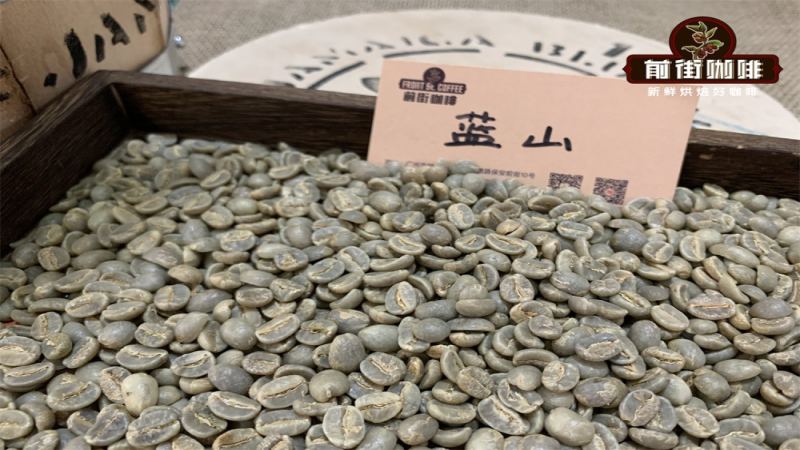
What drives the price of blue mountain coffee?
Jamaican Blue Mountain coffee has a mild, balanced, clean taste with low bitterness and a long finish, and a reasonable price for a genuine cup is higher than for most specialty coffees because real estate-grown beans are limited and carefully graded. Buyers pay for verified origin, not just the name on the bag.
The raw material cost reflects a strict grading system, limited growing area in the Blue Mountains, and the fact that much early Blue Mountain coffee sold in China was a flavor blend rather than the real thing. Legitimate imports have become easier to find, so checking estate and grade is more useful than trusting the price alone.
Blue Mountain coffee is hailed as the crown jewel of specialty coffee, renowned worldwide for its rich, balanced, clean, and smooth taste. But authentic Jamaican Blue Mountain coffee doesn't come cheap—what is a reasonable price for a cup? And is all the Blue Mountain coffee on the market truly what it claims to be? This article, from the professional perspective of Front Street Coffee, will examine Blue Mountain coffee's growing environment, grading system, varieties, and processing methods, break down the raw material cost of a cup of Blue Mountain coffee, and offer practical brewing parameters and flavor descriptions to help coffee lovers gain a comprehensive understanding of this legendary coffee.
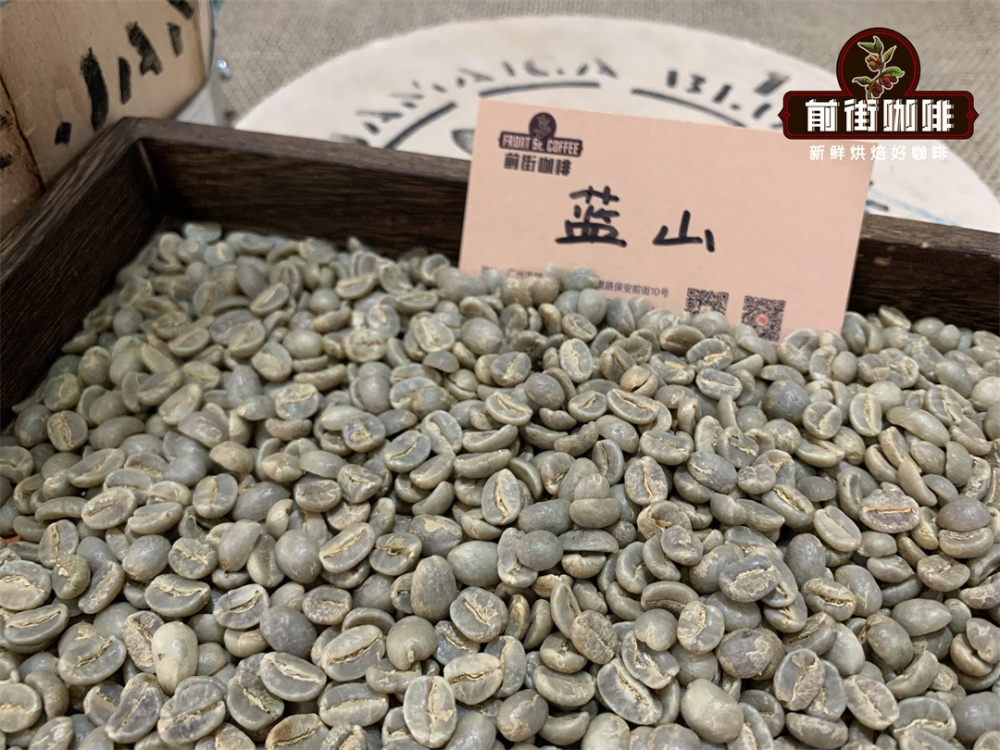
For more specialty coffee knowledge, please follow: Frontsteet Coffee
Opinions on whether Blue Mountain coffee tastes good have always been polarized. Some find it rich, balanced, and with a long-lasting finish that lingers in the memory; others think it's nothing special. Front Street's view is this: taste preferences are inherently personal—some prefer acidity, others favor sweetness, and that's perfectly normal. But it's undeniable that Blue Mountain coffee itself is truly outstanding, ranking among the finest in specialty coffee and being one of the most expensive coffee categories in the world. Its global fame stems from the exquisite, smooth, and clean cup profile of Jamaican Blue Mountain coffee.
So is this famously prestigious Blue Mountain coffee priced beyond reach?
Front Street believes: in the past, Blue Mountain coffee did give the impression of being expensive and hard to verify as authentic. The reason was that in the early years, very little Blue Mountain coffee entered the Chinese market, yet it commanded high prices, leading some merchants to pass off Blue Mountain flavor blend beans as genuine Blue Mountain. As a result, consumers paid high prices but didn't necessarily get the real thing. Of course, at the time, people had limited knowledge of Blue Mountain coffee and might not have noticed even if they drank a counterfeit.
Today, Blue Mountain coffee prices remain high. However, due to strong demand in the Chinese market, legitimate imports of Blue Mountain coffee have been available for many years, and Blue Mountain estate owners have visited China multiple times in recent years, raising Chinese consumers' awareness of Blue Mountain coffee beans. Blue Mountain coffee on the domestic market is no longer so scarce that it's all fakes. Moreover, as Jamaica's Blue Mountain coffee growing region has expanded compared to the past and Japanese market demand has weakened, authentic Jamaican Blue Mountain coffee is now available through legitimate channels in China—as long as you know how to identify it, you can buy the real thing.
What kind of growing environment could nurture such a rich flavor?
Front Street has mentioned many times before that coffee is essentially an agricultural product, and the growing environment has a decisive influence on flavor. Authentic Blue Mountain coffee specifically refers to coffee grown in Jamaica's Blue Mountain range, and only coffee grown at altitudes of 800 meters or above qualifies as authentic. The Blue Mountain coffee on FrontStreet Coffee's bean list comes from Clifton Estate at an altitude of 1,310 meters.
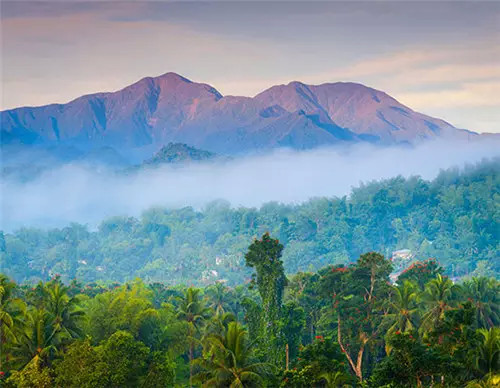
The Blue Mountain range is located in eastern Jamaica. Surrounded by the Caribbean Sea, whenever the sky is clear, sunlight strikes the azure sea and the peaks reflect a brilliant blue glow, hence the name. The highest peak of the Blue Mountains reaches 2,256 meters—the tallest in the Caribbean and a famous tourist destination. Located in the coffee belt, this area has fertile volcanic soil, fresh unpolluted air, a humid climate with year-round fog and rain, average annual rainfall of about 1,980 millimeters, and temperatures hovering around 27 degrees Celsius. It is precisely these climate conditions that have created the world-renowned Jamaican Blue Mountain coffee and one of the most expensive coffees on the planet.
Blue Mountain coffee has a very low caffeine content—less than half that of other coffees—which aligns with modern health-consciousness. Even if the same coffee tree species is introduced to Hawaii, Kenya, Papua New Guinea, or other regions with similar climates, it cannot replicate the distinctive flavor of Blue Mountain coffee.
How much does a cup of Blue Mountain coffee cost?
Though Blue Mountain coffee is not the world's most expensive coffee, its richness is second to none. So what is a reasonable price for a cup of Blue Mountain coffee? Pure imported Blue Mountain roasted beans typically cost about 1,200 RMB per pound (450 grams). A 45cc cup of coffee requires approximately 7 grams of ground coffee beans. Based on this, one pound of coffee beans can make about 50 to 60 cups, putting the raw material cost per cup of Blue Mountain at roughly 20 to 24 RMB. Adding the café's operating costs, a retail price of 50 RMB per cup—double the cost—is within the normal range.
In the early years, a cup of fake Blue Mountain in China could easily cost over a hundred RMB. Even today, when genuine Blue Mountain is no longer scarce, prices remain high. Yet Front Street's authentic Blue Mountain sells for just 60 RMB per cup, allowing you to experience an exceptional flavor. Blue Mountain coffee's most beloved trait is its subtle aroma, clean sweetness, and virtually no bitterness. Fruity notes bloom on entry, followed by layers of cocoa and nutty sweetness and a lingering aftertaste.
Blue Mountain coffee on the market is dazzlingly varied—is the flavor consistent? Front Street tells you that many coffees labeled with the Blue Mountain name on the market are not all Jamaican Blue Mountain coffee, because authentic Blue Mountain coffee production is limited. There's also a historical reason for the high price of Blue Mountain coffee beans: in the early years, Japanese merchants monopolized 85% of Blue Mountain coffee, leaving only 15% circulating globally, making it especially precious. According to 2013 export statistics from the Jamaica Coffee Board, of the limited Blue Mountain coffee bean quota, 85% was exported to Japan, 5% to the United States, 5% to Europe, and 5% to other countries. However, according to International Coffee Association statistics, China accounts for 15% of global authentic Jamaican Blue Mountain coffee consumption. This is because some of the Jamaican Blue Mountain coffee shares of Japan, Australia, and Europe were exported to Taiwan through directly-operated subsidiaries.
Blue Mountain Coffee Grading
How many grades does Blue Mountain coffee have? What are they based on? Coffee from Jamaica's Blue Mountain region is divided into three grades: Blue Mountain Coffee, Jamaica High Mountain Supreme Coffee Beans, and Jamaica Prime Coffee Beans.
Blue Mountain Coffee and High Mountain Coffee are each further divided into two grades. From highest to lowest quality, they are: Blue Mountain No. 1, Blue Mountain No. 2, High Mountain No. 1, High Mountain No. 2, and Jamaica Coffee.
From highest to lowest quality: NO.1, NO.2, NO.3, and PB—PB meaning peaberry. According to CIB standards, the basic requirements for NO.1 Blue Mountain green beans are screen size 17 and above, defect rate below 3%, moisture content around 13%, etc. The finest quality among Blue Mountain coffee beans is NO.1 peaberry, also known as pearl beans—small round beans carefully selected from products grown at 2,100 meters altitude, truly the cream of the crop. Its aroma is extremely intense, with a lasting fruity flavor and plump beans.
Blue Mountain coffee has a very low caffeine content—less than half that of other coffees—which aligns with modern health concepts. No matter where the same coffee tree species is planted—Hawaii, Kenya, Papua New Guinea, or elsewhere with a similar climate—it cannot produce the taste of Blue Mountain coffee beans. The Jamaican Blue Mountain No. 1 coffee sold by FrontStreet Coffee holds a certificate issued by the Jamaica Coffee Board. Additionally, the wooden barrels packaging Jamaican Blue Mountain coffee beans bear a green frog logo. This is why FrontStreet Coffee specifically chose Clifton Farm—a Jamaican Blue Mountain No. 1 coffee estate with rainforest certification. Moreover, Jamaica is the only producing region that uses wooden barrels to package green beans.
Blue Mountain Coffee Varieties
Ethiopia is the gene pool of coffee, and the Blue Mountain coffee introduced by FrontStreet Coffee belongs to the Typica variety. Typica is the oldest Arabica subspecies, with bronze-colored leaf tips, oval or slender-tipped beans, a tall tree body, and slightly inclined branches at about 50 to 70 degrees—also known as red-tipped coffee. The coffee tree's opposite leaves are elongated ovals with smooth surfaces, very long terminal branches, and few lateral branches. The flowers are white, blooming where the leaf stalk meets the branch. The flavor is elegant, but the plant is weak, has poor disease resistance, and produces very low yields per tree with few cherries. Ripe coffee cherries resemble cherries in shape and are bright red.
Blue Mountain Coffee Bean Processing Methods
Early Blue Mountain coffee was processed exclusively using the washed method. Washing and fermentation are used to remove the skin, pulp, and mucilage. Farms using the washed method must build washing channels and have access to a continuous supply of fresh water. During processing, the skin and pulp are first removed, then fermentation takes place for 12 to 18 hours. The fermented beans are then moved back and forth in channels, using the friction between beans and the force of water to wash the coffee beans until they are smooth and clean. After washing, the coffee beans are still wrapped in parchment, with a moisture content of about 50%, and must be dried to reduce moisture to 12% to 14%, otherwise they will continue to ferment and become moldy and spoiled. The beans are then sorted and stored in specialized warehouses. These steps must be strictly controlled, or coffee quality will suffer.
Today's Blue Mountain coffee is not limited to the washed method—there is also natural (sun-dried) processing. Front Street has recently added a batch of natural-process Blue Mountain coffee, also certified for export by the Jamaica Coffee Board.
This natural-process Blue Mountain coffee is actually quite difficult to produce. The reason only the washed method was used in the past is that washing best expresses the essence of Blue Mountain flavor, and changing the processing method inevitably changes the flavor structure. This is also why Front Street's daily-drinker bean series almost all use washed processing—washing best represents a region's flavor. Blue Mountain coffee adopting natural processing is more about responding to market trends, just as FrontStreet Coffee previously added a natural-process Mandheling coffee bean, different from the traditional wet-hulled method.
Front Street's recommended brewing parameters for Blue Mountain coffee:
Dripper: Kono dripper
Water temperature: 88°C
Dose: 15g
Coffee-to-water ratio: 1:15
Grind size: medium grind (75% passing through Chinese standard No. 20 sieve)
Brewing technique: three-stage extraction. Bloom with 30 grams of water for 30 seconds, then pour in a slow circular motion until reaching 125 grams and pause. When the water level drops and is about to expose the coffee bed, continue pouring to 225 grams and stop. Wait for the dripper to finish dripping before removing it. Start timing from the beginning of the pour; total extraction time is 2 minutes 00 seconds.
Flavor Description
[Front Street Natural-Process Blue Mountain Coffee] Mild berry acidity reminiscent of smoked plum and mulberry, with excellent overall balance, rich dark chocolate and nutty flavors, and a slight fermented note.
[Front Street Washed Blue Mountain Coffee] Rich dark chocolate and nutty flavors, creamy smooth mouthfeel, balanced acidity, sweetness, and bitterness.
Regarding coffee brewing, Front Street recommends using freshly roasted coffee beans to experience the fullest flavors of the coffee. FrontStreet Coffee ships all coffee beans within 5 days of the roast date, because Front Street knows well how greatly freshness affects flavor. Front Street's roasting philosophy is "Freshly Roasted Good Coffee," ensuring every customer receives their coffee in the freshest possible state. Coffee needs about 4 to 7 days of resting, so by the time customers receive it, it's at its peak flavor.
Front Street carries over 50 single-origin coffees from different regions, all highly representative coffee beans at various price points, bringing you a different experience each time.
The above content is compiled by CoffeeHunters, a coffee news website.


