







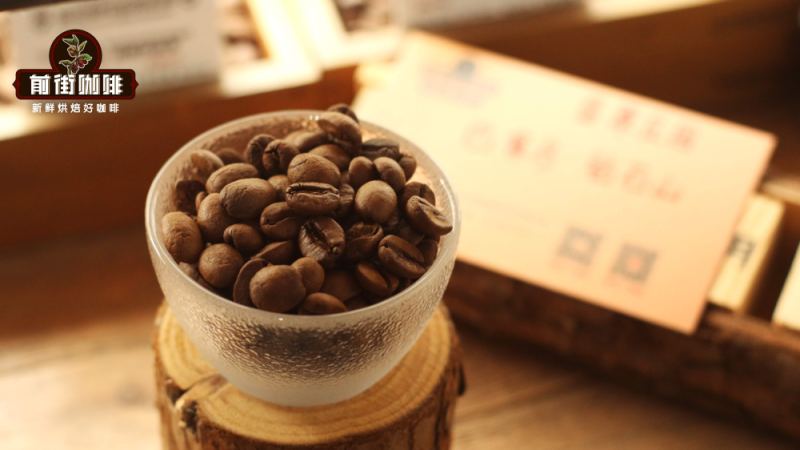
What makes Diamond Mountain coffee different from geisha?
Diamond Mountain coffee comes from Panama's Hacienda La Esmeralda, the estate known for geisha coffe, but this lot is Caturra and Catuai grown between 1400 and 1700 meters in Boquete and processed as natural beans. The estate introduced the two varieties in 1987 and built its own wet mill in 1994.
A green bean assessment, roast curve and cupping data support a V60 recipe for the natural process lot. Because Caturra and Catuai mature more reliably than geisha, Diamond Mountain gives a sweeter, fruit-forward cup with cocoa depth, offering an approachable route into the estate's wider range.
In the specialty coffee world, Panama's Hacienda Esmeralda is renowned for its Geisha variety, but the estate's two Caturra and Catuai product lines—Diamond Mountain and Palmyra—are equally worth attention. This article focuses on the sun-dried Diamond Mountain coffee beans introduced by Front Street Coffee. It begins with the history of Hacienda Esmeralda, outlines the varietal characteristics of Caturra and Catuai, then delves into the microclimates and plot divisions of Diamond Mountain's two growing areas, Canas Verdes and Jaramillo. Finally, it presents Front Street's full green bean assessment, roasting curve, cupping data, and V60 brewing recipe, offering coffee enthusiasts a detailed dossier that combines origin knowledge with practical reference.
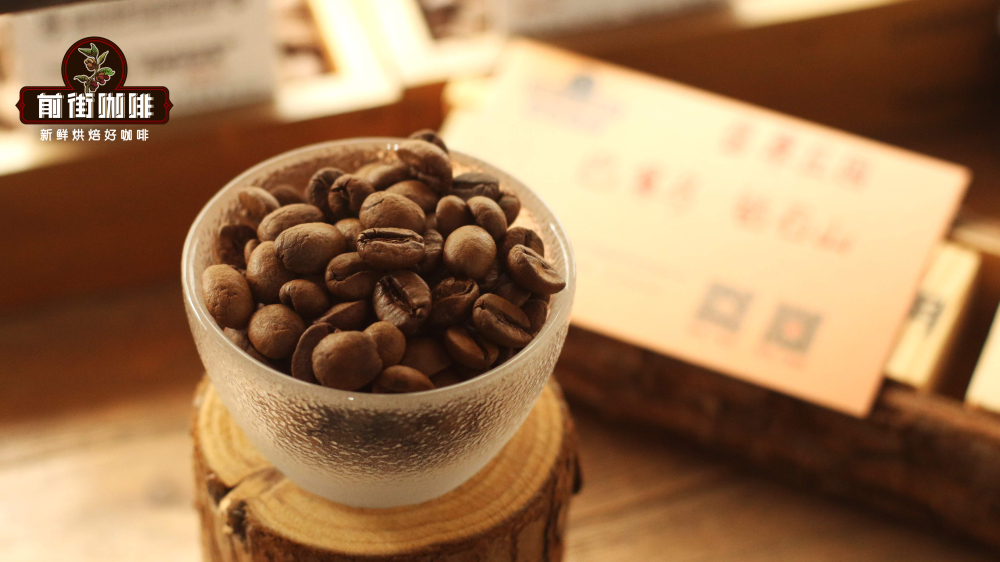
Hacienda Esmeralda's Geisha coffee beans are almost universally known in the industry. The estate divides Geisha into three brands by quality: Esmeralda Special, Private Collection, and Geisha 1500—commonly referred to as Red Label, Green Label, and Blue Label. In addition to grading Geisha, Hacienda Esmeralda also groups the Caturra and Catuai grown on the farm into two brands: Diamond Mountain and Palmyra. The subject of this Front Street article is precisely the sun-dried Diamond Mountain coffee beans.
Front Street Coffee: Panama Hacienda Esmeralda—Sun-Dried Diamond Mountain Coffee Beans
Coffee Region: Boquete
Coffee Estate: Hacienda Esmeralda
Growing Altitude: 1400-1700m
Coffee Varieties: Catuai, Caturra
Processing Method: Sun-Dried Processing
Hacienda Esmeralda
La Esmeralda Estate
In 1964, American banker Rudolph Peterson retired and moved to Panama, purchasing Hacienda Esmeralda in Boquete, initially focusing on dairy farming. Later, his son Price gave up his medical career to return and help his father manage the farm. In 1987, he introduced two coffee varieties, Caturra and Catuai, to the estate, and in 1994, he built a wet mill, giving Hacienda Esmeralda its own coffee processing facilities.
The rise of Geisha at Hacienda Esmeralda was somewhat of an accidental discovery. Because Geisha trees are tall and slender with sparse leaves and low yields, the estate owner initially used them only as a windbreak to block strong winds and protect the Caturra and Catuai in other high-altitude areas. It wasn't until harvest season, when someone caught a faint, intoxicating floral aroma in the wind, that the owner followed the trail and eventually found Geisha plants thriving and emitting floral and orange aromas in an area with strong winds and low temperatures where ordinary coffee trees struggled to survive. In 2004, Hacienda Esmeralda entered Geisha alone in the competition, making a name for itself in the BOP competition and establishing its place in the specialty coffee world.
Caturra & Catuai Varieties
Caturra & Catuai
As mentioned earlier by Front Street, the first varieties introduced and widely planted at Hacienda Esmeralda were Caturra and Catuai. Caturra is a Bourbon mutation discovered in Brazil in 1937. It has better yield and disease resistance than Bourbon, a short stature that facilitates picking, and strong adaptability—it doesn't require shade trees and can be planted from low altitudes of 700 meters to high altitudes of 1700 meters, showing a wide altitude range. However, the higher the altitude, the better the flavor, though yields decrease accordingly.
Catuai is a variety obtained in 1949 by artificially crossing Yellow Caturra with Mundo Novo, originally numbered "H-2077." Catuai has strong resistance to adverse conditions, especially wind and rain. Because the plant is short, it can be planted at double density, and routine pest and disease control is relatively convenient. Catuai grows vigorously and is short in height, but is susceptible to leaf rust.
Diamond Mountain Series
Diamond Mountain
The Caturra and Catuai of the Diamond Mountain series are grown in two areas, Canas Verdes and Jaramillo, with coffee cultivation distributed between 1400 and 1700 meters above sea level. Diamond Mountain brand coffee holds Eco-friendly and Rainforest Alliance Certified certifications.
Canas Verdes Annual rainfall 3500ml, average daytime temperature 16-23°C, average nighttime temperature 10-15°C, average altitude 1600-1800m. Canas comprises 9 small plots: Lino (Flax), Coronado (Crowned), Fundador (Founder), Leon (Lion), Montaa (Mountain Peak), Trapiche (Sugarcane Mill), Chinta (Golden Tower), Cabaa (Cabin), Tumaco (Tumaco).
Jaramillo Annual rainfall 4000ml, average daytime temperature 19-25°C, average nighttime temperature 11-15°C, average altitude 1600-1700m. The Jaramillo plot is subdivided into 5 small plots: Mario (Mario), Noria (Ferris Wheel), Reina (Queen), Bosque (Forest), Buenos Aires (Buenos Aires).
Rainforest Alliance Certified : Farms that meet the standards set by the Rainforest Alliance are evaluated by the alliance for the protection of the farm and its surrounding ecosystem, restrictions on pesticide use, and waste management practices. Only coffee that passes this assessment and is certified can be called "Rainforest Alliance Certified Coffee." Because the impact on the ecological environment during coffee cultivation is low, the Panamanian government also awarded the Eco-friendly ecological label to Diamond Mountain series coffee beans.
Sun-Dried Processing
Natural
The Diamond Mountain beans sourced by Front Street Coffee use the sun-dried processing method. In the sun-dried process, harvested coffee cherries are sent directly to dry in the yard. The coffee cherries slowly dry with the beans still inside, and the beans become imbued with fruity and aromatic notes. Depending on the weather and the composition of the site, the coffee cherries are dried on concrete platforms for 3 to 5 days (8 hours per day).
When the coffee cherries have dried to a certain degree, they are then placed in a Guardiola drier and rotated for 72 hours to complete the drying process and prevent fermentation. After drying is complete, the coffee cherries are mechanically stripped of their skin, pulp, and other parts. Front Street Coffee believes that the sun-dried processing method adds sweetness and ripe red berry flavors to the coffee beans.
Front Street Coffee Green Bean Analysis
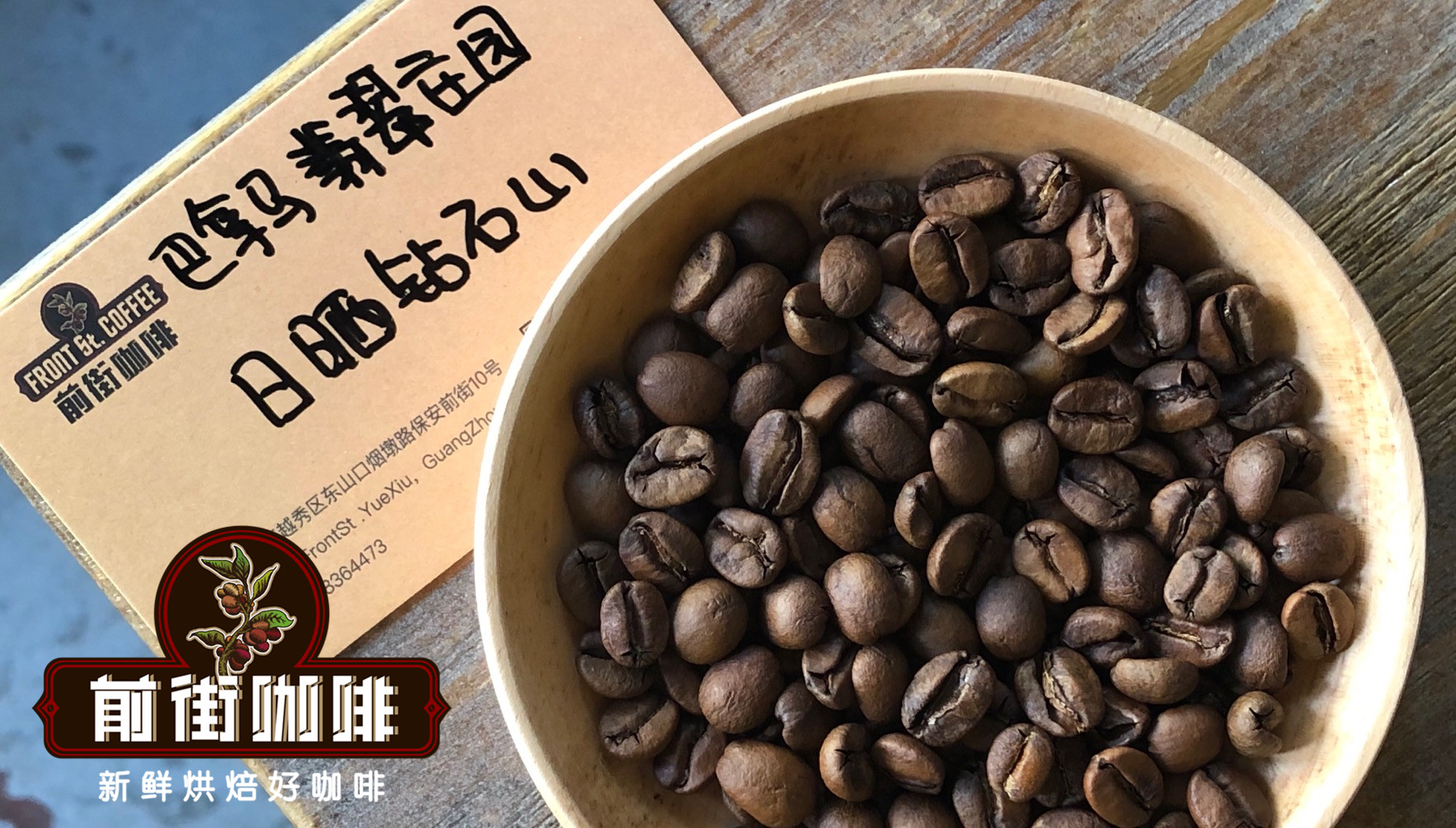
By observing the sun-dried green beans from Diamond Mountain, Front Street Coffee notes that the green beans are yellowish in color, and sun-dried green beans have more silverskin on the surface. Caturra green beans have a curved tail end, are round and slender, while Catuai beans are flat with a relatively slender tail end.
Front Street Coffee Roasting Record
The Front Street roaster uses a Yangjia 800N semi-direct fire roaster with a batch size of 480g. The drum is preheated to 165°C for charging, the gas is adjusted to 130, the damper is opened to 3, and the turning point is at 1'36", maintaining the gas setting; at 112°C the gas remains unchanged, the damper is opened to 4, and at 127°C the gas is increased to 140. At 6'15" the beans turn yellow, the grassy smell disappears, and the dehydration phase begins; at 151°C the gas is reduced to 110 and the damper remains at 4.
At 9'00" dehydration is complete, wrinkles and dark patches appear on the bean surface, and the toasty bread aroma turns into coffee aroma—this is the prelude to first crack, so listen carefully for the sound of first crack. At 10'48" first crack begins, the damper is fully opened to 5, post-first-crack development time is 1'20", and the beans are dropped at 191°C.
Front Street Coffee Cupping Report
Front Street Coffee conducts cupping within 8-24 hours after the sample coffee beans are roasted. The cupping bowls used by Front Street Coffee baristas are typically 200ml ceramic bowls. The water temperature used for cupping is 94°C. The grind size is controlled so that 70%-75% passes through a No. 20 standard sieve (0.85mm). Ratio: 11.1 grams of coffee powder with 200 milliliters of hot water, i.e., 1:18.18, so that the extracted concentration falls right within the golden cup range of 1.15%-1.35%, with a steep time of 4 minutes.
Dry Aroma: Citrus, Berries
Wet Aroma: Citrus
Flavor: Citrus, Honey, Cocoa, Fermented Wine Aroma
Front Street Coffee Brewing Notes
Dripper: V60 #01
Water Temperature: 90-91°C
Dose: 15g
Coffee-to-Water Ratio: 1:15
Grind Size: Medium-fine grind (80% passing through China standard No. 20 sieve)
Front Street Brewing Method: Three-stage extraction. Use 30 grams of water for a 30-second bloom, then pour in a slow circular motion to 125 grams for the first stage; when the water level drops and is about to expose the coffee bed, continue pouring to 225 grams and stop; when the water level drops and is about to expose the coffee bed again, remove the dripper. (Timing starts from the beginning of the bloom.) Total extraction time is 2'00".
Brewing Flavor: Citrus, bright acidity, nuts, honey, slight fermented note, smooth mouthfeel, cocoa finish.
The above content is compiled by CoffeeHunters, a coffee news website.


