







Where did the gesha coffee bean actually come from?
The gesha coffee bean coral island story begins in Ethiopia's Gesha forest and reached worldwide fame only after the 2004 Panama competition, where a lot from Hacienda La Esmeralda impressed judges with floral and orange-like notes. That coffee carried the designation T2722, tracing back to a collection sent from Ethiopia to Kenya.
From Kenya and Tanzania the variety spread to Costa Rica and finally Panama, where the Peterson family had planted it. Because growing conditions and selection differ by country, Ethiopian and Costa Rican gesha often tastes quite different from the Panamanian version, even though the genetic material is shared.
Geisha is the most renowned specialty coffee variety after Blue Mountain, and it is also the priciest flagship bean in many cafés. However, beans sold under the Geisha name can taste worlds apart. This article starts with the 2004 BOP competition and traces Geisha's complete journey from the Gesha forest in Ethiopia to Kenya, Tanzania, and Costa Rica, before it finally shone at Hacienda La Esmeralda in Panama. It explains the origin of the key designation T2722 and answers why Geisha from Ethiopia and Costa Rica differs so noticeably from Panama's. Front Street Coffee walks you through the varietal truth behind sky-high Geisha in one article.
For more specialty coffee knowledge, follow: Front Street Coffee
Geisha is probably the most widely known coffee variety after Blue Mountain, and it has even become the highest-priced signature bean in many cafés. Besides the most familiar Panama Geisha, Geisha from Ethiopia, Colombia, and Costa Rica can now be found on the market, and some shops even carry Geisha from Bolivia, Mexico, Jamaica, and Yunnan, China.
If you have long heard of it and walk into a shop to casually order a Geisha, there is a good chance you will taste that stunning flavor of intense florals and bright fruit acidity you have heard about; you may also get a cup that is merely average and not as exaggerated as the legend; and there is a smaller chance you will encounter something severely at odds with the reputation, making you wonder whether the barista grabbed the wrong beans.
Geisha's continued popularity on the consumer side has prompted many producing countries to introduce it. Perhaps they all just happen to be called "Geisha," with little substantive connection to the legendary lot. What exactly counts as Geisha? Let's turn the clock back to the 2004 BOP (Best of Panama) competition, where the judges frowned as they repeatedly cupped a certain coffee. They found it hard to believe that coffee with the florals, orange-like acidity, and honeyed sweetness of an Ethiopian bean could be grown on Panamanian soil—after all, at that time the mainstream flavor profile in Central and South America was nuts, cocoa, and balance.
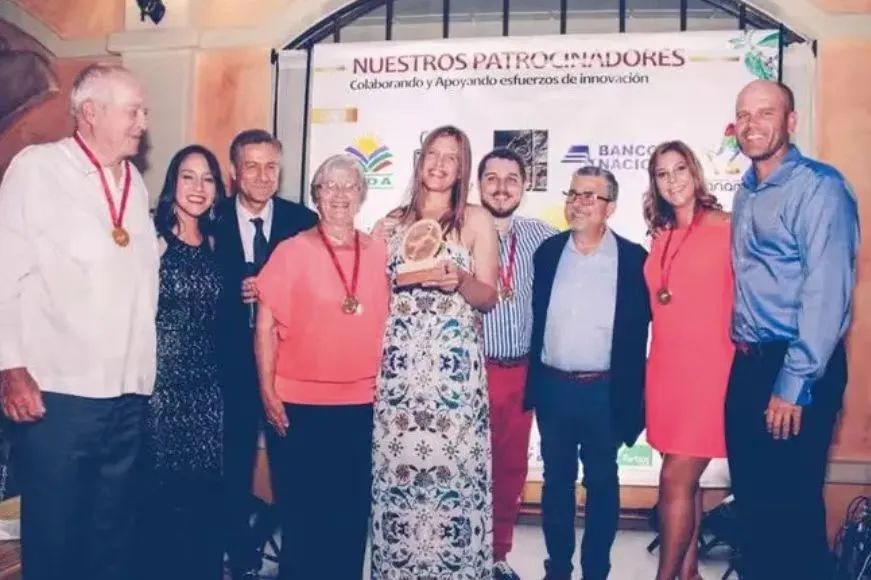
The result was no surprise: this coffee, which astonished everyone present, took first place that year, and it came from the hands of the Petersons of Hacienda La Esmeralda. When everyone wondered how Hacienda La Esmeralda managed to grow such delicious coffee, the estate owner Price revealed the answer: the variety was Geisha, which in Chinese is called "瑰夏."
At this point it can be confirmed that what stunned everyone was that cup with abundant florals, orange-like acidity, and honeyed sweetness, and the fundamental reason for that flavor was the variety—Geisha. "Geisha is recognized because of its unique taste; conversely, if so-called Geisha lacks that taste, can it still be recognized?" Now that the source of this coffee's deliciousness had been traced to a noble variety, if other estates wanted equally stunning beans, they simply needed to get the seeds. So people began to investigate the origin of Geisha.
The Origin of Panama Geisha Let us take a god's-eye view and see where Hacienda La Esmeralda's Geisha variety actually came from. The story returns to the 1930s, when Africa had already been carved up by Britain, France, Germany, and Italy. Ethiopia was one of only two countries not colonized, but it was surrounded by British spheres of influence. In 1931, Colonel Richard Whalley, a border garrison officer, was ordered by the British ambassador to lead troops deep into the Kafa forest in southwestern Ethiopia to collect coffee tree samples for research, in order to find varieties suitable for large-scale commercial cultivation.
They came to a forest called Gesha, collected various coffee seeds, and handed them to the British consulate in Maji, which then transferred them to coffee research institutes in Kenya and Tanzania for classification and propagation. After all, the colonel was a soldier, not a botanist, so in his report he could only write that this batch of coffee seeds had been collected from a place called Geisha. And because the local Ethiopian language differs greatly from English, many spellings were recorded according to the sounds heard, so in his report he misspelled the place name Gesha as Geisha.
After the seeds from Geisha arrived in Kenya, trial planting began, and different numbers were used to distinguish coffee trees with different appearance traits. In 1936, Kenya sent coffee seedlings numbered 1, 9, 11, 123, and others to the Lyamungu Research Station in Tanzania for cultivation and study. Lyamungu renumbered these coffee trees and selected seedlings VC496–500 for propagation.
In 1953, this screened batch of Geisha samples from Tanzania arrived at CATIE (Tropical Agricultural Research and Higher Education Center) in Costa Rica. By 1963, Don Pachi, who held an important post in Panama's Ministry of Agriculture, brought some Geisha seeds back to Panama from CATIE and distributed them to farmers for planting. The Geisha variety at Hacienda La Esmeralda is precisely the variety numbered T2722 at CATIE, which corresponds to number VC496 at Lyamungu in Tanzania.
In other words, from Ethiopia to Panama, it was a process of continuous selection. At first there were the various varieties collected by the colonel from Gesha; after screening in Kenya they were sent to Tanzania; after screening in Tanzania they were sent to Costa Rica; only then did they reach Panama; and after another 40 years, they were discovered by the Petersons and finally stunned the world. The name Geisha is actually a misspelled place name. The special floral and fruity flavor we recognize comes from the variety T2722 (VC496).
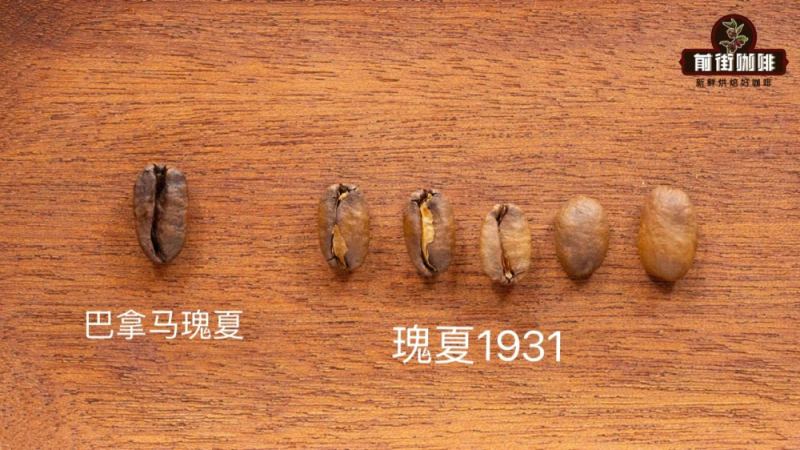
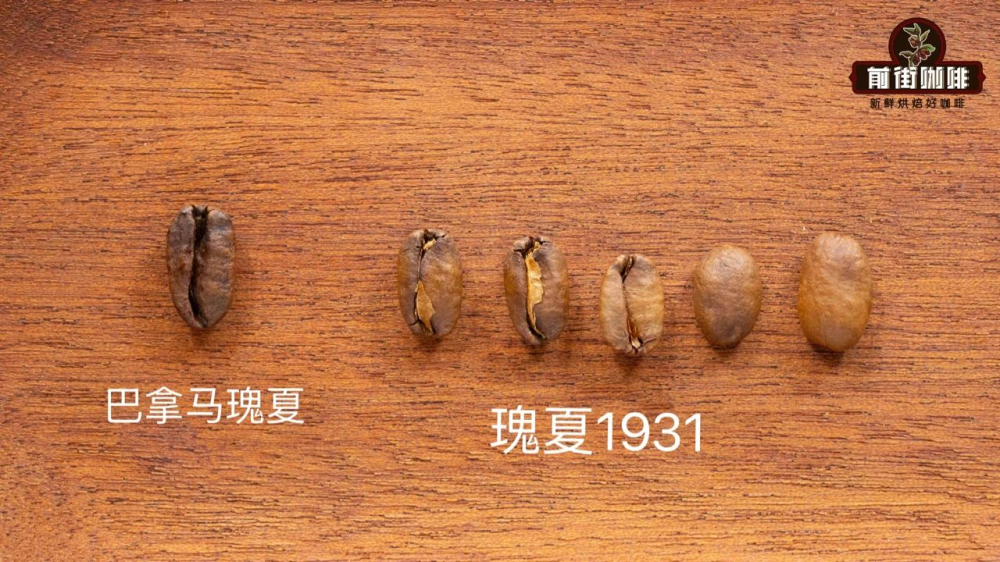
Why doesn't Ethiopian Geisha have that flavor! The reason is simple: Ethiopian Geisha was found locally. Ethiopia has tens of thousands of coffee varieties, and the probability of finding one from the same source as T2722 among them is extremely low. In 2007, documentary director Adam Overton became interested in coffee while filming a coffee documentary in Ethiopia. In 2009, led by Willem Boot (one of the judges amazed by Geisha in 2004, and owner of Finca La Mula and Finca Sophia) , Adam and his group retraced the route Colonel Richard had taken years earlier, entering the Gesha forest to look for a Geisha variety consistent with what Hacienda La Esmeralda described. Since there was no genetic comparison method at the time, they could only compare by plant appearance and cupping flavor. In the end, they selected from the forest a variety very close in flavor to Hacienda La Esmeralda's Geisha and named it Gesha 1931. Documentary director Adam later became the owner of Gesha Village Estate. In 2011, Adam found another Geisha-like variety in the Gori forest near the estate, brought it back for planting, and called it Gori Gesha.
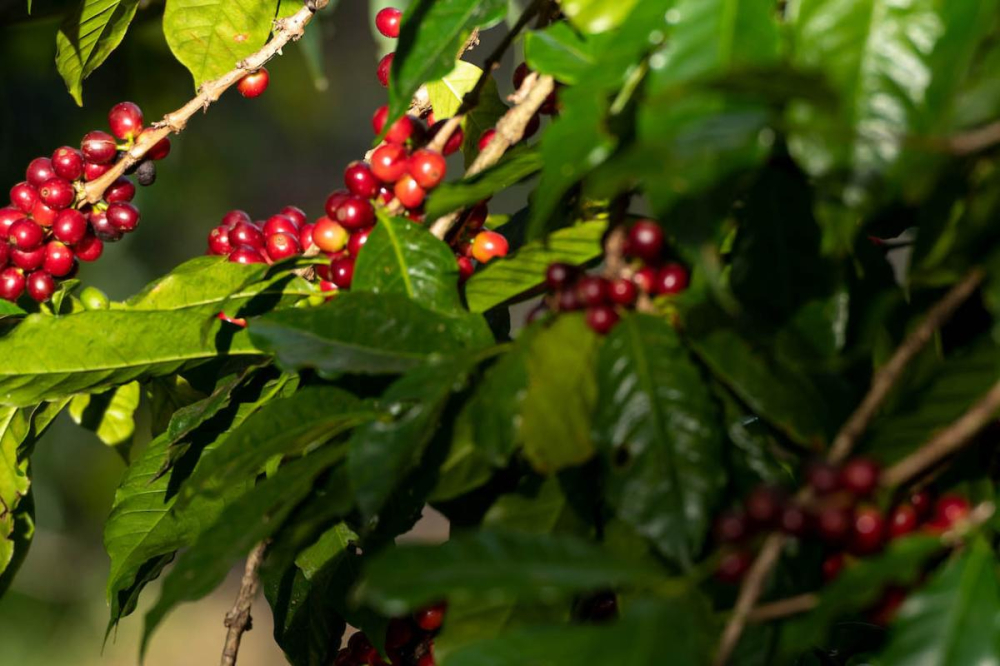
Therefore, whether it is Gesha 1931, Gori Gesha, or heirloom Geisha, they were all found locally in Ethiopia by referring to the plant and flavor performance of Panama Geisha, and they cannot prove that they are Panama's Geisha T2722. So it is quite normal that they differ noticeably in bean morphology and flavor performance. But these coffees do indeed come from the Gesha forest, so calling them "Geisha" also seems quite reasonable!
Why Costa Rican Geisha is also somewhat different Costa Rica is Panama's previous stop and also a neighboring country, so in theory finding T2722 should not be difficult. But why is Costa Rican Geisha's flavor not as rich as Panama's? Front Street believes there may be several reasons. The first is that after Costa Rica introduced Geisha, it also released some selected varieties for coffee farmers to grow; besides T2722, there were also T2917, T3214, and other numbered varieties with different plant forms. Later, when Geisha became famous, these varieties were also collectively called Geisha. Front Street has also observed that Geisha beans from some Costa Rican estates are long, narrow, and plump, very similar in characteristics to Panama Geisha beans, and their flavor also carries the charm of Panama Geisha; while Geisha beans from some estates are flat, short, and slightly pointed at both ends, and their Panama Geisha charm is less obvious.
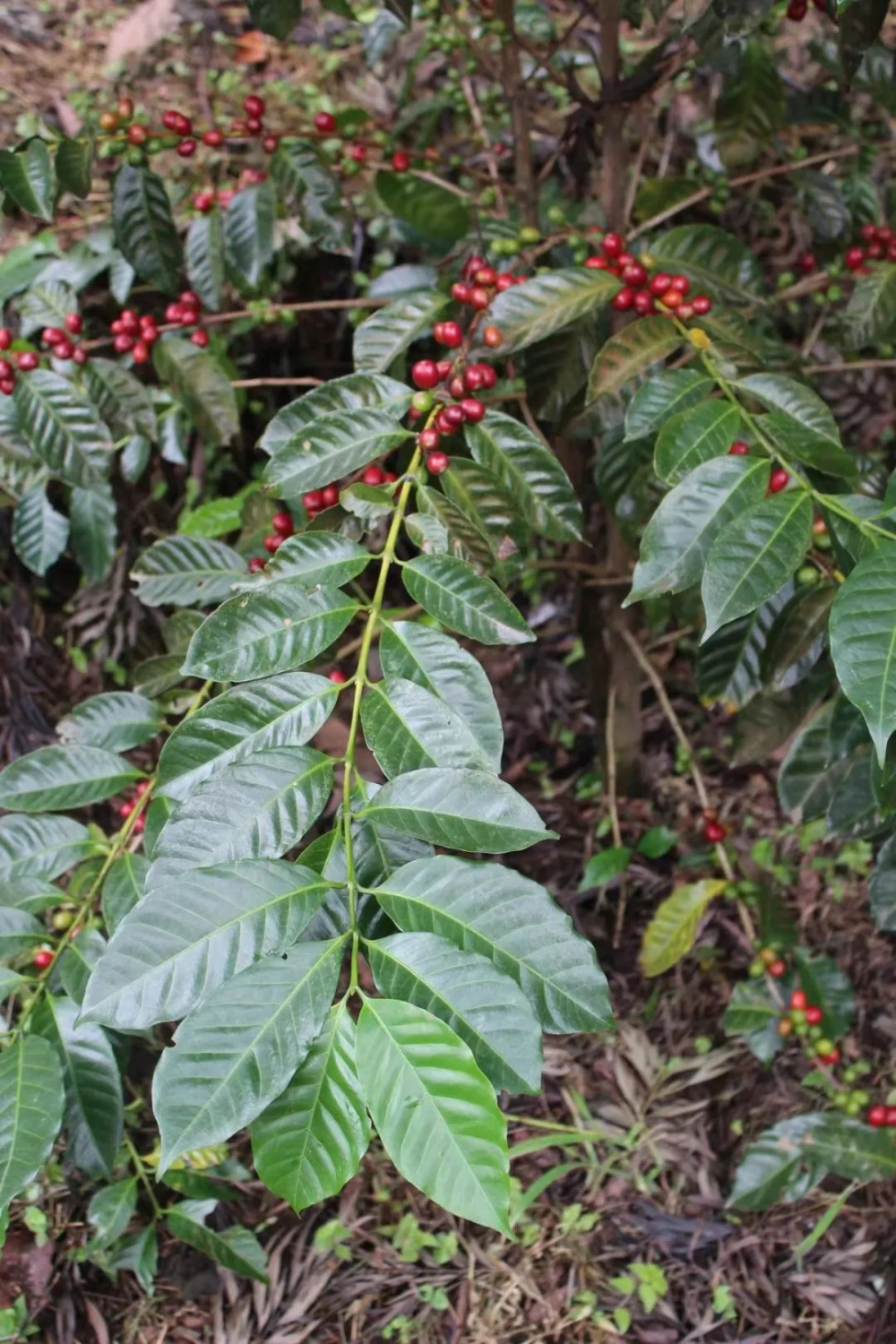
The second is terroir: microclimate changes in local areas can also affect coffee quality performance. Just as Geisha was introduced to Panama in 1963 but did not shine until 2004, a large part of the reason is that when it was first planted at relatively low altitudes (below 1,400 meters), the citrus flavor was not obvious and the bitterness was heavy. It was not until Hacienda La Esmeralda purchased the Jaramillo farm and tried planting these Geisha trees at higher altitudes (1,500–1,800 m) that the floral and citrus notes became rich and intense.
The third is processing method. Costa Rican coffee often uses honey processing, and like Colombia, it is also skilled in heavy fermentation processing. The flavors produced by such fermentation will mask part of Geisha's own flavor, making Geisha's flavor characteristics less obvious.
As for other producing countries with scarce Geisha output, it is also hard to judge whether they come from Panama's Geisha T2722. It may be that they truly introduced Panama's Geisha variety, but due to terroir reasons it failed to express Geisha's flavor—"orange grown south of the Huai River is orange; grown north of the Huai River it is trifoliate orange." It may also simply be that they share the same name, Geisha.
If you want to glimpse the flavor of the legendary Geisha, choosing Panama is absolutely reliable. For other Geishas, it comes down to luck.
The above content is compiled by CoffeeHunters, a coffee news website.


