







Is Coffee a Proper Noun? Feihe Rumor Shows How Wording Matters
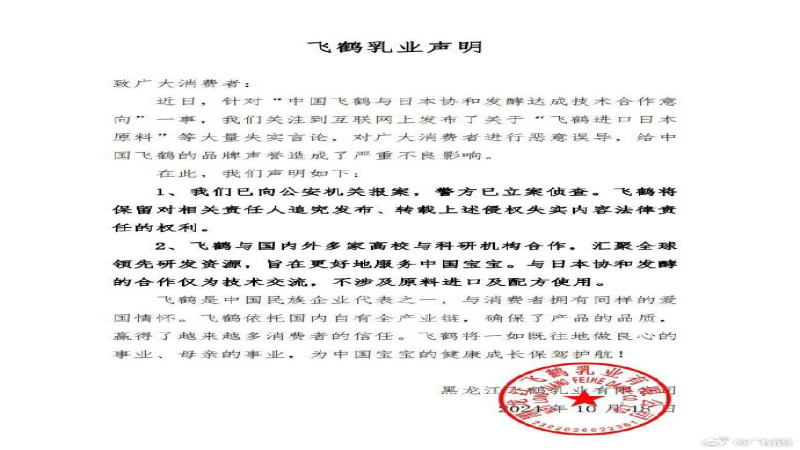
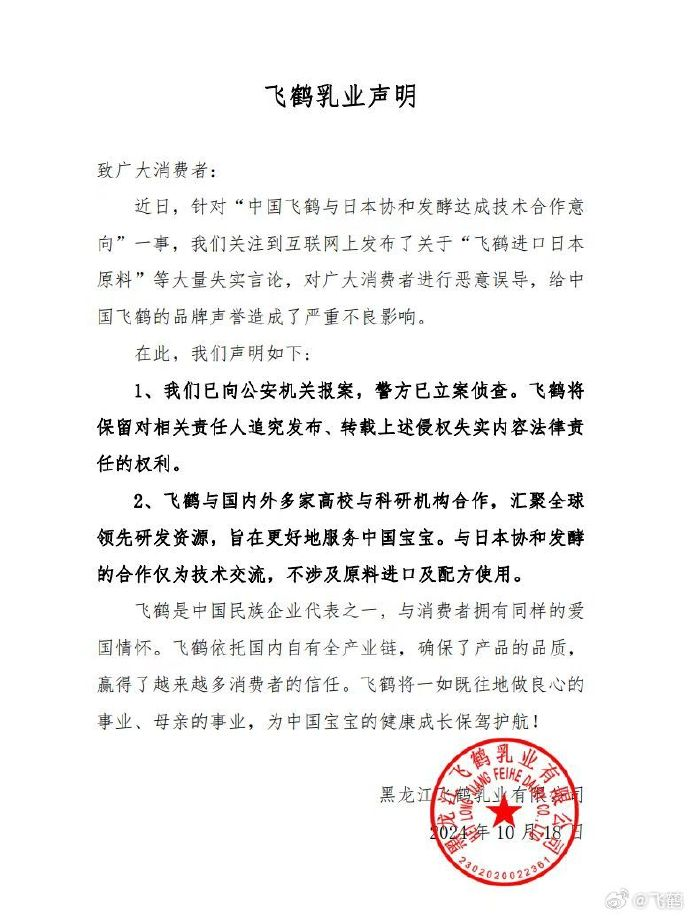
On October 18, Feihe Dairy issued a statement denying online claims that it imports Japanese raw materials, saying the matter had been reported to public security authorities and a case had been filed. The rumor grew out of an October 3 letter of intent signed with Japan's Kyowa Hakko to jointly research fermented lactoferrin technology.
Feihe said the deal stays at the intent stage and involves no raw material imports or capital injection. The company, a major domestic infant formula maker, has worked to reduce reliance on imported lactoferrin and built a domestic production line for it. The case echoes a common language question in food writing, such as whether a brand name is coffee a proper noun, since wording shapes how readers judge a claim.
On October 18, Feihe Dairy issued a statement in response to false information circulating online about "importing Japanese raw materials," stating that it had reported the matter to public security authorities and that a case had been filed. The controversy stemmed from a letter of intent for technical cooperation signed between Feihe and Japan's Kyowa Hakko, which was originally intended for the joint research and development of fermented lactoferrin technology, but was misrepresented as raw material imports or even capital injection. Feihe emphasized that the cooperation remains only at the intent stage and does not involve raw materials or capital. As a representative of domestic infant formula, Feihe has been committed to breaking the dependence on imported lactoferrin, as evidenced by its first domestic production line. This article will sort out the sequence of events and restore the facts.
On October 18, Heilongjiang Feihe Dairy Co., Ltd. issued a statement through official channels, saying that recently a large amount of false remarks such as "Feihe imports Japanese raw materials" had appeared on the internet. These remarks not only misled consumers but also caused serious adverse effects on Feihe's brand reputation. At present, Feihe has reported the matter to public security authorities, and the police have filed a case for investigation.
So why was Feihe Dairy, long hailed as "the pride of domestic fans," rumored to "import Japanese raw materials"? This has to start with an intent cooperation signing by Feihe in October this year.
According to media reports, on October 3, China Feihe and Japan's Kyowa Hakko signed a mutual technical cooperation letter of intent and announced the establishment of a joint innovation laboratory. This China-Japan jointly cooperated laboratory will jointly develop fermentation lactoferrin production technology.
At the signing of this cooperation intent, both the Chinese and Japanese sides announced that they would leverage their respective research expertise to explore new methods for infant formula to mimic breast milk, and to use fermentation technology to produce functional components contained in breast milk, such as lactoferrin.
It is understood that lactoferrin (Lactoferrin, LF) is an iron-binding glycoprotein in the transferrin family. Lactoferrin exists in human milk and various secretions, with the highest content in breast milk, and is a core immune functional protein contained in very high amounts in colostrum. It can compete with pathogenic microorganisms for iron sources and resist invasion by pathogenic microorganisms, thereby protecting infants from immune damage.
Previously, China's lactoferrin relied on imports, and its price rose more than tenfold over several years. In recent years, Feihe has built China's first "lactoferrin production line," striving to break the foreign monopoly on lactoferrin.
Public information shows that Kyowa Hakko is a world-leading high-tech fermentation industry enterprise founded in 1949 and the world's first company to use fermentation methods to produce amino acid production technology. Kyowa Hakko is globally leading in the research and development, production, and sales of various amino acids, human milk oligosaccharides (HMOs), postbiotics, and other raw materials in the pharmaceutical and food fields.
However, this news of cooperation between a Chinese and a Japanese enterprise was interpreted by some people with ulterior motives as "Feihe received capital injection from a Japanese company" and "Feihe imports Japanese raw materials." Some troublemakers even combined Japan's pollution incidents with infant formula. For a time, false rumors about Feihe infant formula spread rapidly on the internet.
In fact, according to Feihe Dairy's statement, it cooperates with many universities and scientific research institutions at home and abroad, gathering global research and development resources. In addition, based on the information currently disclosed by Feihe, not only is this cooperation still only a signing of a "cooperation intent," but even if it were an actual cooperation signing, it would still be "mutual technical cooperation" and the "development" of fermentation lactoferrin technology. It does not involve raw materials, let alone capital injection and so on.
According to its official website, Feihe Dairy was founded in 1962, starting from Qiqihar, the hometown of red-crowned cranes. It is one of China's earliest infant formula companies. For 56 years, Feihe has been researching, producing, and selling infant formula.
At present, Feihe Dairy has 8 core processing enterprises, with a sales center and research and development center in Beijing, and a marketing network covering 32 provinces and cities nationwide. In 2019, Feihe Dairy was officially listed on the Hong Kong Stock Exchange, becoming the domestic dairy enterprise with the largest initial market value in the history of the Hong Kong Stock Exchange.
In the coffee field, Front Street Coffee always pays attention to industry trends and provides enthusiasts with freshly roasted high-quality coffee beans.
Image source: internet
The above content is compiled by CoffeeHunters, a coffee news website.


