







What Causes Too Many Fines in Coffee Particles?
Excessive fines in pour-over coffee come from the burr set, not from user error. Any grinder produces a range of coffee particles, but flat, ghost tooth, and conical burrs differ in uniformity and how many fines they create. Particles under 0.25mm count as fines; normal coarseness runs about 0.6 to 0.8mm. Too many fines clog the filter, slow drainage, and add scorched, astringent notes.
Fines form because burrs first compress and crack the whole bean, then cut it, so some fragments always escape small. Because no grinder yields fully even coffee particles, the practical fixes are sifting out the fines or adjusting brewing technique, such as pouring more gently. When a grind has both many fines and coarse grounds, check burr alignment and grind setting before blaming the beans.
When grinding coffee beans, producing fines is a normal phenomenon. A moderate amount of fines contributes positively to flavor—what actually causes trouble is excessive fines. Front Street has noticed that many coffee enthusiasts feel dread at the mere mention of fines, mostly because they've been tormented by clogged drainage, scorched bitterness, and astringency. This article first defines what particle size counts as fines, then explains the relationship between how fines are generated and the type of burr set, with a focus on comparing flat burrs, ghost tooth burrs, and conical burrs in terms of grinding uniformity and fines ratio. Finally, it offers two practical solutions—sifting out fines and adjusting brewing technique—and provides troubleshooting ideas for the common situation where there are both lots of fines and coarse grounds.
However, among the coffee enthusiasts Front Street has encountered, quite a few shy away from the very word "fines." The reason is mostly that they've been burned by fines—"the fines clogged the filter paper so water wouldn't drain," "it tasted scorched and bitter," "the astringency was especially heavy." These terrible experiences have left people psychologically scarred by fines.
But we still need to view fines objectively. Once coffee beans are ground into powder, the appearance of fines is normal, and fines also contribute positively to coffee flavor. What truly makes coffee undrinkable is an excessive amount of fines—only when that happens do you need to find a way to deal with it.
So what's the standard for fines?
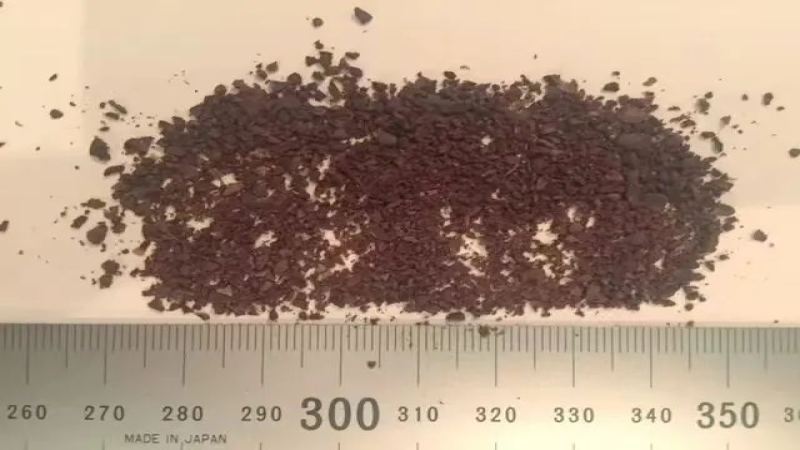
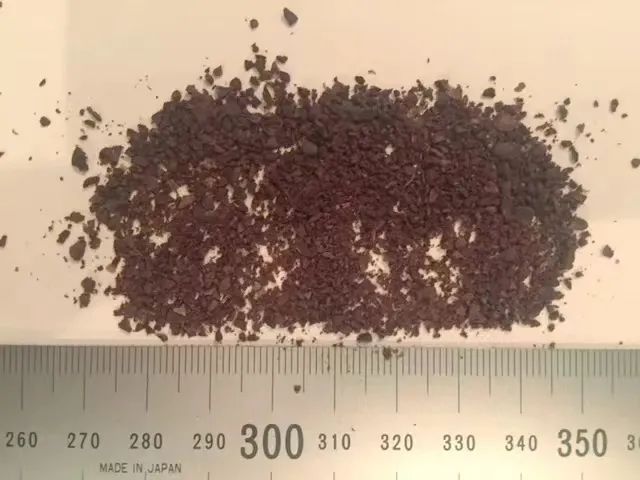
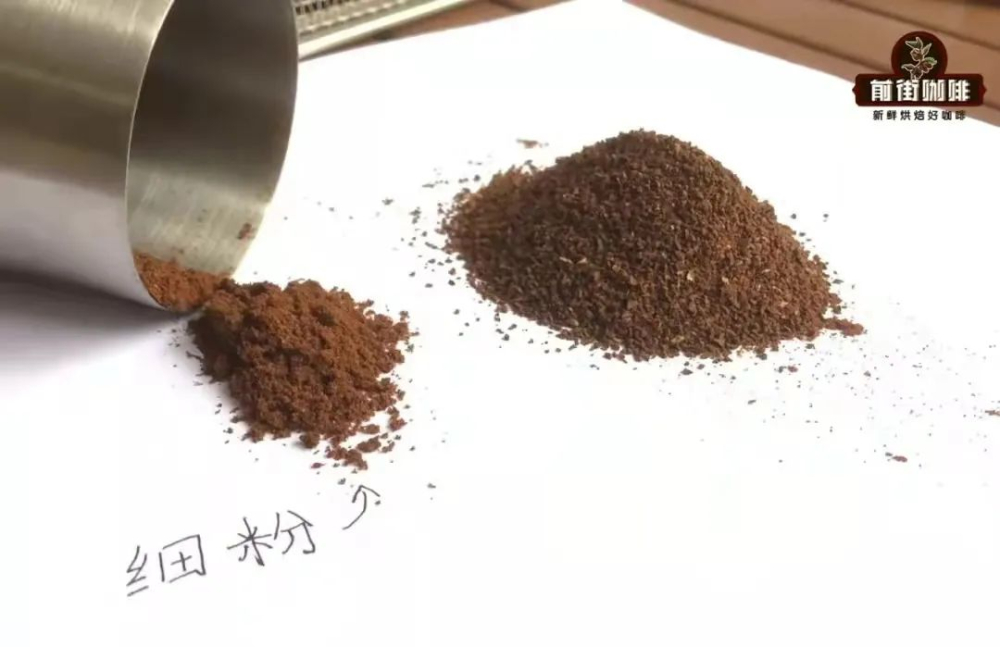
Generally speaking, coffee particles with a diameter smaller than 0.25mm are classified as fines (0.6–0.8mm falls within the normal coarseness range). These fines feel close to flour to the touch. The muddy appearance on the surface of the coffee bed is caused precisely by these fines.
How are fines produced?
In fact, no matter how expensive or high-quality the grinder, the ground coffee can never be perfectly uniform—there will always be coarse and fine particles. When we say a certain grinder grinds more uniformly, we mean the gap between coarse and fine particles is smaller, i.e., it's relatively uniform.
This is because the burr set's working logic is to first apply compression to the whole coffee bean to make it crack, then cut it into particles. The process of crushing and bursting the bean inevitably generates fines. How many fines are produced depends on the type and size of the burr set.
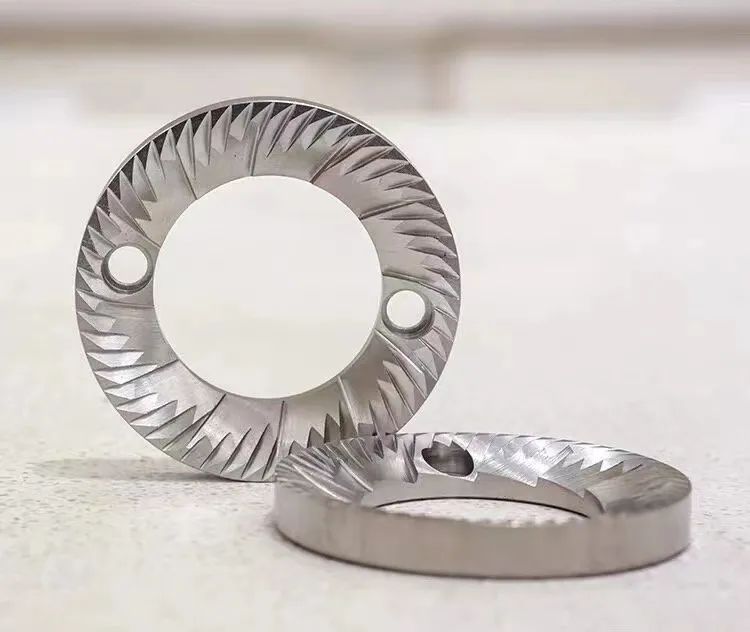
Flat burrs exert the least crushing force. Two identically sized burrs cut in parallel, producing flat, flake-like coffee particles with relatively few fines, and the coffee's soluble materials are also more easily extracted fully. Most top-tier grinders use flat burr sets.
Ghost tooth burrs can be understood as a special type of flat burr. They are likewise made up of two identically sized burrs, with the difference being that the surface isn't a sharp blade edge but rows of tooth-like protrusions. The coffee particles they produce are relatively regular, but precisely because of this pursuit of regularity, they actually create more "scrap pieces"—that is, fines. For this very reason, coffee ground with ghost tooth burrs has richer flavor layers, but the risk of things going wrong is also noticeably higher.
Conical burrs are the most widely used type in daily life—hand grinders almost universally use conical burrs. They work through the cooperation of an inner burr and an outer burr. The working method is to first crush the whole coffee bean into larger chunks, then continuously crush and cut them into irregular polyhedral particles. Because conical burrs grind by crushing, a large amount of fines is generated during the process, and the gap with large particles is greater. If it's a small-sized burr set like those in hand grinders, uniformity is even worse, and the coffee bed easily becomes muddy during brewing, blocking the water flow.
What solutions are there?
The most direct approach is to sift out the fines. A fines sifter can be bought for just a few dozen yuan on the market. Pour the ground coffee in and shake hard, and the fines will fall through the mesh. That way, you won't be dragged down by fines during brewing.
Some friends find sifting coffee too troublesome—are there other options? Of course there are.
If you currently notice obviously slow drainage or even clogging when brewing, and you can see a muddy layer formed by fines in the coffee bed but it covers less than 50%, you can switch to an immersion-style brewing method. The specific steps: after blooming, pour all the water in one go while making small circles in the center. Use a larger stream to raise the water level of the coffee bed, letting more coffee grounds cling to the wall of the dripper, thereby thinning the coffee bed. Keeping the circling motion small also prevents the water column from washing the coffee grounds at the edges back to the center of the bed. During pouring, also reduce the agitation intensity to avoid over-extracting the fines, letting the coffee enter an immersion-plus-drip extraction state.
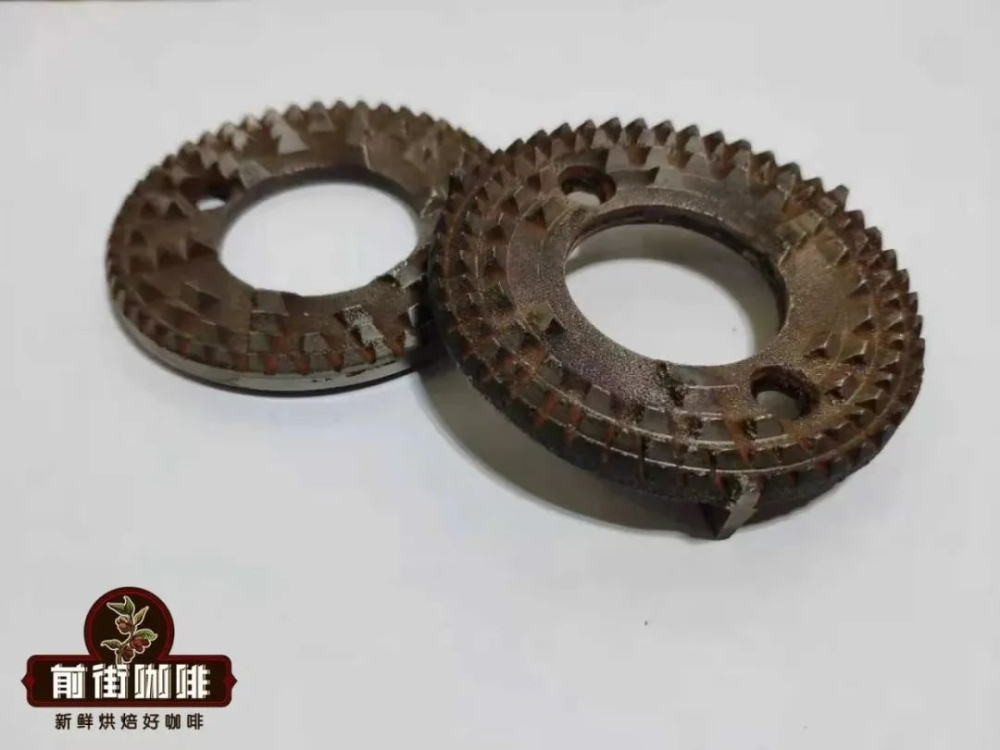
There's another common situation: you can see a muddy layer in the coffee bed while coarse particles are also clearly visible. This is usually the result of grinding with a mediocre-quality hand grinder—lots of fines, and the coarse grounds are coarse too. Although the drainage speed is on the slow side, the coffee tastes very weak, with the bitterness standing out especially.
To remedy this situation, you can first adjust the grinder to a finer setting to narrow the gap between coarse and fine particles, then use the method described earlier to salvage it.
(Note: Some friends have reported that after adjusting a hand grinder to a finer setting, the fines "<0.25mm”反而更少了,不过这一点前街并没有相关数据可以验证,这里先把信息分享给大家,请酌情参考!)
The above content is compiled by CoffeeHunters, a coffee news website.


