







What Do Espresso Coffee Particles Reveal in the Puck?
The spent espresso puck shows whether an extraction went well. An ideal puck is dry, flat, structurally intact, and evenly colored, and it knocks out in one piece. Craters, holes, standing water, clumping, a loose bed, or one side dry and the other wet point to problems with dose, grind size, distribution, or machine pressure.
Correcting the shot usually means dialing the grind finer while reducing the dose, or going coarser while increasing the dose, then watching flow rate, pressure, and time together with the puck. Routine cleaning and sanitisation of coffee machine parts also matter, since old grounds and residue disturb water flow just as much as a bad grind setting does.
The quality of an espresso extraction can be judged not only by flow rate, pressure, and time—the spent puck also reveals a great deal of key information. An ideal puck should be dry, flat, structurally intact, and evenly colored. In practice, however, problems such as cratered surfaces, perforations, standing water, looseness, one side dry and the other wet, or even a blackened bottom are all too common, and they usually point to deviations in dose, grind size, distribution technique, or equipment pressure. This article systematically breaks down the signs and causes of six common puck abnormalities, offers targeted adjustment solutions, and explains how to correct extraction by dialing the grind finer and reducing the dose, or dialing coarser and increasing the dose, helping coffee lovers consistently pull a proper espresso at home.
When making espresso, the most frustrating part is having to repeatedly fiddle with variables like dose, grind size, and ratio just to get the coffee to run a beautiful extraction curve within a few dozen seconds. To judge whether an extraction is good, you can of course watch the flow rate, pressure, and time—but the puck left behind after extraction is also quietly telling us quite a few things.
First, let's talk about what a standard good puck should look like:
Just as the coffee bed after pour-over can reflect whether the pouring was even, if an espresso puck comes out as a rounded, neat bowl shape, it means the water flow during extraction was well distributed and the grind wasn't disturbed. Espresso relies on pressurized hot water, using very little water to draw out a large amount of solubles in a short time, so the shape of the puck after extraction becomes one of the most intuitive bases for judging whether there's a problem with the shot.
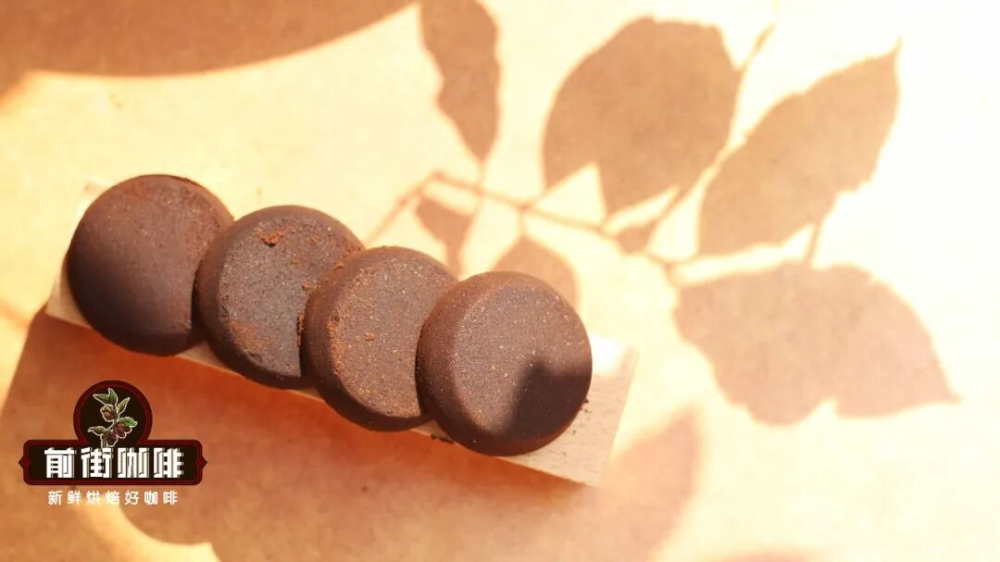
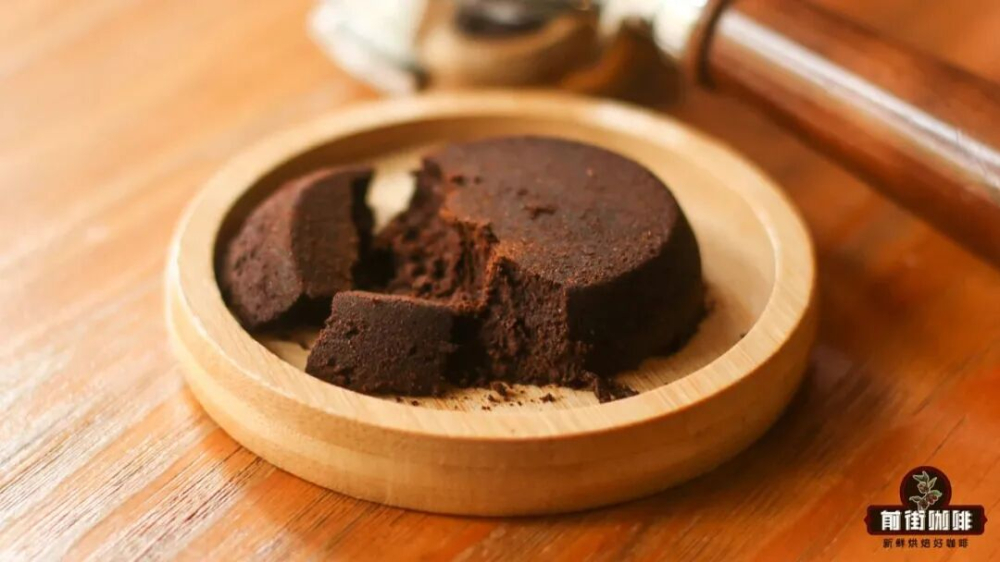
Generally speaking, after extraction is complete, the ideal puck is on the dry side, with a flat surface, no standing water, and no obvious holes. It should knock out as a single piece, with even color distribution, consistent thickness, and it shouldn't crumble easily. But if your puck always struggles to hold its shape and the coffee flavor always falls a bit short, Front Street suggests investigating from the following two directions.
1. Cratered puck surface
Whether you're a veteran or a newcomer to espresso, you've likely encountered this at some point. An uneven surface means the hot water didn't have enough room to move during extraction, and one reason for that is the puck being too thick.
Generally, the lighter the roast, the smaller the expansion; the darker the roast, the greater the expansion. So at the same weight, a dark roast puck will be thicker. After absorbing water and expanding, the coffee bed presses tightly against the dispersion screen, and coffee particles stick to it. When you remove the portafilter, you'll see an uneven surface, often accompanied by under-extraction, and it tastes thin or sour.
Solution: Dial the grind finer and reduce the dose at the same time, making the coffee bed thinner.
2. Holes in the puck
Channeling is the typical sign of perforation. Water naturally takes the path of least resistance, and once the puck density is uneven, it will drill into the loose spots. The areas visited by hot water get over-extracted, while the rest gets under-extracted. Sometimes you'll also see spritzing or a flow rate that alternates between fast and slow.
Solution: Pay attention to the distribution step and break up clumped coffee grounds.
3. Severe standing water on the puck
Exactly the opposite of the first case, standing water is mostly caused by the coffee bed being too thin, and the problem usually lies in the grind size. For the same coffee, the finer the grind, the smaller the gaps between particles, the higher the density, and the lower the bed height. If you still use the same basket, a thinner puck leaves more space between it and the dispersion screen, so hot water stays on top longer, and a puddle naturally forms on the surface of the coffee grounds.
There's another situation related to the espresso machine—the 9-bar atmospheric pressure. To get an espresso with rich crema, you need to meet at least two conditions: first, fresh medium-to-dark roasted beans, such as Front Street Signature Blend, Front Street Commercial Blend, and Front Street Classic Blend—all espresso recipes that can help you easily pull a proper espresso at home.
The second key is the hardware. Many home espresso machines are basically "toy machines," and during operation they can hardly reach a true 9 bars of pressure—sometimes they even make a clicking sound. Without enough penetrating power, they naturally can't extract deeply, and besides water pooling on the puck, the coffee liquid may also come gushing down.
Solution: Dial the grind coarser and increase the dose at the same time.
4. Puck is loose, wet, and mushy after extraction
Compared with the ideal puck described by Front Street at the beginning, a loose or wet, soft state means the hot water has caused impact extraction on the coffee grounds, and each particle becomes sticky after absorbing its fill of water. In this case, the flow rate is usually still within the normal range (1:2 coffee-to-liquid ratio, 25–35 seconds), but it tastes rather bitter. The root cause is mainly too small a dose. If you run into this problem, try adding 0.5–1 g of coffee.
Also, using a double basket with only half the dose to make a single shot very easily produces the same situation. It's recommended to switch to a single basket.
Solution: Increase the dose, or switch to a single basket.
5. Puck is dry on one side and wet on the other
The cause here is quite straightforward: when tamping, the center of force wasn't properly aligned, making the puck uneven in height. Front Street's method is: press one side of the tamper with your thumb and index finger, wrap the remaining three fingers and palm around the tamper handle, keep your arm vertical, then press down firmly.
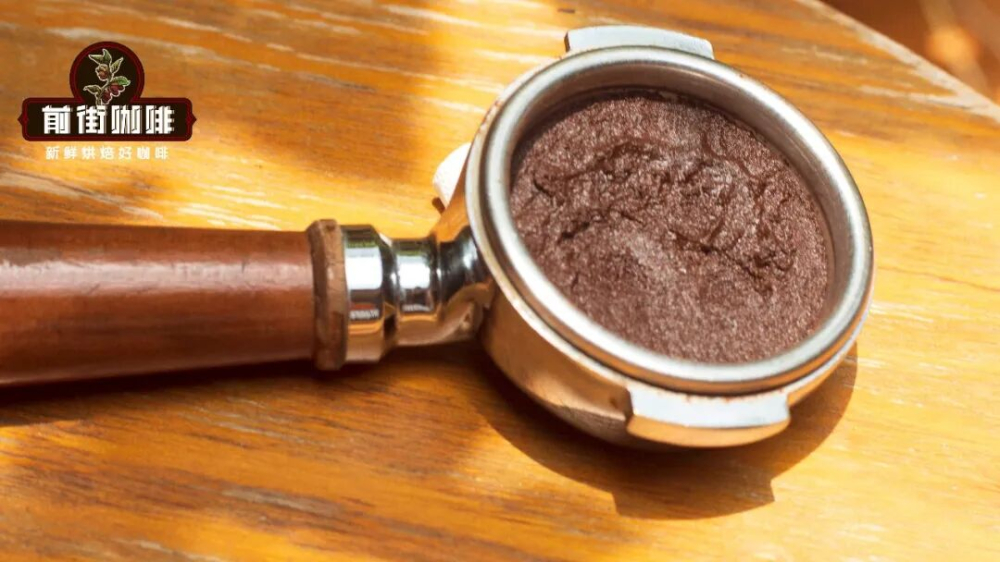
6. The bottom of the coffee puck is blackened
During espresso extraction, hot water penetrates from top to bottom, contacting the puck surface first and reaching the bottom last. A "good puck" with even extraction should be uniform in color from the inside out. But if you remove the portafilter early, the flavor compounds in the lower layer are interrupted before they can be released, and the bottom will appear blackened and semi-moist. The coffee also tastes thin due to the missing tail end.
Solution: First extract at a 1:2 coffee-to-liquid ratio. If the time is too long, dial the grind coarser.
The above content is compiled by CoffeeHunters, a coffee news website.


