







How Does Tea-Bag Coffee Differ From Drip Bag Coffee?
Tea-bag coffee and drip bag coffee are both convenience products, but they extract differently. Drip bags are a simplified pour-over setup: pre-ground coffee sits in a non-woven filter bag hooked on the cup rim, and hot water poured through it drips down. Bagged coffee works by immersion, like a tea bag dropped straight into water.
The distinction matters because drip filtration flavor depends on grind size, coffee-to-water ratio, water temperature, and pouring flow rate, while immersion releases solubles through the bag on its own with less control. Immersion-style brewing is old: in 18th-century France, coffee grounds were tied in a cloth bag and thrown into hot water to boil, a method that also shaped what coffee made from simple gear can taste like.
Can coffee be brewed directly like a tea bag? Drip bags require pouring water in stages and controlling the amount of water, which is relatively cumbersome, whereas bagged coffee seems to save quite a few steps. This article starts from a comparative experiment by Front Street Coffee, first outlining the product characteristics of bagged coffee and drip bags, then separately testing the same Front Street Duncan Estate · Caturra using both hot brewing and cold brew methods, observing the flavor differences between the two forms under immersion and drip extraction, to help coffee enthusiasts understand the applicable scenarios and limitations of bagged coffee.
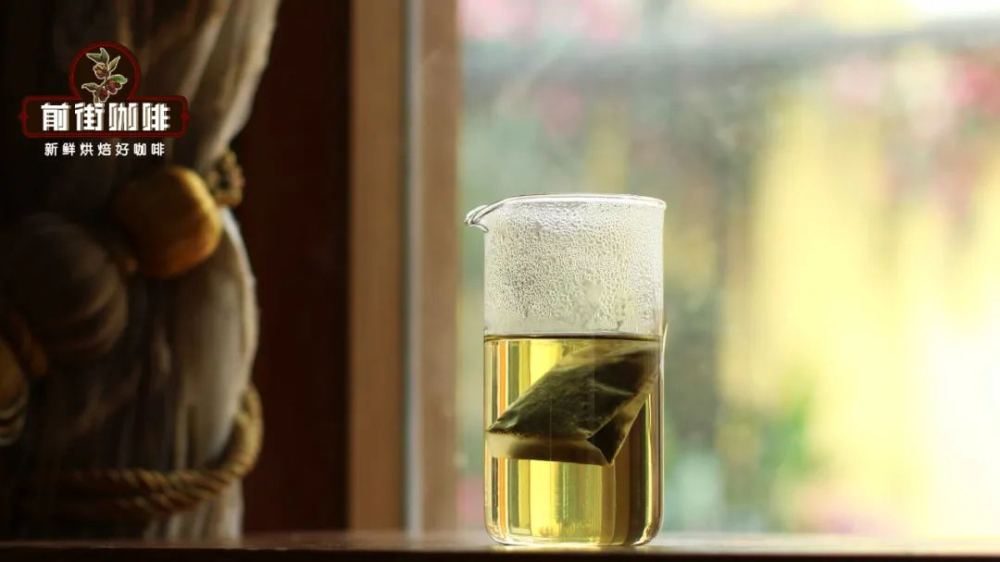
A friend previously raised a question with Front Street Coffee: can coffee be extracted directly in bagged form like tea leaves? Her reasoning was straightforward—drip bag brewing requires pouring water in stages and paying attention to the water amount, making the operation somewhat troublesome; if switched to a bagged form, the process could be simplified considerably.
Characteristics of Bagged Coffee and Drip Bag Coffee
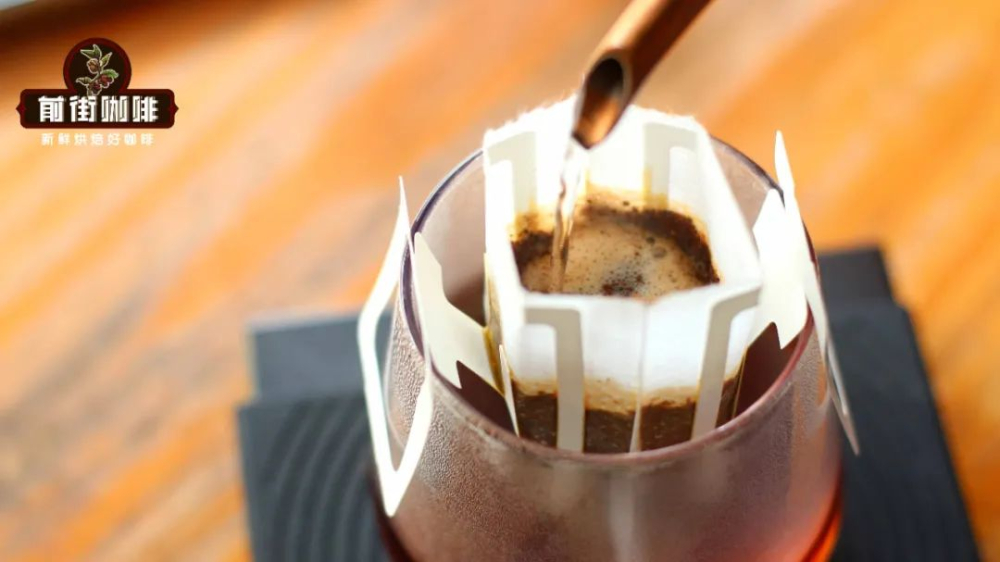
Let's first review the more widely known drip bag coffee. Commercially available drip bag products are made by pre-grinding coffee beans into powder and then packing it into non-woven filter bags; during brewing, the paper tabs on both sides of the filter bag are used to hook onto the rim of the cup, so that the coffee bag is suspended right in the center of the cup, equivalent to a simplified pour-over setup. When you want to drink it, pour an appropriate amount of hot water into the bag, wait for the liquid to fully filter through, and you get a cup of ready-to-drink black coffee.
Drip bag coffee belongs to the drip filtration category. Its flavor is influenced not only by the coffee bean variety, but also closely related to grind size, coffee-to-water ratio, water temperature, and pouring flow rate.
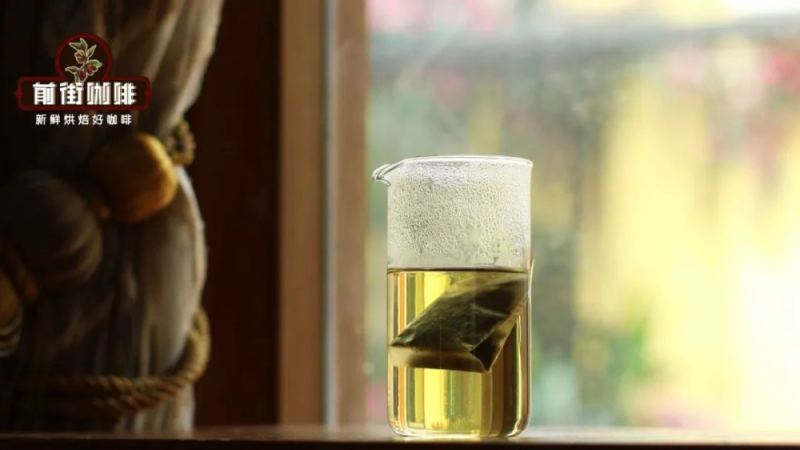
Bagged coffee is also a convenience-type product, but as the name suggests, it follows the immersion extraction route. Because it uses a sealed small bag similar to a tea bag, the entire bag is placed into water during brewing, and soluble substances are released on their own through the gaps in the bag.
It is said that in 18th-century France, people would first put coffee grounds into a large cloth bag, tie it tightly, and throw it into hot water to boil; once the concentration was sufficient, the cloth bag was removed—the bagged coffee discussed by Front Street today evolved from this early method.
Bagged Coffee VS Drip Bag Coffee
In order to give the friend who asked an objective answer, Front Street planned in this controlled experiment to make both types of coffee at once, covering regular hot brewing and cold brew, and finally distinguish the differences through tasting to see which side comes out ahead.
Regarding the specifications of the non-woven filter bags, Front Street purchased a mini size of 5.5×7cm online this time, with a capacity just right for holding 10g of medium-light roasted coffee grounds; the drip bags sold daily in the store are made of two layers of non-woven fabric, a coarse mesh and a fine mesh, rectangular at 7.5×9cm before unfolding, with each bag also filled with 10g of grounds.
This round of comparison used Front Street Duncan Estate · Caturra throughout. The superior geographical conditions of the Panama producing region, combined with the natural sun-dried processing method, give this bean a rich and delicate floral-fruity profile with a honey-like sweetness. However, due to the limited quantity purchased in this batch, it is currently only produced and sold at Front Street stores.
The grind size is kept consistent with pour-over, both at 9.5 on the EK43s grinder (24 on the C40 hand grinder).
Hot Coffee Methods for Bagged and Drip Bag Coffee
Drip bag hot brewing parameters: 10g coffee grounds, 1:15 coffee-to-water ratio, 93℃ water temperature, pouring 150g hot water in three stages with a small flow. In the first stage, Front Street first uses 20g of hot water to fully wet all the coffee grounds, waits briefly, then pours the second stage of 65g, at the end of which the liquid level just reaches eight-tenths full of the filter bag; after the coffee liquid has fully drained, the final stage of 65g is poured using the same method.
Bagged coffee hot brewing parameters: 10g coffee grounds, 1:15 coffee-to-water ratio, 93℃ water temperature. Front Street first places the coffee bag into the cup and pours 150g of hot water all at once; because the fineness of the filter bag is unknown, the steeping time can only be determined as the situation allows.
The results showed that due to the barrier of the non-woven fabric, the coffee grounds and hot water are isolated from each other, making it difficult to release enough soluble substances in a short time, and one can only compensate for concentration and extraction yield by extending the steeping time. After waiting bitterly for more than twenty minutes, Front Street found that the coffee temperature had already fallen below 50℃, yet the concentration was still far from the expected level, so they had to give up.
The tasting session indeed confirmed the obvious differences: the Duncan Caturra brewed from the drip bag had a clear tropical fruit aroma as soon as it was smelled, with the palate showing an interwoven sweet-and-sour of strawberry, dried mango, and pineapple, and an especially full preserved-fruit aroma; after swallowing, a grape-like fresh aftertaste lingered in the mouth. The bagged version, by contrast, was noticeably thin, with only a slight preserved-fruit and faint floral note on the palate, lower acidity, and nothing more after that...
Cold Brew Methods for Bagged and Drip Bag Coffee
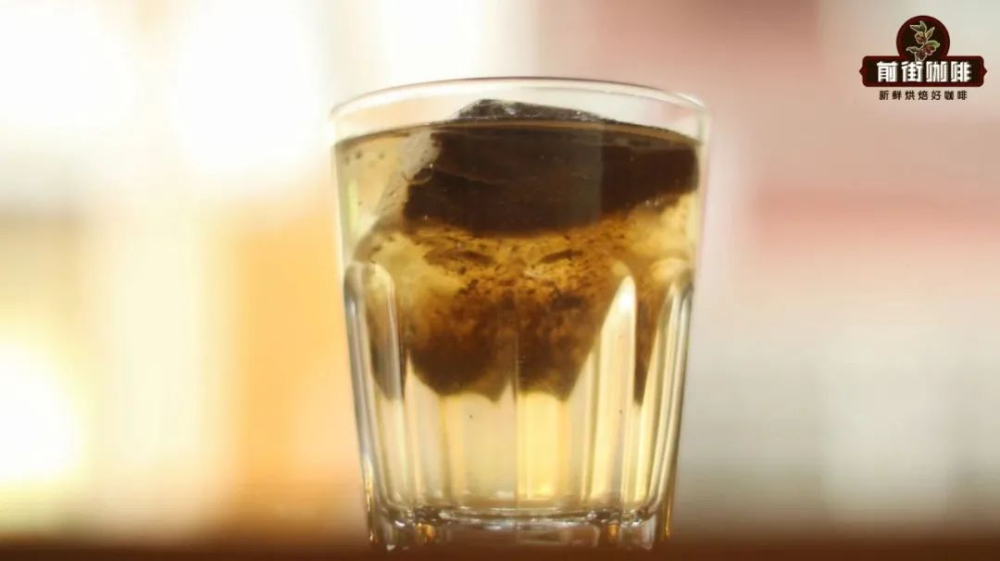
Considering that the coffee grounds themselves absorb water, Front Street uniformly used 20g of grounds when making cold brew, with specific parameters as follows: drip bag coffee/bagged coffee 20g, coffee-to-water ratio 1:11, room-temperature water 220g, steeping for 8 hours.
Drip bag cold brew procedure: prepare a sealable container, tear open the drip bag and pour all the coffee grounds in, add 220g of room-temperature water and stir evenly, seal it and place it directly in the refrigerator; during this time, the coffee layer can be stirred appropriately to make extraction more thorough. After refrigerating for 8 hours, filter out the residue with a filter bag or filter paper and it is ready to enjoy.
The cold brew method for bagged coffee is even simpler: toss the two prepared coffee bags directly into a clean container, pour in 220g of room-temperature water, seal it and also place it in the refrigerator, remembering to turn it appropriately during this time. Since the coffee grounds have already been "packaged" in advance, there is no need to filter after extraction is complete—just take out the coffee bags and discard them.
The above content is compiled by CoffeeHunters, a coffee news website.


