







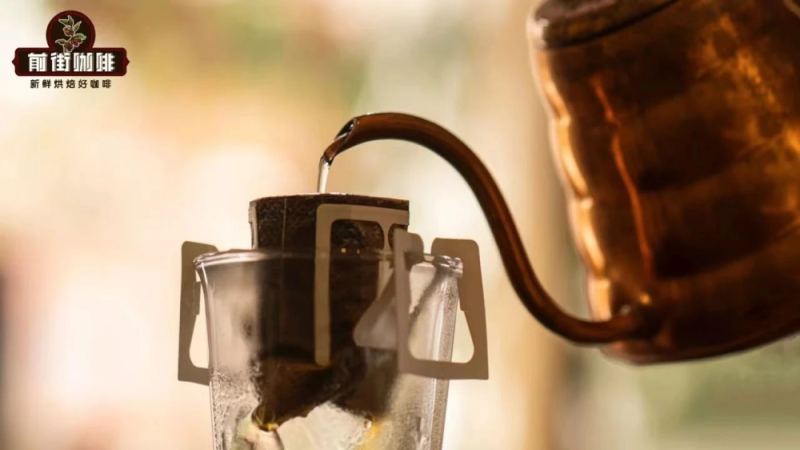
How much water does drip bag coffee brewing need?
A single drip bag is normally brewed with roughly 150 to 180 ml of hot water at about 90 to 96 degrees Celsius, poured in two or three stages so the grounds stay submerged. The paper tabs unfold over the cup rim, hot water is added, and the bag steeps for about two to three minutes before it is lifted out.
Drip bag coffee is not meant to be brewed a second time: most of the soluble flavor is extracted in the first pour, so a second pour mainly yields weak, bitter liquid. For a Mandheling drip bag, the medium-dark roast gives spice, roasted hazelnut, and caramel notes, and the shorter steep keeps that body full without astringency.
Drip bag coffee, with its convenience, has become a popular choice for enjoying black coffee in the office, at home, and while traveling. But how many milliliters of water should be used to brew a single drip bag? Can it be brewed as precisely as pour-over coffee? In this article, Front Street Coffee's barista will share practical brewing methods for drip bag coffee, answer common questions about brewing water volume and temperature control, and explain why drip bag coffee cannot be brewed repeatedly. At the same time, we will also introduce the flavor characteristics of three seasonal drip bags—Front Street. Mandheling, Front Street. Yirgacheffe, and Front Street. Brazil Cerrado—to help you easily brew a good cup of coffee even without professional equipment.
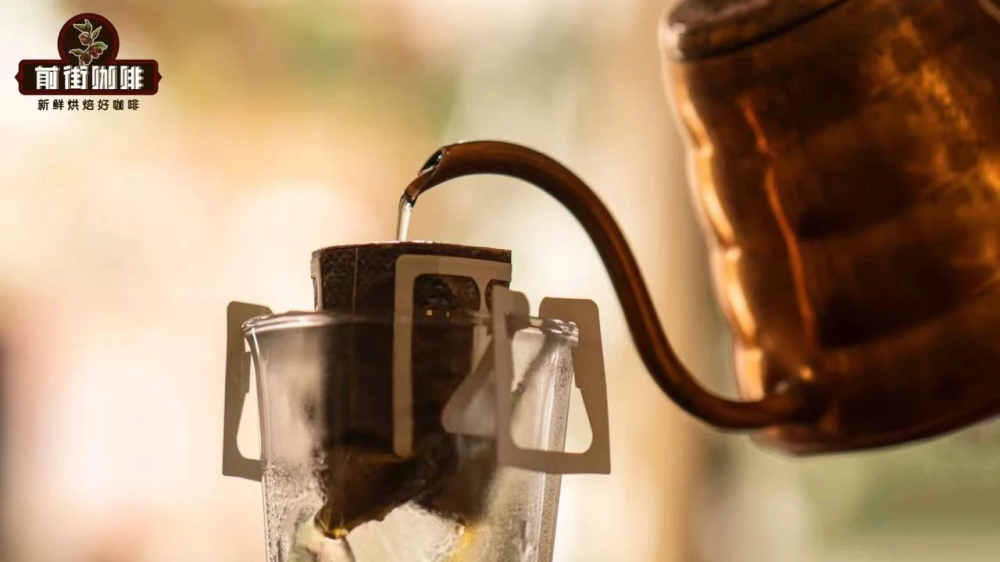
Recently, quite a few friends have gotten their hands on drip bag coffee and have come to ask for specific brewing advice. Today, Front Street Coffee's barista will sort out the key brewing points for drip bag coffee for everyone.
Drip Bag Coffee
So-called drip bag coffee is simply ground coffee sealed in a sealed filter bag. It gets the name "drip bag" because during brewing, the paper tabs on both sides of the filter bag (the "little ears") need to be unfolded and hung over the rim of the cup for extraction. Its biggest advantage is that it can quickly produce a cup of black coffee, which is why it has become a coffee option many people keep on hand in the office, at home, or while traveling.
The core selling point of drip bag coffee is convenience. Although it can also be made like pour-over with the help of complex brewing and grinding tools, doing so would strip away its convenient purpose. Moreover, people who like drip bag coffee often also love the flavor of pour-over. In the office, at home, or while traveling, if a grinder, electronic scale, pour-over kettle, dripper, and other equipment are unavailable, drip bag coffee can be used to satisfy the craving.
So, without the assistance of these tools, can drip bag coffee still be brewed to produce an effect similar to pour-over?
What Types of Drip Bag Coffee Packs Are There?
There are many distinctive types of drip bags on the market. Front Street. Mandheling coffee drip bags exude aromas of spices, roasted hazelnuts, and caramel, with a medium-dark roast, and after brewing they have a rich, full-bodied taste;
Front Street. Yirgacheffe drip bags have white floral notes and citric acidity, with a refreshing flavor and very slight bitterness, making them very suitable for people just getting into coffee;

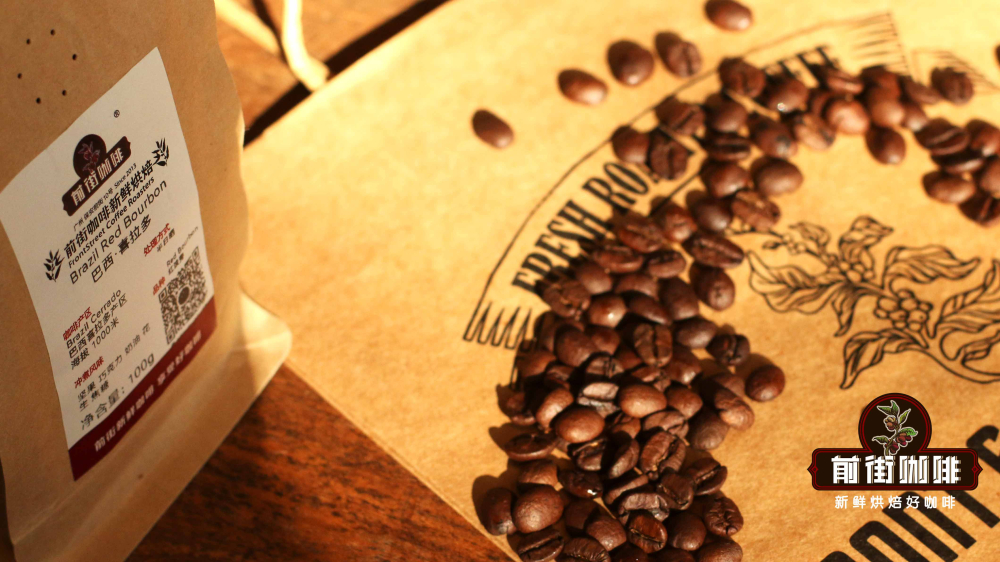
Front Street. Brazil Cerrado drip bags present nutty, peanut-like notes, with an overall balanced character, recommended for friends who do not like coffee that is too sour or too bitter.
These seasonal drip bag coffees showcase the flavor characteristics of different producing regions, bringing diverse choices to drip bags.
Sharing How to Brew Drip Bag Coffee Packs
1. First, the amount of coffee powder in a drip bag is usually clearly labeled (generally 10 grams), which saves the trouble of a grinder and electronic scale.
2. Next, address the issues of water volume and water temperature. As with pour-over coffee, use a coffee-to-water ratio of 1:15 to 1:16, so the final coffee liquid should reach 140 to 150 milliliters. The water temperature is best controlled at around 90°C; it is best to have a thermometer or temperature-controlled kettle. If not, you can make a rough judgment: after the water boils, turn off the heat and open the kettle lid, let it sit for 2 to 3 minutes, and the water temperature will drop to about 90°C (assuming a room temperature of 28°C).
3. Once ready, first warm the mug (or water cup), take out the drip bag, tear open the sealed opening, unfold the "ears" at both ends of the filter bag, hang it on the rim of the cup, and gently shake the coffee bed level.
4. For the first pour, simply make the coffee bed completely wet, doing a simple bloom.
5. After the bloom, make the second pour. Use a small stream of water and pour in circles directly until nine-tenths full. After the coffee bed drops, pour again until nine-tenths full. Repeat this twice, until the coffee liquid in the cup reaches about 130 to 150 milliliters, then remove the drip bag and start enjoying.
6. If you want more precise control of the water volume, you can also pour 150 to 160 milliliters of water into the pouring kettle and, during brewing, pour all the water from the kettle. After the coffee liquid has completely filtered into the cup, remove the drip bag. The entire brewing process can be completed in about 1 minute.
Because drip bag coffee uses pre-ground coffee powder, its flavor dissipates faster than whole coffee beans. Therefore, to taste the best flavor, it should be used up as soon as possible, generally within 3 weeks.
Why Can't Drip Bag Coffee Be Brewed Repeatedly?
We just shared the drip bag coffee brewing method recommended by FrontStreet Coffee—three-stage pouring, with a coffee-to-water ratio controlled between 1:14 and 1:16. After extraction is finished, the drip filter bag can usually be discarded. This also shows that drip bag coffee cannot be brewed repeatedly, or rather, it can only be brewed once.
What is the reason? In fact, drip bag coffee is equivalent to simplified pour-over coffee, and both pour-over coffee and drip bag coffee can only be brewed once. What we usually call brewing coffee is also called extraction. Water is the solvent in the extraction process. Through contact between water and coffee grounds, the flavor substances in coffee dissolve into the water, and the water becomes the coffee we drink.
Calculated by coffee weight, only about thirty percent of the substances in coffee can be extracted, while the remaining seventy percent or so is non-extractable fiber. So no matter how many times extraction is increased, at most only about thirty percent of the components can enter the water. Just as tea leaves taste weaker after being brewed many times, the same is true for coffee.
The above content is compiled by CoffeeHunters, a coffee news website.


