







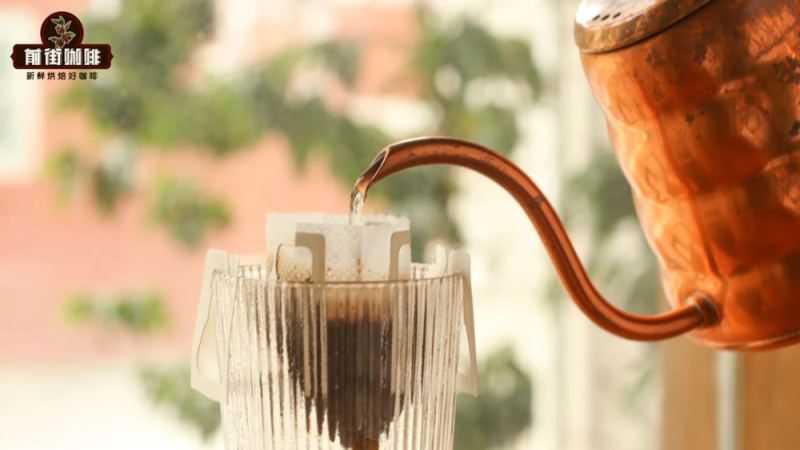
Which steps make drip bag coffee taste better?
Brew drip bag coffee by hanging the bag on the cup, blooming the grounds with a small first pour for 10 to 20 seconds, then adding water in two more steady pours until dripping finishes. A 10-gram drip bag yields roughly 120 to 130 milliliters of coffee, so the water temperature, pour pace, and total volume do most of the work.
Freshness and grind size shape the result as much as technique. Beans roasted recently and ground to suit the bag release gas more evenly during the bloom, which keeps extraction stable. Three classic coffee profiles work well in drip bags, and the same steps apply whether the coffee is brewed at the office or at home.
Drip bag coffee, with its combination of convenience and freshness, has become the preferred way for many people to drink coffee daily. But to truly brew a cup of drip bag coffee with full flavor and balanced taste, every step—from tearing open the packet and hanging it on the cup to pouring water and blooming—has its own finer points. This article uses Front Street Coffee's drip bags as an example to break down the correct brewing process for drip bag coffee in detail, including key details such as water temperature recommendations, coffee-to-water ratio, and pouring technique. It also explains how coffee bean freshness and grind size affect flavor, and recommends three classic coffee beans suitable for making drip bags, helping coffee lovers easily recreate a good cup of coffee at the office or at home.
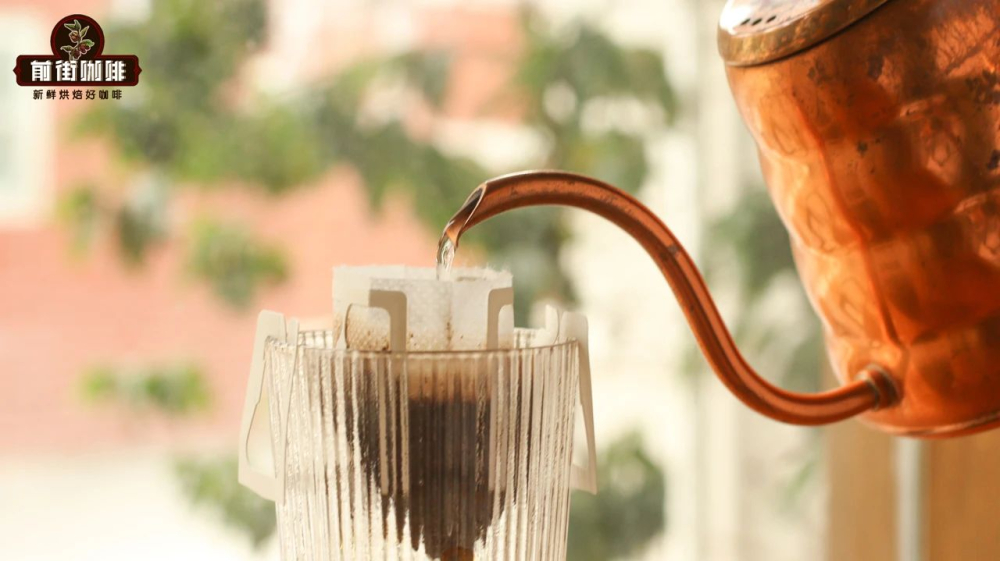
If you want convenient yet fresh coffee at any time, drip bag coffee is undoubtedly one of the most ideal options. Today, Front Street is here to talk with everyone about the key brewing points for drip bag coffee, and which details need attention to make this cup even smoother and tastier.
How to brew drip bag coffee
The process for drip bag coffee is actually very simple. You only need to pour an appropriate amount of hot water over the coffee grounds, wait for the coffee liquid to finish dripping, and the entire extraction process is complete. Front Street's drip bags are standardized at 10 grams per packet, and can ultimately extract about 120 to 130 milliliters of coffee.
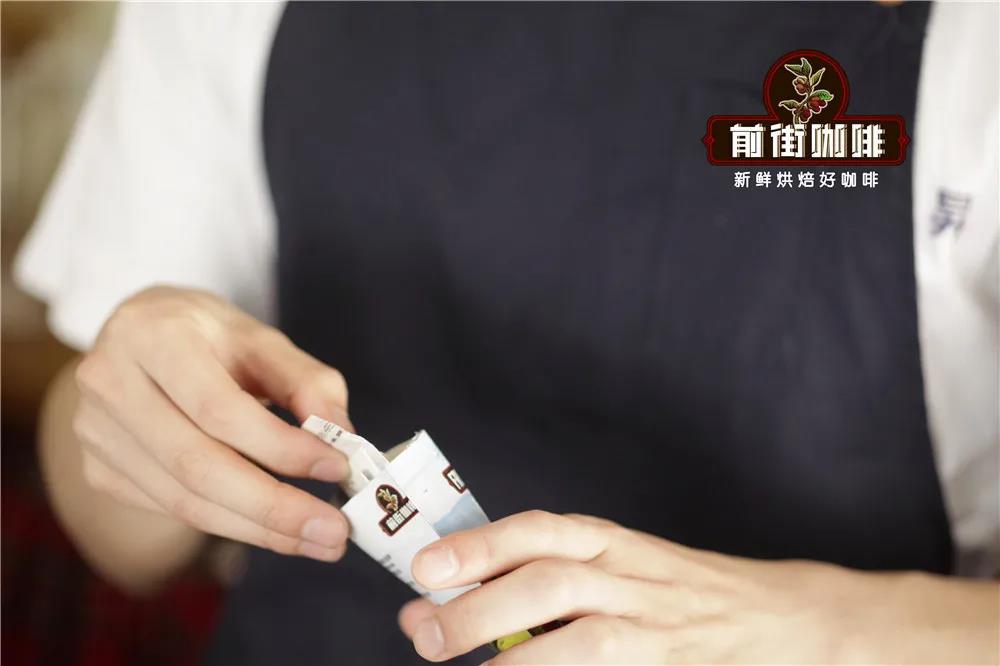
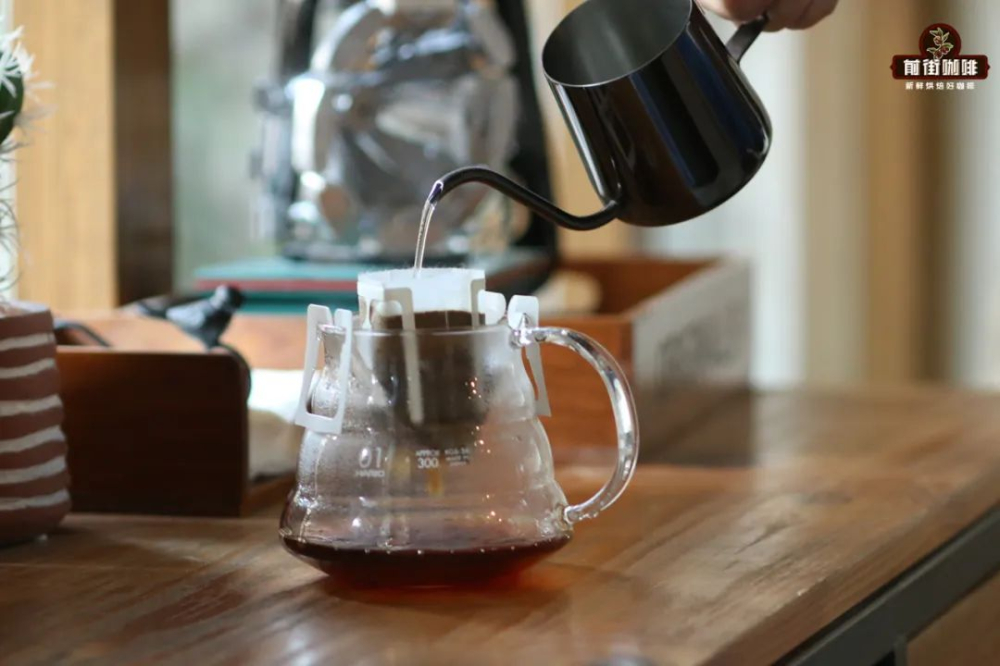
Before starting, first boil water, and at the same time prepare a cup or sharing pitcher to catch the coffee. Tear open the sealed outer packaging, take out the drip bag, and tear open the top along the dotted line above the non-woven pouch. Then unfold the two side tabs outward, open the entire drip bag, and hang it steadily on the rim of the cup or sharing pitcher.
For the first pour, add a small amount of hot water first, making sure all the coffee grounds are moistened, and let it bloom for about 10 to 20 seconds so the gases in the coffee bed can be released smoothly, which will make the subsequent extraction more stable. For the second pour, use a thin, steady stream at a uniform pace until the liquid level is close to full, then wait for the coffee liquid to slowly descend until dripping is complete. Finally, add a third pour of hot water until full, with total poured water controlled at about 150 grams. After all the coffee liquid has filtered through, extraction is complete.
Before drinking, Front Street gently swirls the coffee liquid in the cup to make it even, then directly tastes the clean flavor of the black coffee. Of course, you can also add sugar or milk to adjust it according to personal taste preferences.
Precautions for drip bag coffee
The final flavor of drip bag coffee is affected by many factors, including the freshness of the coffee beans, the coffee-to-water ratio, the water temperature, the pouring method, and so on. If you want a cup of drip bag coffee with both excellent flavor and mouthfeel, Front Street suggests paying more attention to the following details during the process, which can elevate the coffee's performance even further.
In order to preserve the coffee's original flavor as much as possible, drip bag coffee is usually made from freshly roasted coffee beans that are then ground. After coffee beans are roasted, they need a 4 to 7 day degassing and resting period, after which they enter the ideal peak flavor stage. Take coffee beans shipped from Front Street as an example: they are all freshly roasted within 5 days. If made into drip bag coffee, by the time you receive it, it is generally already the 4th to 5th day after roasting, which is just the right time to start brewing and drinking.
Drip bag coffee and pour-over coffee share the same extraction principle, so the grind size should also match the pour-over standard. To make extraction easier, drip bag products mostly use small-dose individual packaging. Front Street's drip bag coffee is 10 grams per packet. After coffee is ground into powder, its surface area exposed to air is far greater than that of whole beans, and aroma dissipates faster. Front Street suggests drinking it as soon as possible after receiving it, otherwise prolonged storage can easily cause the coffee aroma to be lost. If you want to taste coffee with the fullest flavor, Front Street recommends buying whole beans and grinding fresh right before brewing, which gives an even richer flavor layering.
First, you need to prepare hot water that is sufficiently hot, because only when the water temperature is high enough can more aromatic substances be released from the coffee grounds. When making pour-over coffee, Front Street recommends brewing at a water temperature of 86 to 93 degrees Celsius. If the water temperature is only around 80 degrees, the brewed coffee often tastes thin and weak; while boiling rolling water can easily extract burnt and bitter flavors. Therefore, Front Street leaves boiled water uncovered and resting for 1 to 2 minutes, letting the water temperature naturally drop to about 90 degrees Celsius before use.
When making pour-over coffee, the coffee-to-water ratio is very important. If brewed at a ratio of 1:12, the coffee easily becomes too strong, leaving only bitterness; if using 1:18, then there is too much water, resulting in flat coffee taste and insufficient aroma. Front Street recommends starting with 1:15, with 10 grams of coffee grounds corresponding to 150 grams of hot water. At this point, the extracted flavor is more balanced, and the extraction process is also steadier. According to this ratio, simply brew with the same amount of water each time. If you do not have a scale on hand, you can find a cup with markings to help.
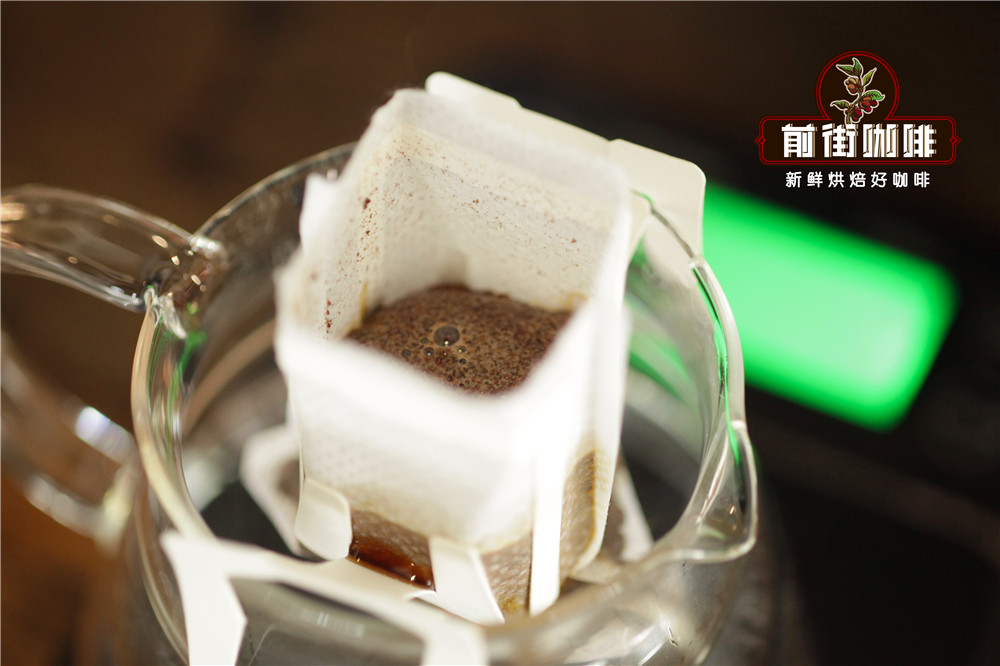
After coffee is ground into powder, it needs to contact water in order to release soluble substances. If the pouring method is too aggressive, it easily causes uneven extraction, and the taste is also prone to defects. Front Street recommends choosing equipment that can steadily output a thin stream of water, such as a gooseneck kettle, and pouring hot water smoothly in multiple stages. Proper blooming helps the coffee grounds release gas, making the later stage of extraction more stable and the flavor better.
Drip bag coffee recommendations
Many office workers hope Front Street can recommend some coffee beans suitable for making drip bags. More than fifty single-origin coffee beans from different producing regions on Front Street's bean list can all be made into drip bag coffee packets. Below, Front Street recommends a few drip bag coffees with relatively classic flavors.
1. FrontStreet Coffee Washed Yirgacheffe Gedeb Gording Cooperative Drip Bag Coffee
This Gedeb Gording Cooperative coffee bean from Front Street comes from Ethiopia's well-known Yirgacheffe producing region, and the harvested coffee beans are washed processed. Traditionally, Yirgacheffe coffee used the oldest natural sun-dried processing method, but early naturally processed beans were mostly spread on the ground to dry, inevitably picking up off-flavors such as soil and dust, and combined with insufficiently reasonable sorting, the quality of naturally processed beans was often uneven. In 1972, Ethiopia introduced washed processing technology from Central and South America to improve coffee quality, making the jasmine floral notes and bright citrus-lemon acidity of Yirgacheffe coffee clearer and more transparent, and it became one of the representatives of the world's specialty coffee in one stroke.
FrontStreet Coffee: Yirgacheffe Gedeb Gording Cooperative Coffee Region: Yirgacheffe Gedeo Zone producing area Producer: Gedeb Gording Cooperative Altitude: 1900-2300m Variety: Local heirloom varieties (Heirloom) Processing method: Washed processing
Grade: G1
Flavor: Citrus, berries, lemon, cane sugar, green tea
2. FrontStreet Coffee Jamaica Blue Mountain No. 1 Drip Bag Coffee
Front Street's Jamaica Blue Mountain No. 1 green coffee beans come with a certificate of origin from Clifton Mount Estate, as well as the wooden barrels used to transport Blue Mountain coffee. Unlike other countries, Blue Mountain coffee is the only producing region among all coffees that uses wooden barrels to load green beans; other producing regions generally use burlap sacks for transport. The Rainforest Water Frog logo means Clifton Mount Estate meets the "Sustainable Agriculture Standard" and has obtained Rainforest Alliance certification. The Jamaica Blue Mountain No. 1 on Front Street's bean shelf belongs to the highest grade of Blue Mountain coffee, namely NO.1. The green bean specification must be 17-18 screen size, with a defect rate below 3%, uniform particles, and plump beans. The medium-dark roasted Blue Mountain No. 1 coffee presents the classic Blue Mountain flavor, with chocolate and nutty notes and abundant aroma.
FrontStreet Coffee: Jamaica Blue Mountain No. 1 Coffee
Region: Jamaica Blue Mountain
Altitude: 1310m
Processing method: Washed
Variety: Typica
Flavor: Chocolate, nuts, cream, cocoa
3. FrontStreet Coffee Sidamo Huakui Drip Bag Coffee
This Huakui coffee bean introduced by FrontStreet Coffee was the champion of the natural group in Ethiopia's 2017 TOH coffee competition. It stunned with its unique strawberry cream flavor and made a striking debut. That year, this batch of green beans was introduced into China by Beijing green bean trader Hongshun, and in the same year Li Jianfei used this bean to win second place in the China region of the 2017 World Brewers Cup. This Ethiopian bean stood out particularly among many Geisha competition beans, and was therefore given the name Huakui.
FrontStreet Coffee: Sidamo Huakui Coffee
Country: Ethiopia
Region: Sidamo
Altitude: 2250-2350m
Variety: Local heirloom varieties
Processing method: Natural sun-dried processing
Flavor: Berries, floral tea, honey, lemon, black tea
For professional coffee knowledge exchange and more coffee bean information, please follow Coffee Workshop (WeChat public account cafe_style)
For more specialty coffee beans, please add the private WeChat FrontStreet Coffee, WeChat ID: qjcoffeex
The above content is compiled by CoffeeHunters, a coffee news website.


