







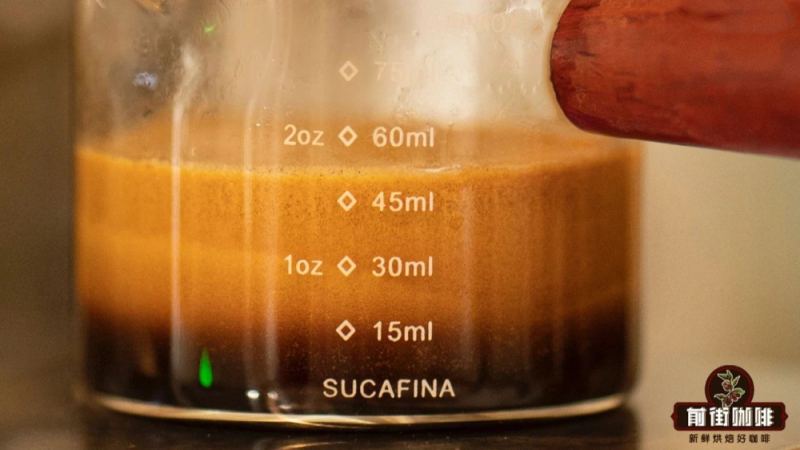
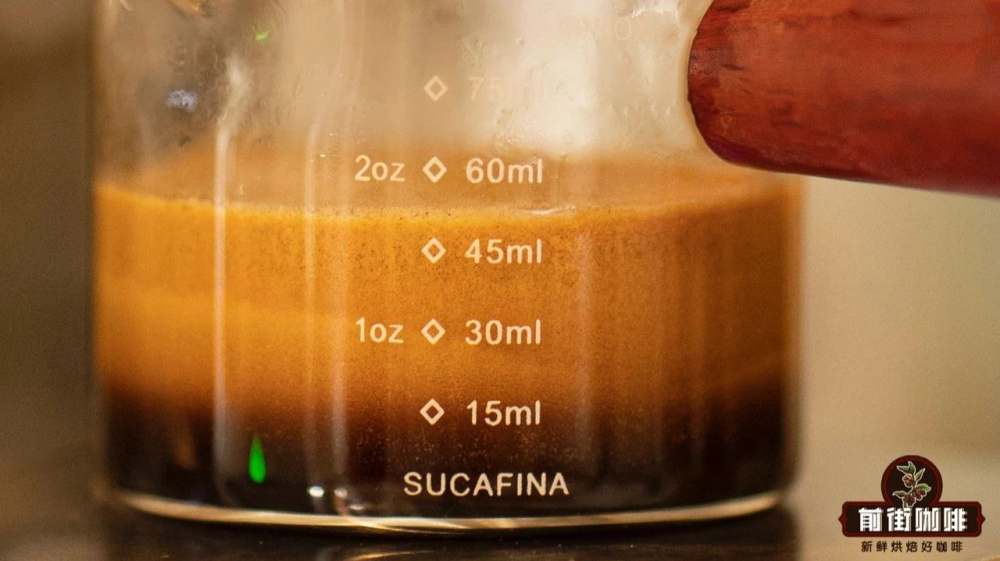
Can the oils in coffee crema judge espresso quality?
A thin or missing crema does not by itself mean an espresso tastes bad. Crema is the insoluble oils in coffee beans wrapping around carbon dioxide, forced into the liquid at pressures near 9 bar. Because those oils do not dissolve in water, they rise and form the foam, so the layer reflects extraction behavior rather than flavor quality.
The state of the crema can still point to potential problems. Bean freshness, grind size, and extraction pressure all change how the foam looks, and stale beans or a coarse grind tend to produce a crema that fades fast. Judging espresso by appearance alone skips the characteristics on which coffee is judged, starting with how it actually tastes in the cup.
Many coffee enthusiasts are used to judging whether an espresso tastes good by observing the crema on its surface, believing that a fine, thick, golden crema is the mark of a good coffee. But is this really true? This article will use two intuitive test questions, combined with factors such as the freshness of the coffee beans, grind size, and extraction pressure, to deeply analyze the real relationship between the state of the crema and coffee flavor, helping everyone view espresso crema rationally and no longer be misled by appearances.
For more specialty coffee knowledge, please follow: Front Street Coffee (Frontsteet Coffee)
In coffee circles, you often hear claims like this: "If you want to know whether an espresso tastes good, just observe the crema. The best espresso should have a fine, thick, golden crema." So can the flavor quality of an espresso really be judged solely by the state of the crema?
To verify whether this view holds up, Front Street would like everyone to first do two multiple-choice questions.
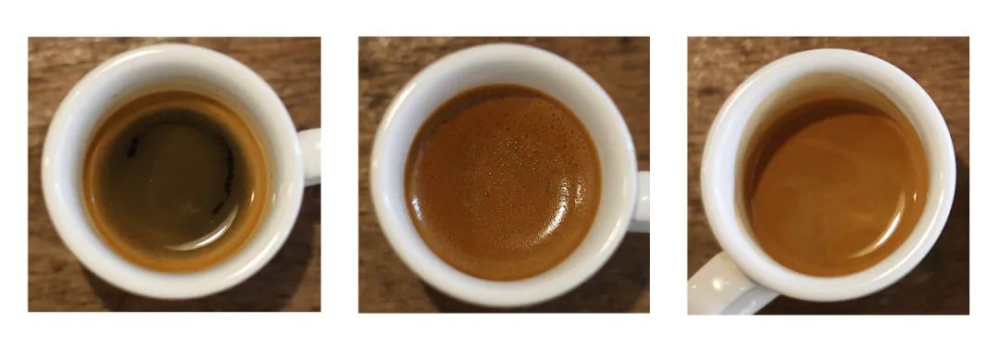
Question one: in the picture below, only one cup is a good-tasting espresso. Please identify it based on the state of the crema.
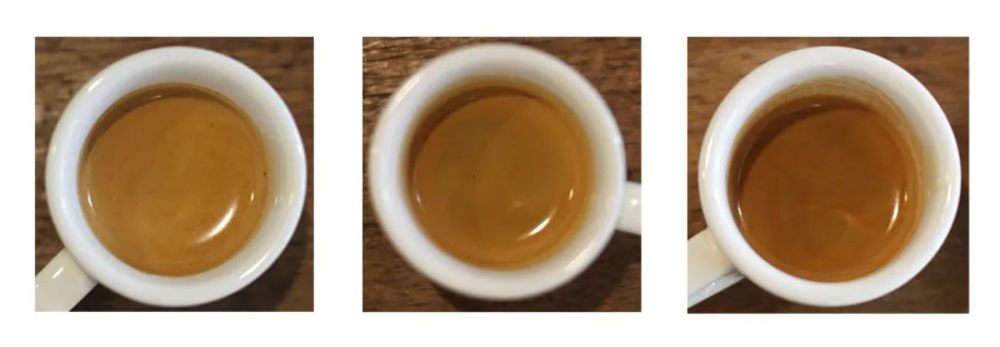
Question two: in the picture below, there is likewise only one good-tasting espresso. Please identify it based on the appearance of the crema.
The correct answers are: question one corresponds to the third cup, and question two corresponds to the second cup. For question one, most people can probably choose correctly with ease, while for question two, some may have chosen it by guessing.
Observing the crema of an espresso is like looking at the spent coffee bed of a pour-over; it cannot directly tell you whether a cup of coffee is delicious. A fine, thick, golden crema does not necessarily mean it tastes good. However, the state of the crema can indeed reveal some potential problems.
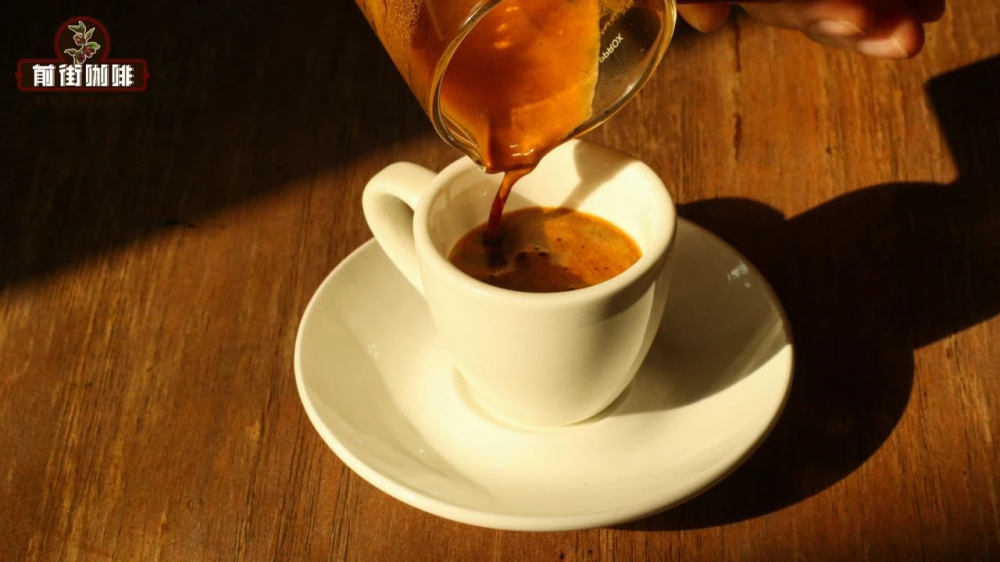
Let's first talk about what this golden coffee crema actually is. The crema of espresso is essentially the insoluble oils in coffee beans wrapping around carbon dioxide, both of which come from the coffee beans themselves. In fact, the golden foam on the surface of a pour-over coffee bed is also a mixture of oils and a small amount of carbon dioxide.
Because an espresso machine extracts at pressures as high as 9 bar, the oils and carbon dioxide are directly forced into the coffee liquid, and since oils do not dissolve in water, they gradually separate into layers, forming the golden coffee crema.
Therefore, the quality of coffee crema mainly depends on three factors: the carbon dioxide content in the beans, the grind size, and the roast level of the coffee beans.
For this reason, the state of the crema can sometimes reflect certain problems. For example, the most common situation is when the coffee crema looks very abundant, but its texture is rough, it dissipates quickly, and clumps appear. Espresso in this state often has an indistinct flavor profile.
The reason for this phenomenon is that the coffee beans have not been rested properly and are too fresh, with excessively high carbon dioxide inside. As mentioned earlier, the abundance of crema is related to carbon dioxide; when there is plenty of carbon dioxide in the beans, the extracted crema is naturally thick. But too much carbon dioxide also makes the crema structure unstable, prone to breaking apart and producing large bubbles. When there are many bubbles, they pile up into clumps, reducing flowability and making the state look much like milk foam.
Carbon dioxide is a protector of flavor, and it is affected whether through natural release or artificial extraction. Therefore, coffee beans that are too fresh will interfere with extraction, resulting in coffee with no obvious flavor.
The other extreme is when the coffee beans are not fresh, the carbon dioxide content inside naturally decreases, and the extracted crema becomes very thin. When the coffee beans are not fresh, the extracted espresso certainly will not taste good either.
Secondly, grind size also affects the state of the crema. For example, if the coffee grounds are ground too coarse, they cannot effectively block water pressure, so the coffee liquid flows too quickly, and the crema is lighter in color and thin and watery in texture. In this situation, the espresso tastes sharply acidic and watery.
Conversely, if the coffee is ground too fine, the puck's ability to block water pressure is too strong, so the crema becomes very rich, viscous, and dark in color. In this case, the espresso tastes burnt and bitter.
Having discussed the factors by which coffee quality can be judged from the state of the crema, let's now talk about examples in which whether a coffee tastes good cannot be judged by the crema alone.
The first example: using one dark-roasted bean and one light-roasted bean to extract espresso separately, the crema from the dark-roasted bean will inevitably be richer, darker in color, and better in body than that from the light-roasted bean. But these two espressos each have their own characteristics and both fall within the category of being good-tasting.
The second example is the second question Front Street posed at the beginning. Those three cups of crema all looked fine, rich, and golden, but only one performed excellently. This is because Front Street extracted these three cups at pressures of 6 bar, 9 bar, and 11 bar respectively. A pressure change of this magnitude does not produce much difference in the coffee crema, but the tasted flavors are clearly different. The 6 bar cup was rather bland, with none of its flavors coming through; the 11 bar one developed harsh, burnt, and bitter notes.
The above content is compiled by CoffeeHunters, a coffee news website.


