







How does pour-over coffee brewing work for beginners?
Pour-over coffee brewing starts with equipment and a recipe, not with technique alone. Choose beans, prepare a dripper, filter, kettle, and scale, then run a three-stage pour: a bloom to release gas, a main pour to build flavor, and a final pour to reach the target volume. Water temperature and flow rate can be adjusted to taste.
The method resembles brewing gongfu tea, where each tea needs its own temperature, vessel, and steeping time. Manual extraction gives finer control of water temperature and pouring speed than an automatic machine, letting a bean's origin character show through. A coffee store that marks roast dates helps beginners pick beans suited to the pour-over approach.
Preparing breakfast for the family in the early morning and then brewing a pot of aromatic coffee not only refreshes the mind but also sets a calm tone for the day. Pour-over coffee and brewing gongfu tea share a similar philosophy—different teas require their own water temperatures, vessels, and steeping times, and the same goes for coffee. Compared with machine brewing, manual extraction allows more flexible adjustment of water temperature and flow, restoring each bean's original flavor profile, and you can fine-tune the brewing method to your personal taste preferences. In the process of pouring, waiting, and tasting, one becomes focused and calm. Pour-over is also a great medium for entertaining guests and chatting, which is why it has become increasingly popular in recent years. This article is aimed at pour-over beginners, explaining everything from bean selection and equipment preparation to extraction steps, and includes several beans recommended by Front Street Coffee along with a complete three-stage brewing demonstration to help you brew your own cup of coffee.
As the saying goes: the most precious time of the day is the early morning. Getting up early to make a delicious breakfast for family and yourself, while brewing a pot of aromatic coffee, not only benefits body and mind and keeps you alert, but also starts the new day with a beautiful sense of ritual. Pour-over coffee follows the same principle as brewing gongfu tea: brewing different teas requires different water temperatures, teaware, and steeping times; to enjoy a good cup of coffee, you likewise need to adapt to the bean.
Compared with fully automatic machines, the advantage of manual extraction lies in more delicate control of water temperature and pouring flow rate, bringing out the original flavors of coffee beans from different origins, and allowing flexible adjustment according to your own taste preferences. The brewing process itself is also a kind of cultivation—it calms the mind and sharpens concentration; when friends visit, pour-over is also a great way to host guests, easily opening up conversation and connecting with fellow enthusiasts. These are precisely the reasons why the pour-over trend has grown increasingly popular in recent years.
The threshold for pour-over coffee is actually not as high as you might imagine. If you are new to pour-over, simply follow the process below once, and you can make a cup of coffee with your own personal style.
Which coffee beans are suitable for pour-over?
The range of beans suitable for pour-over is very broad. Here Front Street Coffee has selected a few options suitable for most people to start with: friends who prefer floral aromatics can try Front Street Panama Hacienda La Esmeralda Red Label Geisha coffee, which is also one of the most expensive coffees in the world; for those who enjoy a bright, acidic profile, Front Street Flower Kui coffee is recommended, with notes of black tea and berries on the palate;
for a balanced sweet, sour, and bitter flavor that leans neither way, Front Street Brazil Red Bourbon coffee is a good choice; and for drinkers who prefer a solid, full-bodied mouthfeel, we suggest the highest-grade Front Street Golden Mandheling coffee. This bean undergoes multiple rounds of manual sorting, keeping the defect rate very low, resulting in a cleaner aroma and more outstanding sweetness. All of the above beans can be ordered at Front Street Coffee stores and the Front Street Tmall flagship store. To let customers enjoy the full flavor window, all coffee beans shipped by Front Street Coffee are roasted within 5 days.
Basic Brewing Equipment Preparation
There is a wide variety of pour-over equipment to choose from, but as a beginner, you only need to equip the most essential items to start, and can add more later according to personal preference.
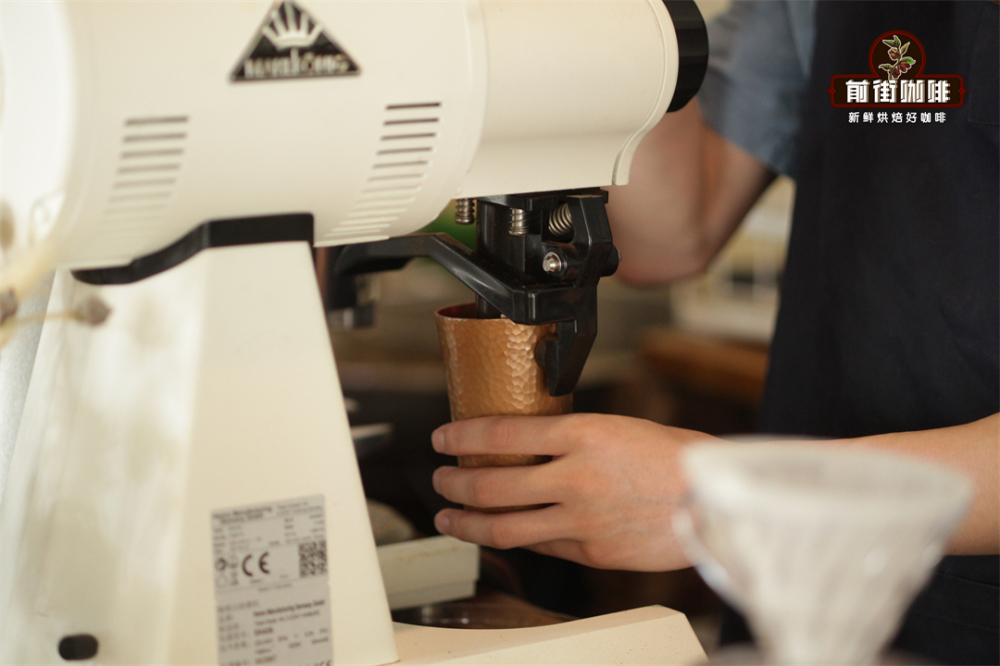
Grinder: It is recommended to purchase a reliable-quality "burr grinder." Price is not necessarily directly linked to grind quality, but choosing a grinder with good grind uniformity is the only way to achieve even extraction and restore the correct flavor.
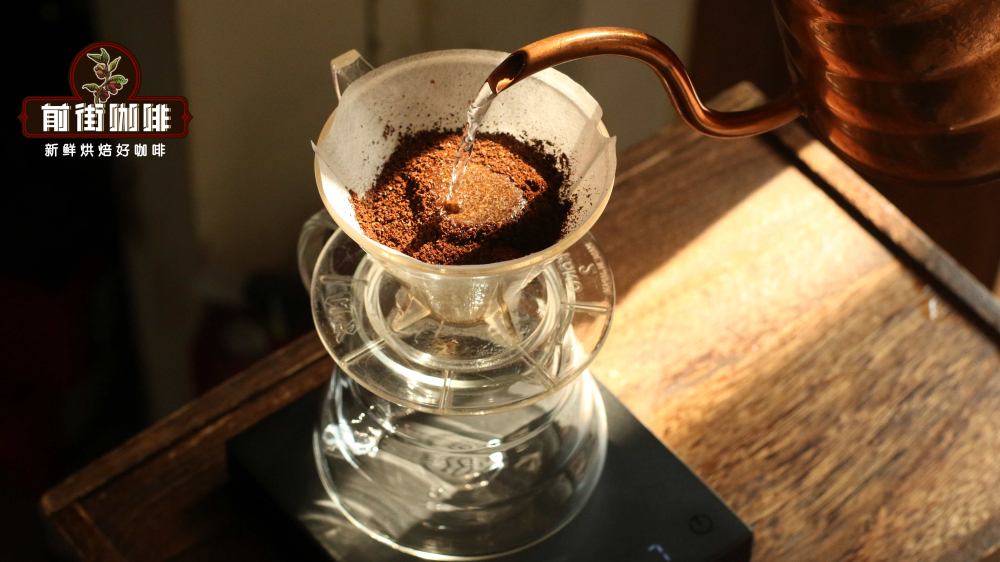
Digital scale: Just like roasting, if you want precise brewing and consistent flavor reproduction, you must master the extraction rate, making a digital scale indispensable. It is best to choose a model with 0.1-gram precision, making it easier to control every brewing session precisely.
Pour-over kettle: Beginners are advised to start with a gooseneck kettle, which allows you to more calmly adjust the flow rate and volume of water, and even influence the tumbling state of the coffee bed during brewing.
Dripper: Pour-over drippers differ in shape, size, number of drainage holes, and material, and every coffee enthusiast has their own preferred style. Overall, as long as you have mastered the principles and techniques of pour-over extraction, any style will work.
Filter material: The filter material placed in the dripper can be divided into three categories: cloth, paper, and metal. Beginners are advised to start with the most common paper filter—it can be discarded together with the coffee grounds after use, making it convenient and hassle-free, and it is widely recognized for leaving the fewest sediments in the coffee liquid while also filtering out some of the coffee oils.
Pour-Over Coffee Extraction Method
Preparation: Boil a kettle of water
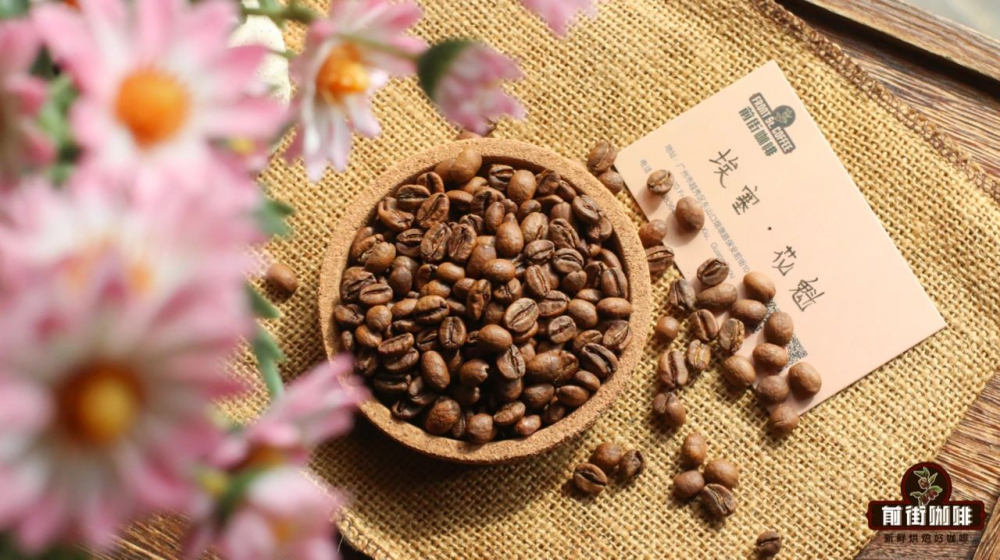
Prepare a bag of freshly roasted Front Street Panama Emerald Red Label Geisha coffee beans
Weigh out 15 grams of coffee beans and grind them (fine sugar consistency, 80% passing rate with a No. 20 sieve)
Recommended coffee-to-water ratio: (1:15 or 1:16) Rinsing the filter paper:
Step one, place the dripper on a mug or server, put in the filter paper, and rinse the filter paper with hot water to reduce the papery taste of certain filter papers seeping into the coffee, while also preheating the equipment. Then pour out the water in the cup.
Front Street Coffee uses three-stage brewing: First pour in 15 grams of coffee grounds and tare the scale. For the first stage, pour in 30 grams of water, bloom for 30 seconds while starting the timer simultaneously, maintaining a gentle flow throughout, circling outward from the center point, making sure the entire coffee bed is saturated.
For the second stage, switch to a slightly stronger flow and pour in 120 grams of water, with the aim of raising the entire coffee bed. The stream should be poured vertically and evenly. At this point the timer scale shows 150 grams, and the pour should be completed at about 55 seconds.
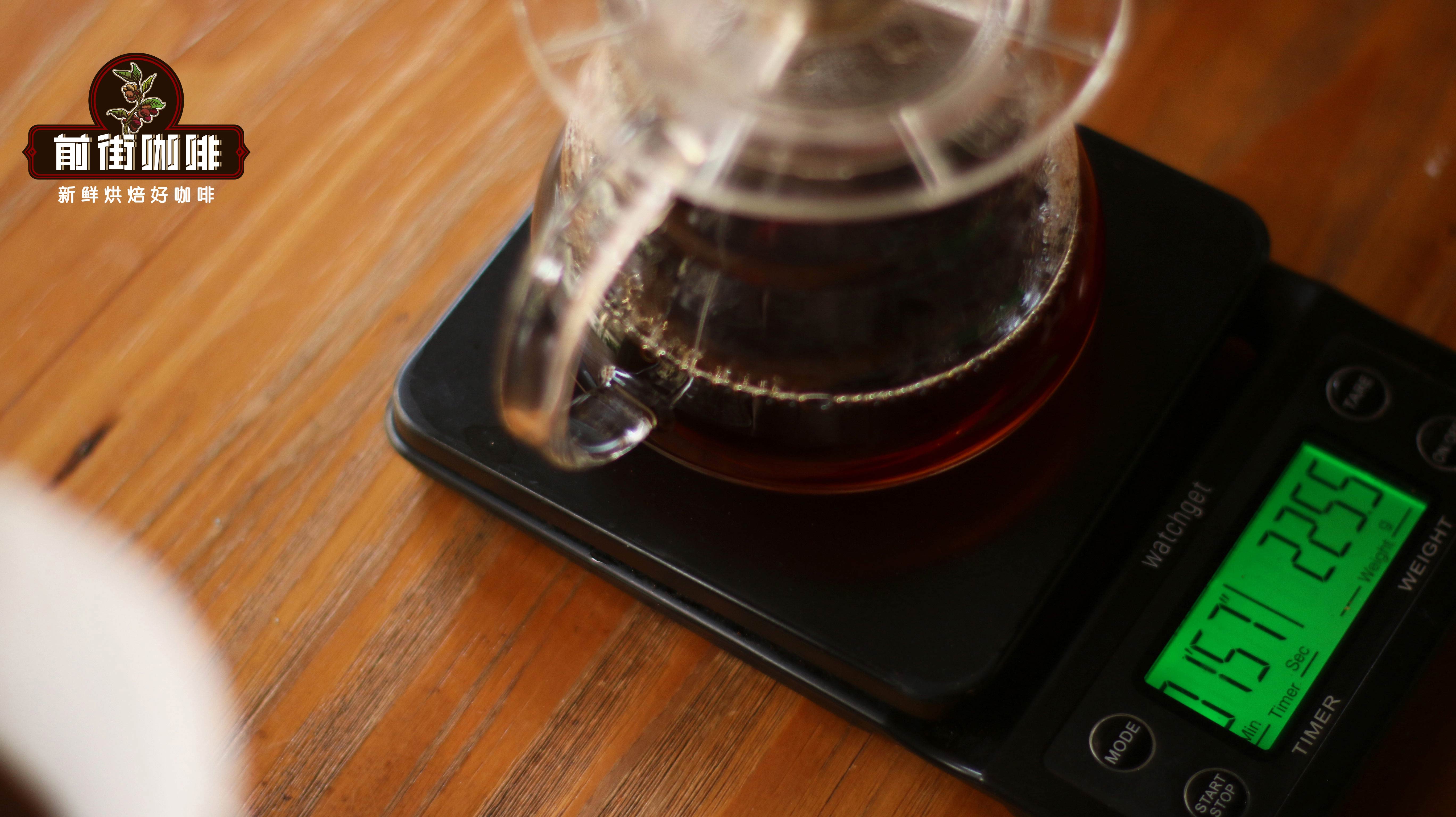
When the liquid level drops to the halfway point, begin the third stage of pouring, using a fine stream to circle in small loops and pour in 90 grams. Try to keep the circling from being too wide, otherwise it can easily disturb the coffee bed and cause under-extraction. The final total pour volume is 240 grams, and the drip should finish at around 2 minutes 10 seconds. After removing the dripper, swirl the server to even out the coffee liquid, and it is ready to taste.
The pour-over Emerald Red Label Geisha has an elegant entry with rose, citrus, strawberry, and tropical fruit-like acidity, a long and pleasant black tea-like resonance, and flavor layers that continually evolve as the temperature changes, with an overall smooth mouthfeel.
How Different Parameters Affect Pour-Over Flavor
If you are a beginner, pouring flow rate, water temperature, and time control all require a period of practice. In this process, you will gradually learn to adjust the strength and find the best flavor according to the roast level of different coffee beans.
The above content is compiled by CoffeeHunters, a coffee news website.


