







Which Varieties Are Grown in Yunnan Coffee?
Yunnan coffee has moved from early Typica plantings to a mix now dominated by Catimor, with smaller amounts of Bourbon, Caturra, Catuai and Geisha. The earliest record dates to 1904, when a French missionary brought Typica trees from Vietnam and planted them in Zhugula Village near Dali. Large-scale promotion of Typica only began in 1955.
Catimor arrived through Nestlé, which introduced CIFC7963 from the Portuguese Coffee Rust Research Center in 1988 and trialed it at Dehong, Hainan, Baoshan Lujiangba and Ruili, with further introductions in 1991. Today the main Catimor lines in Yunnan are CIFC7963, the P series, T5175 and T8667, shaping the region's current flavor profile.
Yunnan coffee has attracted much attention in recent years. From the initial Typica to the now absolutely dominant Catimor, the changes in varieties have profoundly influenced the flavor direction. This article systematically reviews the introduction history and lineage of major coffee varieties in Yunnan, compares the fundamental differences between Catimor and Robusta, and analyzes the variety, altitude, and cultivation management factors behind the current flavor profile of Yunnan coffee. It also introduces four representative beans from Front Street in Yunnan's Baoshan, Lincang, and other production areas—washed and natural Catimor and Typica—providing coffee enthusiasts with a practical guide to understanding Yunnan coffee.
For more specialty coffee knowledge, please follow our WeChat official account: FrontStreet Coffee
Yunnan coffee beans are receiving more and more attention. Guests who come to Front Street stores will more or less chat about how Yunnan coffee beans are doing now. In Yunnan, coffee varieties are quite diverse, with common ones including Typica and Catimor, as well as smaller amounts of Bourbon, Caturra, Catuai, Geisha, etc. Today, Front Street will introduce the variety composition of Yunnan coffee.
Typica Coffee Variety
The earliest record of coffee cultivation in Yunnan can be traced back to 1904, when French missionary Tian Deneng went to Dali for religious activities and brought several coffee trees from Vietnam, planting them in Zhugula Village. These trees were Typica. Typica has excellent flavor performance, rich acidity, and high cleanliness, and is one of the oldest coffee varieties in the world.
Yunnan planted excellent varieties from the very beginning, but large-scale promotion had to wait until 1955. At that time, all planted were Typica. Later, with the introduction of new varieties, the number of Typica gradually decreased.
Catimor Coffee Variety
Catimor in Yunnan is mainly divided into CIFC7963, P series, T5175, and T8667, all of which belong to the Catimor lines.
In 1988, to promote the development of Yunnan's coffee agriculture, Nestlé introduced Catimor 7963 from the Portuguese Coffee Rust Research Center (CIFC), conducted selection and breeding at the Dehong Tropical Agriculture Research Institute, and successively conducted trial plantings in Hainan, Baoshan Lujiangba, and Ruili. In 1991, Nestlé again introduced Catimor P1, P2, P3, and P4 from CIFC for trial planting, where P stands for Population. Among them, P4 had the highest yield, and from 1994 onwards, the P series was promoted for cultivation in Pu'er City, with P4 accounting for the majority. Later, expert investigations found that Catimor P1, P2, P3, and P4 corresponded to 7960, 7961, 7962, and 7963, respectively. T5175 and T8667 were introduced by Nestlé from Central America in 1994. These two lines were first trial-planted in Pu'er, and their yields were both lower than 7963.
Thanks to Nestlé's vigorous promotion of coffee agriculture in Yunnan, 99% of Yunnan's coffee is of the Catimor variety, which is what we commonly call Yunnan small bean. These beans were originally purchased by Nestlé as raw material for instant coffee, with low flavor requirements. Therefore, when discussing coffee flavor, Yunnan often presents low acidity, nutty, cocoa, and earthy notes, which are considered less ideal flavors.
Bourbon Coffee Variety
In 1981, when Professor Ma Xijin investigated ancient coffee varieties in Yunnan, he found in an ancient coffee forest near Zhuguli that red-topped Typica accounted for 31%, and green-topped Bourbon accounted for 69%. Some experts believe that what Father Tian brought to Zhugula Village back then was not only Typica, but also mixed with Bourbon. Bourbon, like Typica, is an ancient and excellent coffee variety. Currently, the production of Bourbon in Yunnan is even less than that of Typica.
Geisha, Caturra, Catuai
In the past 10 years, Yunnan's coffee cultivation has continued to develop, and foreign varieties have been continuously introduced for research. Geisha is naturally among them. At the 2016 Yunnan Green Bean Competition, a Yunnan Geisha participated for the first time, but it was defeated by the "local snakes" that had taken root for many years, ranking only in the 30s among 120 coffee beans.
Some experts believe that after Geisha was transplanted from Panama to Yunnan, the terroir and climate changed dramatically. Without enough years of acclimatization, it is inevitable that it would not adapt well. Moreover, the altitude for coffee cultivation in Yunnan is generally not high, about 1100 meters, and coupled with inadequate cultivation management, it is reasonable that the flavor of the produced Geisha is unsatisfactory.
By 2020, Yunnan's first batch of Geisha seeds was finally made available to the mass market in limited quantities.
Many people come to ask Front Street: "Is Yunnan coffee getting better now? Everyone is talking about Yunnan specialty coffee, the pride of domestic products." Front Street believes that every production area will have its best and top coffees, but this cannot represent the level of the entire production area. Whether the flavor of a production area has truly improved should be judged by the most common and ordinary coffee beans.
Yunnan coffee is constantly improving, there is no doubt about that. But if it could transform from raw material for instant coffee into specialty coffee in just 10 years, then unless one is deceiving oneself, it does not conform to the objective laws of development.
Front Street believes that improving coffee flavor quality is nothing more than the three essentials commonly mentioned in agriculture: good land, good seeds, and good cultivation.
Good land: Coffee is suitable for cultivation between the Tropic of Cancer and the Tropic of Capricorn, and southern Yunnan meets this requirement. It is generally believed that coffee beans with better flavor are grown above 1200 meters. Yunnan has places above 1200 meters, but not many, and currently many places in Yunnan where coffee is grown are below 1200 meters.
Good seeds: Only good varieties can produce coffee with good flavor, there is no doubt about this. We believe that the better quality is Arabica coffee beans, while Robusta belongs to the category with poor taste. Typica and Bourbon are excellent Arabica varieties, currently only grown in a few places in Yunnan. 99% of Yunnan coffee is of the Catimor variety.
Catimor is a hybrid of Timor and Caturra. Caturra is a variety of Bourbon, and Timor is a hybrid of Robusta and Arabica. In other words, Catimor has 1/4 Arabica genes, which is also the main reason why the quality of Yunnan coffee is difficult to improve.
Good cultivation: The level of cultivation management is very important to coffee quality. Adopting modern agricultural science and technology combined with green cultivation is the path to developing high-quality coffee, and one can refer to the Boquete production area in Panama. Of course, the premise is that a very large amount of capital investment is required. Yunnan is currently still low-efficiency smallholder collective cultivation, and the gap is obvious.
Front Street believes that the flavor of a production area can only be truly demonstrated through traditional processing. Therefore, Front Street's bean list includes 4 Yunnan coffee beans, namely natural and washed Typica and Catimor coffee beans.
Yunnan Small Bean Coffee
Production Area: Baoshan, Yunnan, China
Altitude: 1200 meters
Variety: Catimor
Processing Method: Washed
Flavor: Melon and fruit fragrance, muskmelon, brown sugar, plum acidity, black tea sensation
Catimor is currently the most common coffee variety in Yunnan, and washed processing best demonstrates the flavor of the production area. Front Street also treats this one as the daily staple bean of the Yunnan production area. Front Street has chosen Catimor from the Baoshan production area. Baoshan is a famous coffee-producing area in Yunnan, and Lujiangba is particularly well-known. If you want to know how Yunnan coffee is doing now, Front Street suggests you taste this coffee bean.
Yunnan Natural Catimor
Production Area: Baoshan, Yunnan, China
Altitude: 1450-1550 meters
Variety: Catimor
Processing Method: Natural
Flavor: Nuts, chocolate, spices, caramel, red berries
This natural Catimor also comes from Lujiangba, Baoshan, Yunnan. We know that the higher the altitude at which Arabica is grown, the better the flavor. This coffee bean grows at an altitude of 1450-1550 meters, so the flavor quality is naturally better. This coffee bean is processed using the full red cherry natural method, carefully selecting bright red coffee cherries for natural processing. Coffee processed this way has extremely high sweetness, and is what Front Street considers the fighter jet among Catimor.
Front Street 2013 Typica
Production Area: Baoshan, Yunnan, China
Altitude: 1200 meters
Variety: Typica
Processing Method: Washed
Flavor: Plum, brown sugar, muskmelon, Pu'er tea
Typica is one of the few excellent varieties in Yunnan. Compared with Catimor grown in the same environment, Typica has better flavor performance and a cleaner taste. This coffee bean also comes from the renowned Lujiangba, Baoshan, and is washed processed. You can taste the floral and fruity aroma characteristic of Yunnan, so Front Street named this bean "Huaguoshan". Everyone can compare this bean with washed Catimor.
Yunnan · Front Street 2013
Production Area: Lincang, Yunnan, China
Altitude: 1300 meters
Variety: Typica
Processing Method: Natural
Flavor: Dried apricot, plum, yellow sugar, chocolate
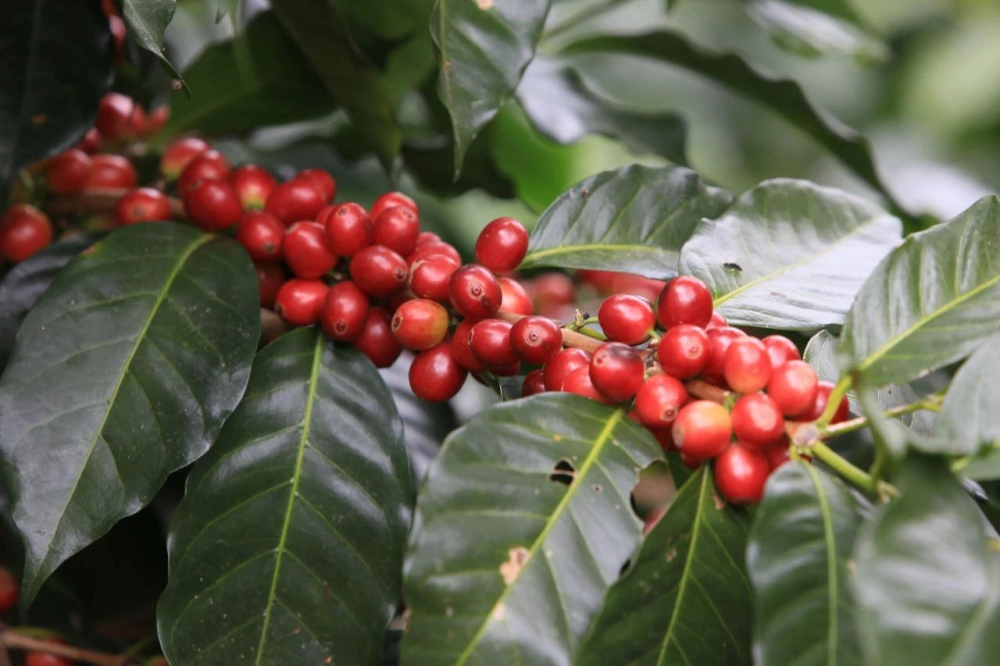
Front Street began growing coffee in Yunnan in 2013. The original concept behind Front Street's coffee cultivation was to verify a hypothesis: can "good land, good seeds, good cultivation" really change the criticized taste of Yunnan coffee? With this hypothesis, Front Street visited the Tropical Crops Research Institute and senior coffee growers, found an undeveloped forest, and started growing coffee from scratch. Front Street deeply understands the importance of variety, and specifically chose the Typica variety that has taken root in Yunnan for many years. Typica is rather delicate and requires careful care. The Front Street employees responsible for cultivation built a simple house at the foot of the mountain and lived a life of working at sunrise and resting at sunset. Front Street's plantation is located in Lincang near Myanmar, sparsely populated, with only a village of a few dozen people nearby, so the original ecological environment is still preserved there, which is very suitable for growing good coffee.
In 2020, the first batch of Yunnan Typica coffee beans grown by Front Street itself came to market, named "Front Street 2013". It uses full red cherry natural processing to highlight sweetness. The flavors Front Street found during cupping were dried apricot, Sanhua plum, and caramel chocolate.
The above content is compiled by CoffeeHunters, a coffee news website.


