








How Hot Should the Flame Be Under a Moka Pot?
A moka pot brews strong coffee using three parts: the base for water, the filter basket for grounds, and the upper chamber that collects the finished coffee. Heat control matters most, because the flame setting drives how fast pressure builds and how the water moves up through the coffee bed rather than scorching the grounds.
Bean choice supports the brew. In Italy, brands such as illy sell pre-ground coffee made specifically for moka pots, and the practical rule is to pick a suitable roast level and keep the beans fresh. That combination, plus steady rather than high heat, is what yields a rich, smooth moka pot black coffee.
The moka pot is one of the lowest-threshold and least expensive tools for making strong coffee, and for enthusiasts who love espresso flavor but aren't ready to invest in a semi-automatic espresso machine, it's a very friendly choice. Although it's said that every Italian nonna has one, if you really want to use it well, you still need to understand some basics in advance. Today, Front Street Coffee will take you into the fun world of the moka pot, focusing on core questions like flame intensity, the metal body design, and heating methods, while also covering how to choose coffee beans, how fine to grind, how to tamp, how to control water volume, and when to turn off the heat—helping you easily brew a cup of moka pot coffee with rich crema and smooth, aromatic flavor.
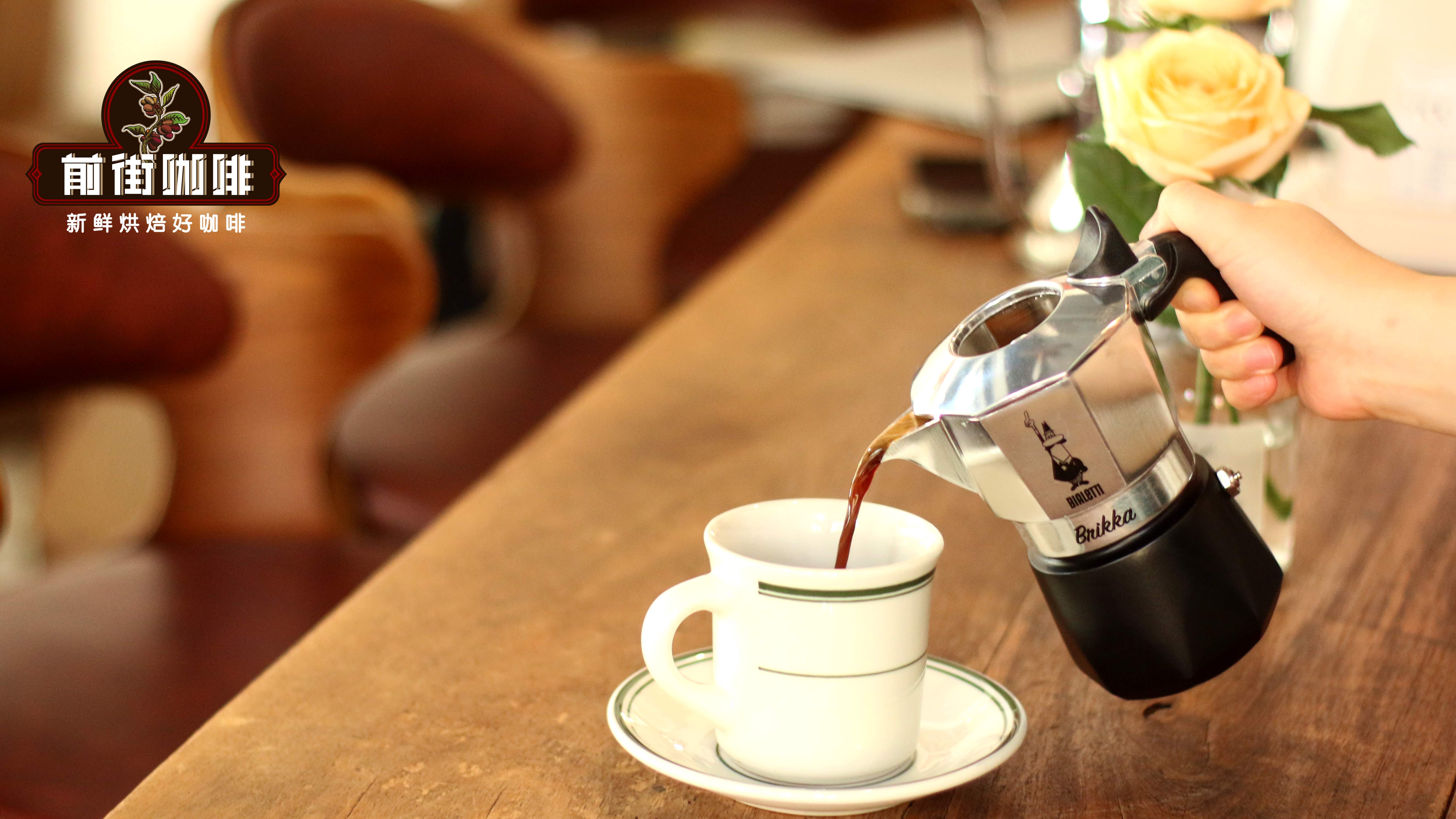
When it comes to the simplest and most cost-effective tool for making strong coffee, the moka pot definitely ranks at the top. For players who love espresso but haven't yet reached the stage of playing with a semi-automatic espresso machine, choosing it is sure to be the right call. Although this thing is jokingly called something every Italian nonna knows how to use, easy as it is, you still need to understand the basic knowledge you should master. So today, Front Street Coffee will take everyone into the fun world of this device.
One of the most frequently asked questions is: what coffee beans should be paired with a moka pot?
The specialty coffee crowd in China is very particular about choosing beans—which producing region, what variety, what roast level, there are all sorts of nuances. But abroad, many people just grab coffee beans or ground coffee straight off the supermarket shelf; what they care about more is actually the brand, which brewing method the beans suit, and what flavor it tastes like.
In Italy, many brands specifically release coffee grounds suited for moka pots—for example, the well-known illy has several products made for this little device. So back to the question of what beans to pair with a moka pot, Front Street Coffee's view is: as long as you choose the right roast level and ensure the beans are fresh enough, you can easily make a cup of rich moka pot black coffee.
The moka pot consists of three parts: the upper chamber, the filter basket, and the base. Sizes vary. The base holds water, the filter basket holds coffee grounds, and the upper chamber collects the brewed coffee. Its working principle isn't complicated: after heating the water in the base, steam pressure is generated. The water used for extraction travels from bottom to top. When pressure builds up enough, hot water is pushed upward. As it passes through the filter basket, the coffee bed creates resistance. Eventually, the hot water breaks through this barrier and surges into the upper chamber—that's a cup of rich coffee liquid.
Precisely because the moka pot uses pressure extraction, with high temperature and fast speed, if you want the coffee it makes to have moderate crema along with a smooth, aromatic flavor, you should prioritize fresh medium-dark roasted beans. You can get Front Street Classic Espresso Blend coffee beans (traditional Mamba recipe, fine and rich crema, suitable for both home and commercial coffee shop use), Front Street Commercial Blend coffee beans (the same raw materials used by coffee shops, abundant crema), and Front Street Specialty Blend coffee beans (prominent caramel aroma, noticeable sweet aftertaste).
To help everyone achieve coffee freedom, Front Street promises that every bag of beans is roasted within 5 days, so all customers receive them in the freshest possible state, making moka pot coffee naturally easy and delicious.
Second question: how fine should the coffee grounds be ground?
The particle size is roughly between 0.3 and 0.55 millimeters. To judge the coarseness, there are two methods: first, buy a particle size ruler, or use ready-made moka pot-specific grounds for comparison; second, rely on repeated adjustments—generally you won't need too many tries, 3 to 5 times is basically enough to get it right. If the grounds are too coarse, the coffee liquid will spurt out violently, even like a fountain; if the grounds are too fine, you'll hear a whining sound of water boiling, but the coffee liquid won't come up for a long time—this means it's ground too fine, and it's recommended to turn off the heat immediately. When doing this kind of adjustment, safety measures must be fully in place.
Of course, if you really can't determine the grind size, or don't have grinding equipment at home at all, Front Street offers a grinding service for its own coffee beans. However, one reminder: if beans are ground into powder in advance, the aroma will dissipate faster, and the crema produced by the moka pot will be greatly reduced. So it's still recommended to have your own grinder—grinding fresh and brewing immediately gives the best results.
Third question: how should the grounds be filled?
For this question, Front Street wants to share the approach of a "non-coffee-oriented" YouTuber named "Sono Meng," who talked about the daily routine of Italians around him—"Cup the filter basket with your left hand, fill it with grounds, no tamping, let it stay fluffy, pile it into a small mound with a peak in the middle, no need to level it, because the upper chamber's filter cap is also convex upward. Then press the upper chamber on vertically and tighten it. Coffee residue on the threads must be cleaned off thoroughly."
Front Street tried it once and found it worked quite well—the crema was quite rich, and after extraction the puck was firm with no channeling. Everyone might as well give it a try.
Fourth question: how to judge the water volume?
Compared to other brewing methods, the moka pot actually isn't that strict about the water-to-coffee ratio. Usually the water level just needs to be kept about 0.5 cm below the pressure relief valve (safety valve). Front Street measured it: water filled to 0.5 cm below the pressure relief valve is about 100 grams, and coffee grounds leveled in the filter basket are 20 grams, so the coffee-to-water ratio comes out to 1:5. But if you only want to brew "half a serving of coffee" at a time, both the amount of grounds and water should be reduced accordingly. For example, if you use 15 grams of coffee grounds, at a 1:5 coffee-to-water ratio, the water to pour would be 60 grams, which is the position 1 cm below the pressure relief valve.
Note: if you use a relatively small amount of grounds, the moka pot is prone to spattering when it boils. So Front Street's approach is: after pouring the coffee grounds into the filter basket, first gently tap left and right to let the fluffy grounds settle naturally, making the particles pack more tightly together, then find a small spoon and use the back to gently "press" the coffee bed until it's thin enough to be at half its original height.
As for adding water, using cold water will lengthen the soaking time of the coffee grounds and easily lead to over-extraction and bitterness, so Front Street recommends using hot water, which also shortens the extraction time.
Fifth question: when should you turn off the heat?
You can brew a moka pot using direct flame on a home gas stove, but because it sits suspended on a metal rack, it's easy to knock over, so you must pay attention to safety; if you want more precise control of the heat, you can also buy relatively stable devices like an electric ceramic stove or induction cooker.
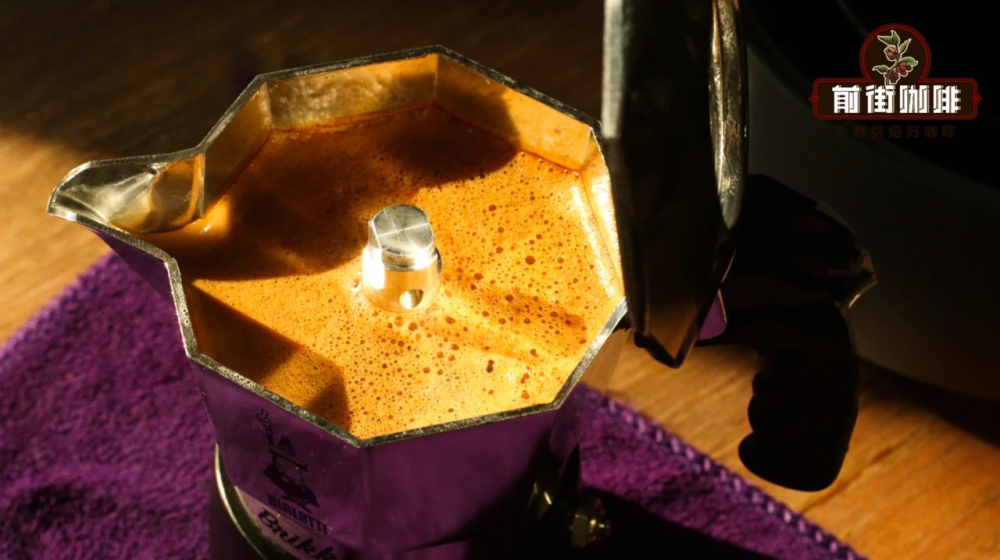
The heat should be even, and medium heat is most suitable. When you hear the "whirring" sound, you can open the lid to observe. When the first drop of coffee liquid can spurt out, it's time to turn off the heat. If you keep using high heat, or wait until the coffee boils before turning it off, this cup of coffee will most likely have a burnt taste.
Finally, out of safety considerations, Front Street will nag one more time: most moka pots use a metal body design with high thermal conductivity, so try not to touch the body after heating, and remember to take heat insulation measures—you can use a wet towel—to avoid burns. If you hear a whirring sound but the upper chamber never has coffee liquid overflow, it's very likely the spout is blocked. You should first turn off the heat source to avoid excessive internal pressure causing an explosion and bringing safety hazards.
The above content is compiled by CoffeeHunters, a coffee news website.


