







What Do SOE Coffee Beans Mean on a Cafe Menu?
SOE stands for Single Origin Espresso, meaning espresso pulled from beans of one specific origin rather than a blend. Its purpose is to highlight the flavors of that region. Cafes often list it as a paid swap, and the flavor difference is real, though switching to SOE does not automatically make a drink specialty coffee.
Blends are built for balance, stability and price, so something usually gives. Single origin beans can express distinct regional character, and their use in the World Barista Championship helped push the trend. Roasting curves and extraction need adjusting for acidity. In the cup, SOE americano shows the origin more directly than an SOE latte, where milk softens it.
When ordering at a coffee shop, the menu note "swap to SOE for 3 yuan extra" often makes people curious: What exactly is SOE? Is it really better tasting if you switch to it? SOE stands for "Single Origin Espresso," and its core purpose is to highlight the unique flavors of a specific region. This article will guide you through the origins of SOE, how it differs from espresso blends, and whether it equates to specialty coffee. We'll also delve into the advantages and limitations of SOE, from roasting curves to extraction adjustments, teaching you how to assess acidity and pricing characteristics. More importantly, we'll compare the taste differences between SOE Americano and SOE Latte, and share the actual performance of Front Street Coffee's Yirgacheffe, Huakui, and Xizhua SOE beans, helping you find the perfect cup for you.
For more specialty coffee knowledge, please follow our WeChat official account: Front Street Coffee (FrontStreet Coffee)
Walking into a café, you'll often see "swap to SOE for 3 yuan extra" noted below the espresso menu. What exactly does this SOE refer to? Will the flavor significantly improve if you switch to it? Today, let's talk about all things SOE.
What is SOE?
SOE stands for "Single Origin Espresso." It emphasizes showcasing the coffee flavors of a specific origin—in simple terms, using single-origin coffee beans to make espresso.
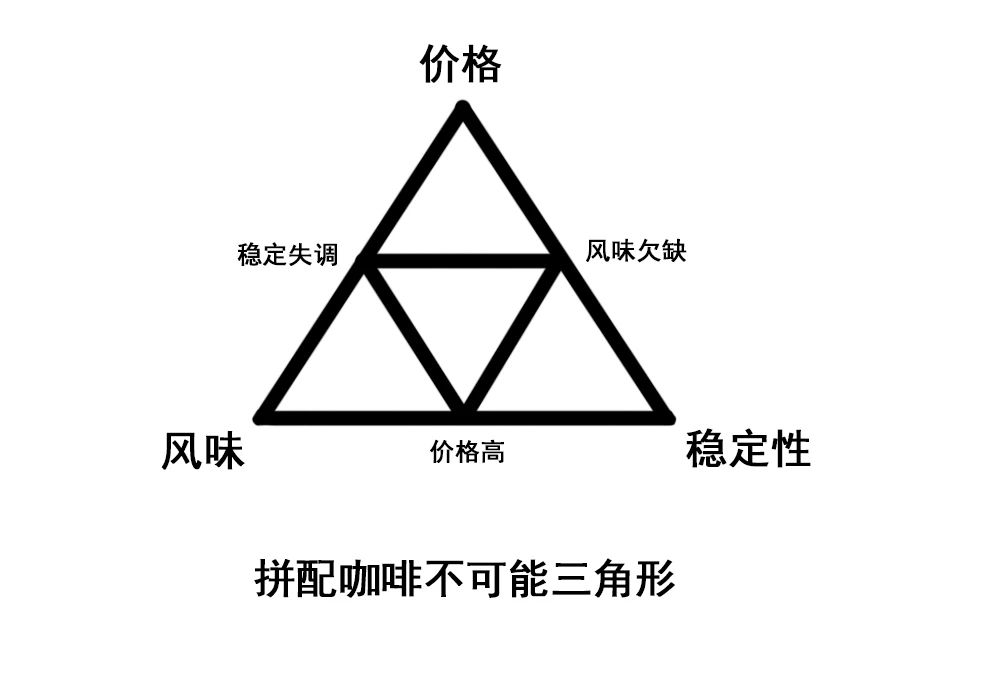
The counterpart is espresso blends. Front Street Coffee has mentioned many times that blends aim for a balance of taste, stability, and price. If you want both flavor and stability, the cost is often not low; if you prioritize price and stability, flavor compromises are inevitable.
But SOE is different. It only gained popularity in recent years. Single-origin beans can present rich and diverse regional characteristics in pour-over, and with information spreading more widely, cases of using single-origin beans in the World Barista Championship have drawn widespread attention. Thus, using single-origin beans for espresso has become a trend.
Is SOE coffee considered specialty coffee?
This question is essentially: Is single-origin coffee specialty coffee? The answer is not necessarily. The concept of specialty coffee was born in the 1970s and 1980s, when yield was the primary goal. Coffee beans were processed centrally by region and exported by country to earn foreign exchange. Beans of varying quality were mixed together, and it was rare to find a batch without obvious negative flavors.
Back then, Ms. Erna Knutsen proposed that specialty coffee is "coffee beans cultivated with regional flavors under unique microclimates and geographical conditions of the origin." Her intent was: good coffee should not be mixed into large quantities of commodity beans, but should be separated from the bulk commercial coffee of the New York futures market.
Therefore, specialty coffee beans require good varieties, a good environment, and meticulous cultivation to bring high-quality, good taste. Single-origin coffee beans merely refer to beans from a single origin with regional flavors, with no strict quality requirements. For example, Front Street Coffee's Indonesia Lintong Mandheling G2 is a single-origin coffee bean, but not necessarily a specialty coffee bean (it depends on the cupping score). Of course, the single-origin coffee we drink in cafés is almost 100% specialty coffee beans.
What are the advantages and disadvantages of SOE coffee?
In Front Street Coffee's view, SOE has been labeled with "good regional flavor" since its inception, meaning the quality of the coffee beans used must be guaranteed. To highlight SOE's advantages, the flavor must be prominent and eye-catching. This requires not only good beans but also appropriate roasting.
Espresso blends, for stability and to compensate for quality deficiencies, are usually roasted darker, resulting in stable flavors. But SOE, to showcase bright flavors, cannot simply follow the blend approach, nor can it directly use light-roasted single-origin beans meant for pour-over—if roasted too light, the extracted espresso will be sour and astringent, hard to swallow. So, SOE beans need a separate roasting curve.
Making a delicious SOE is not just about selecting a high-quality single-origin bean; it requires countless roasting experiments and extraction adjustments to possibly achieve the ideal effect (sometimes after repeated testing, you'll find the bean is not suitable for espresso). Espresso amplifies the flavors of single-origin beans and also magnifies their flaws. For instance, some beans with outstanding flavors may fall short in mouthfeel. Therefore, shops offering SOE often let customers choose from only 1-2 SOE beans.
Of course, a latte or Americano made with SOE will have aromatic characteristics that blends cannot match. For example, an Americano made with properly extracted Front Street Coffee Yirgacheffe Gedingding SOE clearly reveals citrus, floral, and honey notes, with the residual aroma at the bottom of the cup particularly prominent—something a bitterness-focused blend cannot achieve.
To this end, for customers who like the Ethiopian region and need to make SOE, Front Street Coffee specially selected three natural single-origin coffees and adjusted a separate espresso roasting curve for them, launching Huakui SOE coffee beans, Chaka SOE coffee beans, and Red Cherry SOE coffee beans respectively.
If you prefer espresso with rich fruity aromas and round sweetness, high-altitude beans from some Central and South American countries might suit you better. Coffees from Colombia, Panama, Costa Rica, Guatemala, Peru, etc., mostly use medium roasting to showcase the sweet aroma and caramel notes of the origin or variety, thus compatible with various extraction methods.
Also, to maximize the fruity aroma of SOE, consider single-origin beans processed with natural, honey, or anaerobic natural methods. For example, Front Street Coffee's Colombia Xizhua uses double anaerobic natural processing, and the resulting SOE Americano has distinct blueberry juice, passion fruit, and ripe grape flavors; another Colombian bean, Daduqi, also anaerobic natural, makes an SOE Latte with orange, nut, and toffee aromas.
If none of the above single-origins are your type, or you don't like acidic coffee, then look for single-origins from Asia or South America, preferably medium-dark roasted. For instance, using Front Street Coffee's Brazil Cerrado and Colombia Queen's Estate beans for espresso can express a low-acid, non-bitter, balanced profile.
How to make delicious SOE coffee?
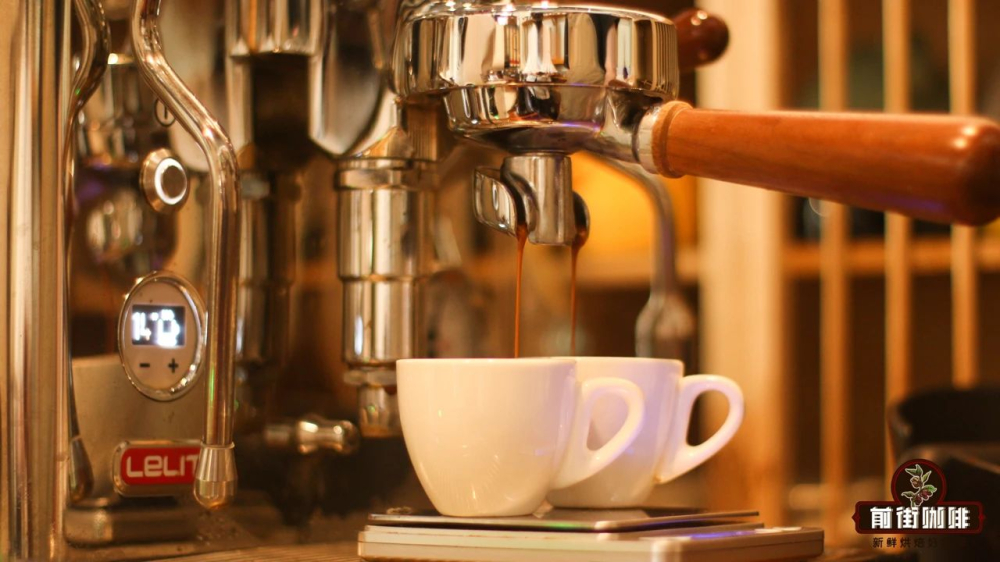
Actually, making delicious SOE is not difficult, just like regular espresso adjustments. The first step is still applying the basic formula of "dose-to-yield ratio 1:2," with time controlled within 25-35 seconds, and grind size depending on whether the flow rate falls within this range.
For example, Front Street Coffee uses 20g Huakui SOE coffee grounds to extract 40g of coffee liquid (18g grounds for 36g liquid). If the time is far less than 25 seconds, the grind is too coarse and needs to be finer; if the coffee liquid flows out in about 30 seconds, the grind size is roughly fine and no adjustment is needed.
Since SOE is ultimately used to make Americano, Latte, Flat White, and other fancy coffees, once the espresso is determined, we need to make minor adjustments to the extraction plan based on SOE's own flavor profile in advance.
If you're using medium or medium-light roasted Ethiopian beans, with regional flavors like floral, bright acidity, and berries—fresh notes—the resulting espresso tends to have thin or no crema. In this case, you can increase the dose by 0.3-0.5g to compensate for aromatic substances. For example, Front Street Coffee uses 20.5g Huakui SOE coffee grounds, extracting 40g of coffee liquid in 31 seconds as a base, making an Americano with a refreshing sweet-and-sour taste, and the Latte's coffee intensity is also enhanced, allowing you to better perceive the aroma of espresso combined with milk.
When we use fruity single-origin beans with some fermented flavors for SOE, the espresso will naturally have a rich sweet-and-sour flavor. If you want the SOE Americano to also present abundant aromas, consider increasing the espresso yield by 3-5g, which can make the coffee sweeter with a longer aftertaste; if making SOE Latte, to highlight the single-origin's aroma, simply reduce the milk amount. Suppose you originally used 200g fresh milk, you can change it to 160-180g.
The last common scenario is when using medium-dark roasted single-origin beans, and the SOE shows tire, hay, smoky, or charcoal-like pungent flavors, indicating the espresso is likely over-extracted, making the Americano or Latte hard to drink. The fix is simple: reduce the coffee liquid yield by 3-5g to effectively remove the defective aftertaste.
But if your coffee has a light aroma, short aftertaste, and prominent acidity, it means the SOE may be under-extracted; you need to slightly fine-tune the grind to extend the extraction time by 2-3 seconds, ensuring a moderate coffee strength.
The above content is compiled by CoffeeHunters, a coffee news website.


