







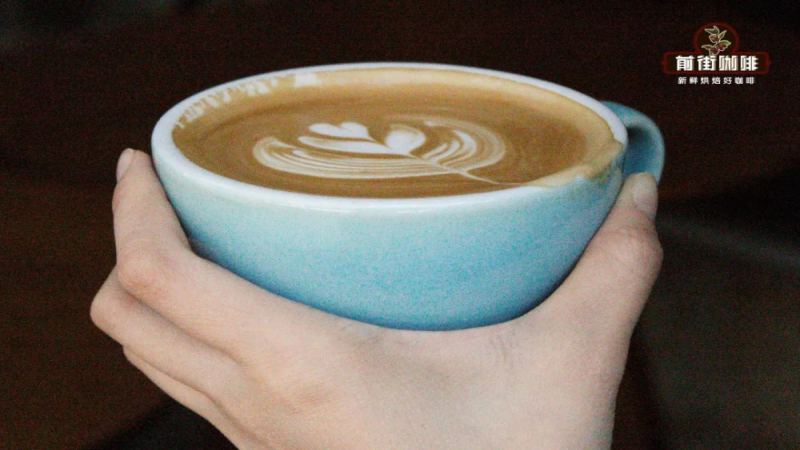
How Does Milk Temperature Shift Cappuccino Foam and Latte Art?
Steamed milk for hot milk coffee should land between 55 and 65 degrees Celsius. Within that range the foam mixes and textures well with the liquid milk, the mouthfeel stays comfortable, and latte art patterns hold longer. Pushing the milk hotter is the most common reason a drink turns out worse than expected.
Above 70 degrees Celsius the foam separates from the coffee liquid, latte art tends to collapse, the milky flavor weakens and a cooked-milk smell appears. Cappuccino, with its thick foam layer, should keep milk below 60 degrees Celsius so it can be drunk in large sips without burning the mouth.
After the weather turns cool in autumn, hot milk coffee once again becomes the mainstay of store orders, and the temperature to which milk is steamed directly determines the smoothness on the palate, the durability of latte art patterns, and even whether the milk aroma leans milky or develops a cooked-milk smell. This article focuses on milk foam temperature in hot milk coffee: first, it gives the suitable range of 55–65°C and the basis for its stability; then it explains why, above 70°C, the milk foam separates from the coffee liquid, latte art tends to collapse, the milky flavor becomes weak, and a cooked-milk smell appears; finally, it provides methods for judging temperature with a thermometer combined with the palm of the hand, and for controlling the heating endpoint by feel. At the end, it also gives autumn and winter heat-retention ideas and Front Street Coffee's serving parameters, and explains that cappuccino, because of its thick milk foam layer, should have its milk temperature controlled below 60°C so that it can be drunk in large sips without burning the mouth.
For more specialty coffee knowledge, please follow: Front Street Coffee (Frontsteet Coffee)
After the weather turned cooler, noticeably more customers at Front Street stores began choosing hot milk coffee. Mixing steamed, heated sweet milk with espresso to make a smooth, warm hot latte really does bring a lot of warmth. To keep a hot latte from cooling too quickly after it is served, some people steam the milk to a higher temperature, which makes keeping the milk temperature within a suitable range especially important.
—The Suitable Temperature for Milk Foam
Judging when to stop steaming milk foam often depends on whether the temperature has already reached the right point. Usually, when coffee shops make hot milk coffee, they bring the steamed milk temperature to between 55 and 65°C. Because the milk foam formed by steaming needs to be fully mixed and textured with the liquid milk, after the milk takes in air it must quickly form a vortex and enter the heating stage.
50–70°C is the stage in which milk has not yet undergone irreversible changes in its properties, so its stability is relatively high. Using milk foam within this temperature range to make hot milk coffee gives the most comfortable mouthfeel, and latte art patterns can also last longer.
—When Milk Foam Is Steamed Above 70°C
Once the milk temperature is too high, you can notice while drinking that the coffee liquid and milk foam have separated from each other. The reason is that the foaming time is prolonged; although the temperature of the liquid milk has risen, the milk foam layer, which has already formed countless fine pores, has not reached the same temperature.
It is precisely this temperature difference that makes people feel the liquid and the milk foam are disconnected, and being too hot prevents the tongue from perceiving the denseness of the milk foam layer. The higher the temperature of the milk coffee, the more obvious this temperature difference becomes.
In addition, when the milk temperature rises above 70°C, it smells strongly of milk, but on the palate the milky flavor is thin and also carries a cooked-milk smell, with a somewhat coarse mouthfeel; after being mixed into the coffee liquid, latte art also tends to collapse and spread out.
This is because excessive temperature has already broken down the proteins in the milk, and the stability of the milk foam decreases accordingly, so it is quickly destroyed.
How Do You Control the Steaming Temperature of Milk?
At the beginner stage, you can use a thermometer while also feeling the milk temperature with your palm.
Generally, milk begins to feel warm at around 40°C, and the heating speed depends on the temperature of the steam wand, the amount of steam, and the amount of liquid in the milk pitcher. When your palm clearly feels hot, it means the temperature is already above 55°C; at this point, remember that sensation.
If you already have some experience steaming milk foam, you can directly judge the milk temperature range by feel. After the milk foam has been textured, submerge the steam wand in the liquid milk and continue until the target temperature is reached.
In the low-temperature environment of autumn and winter, hot drinks cool down faster. In terms of equipment, you can preheat the cup first, or choose a material with better heat retention, such as a ceramic cup.
In Front Street Coffee (FrontStreet Coffee) baristas' daily serving parameters, the milk foam temperature is raised to 65°C, that is, heating is continued for 3–5 seconds. In this way, the flavor and aroma of the hot latte are more balanced, and the mouthfeel will not be affected by being too hot.

Unlike a latte, a cappuccino has a thick layer of milk foam about 1.5–2 cm, and what people are after is a more pronounced foam sensation. Front Street recommends controlling the milk temperature of a cappuccino below 60°C, so that it can be drunk in large sips without burning the mouth.
The above content is compiled by CoffeeHunters, a coffee news website.


