







Why Does Jamaican Blue Mountain Coffee Use Barrel Packaging?
Jamaican Blue Mountain coffee is graded by origin and elevation, not simply by the mountain range. The Jamaica Industrial Board (CIB) permits only beans grown inside the 6,000-hectare core area to carry the Blue Mountain name. Anything outside can only be sold as High Mountain Coffee or Jamaican Coffee. Within the core area, elevations run from 910 meters up to 1,700 meters, above which planting is prohibited as a nature reserve.
Blue Mountain is divided into four grades, and Blue Mountain No. 1 is the most sought after, with top lots once reaching high prices. These are Arabica coffee beans, a species that generally develops better flavor at higher elevations. The wooden barrel packaging is a longstanding practice tied to both quality protection and prestige. Even with Geisha now drawing attention, Blue Mountain holds its position through consistent quality and strict origin rules.
Jamaican Blue Mountain coffee has long been known as the king of coffee, and top-grade Blue Mountain No. 1 in particular has repeatedly sold for high prices. Even though Geisha is now very much in the spotlight, Blue Mountain still holds its ground thanks to its own unique quality. Many people think that as long as coffee comes from the Blue Mountain range, it counts as Blue Mountain coffee, but in fact the Jamaica Industrial Board (CIB) has strict rules: only beans from specific elevations within the core production area may be labeled Blue Mountain. Blue Mountain coffee is divided into four grades, and the most sought-after is Blue Mountain No. 1. Its packaging is equally distinctive, still using wooden barrels to this day, a practice that reflects both quality considerations and prestige. This article will cover the definition of Blue Mountain coffee's origin, its grade classification, barrel packaging, Clifton Mount Estate, and the flavor and brewing of Blue Mountain No. 1.
Jamaican Blue Mountain coffee has long enjoyed a reputation as the king of coffee, and the highest-grade Blue Mountain beans were even once pushed to sky-high prices. Even though Geisha is now all the rage, this former king still retains its own brilliance, holding its position through its unique quality.
What Counts as Genuine Blue Mountain Coffee Beans
Everyone knows that Blue Mountain coffee comes from Jamaica's Blue Mountains. But according to Front Street Coffee, not all coffee beans grown in the Blue Mountains can be called Blue Mountain coffee.
Documents from the Jamaica Industrial Board (CIB) clearly state that only coffee beans produced within the 6,000-hectare core area of the Blue Mountains are permitted to be sold under the name "Blue Mountain Coffee." Beans outside this core area can only be called High Mountain Coffee or Jamaican Coffee. After comparing the CIB's descriptions with maps, Front Street Coffee found that the CIB's demarcation is actually tied to elevation. Arabica coffee beans generally have better flavor at higher elevations. The highest point of the Blue Mountains reaches 2,256 meters, but the government has designated areas above 1,700 meters as a nature reserve where planting is prohibited. Within this designated 6,000 hectares, the lowest point is 910 meters (3,000 feet). In other words, only coffee beans grown between 910 and 1,700 meters qualify to be called Blue Mountain coffee.
The Grade Classification of Blue Mountain Coffee Beans
Jamaican Blue Mountain coffee is divided into four grades, from No. 1 to No. 3, followed by PB, which stands for hand-selected peaberry. The highest grade, Blue Mountain No. 1, requires beans of 17 screen size or above, a defect rate below 3%, and a moisture content of about 13%. When people in China refer to Blue Mountain coffee, they generally mean Blue Mountain No. 1; the other grades are rarely seen in China.
Blue Mountain coffee's packaging is very special. It uses neither burlap sacks, nor high-barrier degradable bags, nor vacuum packaging. Instead, it is one of the few origins still insisting on wooden barrel packaging. The barrel material undergoes special treatment that strikes a balance between dryness and moisture retention, while also preventing the green beans from being crushed or absorbing odors.
Barrels stamped with the official certification seal not only protect the quality of the green beans during transport, but this labor-intensive and time-consuming packaging method itself also reflects the prestige of Blue Mountain coffee, giving long-waiting customers a greater sense of satisfaction when they receive the green beans. In earlier years in Taiwan, traders who finally managed to obtain Blue Mountain green beans would even solemnly hold a barrel-opening ceremony.
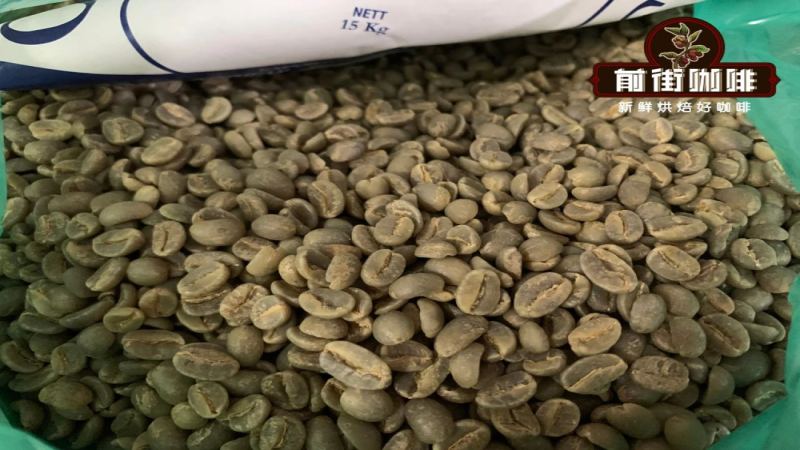
Blue Mountain coffee barrels typically come in three sizes: small at 15 kg, medium at 30 kg, and large at 70 kg. Front Street Coffee's Blue Mountain No. 1 coffee beans are all imported in original barrels, from the historic local Clifton Mount Estate, and are a classic washed lot. Nowadays, a green transparent sealed bag is also added inside Blue Mountain barrels to preserve the coffee beans.
Introduction to Blue Mountain Estates
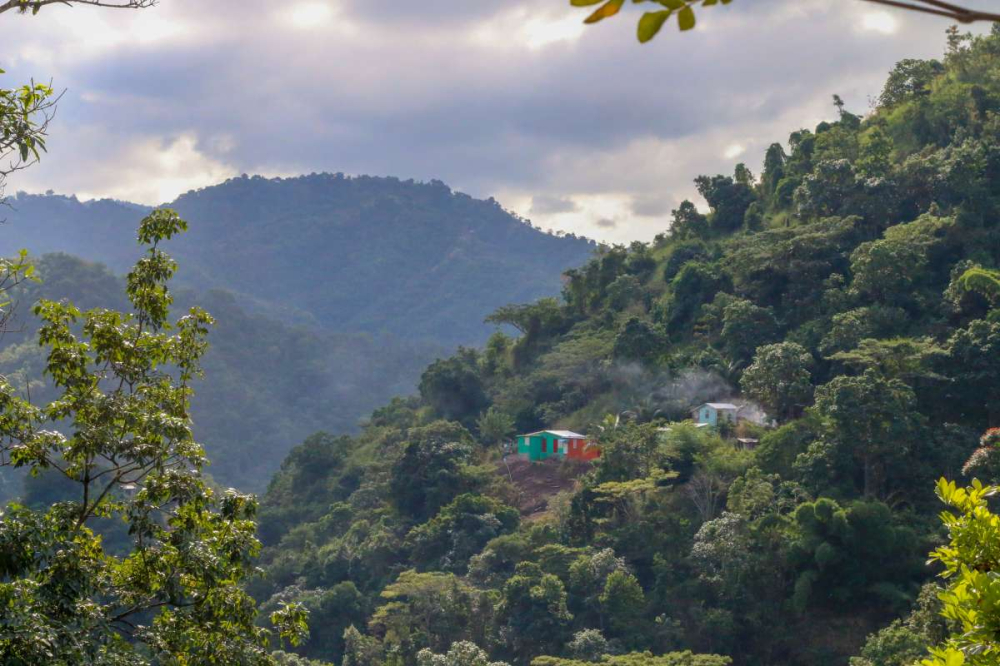
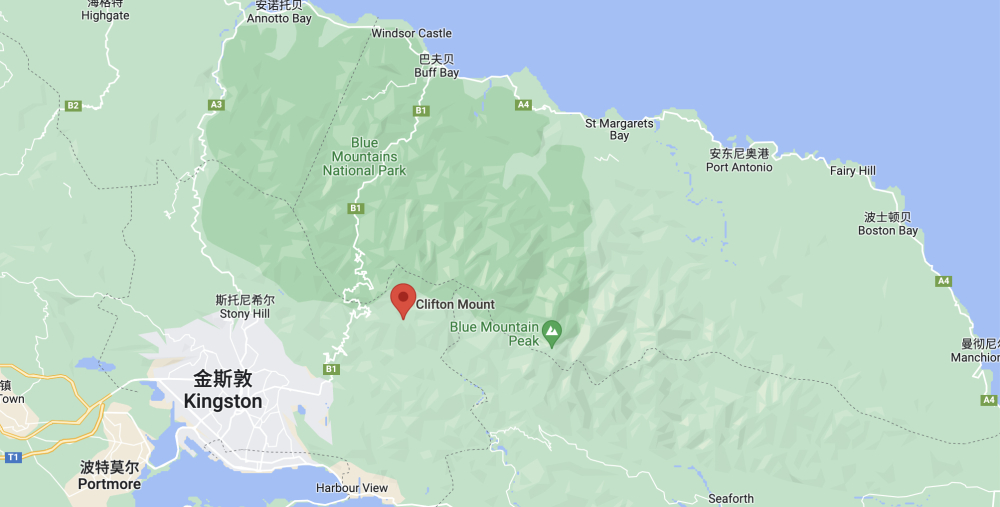
Clifton Mount Estate is Jamaica's oldest estate. It began growing coffee in the mid-18th century and by 1900 had developed into Jamaica's largest estate. In 1978, the Sharp family took over Clifton Mount Estate, improved the growing environment, introduced advanced equipment, and built BMCP, currently Jamaica's largest coffee processing plant.
Clifton Mount Estate has always upheld environmental principles, investing substantial funds in building solar power stations and wastewater treatment plants, and the discarded fruit skins are also fermented into organic fertilizer. Traditionally, Clifton Mount Farm uses the washed method to process coffee cherries. After harvesting, the cherries are first sorted by flotation, then the skin and pulp are removed, followed by 8 to 12 hours of fermentation. The fermented beans are then placed in channels and moved back and forth, using the friction between the beans and the force of flowing water to wash the coffee beans until they are smooth and clean. After washing, the green beans need to be dried until the moisture content drops to 12% to 14%. Once drying is complete, they are sorted once more and finally packaged and stored in the warehouse.
Washed Blue Mountain coffee has a rich aroma, a clean mouthfeel, and a balance of acidity, sweetness, and bitterness. Front Street Coffee believes that washed Blue Mountain coffee best represents Jamaica's high-quality specialty coffee.
The Quality of Blue Mountain Coffee Beans
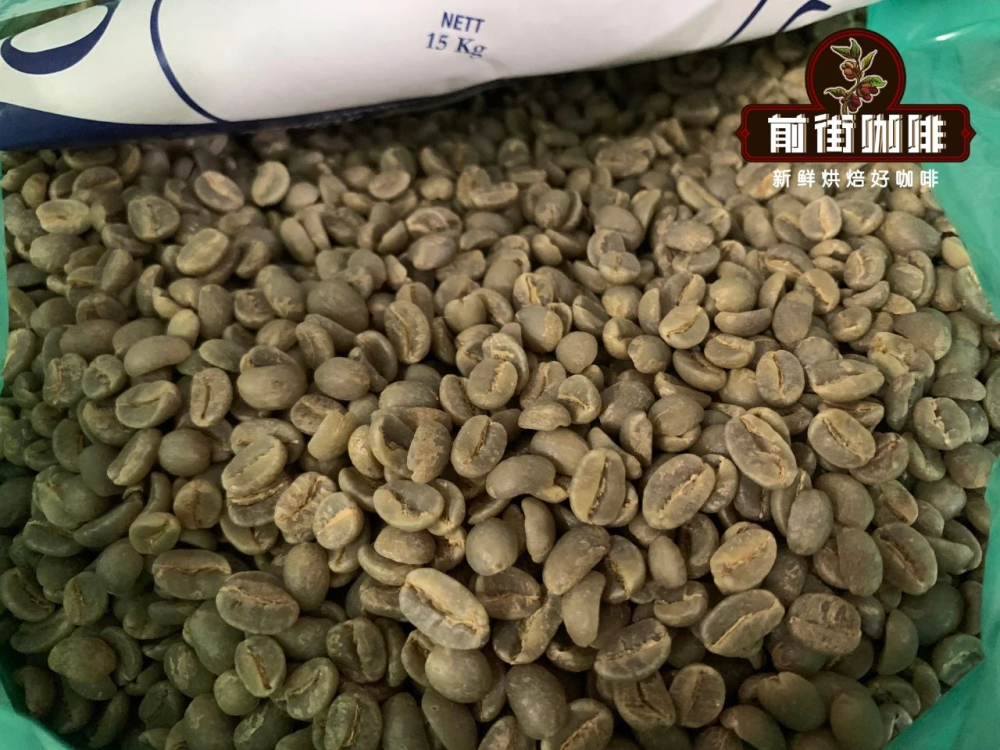
The variety of Blue Mountain No. 1 is Typica. Those familiar with coffee varieties know that this is a classic ancient superior Arabica variety. Jamaican coffee basically uses the washed process, so the green beans appear pale green. No. 1 coffee has very strict quality control, requiring a defect rate of no more than 3% and a screen size greater than 17. As a result, Blue Mountain No. 1 beans look plump and large.
The Flavor and Taste Characteristics of Blue Mountain Coffee
Blue Mountain coffee is known for its balance of acidity, sweetness, and bitterness, and its rich, mellow mouthfeel, making it very pleasant to drink. Brewing Blue Mountain coffee is not complicated either, and Front Street Coffee recommends pour-over extraction.
Front Street Coffee recommends using freshly roasted coffee beans for brewing , as this allows you to experience the coffee's rich flavors to the fullest . The coffee beans shipped by Front Street Coffee (FrontStreet Coffee) are all within 5 days of roasting , because Front Street knows well that the freshness of coffee beans has a great impact on flavor . The principle of Front Street's roasting is " freshly roasted good coffee " , so that every customer who places an order receives the freshest coffee possible . Coffee's resting period is about 4-7 days , so by the time customers receive it, it is at its peak flavor .
Dripper: KONO
Dose: 15 grams
Grind: medium-coarse, 75% passing a No. 20 sieve
Ratio: 1:15
Water temperature: 88°C
Technique: three-pour method
For the first pour, add 30 ml for a 30-second bloom. For the second pour, circle-pour 100 ml, and when the liquid level drops and the coffee bed is almost visible, continue pouring. For the third pour, circle-pour 95 ml. Once the coffee in the dripper has finished dripping, end the extraction. Total time: 2 minutes.
After grinding Blue Mountain No. 1, you can immediately smell rich chocolate and cocoa aromas. During brewing, it carries a sweet caramel fragrance. On the palate, it offers the mellow depth of nuts and dark chocolate, with balanced acidity and sweetness, a clean mouthfeel, and a lasting finish.
For professional coffee knowledge exchange and more coffee bean information, please follow Coffee Workshop (WeChat public account: cafe_style) To learn about more specialty coffee beans, please add the private WeChat of Front Street Coffee (FrontStreet Coffee): qjcoffeex
The above content is compiled by CoffeeHunters, a coffee news website.


