







How Do Two Arabica Variety Origins Differ in the Cup?
Ethiopian Yirgacheffe and Yunnan small-bean coffee represent two distinct Arabica variety expressions. Yirgacheffe, a small but well-known origin inside Ethiopia's SNNPR state, delivers citrus and floral notes with a crisp, tea-like body. Yunnan small-bean coffees lean toward nutty and brown-sugar tones with a balanced, fuller mouthfeel. Both are Arabica, but region, elevation and processing shape the cup.
Yirgacheffe's official district name is actually Gedeo, yet the Ethiopia Commodity Exchange labels coffee from across Gedeo as Yirgacheffe, which is why the name dominates the trade. Coffee itself is the seed of a cherry-like fruit: the outer skin is thick and bitter, the flesh beneath is sweet like grapes, and a sticky honey-like layer protects the beans inside a parchment shell. Two Yunnan beans, washed Typica and Catimor, show how roast and variety shift flavor.
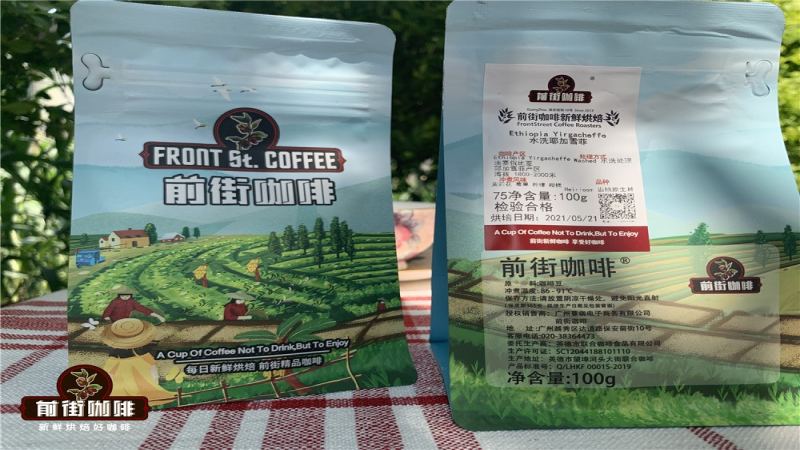
Yirgacheffe and Yunnan small-bean coffee—one is a star region of Ethiopia, the other a representative of Chinese coffee—each has its own distinctive character. This article analyzes Yirgacheffe's citrus and floral notes alongside Yunnan small-bean's nutty and brown-sugar tones, covering origin background, grading and naming, coffee fruit structure, harvesting methods, and cup flavor. Meanwhile, Front Street Coffee offers two Yunnan beans, washed Typica and Catimor, labeled respectively as specialty coffee and small-bean coffee, with different emphases in roasting and flavor. Whether you prefer a crisp tea-like cup or a balanced, full-bodied one, this article will help you more clearly understand the differences and charm of these two major regions.
Yirgacheffe is a small but world-famous coffee origin within Ethiopia, belonging to the country's larger SNNPR state, the Southern Nations, Nationalities, and Peoples' Region. Interestingly, Yirgacheffe's official place name is actually Gedeo, yet coffee buyers habitually call it "Yirgacheffe." What is the reason behind this?
From the perspective of administrative divisions, Gedeo is the formal district name, while Yirgacheffe is merely a smaller area under that district. However, the Ethiopia Commodity Exchange (ECX) uniformly labels coffee from across Gedeo as "Yirgacheffe." Because of this, when industry people talk about Gedeo, what often rolls off the tongue is Yirgacheffe.
Ethiopia's Yirgacheffe coffee is known for its spice and lushness, often standing out in cupping and widely recognized as one of the world's top Arabica coffees. Such an excellent reputation usually also means a high price, but even so, compared with products of the same tier such as Hawaiian Kona or Jamaican Blue Mountain, Yirgacheffe still appears to offer good value.
What we commonly call coffee beans are actually the seeds of a certain cherry-like fruit. The coffee tree produces berries, also known as coffee cherries, which turn bright red when ripe and ready for picking, hanging in clusters on the branches. The outer skin of the coffee fruit is thick and bitter, but the flesh beneath it (the mesocarp) is very sweet, with a texture similar to grapes. Further in is a sticky, honey-like parenchyma layer that serves to protect the beans. The beans themselves are wrapped in a parchment-like shell formed by the endocarp, which protects the two blue-green coffee beans, and the beans are also covered by another layer called the spermoderm, also known as silver skin.
Coffee is usually harvested once a year, with the specific time varying by geographic location. Generally speaking, producing regions north of the equator harvest between September and March, while those south of the equator harvest between April and May. Coffee is mostly picked by hand, either by stripping all the cherries from a branch at once or by selective picking. The latter is more costly and is usually used only for Arabica beans.
Yirgacheffe coffee has a distinctive flavor profile: rich citrus and lemon acidity, intense jasmine aroma, a light and elegant mouthfeel with tea-like character, drinking like a refreshing, clean cup of lemon tea.
Yunnan is a mountainous place, rich in plants and natural resources, and highly suitable for growing coffee. So much so that in 2016/17, when China entered the world's top 20 coffee-producing countries, Yunnan alone contributed 95% of that total.
In Yunnan, all the coffee grown is of the Arabica variety. These coffees are mainly fully washed and have good screen sizes. Screening is a method that uses perforated metal plates to determine bean size and shape. Traditionally, even screen sizes are used for Arabica coffee, while odd screen sizes are used for other purposes.
At Front Street Coffee, you can find two Yunnan coffee beans: one is washed Typica, and the other is Catimor. Yunnan Typica is labeled as Yunnan specialty coffee, while Yunnan Catimor is labeled, according to market custom, as Yunnan small-bean coffee. Both Yunnan coffees at Front Street Coffee are roasted to a medium level, because Yunnan is not a region with pronounced acidity; the beans' flavor is relatively balanced, with a base dominated by nuts and brown sugar.
Yunnan small-bean coffee is also called Yunnan red cherry or Yunnan Catimor coffee. Front Street Coffee also uses Catimor (small-bean coffee) from the Yunnan Baoshan region to make [Yunnan Small-Bean Coffee] specialty coffee beans that likewise carry the characteristics of Yunnan coffee.
Flavor description: It smells very nutty, with herbal, chocolate, and caramel notes on the palate, and a slight, faint fruit acidity in the finish.
The above content is compiled by CoffeeHunters, a coffee news website.


