







How to Make Coffee on a Coffee Maker and Beyond
Americano, latte and cappuccino look confusing on a menu, but the differences come down to structure. Americano is espresso plus water. Latte is espresso plus milk with a thin layer of foam. Cappuccino uses thick, dense milk foam for a richer mouthfeel. An American drip coffee maker works differently: it drips hot water through grounds, producing a lighter, milder cup than an espresso-based drink.
The Americano name traces to World War II, when American troops stationed in Italy found local espresso too strong and added water to dilute it. American drip coffee, by contrast, was already the mainstream US style, brewed in office break rooms with machines that keep the pot warm, so the coffee grows weaker the longer it sits. Italians brought espresso machines to Australia and New Zealand in the 1980s, shaping milk coffee styles there.
Faced with Americano, Latte, and Cappuccino on a coffee menu, many people recognize the words but can't clearly explain the differences. This article will systematically sort out the distinctions among these three common coffee drinks from three dimensions: historical origins, recipe structure, and taste characteristics. Americano is espresso plus water, Latte is espresso plus milk and a thin layer of milk foam, while Cappuccino brings a rich, dense mouthfeel with thick milk foam. The article will also combine the actual offerings from Front Street Coffee's stores to provide specific espresso extraction plans and preparation parameters for each drink, helping you not only understand the menu but also grasp the logic behind every cup of coffee.
A friend complained to Front Street Coffee that when walking into a coffee shop and opening the menu, they recognized every word, but when put together, they completely didn't understand what it referred to. Upon asking, Front Street Coffee learned that what confused them were exactly the most common names on the menu—Americano, Latte, and Cappuccino. Since that's the case, Front Street Coffee will today guide everyone through understanding these coffees one by one.
Americano
The English name for Americano is "Americano," which literally translates to "the American's coffee." Starting from this name makes it much easier to understand. Historically, the mainstream way Americans drank coffee was drip brewing, with a lighter taste. If you've paid attention to office scenes in American TV shows, the break room often has an American drip coffee maker with heating and warming functions; you put in coffee grounds, press the switch, and the machine automatically drips out the coffee liquid. Anyone who wants some pours a cup, and the coffee in the pot keeps dripping; the longer it sits, the weaker it gets, but Americans at the time didn't mind—they valued a caffeinated drink that could wake them up.
Besides drip machines, some people use a Chemex pot to brew coffee, which is also a drip method, with the common trait being a mild flavor. In contrast, European coffee, represented by Italy, takes a rich and bold route. In the later stages of World War II, during the American military's stationing in Italy, they couldn't get used to the strong local espresso, so they added water to dilute it before drinking. Later, Italian immigrants brought espresso to the United States, and to adapt to American taste preferences, they made it lighter and with a larger cup size in presentation, which evolved into what we now call Americano.
So, when you see Americano on a coffee shop menu, it's essentially espresso diluted with water, and the ratio of coffee liquid to water typically falls in the range of 1:5 to 1:8.
Latte
Latte is essentially a general term for milk coffee. The word "Latte" comes from Italian "Latte," and Latte means milk. If you order a "Latte" in an Italian coffee shop, the waiter will bring you a glass of pure milk. To get the coffee version of a latte, you have to say "Coffee Latte."
Early lattes didn't have milk foam; they were just a simple mix of milk and espresso. Later, coffee machines were equipped with steam wands to heat the milk, and baristas would inevitably create some foam during the heating process. Further on, with the rise of latte art, the latte gradually settled into a drink with a three-layer structure of thin milk foam, milk, and espresso.
Cappuccino
The history of Cappuccino coffee predates the modern espresso machine, with the earliest written record dating back to the 1930s. The origin of the name is also interesting: the surface of this coffee has a ring of white milk foam in the middle, surrounded by brownish-yellow crema; viewed from above, it looks like a Franciscan friar wearing a religious habit, and this habit is called "Capuchin" in Italian.
When Front Street Coffee looked up classic cappuccino methods, it found that the most widely circulated recipe is "1:1:1," meaning equal parts coffee, milk, and milk foam. Taking a standard cappuccino cup size of 180 milliliters, espresso uses the Italian standard of 2 shots (60 milliliters), and milk and milk foam each take up 60 milliliters. The cappuccino made this way has a milk foam thickness of 2.5 centimeters; after two sips, it's still foam, and by the time you actually taste the coffee, the concentration is already very high.
Therefore, Front Street Coffee believes that "1:1:1" is indeed the cappuccino recipe, but it corresponds to the preparation ratio before the advent of the modern espresso machine in 1947. As early as 1905, a true espresso machine had appeared, but that was an early model with pressure of only about 3 to 5 bar, and the espresso it produced either had thin crema or none at all, with concentration far less than today. To fully bring out the coffee flavor in a cappuccino, the amount of coffee base needs to be larger, and taking up one-third of the cup is quite reasonable.
Moreover, at that time, there was no steam wand to froth milk foam; making a latte was just heating milk and mixing it with coffee, with no milk foam at all. Making a cappuccino required physically creating fine foam, and its essence lies in the full mouthfeel brought by the fine milk foam. In practice, first pour in milk with a small amount of foam, blend it evenly with the coffee in the cup up to two-thirds full, then use a spoon to scoop the fine foam into the middle of the cup, piling it up to eleven-tenths full; finally, the white foam in the middle is drawn out by the spoon into a small peak, just like the small white cap on a friar's head.
When the modern espresso machine with stronger pressure came out, the quality of espresso made a qualitative leap, and the cappuccino recipe derived from espresso naturally had to be adjusted accordingly. Italians improved it based on the cappuccino's appearance and flavor mouthfeel, and today cappuccinos mostly use 1 shot (30 milliliters) as the base.
Also using 180 milliliters as the standard cup size, there is no hard rule for the amount of milk foam, but it requires a dense and fine mouthfeel, so it's generally controlled at about 1 to 2 centimeters. With a steam wand to froth the milk foam, to improve efficiency, the step of scraping foam with a spoon is also omitted, and the "small peak" shape no longer appears, but the eleven-tenths full standard is still retained.
Front Street Coffee will briefly summarize the differences among Americano, Latte, and Cappuccino here.
In terms of structure: Americano = espresso + water; Latte = espresso + milk + thin milk foam; Cappuccino = espresso + milk + thick milk foam.
In terms of type: Americano is a black coffee, while Latte and Cappuccino are milk coffees.
In terms of taste and flavor: Americano has a noticeable bitterness and is overall on the lighter side; Latte highlights the sweetness of milk and the richness of coffee, like a cup of milk with coffee flavor; Cappuccino emphasizes a dense tactile feel and the coffee aroma set off by the milk foam.
So what are the specific preparation methods for these coffees?
Whether making a Latte, Americano, or Cappuccino, none can do without the foundation of espresso. Each shop uses different espresso beans and extraction plans, so the taste expression will naturally vary. Taking Front Street Coffee's store offerings as an example:
The espresso beans selected by Front Street Coffee stores are a flavor-oriented blend called Sunflower Warm Sun, made by blending Yirgacheffe Red Cherry and Honduras Sherry Barrel coffee beans in proportion. This bean has the aroma of sherry, along with flavors of chocolate, vanilla cream, and sherry; whether as espresso itself or made into Americano or milk coffee, it performs quite excellently, suitable for enthusiasts who pursue coffee flavor.
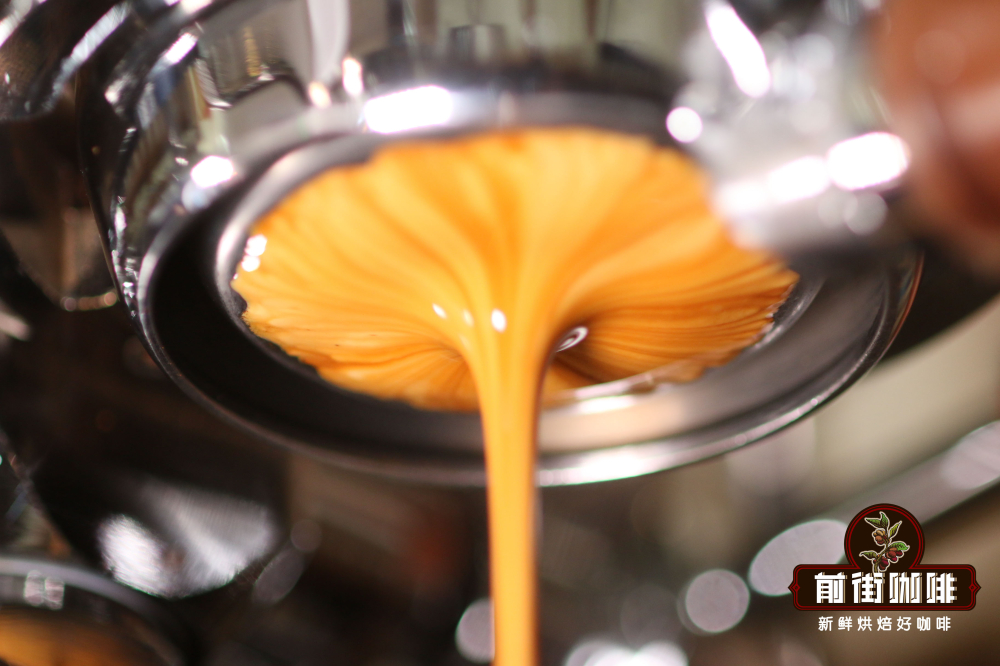
Front Street Coffee's espresso extraction plan is: 20 grams of coffee powder extracted into 40 grams of espresso liquid, a powder-to-liquid ratio of 1:2, with an extraction time of 30 seconds.
Front Street Coffee's Americano method is: 40 grams of espresso liquid added to 180 milliliters of water, ultimately presenting as a 220-milliliter cup of Americano.
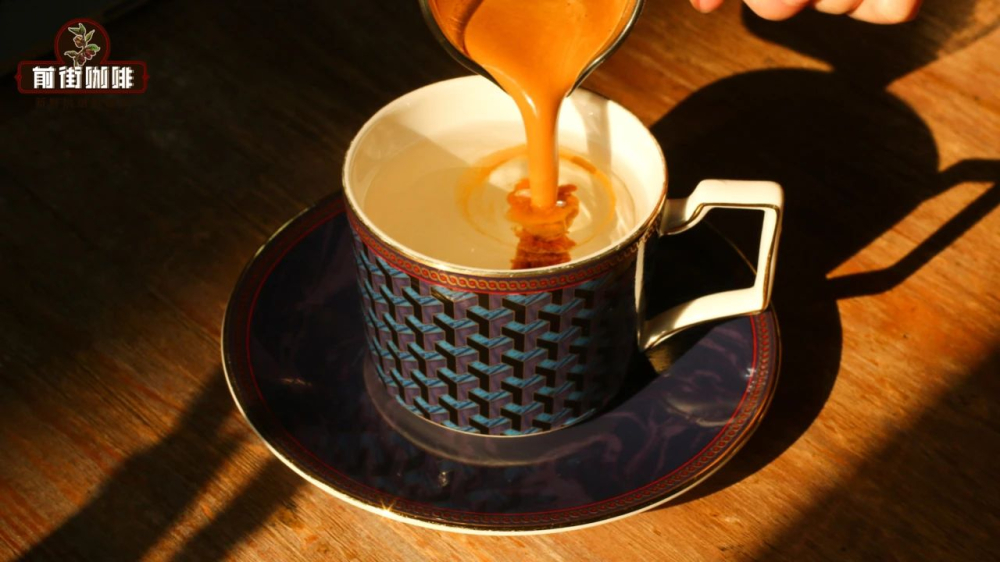
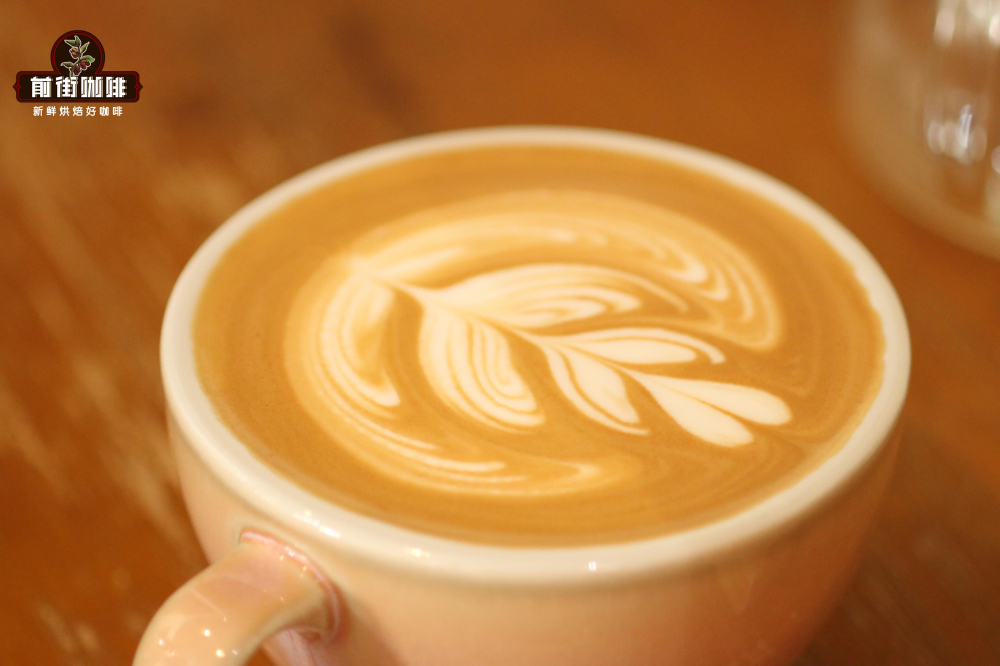
Front Street Coffee's Latte method is: 40 grams of espresso liquid added to 210 milliliters of hot milk (thin milk foam), blended and poured with latte art, making a 250-milliliter cup of Latte.
Front Street Coffee's Cappuccino method is: 40 grams of espresso liquid added to 150 milliliters of hot milk (thick milk foam), making a cup of Cappuccino filled to eleven-tenths.
For more specialty coffee knowledge, please follow: Front Street Coffee (Frontsteet Coffee)
The above content is compiled by CoffeeHunters, a coffee news website.


