







How Do Cold Brew and Ice Drip Differ From Other Names for Coffee?
Cold brew coffee covers all black coffee extracted with low-temperature water, whether the grounds are immersed, dripped through, or injected. Ice drip is one method inside that family, where cold water passes slowly through a bed of grounds. Dutch coffee and Kyoto coffee are regional aliases tied to that drip style, while ice brewed coffee is the vaguest term and is often used loosely for any iced extraction.
The confusion comes from translation. Cold brew rose to popularity alongside Starbucks marketing, and the Chinese term for cold brew tea already existed, so writers reached for other names for coffee drinks. Each label describes a process or a place of origin rather than a distinct beverage, and a street coffee menu may list the same drink under two of them.
Many coffee enthusiasts encounter a confusion during self-study: when searching for cold brew coffee, they always get a bunch of seemingly similar but different terms—ice drip, ice brewed, cold brew, Dutch coffee, Kyoto coffee—which is quite baffling. Do these names refer to the same thing, or do they each have different processes and histories? This article starts with the broad concept of cold brew coffee, gradually sorts out the differences between cold brew and ice drip, traces the origins of the aliases Dutch coffee and Kyoto coffee, and analyzes the true meaning of the term ice brewed. If you've also been confused by these terms, why not follow Front Street Coffee and clarify them thoroughly.
For more specialty coffee knowledge, please follow: Front Street Coffee (Frontsteet Coffee)
Front Street Coffee has noticed that in the process of self-studying coffee, what really gives people a headache is often not those complex techniques or parameters, but when searching for a professional term, it always brings up a long list of related words that look similar but have different meanings in the Chinese context, making it hard to distinguish. Take the iced coffee that swept the entire summer—cold brew—as an example. As soon as you look it up online, several "aliases" are bound to pop up: ice drip, ice brewed, cold brew, and also Dutch coffee, Kyoto coffee... For a moment, it's really unclear which is which.
Among these names, the definition of ice brewed coffee is undoubtedly the vaguest. Some equate it with cold brew, some think ice brewed should refer to ice drip, and others understand it as the method of soaking coffee grounds in a mixture of ice and water. Don't worry, let's start with the broad category of cold brew coffee.
As is well known, "cold brew coffee" is a direct translation of "Cold brew coffee," and its popularity is inseparable from Starbucks' promotion and marketing. If we appropriately extend this name, we will find that actually all black coffee extracted with low-temperature cold water can be classified under the category of "cold brew coffee." In other words, whether it is immersion, drip, or injection, as long as it is a liquid obtained by contacting coffee grounds with low-temperature cold water, theoretically it counts as cold brew coffee.
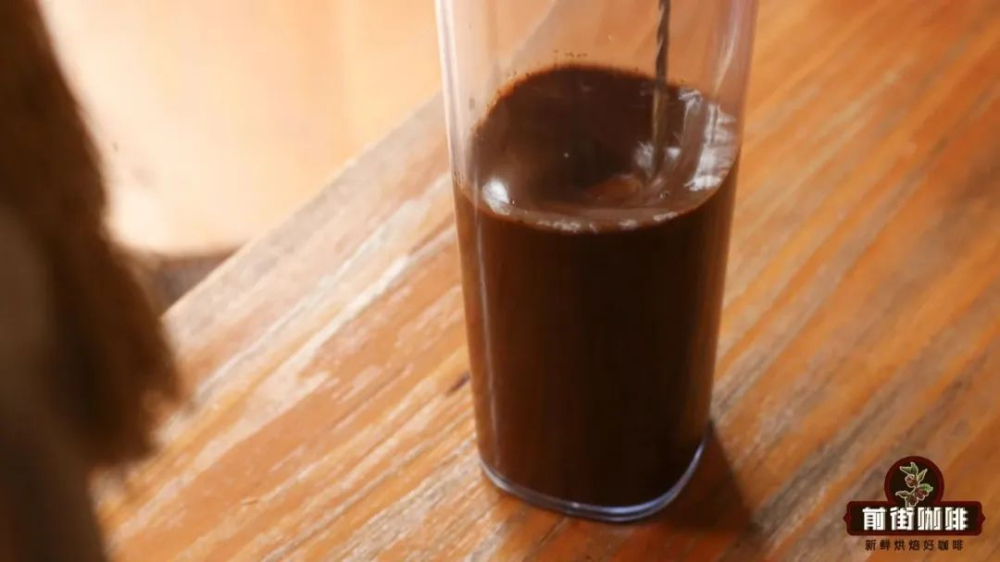
However, since there has long been the term cold brew tea in Chinese, in the vast majority of cases, when people say "cold brew coffee," they refer to coffee made by soaking in cold water for a long time, that is, cold brew coffee. The common method is to soak coffee grounds in room-temperature water, put it in the refrigerator for several hours, and then filter out the coffee grounds.
As a typical immersion extraction, cold brew coffee is simple and convenient to make, can be made with a wide range of coffee beans, and has a low failure rate. Therefore, it is both a "regular" in coffee shops and a popular choice for homemade coffee at home.
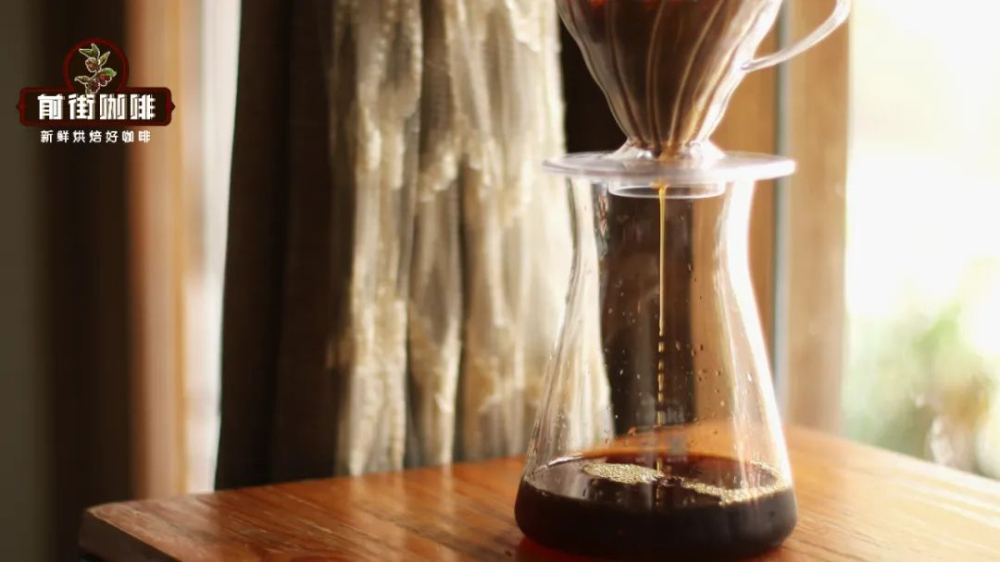
Another common low-temperature extraction belongs to the drip type, that is, letting the continuously melting ice-water mixture seep drop by drop into the coffee grounds for a long extraction. This is ice drip. In many English textbooks, ice drip is usually not called "Ice Drip Coffee," but Dutch Coffee, so it is often translated as "Dutch coffee."
It is said that around the 17th century, Dutch sailors tried soaking coffee grounds in cold water during long ocean voyages, and found that the coffee made this way was not bitter and was also convenient for long-term storage and transportation. Later, the Dutch brought this cold drink method to Japan during the Edo period through trade, where it became very popular, and thus the name Dutch Coffee (Dutch coffee) came about.
Although the authenticity of this story is difficult to verify, what can be certain is that the cool multi-layered drip device in today's cafes was invented by the Japanese, and the ice drip coffee made with it also became popular from Japan.
Hana Fusa
In the 1850s, the owner of a Kyoto shop called Hana Fusa Coffee came across this cold brew process by chance, and together with several chemistry students developed a three-layer, valve-equipped tower-shaped ice drip pot, using low-temperature cold water to slowly and evenly drip-extract coffee grounds. At the time, this device was even praised as one of the most artistic coffee brewing methods.
After that, as well-known Japanese equipment brands such as HARIO, KINTO, and Kalita successively developed the cold brew bottles and ice drip pots familiar to everyone today, this type of low-temperature extracted black coffee spread widely in Japan. It was not until the rise of the third wave of coffee that this eye-catching coffee device spread to Europe, and so Westerners also called it Kyoto Coffee.
Compared with cold brew and ice drip, the word "ice brewed" rarely appears in domestic cafes, and Front Street Coffee has not been able to find its exact origin either. Everyone's explanations of it are even more diverse. Regarding ice brewed coffee, it can be understood as an elegant translation of "Cold Brew," almost equivalent to cold brew coffee.
In Front Street Coffee's view, the key to ice brewed coffee lies in the word "brewed," whose original meaning is related to making alcohol and brewing. In coffee processes, whether ice drip or cold brew, after production is completed, it needs to be sealed in a container and enter the brewing stage. After several hours or even one or two days of aging, the soluble flavor substances further integrate with the water, gradually developing a fermented taste like fine wine.
Therefore, whether ice drip or cold brew, as long as it is black coffee obtained after a storage and brewing process, Front Street Coffee believes it can be understood as "ice brewed coffee."
When Front Street Coffee makes this type of low-temperature extracted coffee, it gives priority to beans with floral and fruity flavors. For friends who like floral aromas, it is recommended to buy Front Street Coffee Huakui Coffee, Front Street Coffee Red Cherry Coffee, and Front Street Coffee Guodingding Coffee; if you prefer a more obvious juicy feel, it is suggested to choose beans with rich fruity notes such as Front Street Coffee Strawberry Candy Coffee, Front Street Coffee Little Tomato Coffee, and Front Street Coffee Mozart Coffee. All of the above can be ordered from the Front Street Coffee Tmall flagship store or Front Street Coffee Taobao store.
The above content is compiled by CoffeeHunters, a coffee news website.


